Categories
About Me

My Journey to Scrivener

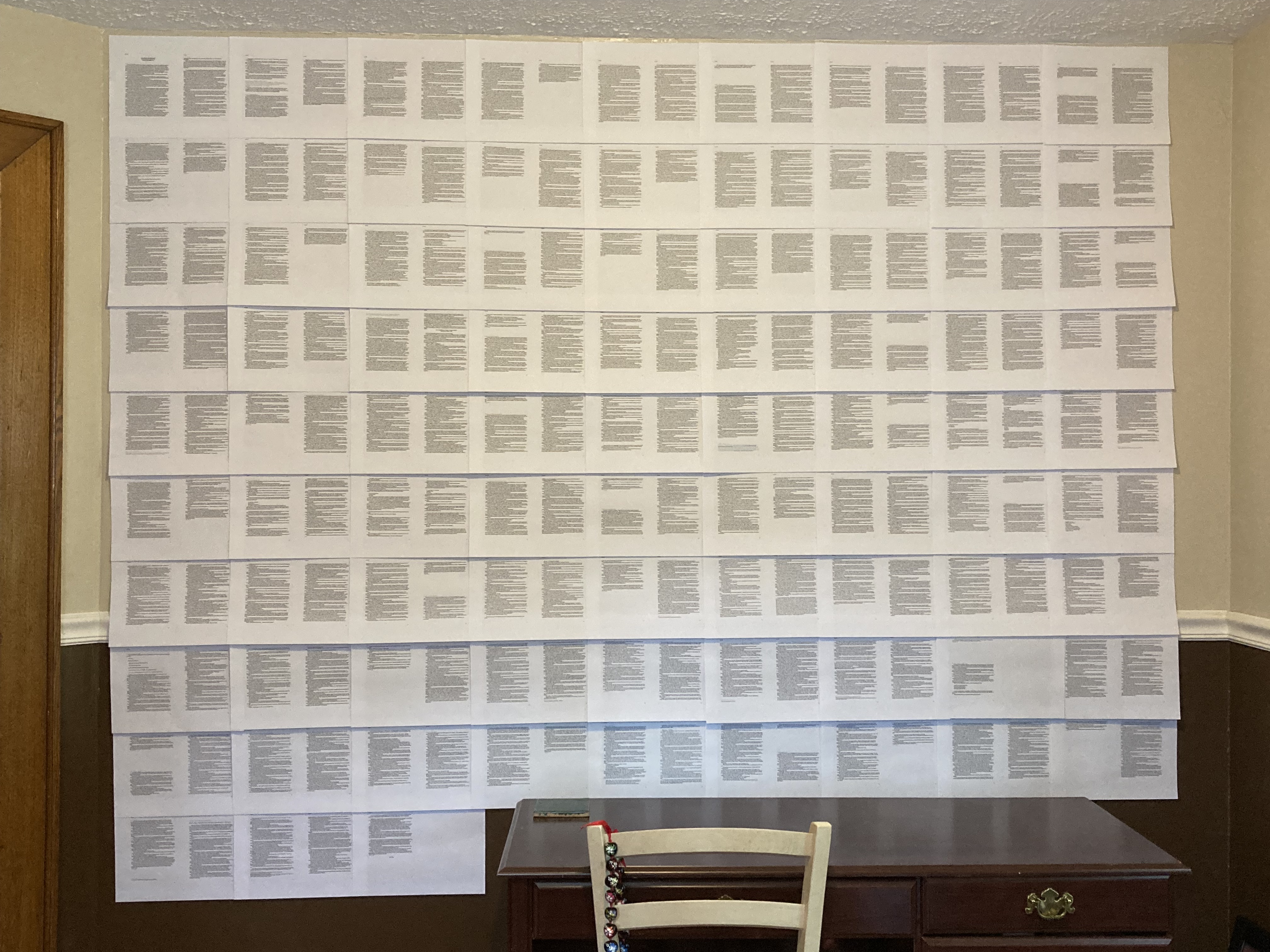
I started THE ARCONE by writing freehand. I’ve passed hundreds of hours journaling, and my heavy bookshelves are paying the price. I also began THE ARCONE as a pantser, meaning I was writing the book by the seat of my pants, and in the end, I’ve written enough for three novels. I’m plotting my second book.
I write more than fiction, though, as evidenced by this blog, I’m passionate about sustainability, drawing, and architecture. Academic writing and notes on the edge of a titleblock sheet differ significantly from the scene-setting prose I’m drawn to while crafting a book about 19th-century Florence, Italy.
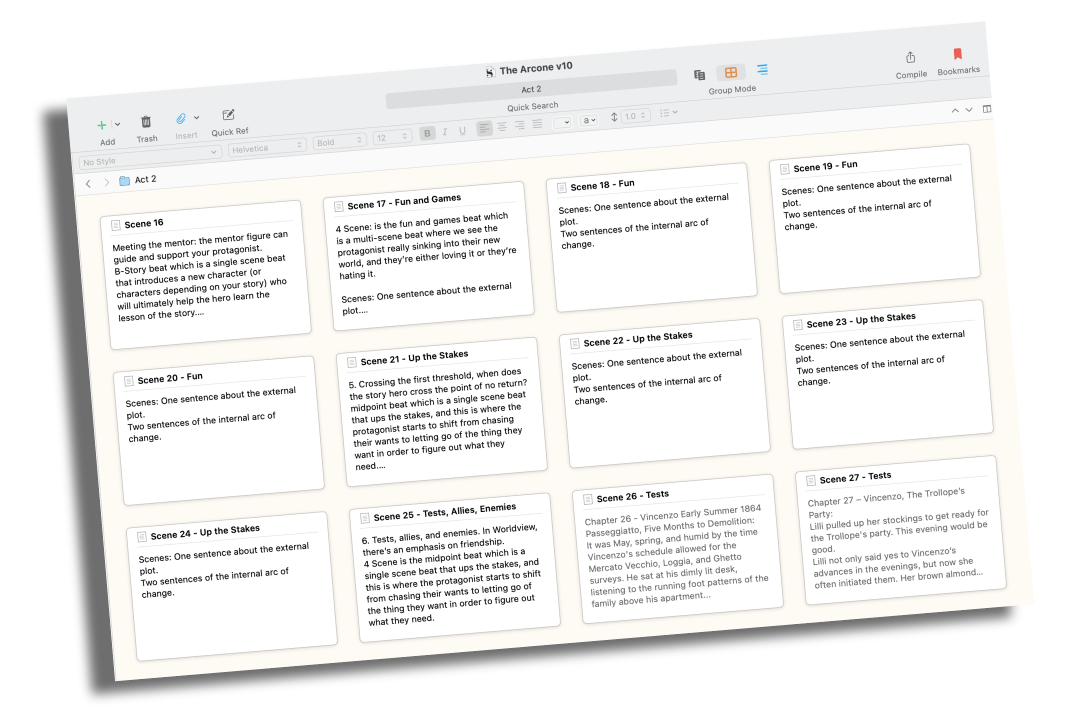
What finally made me jump from handwriting to microsoft word, and finally to Scrivener, was the advice from other writers. I also realized I could have chapter cards at a glance instead of making my guestroom look like a crime scene pinup board.

Categories
Book Review

Literary Agent Submissions

THE ARCONE is the first novel I’ve written, and using QueryTracker to find literary agents open to historical fiction submissions has been a positive experience overall. I researched and submitted query letters to sixty agents, and only one asked for my manuscript. (It was then declined.) So, either my manuscript needs work, or I’m trying to drive a hole-in-one in the dark. Maybe it’s a little of both. However, I found the QueryTracker website critical to finding the right agents and organizing the submission process. Agents are found by genre, the firm they work for, and whether they are open for submissions. Emails, websites, and preferred submission style information are all included. I told myself I’d submit to at least forty agents, and then consider a hybrid or self-publishing alternative to traditional publishing. After attending conferences and meeting publishing professionals who gave me a glimpse of their world, I think I’ll just be patient. I can write another book while I wait and continue perfecting a craft.

Categories
Book Review

Have a Story to Tell?

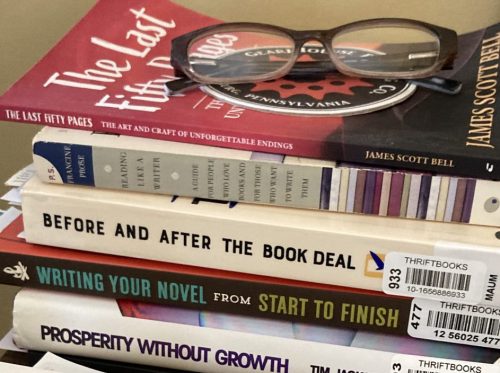
Fairmont State generously supported a sabbatical, allowing me to complete a manuscript for my book, THE ARCONE. I learned how to edit, query literary agents, rely on my writing critique partners, and, finally, how to pitch to an agent. Through recommended books and blogs, I know so much more about the writing-to-publishing journey, even if I haven’t landed an agent yet. One friend called this collection of experiences a “punch card” MFA.
I had a great experience in November with ProWritingAid’s NovNov event, which encourages you to write a novel in one month with the support of many people around the globe. I learned that the silent writing groups held me accountable during times I would have otherwise wasted.
If you have a story to tell, take twenty minutes or two hours, sit down, give yourself the time to focus, and then write.

Subscribe to receive a plan drawing related to my book. The drawing recreates the Jewish Ghetto that existed in historic Florence, Italy.

Categories
Community

Drawing Workshop

Join me at the West Virginia Botanic Garden in Morgantown, WV, on Thursday, May 22nd at 6p for my 6th annual drawing workshop. Sign up by visiting the WVBG website event registration page.

Categories
Book Review

Book Signing

The Morgantown Writers Group (MWG) will host a book signing at Barnes & Noble today, November 24th, from 1-4. Check out our website here to learn more about the group and our book, River and Stone, the anthology collection edited by Melissa Reynolds and Patty Hopper Patteson.

Categories
Architecture Travel

Architecture in Barcelona

Antoni Gaudí, one of Barcelona, Spain’s most recognizable architects, made an impression on Fairmont State Architecture students during a recent travel abroad trip. The Sagrada Familia is the orienting point from which all visitors to the Recinte Modernista de Sant Pau and the Montjuïc park overlook seek. Jean Nouvel’s “pickle,” the Torre Glories, is the Sagrada Familia’s counterpoint anchor.

The Mediterranean Sea is nearby, but the range of mountains farther north, the mountains of Montserrat, inspired both Montaner and Gaudi.

Apartment blocks near Gaudi’s Casa Mila and Casa Batllo show tilework that mimics the broken ceramic pieces Gaudi used to create his artistic abstractions. The ironwork is reminiscent of the Batllo balcony masks.

Inside Sagrada Familia, the concert of colors and the inverted scripture that pushes toward the visitor leaves an impression as one walks back out to the streets. The rare rain of Barcelona fell on our group in full force as we walked Gaudi’s Park Guell, observing the place gifted to him as a residence while we huddled under umbrellas. We followed the rosary beads, carved large-scale decades strewn along our saunter to the undulating scalloped overlook. The high plaza is a large bowl of gravel filtering the rainwater through trunks of columns to a cistern below. Gaudi’s columns are abstractions of the plane and southern nettle trees that grow along Barcelona’s boulevards. The idea of a “superblock” has inspired many city streets to turn their focus away from cars and toward pedestrians, as one experiences in the triangular sliced planting beds allowing pedestrians the right of way in a city of 1.6 million.

In the diagonal NE/SW grid of streets with chamfered corners, Ildefons Cerda developed 520 blocks that locals call “apples” instead of blocks. This pattern breaks to cut a sightline from Architect Lluís Domènech I Montaner’s Recinte Modernista de Sant Pau to the Sagrada Familia. The administration building (pictured first, above) honors Gaudi’s ceramic tradition in a series of eve button clay details.

The administration building symbols are found throughout the sixteen-and-a-half-acre campus.

Would the diocese doors near the Barcelona Cathedral have been so ornate, heavy, and whimsical without Gaudi?

The market roof of Mercado de Santa Caterina by Miralles Tagliabue (EMBT) cascades over the market and street.

Our guide says that Catalans have always had an open mind. The Palau de la Música Catalana places a still life on the corner edge of the building as if it is the bow, steering the ship/building through the Gothic Quarter streets.

The Forum was developed to encourage tourism where the Avenue Diagonal meets the sea. Herzog & de Meuron created an Auditorium and Museum building that reminded me of the natural elements Gaudi referenced in his work. The architect’s website references Light and shade of Moorish and Gothic architecture, caves, water, and leaves. Enric Miralles nearby has transformed 1400 acres that weave between commercial buildings with waterways, bridges, and metal tube ribbons. These sculptural elements of  Parc Diagonal Mar allow wisteria to grow over the trellis to offer shade. I imagine it cascades into the water in rainier seasons. The planting boxes, made with ceramic shards, suspend in the air like remnants of a deconstructed Park Guell and look like erratically bent rebar. Miralles creates a permanent and frozen moment, introducing a paused glimpse of the past with the dynamic reflections of pond waterways and slides today.

The park boundary fence is an ornate tweezer pattern.

One week later, Fairmont State architecture students returned to share what stepping out of West Virginia taught them in Spain. During the Architecture, Art & Design’s day-long event to bring High School students on campus, the architecture students shared how traveling abroad has opened new curiosities. Meanwhile, what they were saying was heard by high schoolers, who wondered what college might look like for them.

Categories
Architecture

Teach Architecture in WV

Assistant Professor of Architecture position open at Fairmont State University in West Virginia:  https://www.fairmontstatejobs.com/postings/5192 

Join a growing program in Fairmont, WV.

Categories
Architecture

NAAB Accreditation Celebration

Fairmont State University’s Architecture Department will celebrate the milestone achievement of receiving accreditation for the Master of Architecture Program from the National Architectural Accrediting Board (NAAB) with a lecture and celebration on October 28th on Fairmont State’s campus. Please join us to celebrate!

Categories
Architecture

Architecture Accreditation

Fairmont State University’s Master of Architecture has just received accreditation. The university is the only institution with an architectural program in West Virginia, and students who want to study architecture may now stay within the state to achieve the educational component required to become a licensed architect in the United States.

Congratulations to my colleagues, Robert Kelly, Kirk Morphew, Philip Freeman, and the many other supporters who have worked tirelessly to bring this distinction to our program and university!

As we say when introducing people to architecture at our school: Make Architecture, Make a Difference.

The full report of our accreditation is uploaded on Fairmont State University’s Architecture site here.

Categories
Travel

Working on a Book

Sketching ideas for research in Florence, Italy.
Attending a Savannah Gilbo (editor and book coach) workshop.
My outdoor desk – writing draft 1, draft 2, draft 3 of the novel.

I’ve always enjoyed the look of working desks. After years of preparing a book idea, I am in Florence, Italy to research the details.

It started as a question during a Master’s course at Fairmont State University: How might poets and architects meet in Florence, 1865? My Italian inspiration on Instagram is @kelliecolegram.