I immediately had to agree with Mr. Hawthorne! While reading through Taking the Pulse of Architecture (By Christopher Hawthorne for Architectural Record) I underlined the following sentence: The two most disruptive forces to hit the profession in decades: the digital revolution on one hand and the global economic crisis on the other.
The 2012 version, {of the Venice Architecture Biennale} running until November 25 and anchored by a thoughtful, beautifully crafted, and rather cautious main show by the 58-year-old British architect David Chipperfield, is no exception. It reveals in almost painfully honest terms the clashing ways that architects are reacting to the two most disruptive forces to hit the profession in decades: the digital revolution on one hand and the global economic crisis on the other.
Then, I had to write about it myself.
Two influences on Architecture today:
the digital revolution and an economic crisis.
~ Part 1 – The Economic Crisis
There are problems with the profession of Architecture. In a production-induced environment creativity comes second to a quick project. The products we build with, the environment we build in, and the schedules we work around are binding. Construction itself is cost prohibitive. We are value-engineering ourselves out of work. This is an economic crisis within an economy that has tried to grow too quickly. Lending money to house every willing individual created a sinkhole in 2008, when banks needed a bailout to survive. The money problem is grand. But within it I’m still, luckily, working in a small architecture firm. As an architect not only do I have to fashion the way materials come together, but I have to be creative with how my client will afford the architecture. This process requires foresight just as much as buildings do.
The price to build hasn’t changed and neither have the means to complete one. This translates into proposed projects my clients cannot afford. I must find a creative solution to advance their plans. So, I must move beyond the drawing table to initiate thinking of an economic model for architecture. I can design and build, keeping the sensitivity of design and cost by developing localized responsibility on nearby resources. The role of architect expands to encompass being a “program” worker, a cost estimator, and a magician with new materials to shelter societies needs in an affordable way.
Architects have different ways of managing budgets while getting projects built. Susanna Sirefman’s book ‘Modern Shoestring’ discusses building with inexpensive materials much like Jill Herbers’ book ‘PreFab Modern’. Herbers’ book suggests using readily available materials to cut costs. Steel, glass and aluminum are suggested materials that can be found in abundance. This is confirmed in the new use for old shipping containers. These steel boxes are sliced to fit windows and doors within a houses’ program of spaces. The structural blocks have been stacked, embed in the earth, and cantilevered from sites to form creative solutions to house our fascination of how to shelter ourselves.
‘Building around bargain basement windows, Sirefman describes, is an inexpensive solution to providing windows where sunlight is needed. Using recognizable materials in new ways can provide a sustainable reuse of items that may have been discarded. Specific applications for materials may also be selected for inherent qualities in the material to create insulated, solar, off-the-grid homes that provide comfortable houses without the over dependence on nonrenewable energy. The well-worn materials can be used to their best purpose. Herbers’ book describes a case study on five homes. These homes, Ikea Blokok House, Graves’s Target House, Holl’s Turbulence House, D. Hentz’s Venice Ca ‘Concrete House’, Susi and Fred Houses by KFN Architects, and J. Siegals Office of Mobile Design are built examples that push creative ideas for practical applications. Herbers’ book offers ‘advice on new materials and processes’ with these examples (as I read in a recent review here.)
Cost-Effective Building, a book edited by Christian Schittich is another book that markets building to ‘create unique architectural solutions with small budgets.’ Within a book review on A Daily Dose of Architecture, the author simplifies the summary of the solution as ‘simplified structures and volume affords more (envelope) detail.’ A comment on the post responds that ‘repeating non-planar, inexpensive elements you begin to see non-orthogonal buildings constructed cheaply.’
Sirefman offers a third solution in the budget versus architecture balance to be the selection of the construction team. ‘Perhaps the client can offer his hand, an undergraduate class is available for a learning session, or a less expensive contractor may sometimes be found.’ Though, I would imagine this ‘cheap labor’ is something that cannot be shopped for so easily. Some contractors bill labor and material directly to the customer. Other contracting firms mark-up the materials on top of the labor costs. Just as every site and client differs, so do the ways in which to get creative with a budget.
Stephen Crafti, in his book Affordable Architecture suggests a focus on the planning phases. Architects take on the role of a psychologist, or a life organizer, related to the structure that surrounds your living. ‘Strong ideas are more valuable than unlimited budgets.’ He says. With a focus on ‘short term and long-term costs, program shrinkages, and on what the client needs versus what they ‘want’ a realistic plan can be pulled out. It takes an architect that is well versed in bargaining and thoughtful solutions from the onset. The architect must stand on the side of the budget for their client, so that in the end a project is constructible.
Perhaps architects should work harder at finding materials to build with in the beginning. If I don’t want to be shocked with the sticker price as bids come in, I shop, collect, and find solutions within materials already accumulated. Materials architects may find at their disposal can found in antique shops such as those I’ve found in Pittsburgh at the end of this article.
The solutions begin to repeat the same mantra, materials and labor, materials, labor, and an architects’ expertise is challenged and celebrated in the way they choose to work with both to their advantage.
…
Architectural Emporium, Adams Ave. in Canonsburg Pa
TriState Antiques in Canonsburgh Pa
Construction Junction, Lexington Ave., Pittsburgh
Final Authority Antiques 2358 Penn Avenue Pittsburgh, PA 15222 (412) 281-1488
Mahla & Co Antiques – 17th & Smallman Street, Pittsburgh, PA 15222 (412) 471-2090
Zenith Antiques – 86 South 26th Street Pittsburgh, PA 15203 (412) 481-4833
Who’s New 5156 Butler Street Pittsburgh, PA
…

~ See the plywood ceilings Above ? ~

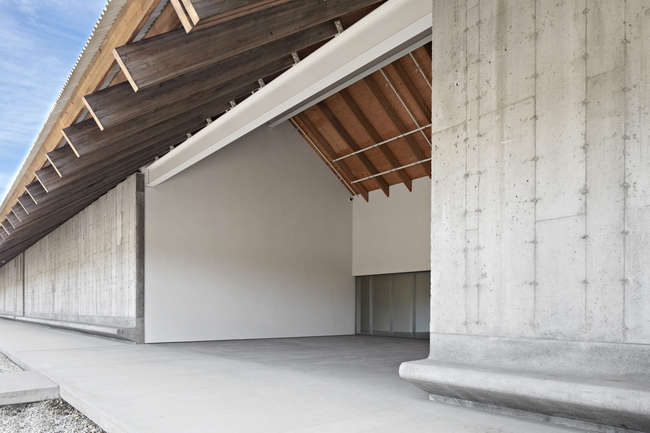
After writing the article above, I’ve found numerous publications siting how Architects can budget with materials. For example: Use cheap and recycled materials! by Parrish Art Museum by Herzon & de Meuron
To keep costs down, Mergenthaler used the pocked and craggy concrete that covers the museum’s long exterior sides after seeing similarly rough walls in a local basement. The scruffy character of the mottled concrete keeps the vast expanses from looking monotonous. “The thing that you really engage with first has to have a presence, a solidity, and a character,” says Mergenthaler. “It’s not just cladding.” – Article in Architecture Record by William Hanley