Categories
About Me

My Journey to Scrivener

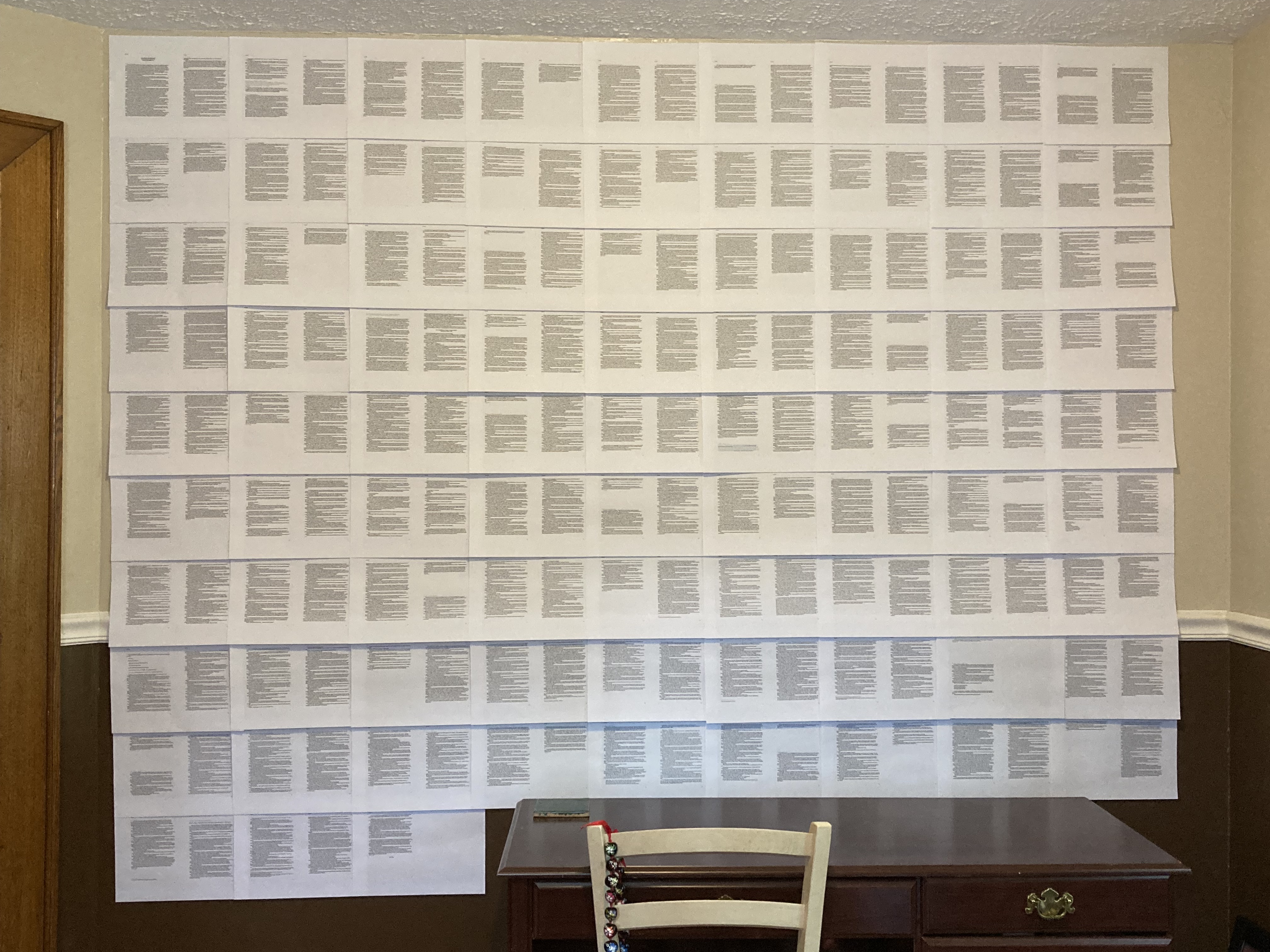
I started THE ARCONE by writing freehand. I’ve passed hundreds of hours journaling, and my heavy bookshelves are paying the price. I also began THE ARCONE as a pantser, meaning I was writing the book by the seat of my pants, and in the end, I’ve written enough for three novels. I’m plotting my second book.
I write more than fiction, though, as evidenced by this blog, I’m passionate about sustainability, drawing, and architecture. Academic writing and notes on the edge of a titleblock sheet differ significantly from the scene-setting prose I’m drawn to while crafting a book about 19th-century Florence, Italy.
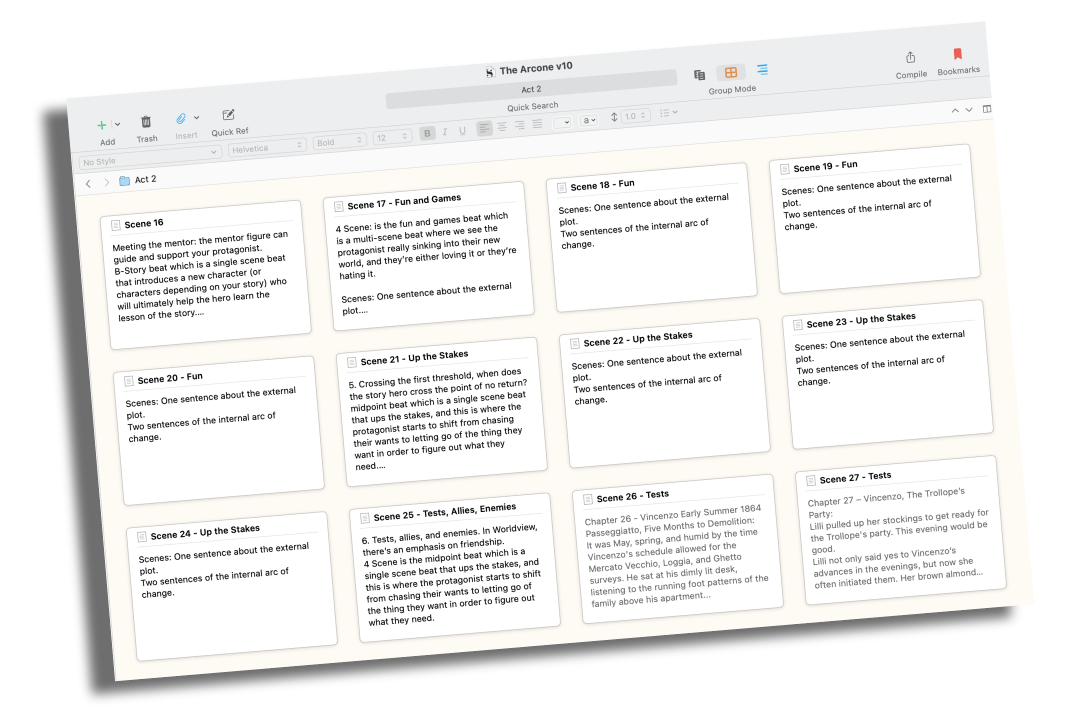
What finally made me jump from handwriting to microsoft word, and finally to Scrivener, was the advice from other writers. I also realized I could have chapter cards at a glance instead of making my guestroom look like a crime scene pinup board.

Categories
About Me

Drafting Invisible Cities in Revit (Part 2)

Inspired by Italo Calvino’s book Invisible Cities students are asked to sketch an imaginary city then draft it into Revit. (See the Invisible Cities Part 1 Video.) In this Part 2 video students learn how to develop a Construction Document Sheet Set with the different views required to understand their invisible city interpretation.
Categories
About Me

SketchUp – Lecture 4

Learn about how architectural students in West Virginia, USA are asked to think about formal ordering such as Axis and Symmetry through Michelangelo’s Campidoglio. Then, apply these same concepts to draft Calatrava’s Science Museum at the City of Arts and Sciences Complex in Valencia, Spain. Learn to use Google Earth to measure the Science Museum and develop the structural-rib envelope of the museum. As a beginner to SketchUp you can create a complex structure with simple SketchUp tools.

Categories
About Me

SketchUp – Lecture 3

Learn to draw the Golden Ratio with Sketchup. Use Le Corbusier’s Modulor man to inspire furniture dimensions too.
Categories
About Me Architecture

The Profession to Academia

I am fortunate to have been offered a teaching position at Fairmont State University last fall.

Live the life you want to be living, and this will become your life. As I wanted to become a better architect, draw more, and allow creativity into my daily practice, I found this opportunity to grow through academia. This semester I am teaching both freshman and seniors, who in four years have different expectations of their work. They approach the work of creativity by different means. Freshmen are getting comfortable starting a process, of drawing for example, without knowing what the end result may be. Seniors may be expecting something of their project result, and may want to reach the end too quickly to be able to present a final project during critique.

It makes me wonder about the profession as a whole, teaching students of architecture to work in a profession that doesn’t lend itself to much exploration through the process. The idea of architectural service is becoming more engaged in the voice of a large community. Architects are more collaborator than singular practitioners. Where does this taught ability of exploration find itself in the professional world? As an architect who has been managing large projects for the last few years, my role in the office has become one of a coordinator, and not a person who produces the work directly by drawing. I engage others to draw, explore, and build the set we will use to bid and construct the project. Collaboration means that a lot of time is spent emailing to remind consultants, calling the owner to keep the lines of communication clear, organizing and hosting 5-hour long phone calls so that all of the designers (interior, graphic, landscape, mechanical, electrical, plumbing, energy consultants, etc.) may be listening to one another in order to work together. It is not the work I was doing to get my degree. In a communities’ mind, the value of an architect has shifted. While we have an understanding of code compliancy and structural limits, the value of providing a built aesthetic is waining.

As my position of being an architect changes, new opportunities present themselves. Instead of only offering a service as an architect, my perceived abilities now include teaching architecture. How lucky am I to get back to the source of my interest? My research process includes reading, writing, and drawing. To share this with people of different perspectives is a joy. In the next week I will be discussing Smart Cities with the senior students of Fairmont State University. This is in response to Architect magazine’s article here. What is a Smart City to you? Does it include more or less of the available technology we have today?

The process of finding that architecture school teaches a student is a valuable life lesson.

Categories
About Me

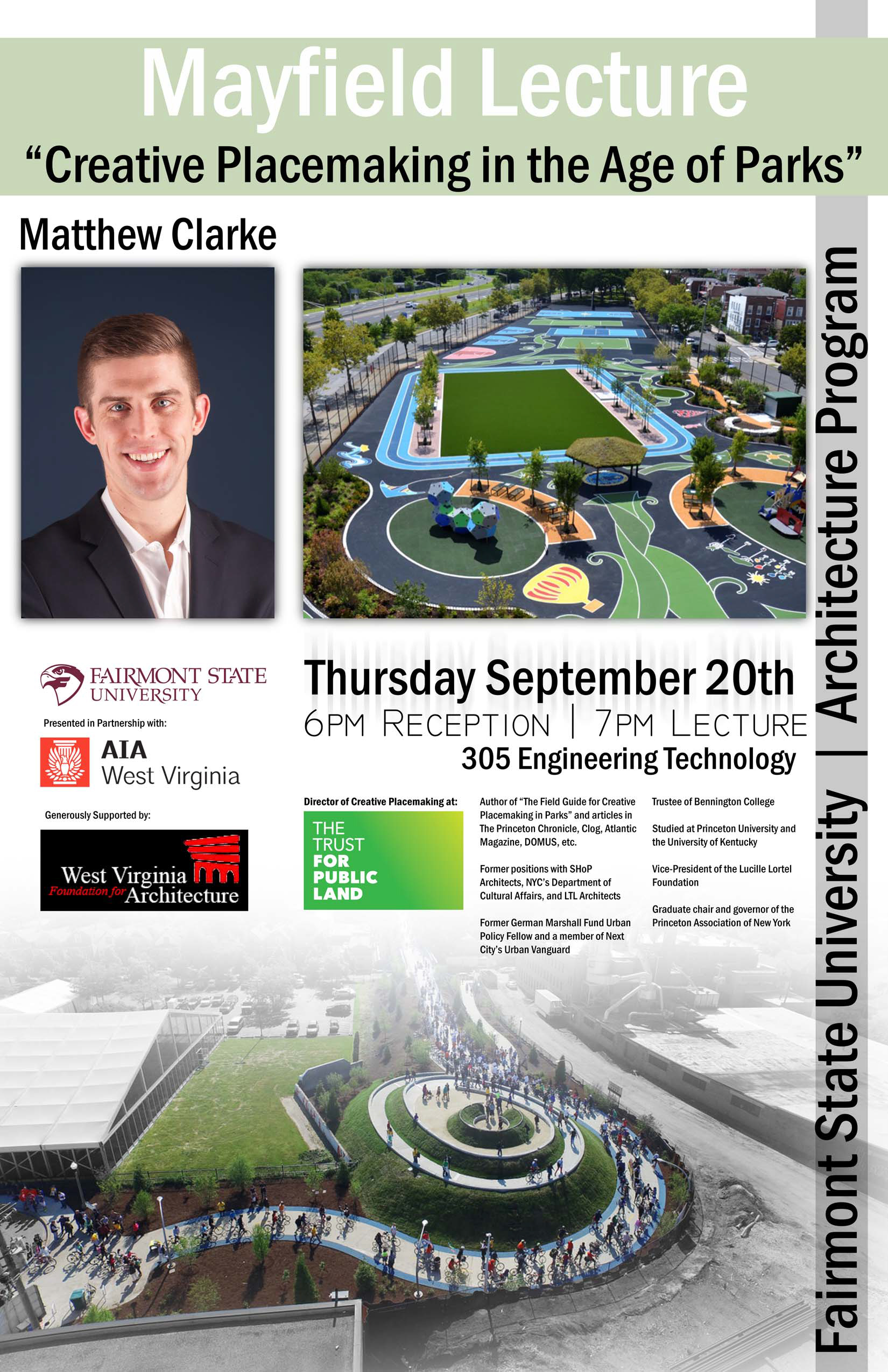
Mayfield Lecture 2018

2018 Mayfield Poster 2018-09-11.jpg

Print your own to share: 2018 Mayfield Poster 2018-09-11

Categories
About Me

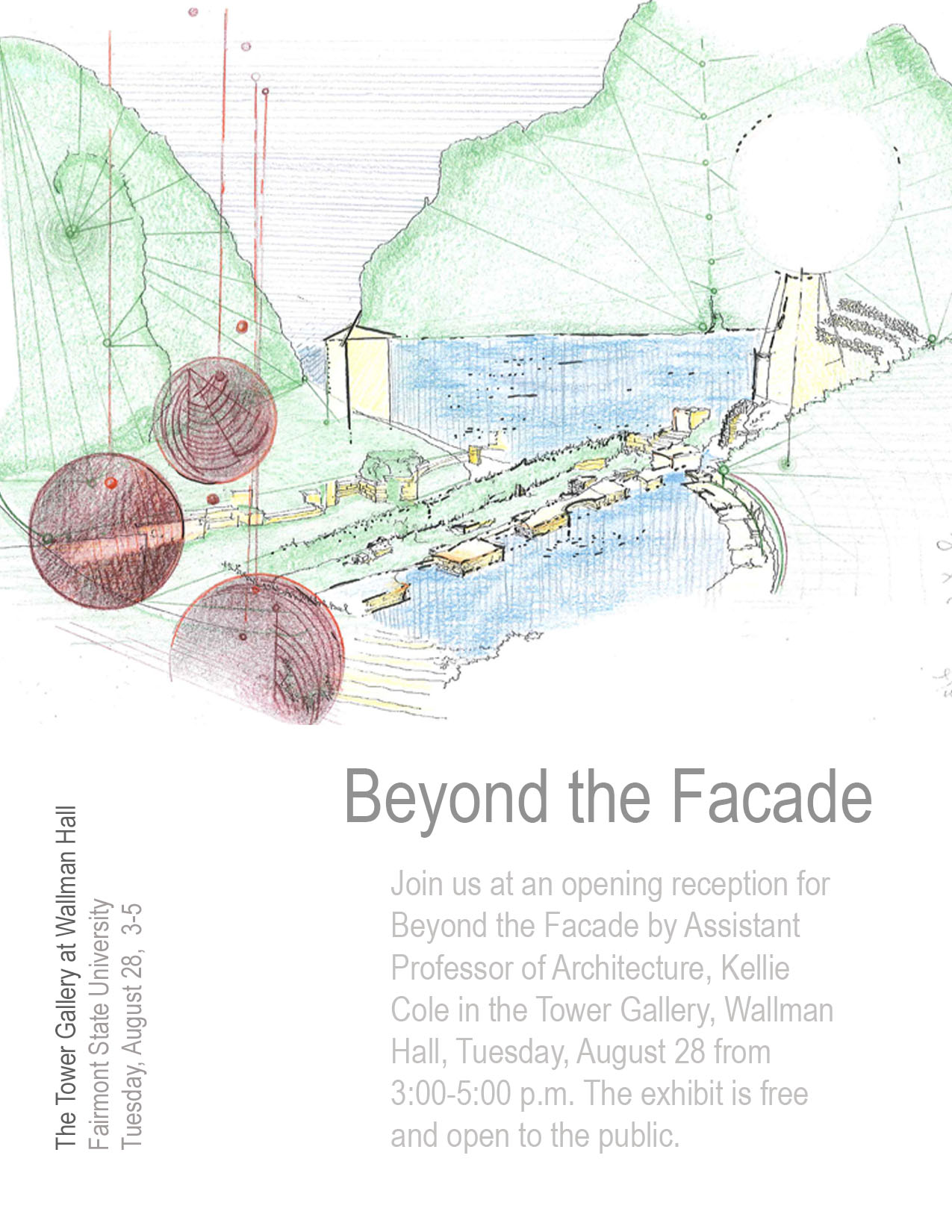
Beyond the Facade

Rendered drawings completed during European travels will be on display at the Tower Gallery (Upper Level of Wallman Hall) at Fairmont State University for the next month.
Beyond the Facade3
Find additional information on the Fairmont State Visual Art Department’s Facebook Page.
Categories
About Me Architecture

What should Architecture be?

IMG_9625.JPG

What should architecture be? What should I be as an architect? The class discussion about Le Corbusier required that I define something for myself!

The more I learn about how to be a better person, the more I believe everything I do should relate back to the same thing. When my family traveled in Italy in 2014 we took an 11 o’clock taxi ride to our hotel outside of Venice. The three miles was something like 30 euros, a rip-off, of course. My mother was upset and when she demanded an explanation the cab driver simply handed over his laminated ‘terms and conditions’ sheet. My family then decided that we all needed terms and conditions of ourselves and that declaration has been with me ever since.

So, with the task inspired by Le Corbusier from an architect’s perspective and my belief that all things in life relate, I’ve drafted the following.

I must try to write every day. Language relates my actions to my beliefs. Sometimes not until I write, do I fully understand what I think.

Help others.

Reading and writing influence my work.

Everything is better with a good cup of coffee.

Authentic experiences must evolve.

In architecture, there exist inner and outer forces, meaning that there is the way people want to use a space, and the conditions of the site, culture and area in which the project exists. I’ve started a chain letter to a colleague that describes how I start a project, and I believe the next step to understanding the conditions of project is to evaluate the materials with which one is to be working with. Then, the structure, something holds up and together a project, and then the infill may be allowed to be more fluid.

Homes are for eating, cleaning, sleeping. Beyond the home there is work, social interactions, and commerce, everyone sharing their work. I need to develop my thoughts architecture beyond the home.

All things great or distressing become better when they are shared with someone else.

Live life how you believe you should be living. (What you identify with, you become. – from the Deepak Chopra meditations.)

What are your ‘rules’ of life?

Categories
About Me

A Cairn in the Backyard

I woke up this morning to a new landmark in the backyard. P spent yesterday afternoon building new beds for the fall planting of azaleas, rhododendrons, and our very first cairn.

October 2015 Foggy Cairn backyard

Categories
About Me

Take in October 2015

Fall time with the low sun, the crisp mornings and cool breezes throughout the afternoon, October lets me see the world around me with fresh eyes.

Some images from home:

IMG_0076

Out of a stump

IMG_0085

The Front porch