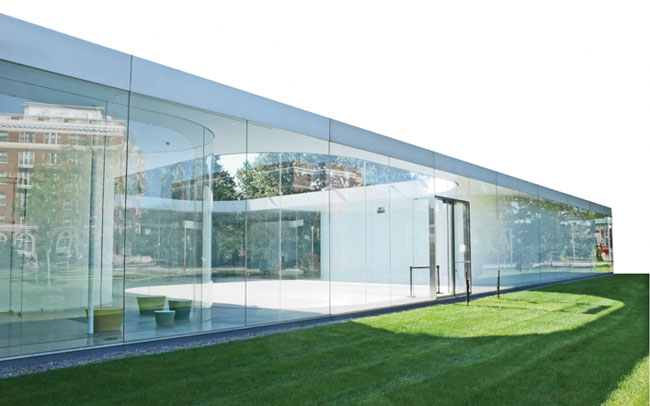
Architecture Record’s recent article Hot in Cleveland explains how the heart of the U.S. is still beating.
Also, kudos to Kelly Minner who now writes for Arch Daily! Check her out at
 Passive Architect
Architecture Record’s recent article Hot in Cleveland explains how the heart of the U.S. is still beating.
Also, kudos to Kelly Minner who now writes for Arch Daily! Check her out at
Welcome to Italy, my secret garden, iron gate doors, cobblestone courtyards, skinny women in tight black clothes.
In Como… Circling storms around the Duomo covering empty space, tourists with an agenda to experience, supporting Italians working to serve them their pranzo, lunch.
Hot spot candles melt in the dark cathedral. All the people bring in the street and the sky with their shoes. The wax collects as more and more people pray for their diseased. The echoing air cold and colorful by the only light between the clouds. Because it is apart of my unscheduled day.
Bologna, Italy… We are in the city of vaulted archways, a city of hallways and interior courtyard lives. The porticos, for which the city is famous are pedestrian covers from the rain and sun.
Students in this ancient city commune in the few piazzas for a Friday evening to defend their scientific thoughts.
Today we may climb the 4 kilometer portico of San Lucca. It is near the Italian Football stadium.
Across Italy, and most prominent in Padova Italy where the students are, there is a fashion crisis jumping back to the 80,s! American T-shirts, tight black, green, turquoise Jordache jeans ending with their very popular Nike tennis shoes. Tennis shoes that are hot pink, orange and blue. Away from those pegged pants are the Bologna dressers. Dressers dressed in vacation, buttoned up linnen dresses, scarves and pretty sweaters. I read Walden under a lunch portico, below an old and crumbling brick sidewalk and watch the city of peole for an hour.
On my drive to work today a friend and I discussed progress and balance. How do you judge your progress? Is it accomplishing your daily plan you set out for yourself each morning? Is it taking the time to accomplish your resolutions, exercising more, knowing what you eat, doing something creative everyday? Is it knowing what makes you happy? I know that writing, drawing, reading, traveling, attending lectures and deep conversations make me happy. So, why is it that in the pathway to progress my tedious work gets in the way? I love design work when I can dream of how to make someone’s living space more efficient, more beautiful and usable for them. I enjoy making three-d models, choosing local and sustainable materials, and presenting my findings. I enjoy searching for inspiration and then adapting it to my use.
My friend and I discuss the fun things and why these things are sometimes left to last, after the running around appeasing meetings, instead of focusing on the tasks that we know make us feel we measure up. Maybe it is the way we perceive what we should be doing, or hope of ourselves to accomplish. When the day turns out differently we need to focus on what we did accomplish and not judge ourselves negatively on what we did do. It is about having the confidence to know you did your best, and your best is different from what you thought it may be in the beginning.
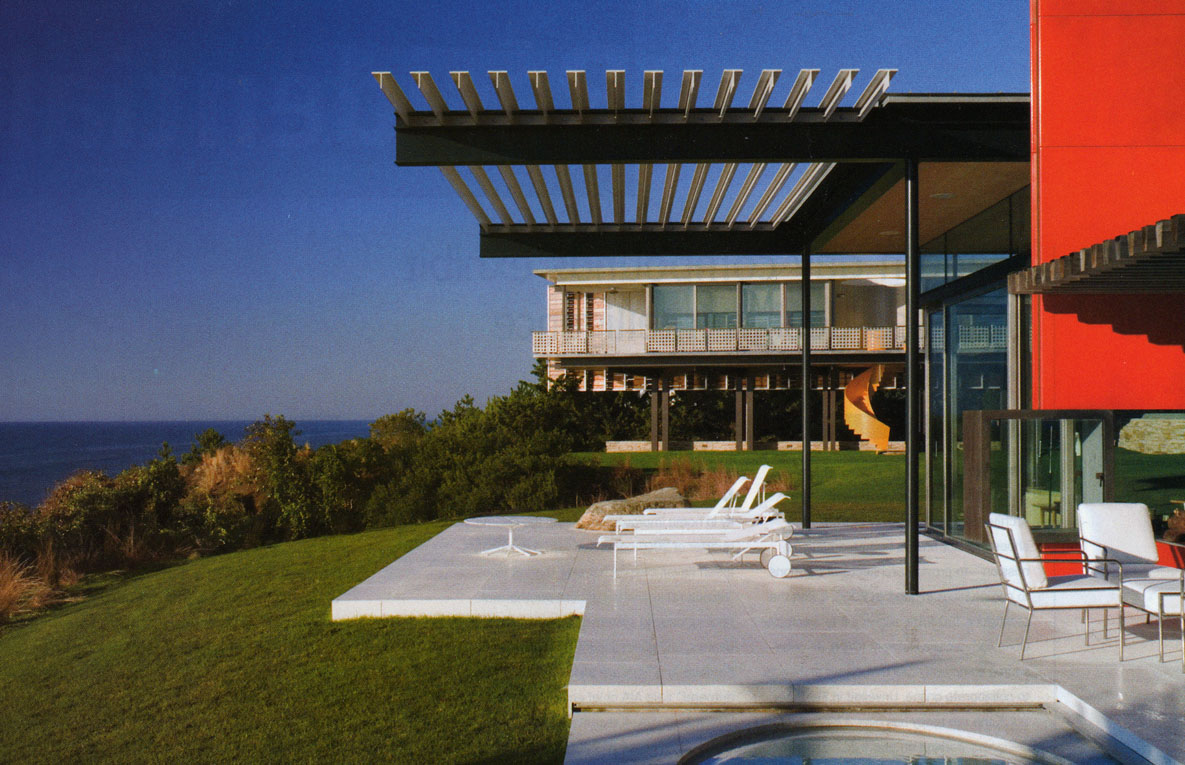
I took half an hour to write this morning on the image below and let my mind wander.
Architecture Inspiration

Outpost, Olson Kundig Architects in Architectural Record
Designed for an artist and designer, this house in rural Idaho uses rectilinear forms and simple materials to create an elegant, spare composition. Worked on haltingly over a protracted, 10-year development period as the owner negotiated with zoning boards, both at her previous home and the new one, the design was pared down further and further until only essential elements remained. Built to withstand the extreme changes in temperature in this harsh region, the house’s steel frame, concrete-block exterior, and interior exposed wooden joists all portray the design’s toughness and show the means of construction in their roughest form. Eleven-foot-high walls extend out from the house to create a long garden, where the client has planted rosebushes, grapevines, and fruit trees. (text from Architectural Record)
This projects reminds me of Carlo Scarpa, who built busy concrete volumes over Italy’s country side. In the Brion Cemetery Scarpa uses the concrete form to step over a still pond, invite you into a door, and cover the dead. He raises an altar and glazes tile on two interlocking circles made of thin shadows against the venetian sky, and bordering landscape slits.
My husband and I will be traveling to Switzerland and Italy in 16 days! For our month-long honeymoon we will be flying into Zürich, hiking the alps 4-8 miles per day from mountain town to town, taking a train into Italy ten days later, heading to the east coast to see Scarpa’s Brion Cemetery and Venice, traveling by train to Bologna and nearby cities, hopping on the train again to get to Florence for an evening before renting bikes to ride the Chianti hills of Tuscany. Our trip will end in Cinque Terre before flying out of Milan. We’ve put a lot of research into our trip, setting aside time for Italy dates every week or so for the past few months.
Thinking about Italy, architecture, inspiration, my work, travel, a new language, the happiness project along with my resolutions and continuing to train for the Sprint, Splash N’ Spin this weekend has left me in a full state of mind wanting to write more about the balance I am to be maintaining. It is a good thing I have a month in Europe to reevaluate and write. I think we all need a break in monotonous days of work, work, work, and cleaning the house. We all need to take an hour for lunch to sit by the river and be quiet.
Did anyone see Mockbee’s PBS special last night? I haven’t seen it yet.
Sam Mockbee, the architect who worked with Auburn University to create Rural Studio is highlighted this month with a new film airing on PBS. The Butterfly House is shown above.
As architecture in the computerized world comes farther from hands on experience, Mockbee taught his students not only how to construct, but that the profession of architecture could be a humane endeavor to aid the human spirit.
In the rural setting of Hale County, Alabama, students have worked over the last seventeen years to try and create a better life for residents who would otherwise not have the ability to live in architecture.
PBS runs, Citizen Architect: Samuel Mockbee, on August 23rd, a film I cannot wait to see. Zack Mortice writes a full article here covering this and the life work of Samuel Mockbee.
How an Architect can help you See
What did I do all day yesterday? I worked on an image for a client, developing a model in Sketchup, and created a three-dimensional building that I superimposed in a mountainous, old main street somewhere in West Virginia. It took me about two days to do.

The next thing to do is to begin rendering it. My husband has a saying about rendering… it’s coloring when you do it for fun, rendering when you get paid to do it.
Then, I woke up this morning dreaming about a bathroom renovation. I have started an Interiors Division within my firm that focuses on Sustainability. Having a lot of green research under my belt, and continuing to try to fit low VOC, reused, upcycled, local materials, labor and products, I have been itching to apply my ideas somewhere. Then, all of a sudden, I am hired!
I am renovating three existing bathrooms in one house. The home has an open, light and airy floor plan downstairs. Nice yellow colors with cobalt blue accents, large pillar candles sit on the kitchen table tucked behind a couch. The first bathroom is downstairs. The second and third are upstairs, with the slanted roof that feels like you’ve just walked into a bird’s house atop a tree. It is a little low, a little darker, so I am starting with an idea of opening the upstairs with light, and using the bathroom renovations to do so. I love being inspired by House Beautiful so I began to go through some of their bathroom photos and here is what I’ve come up with.
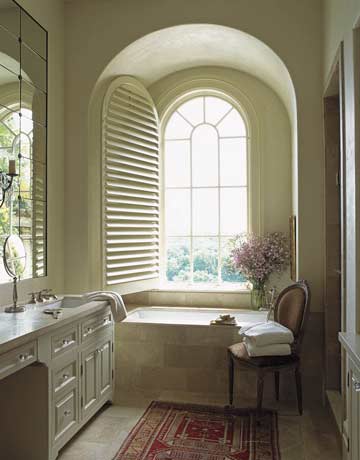

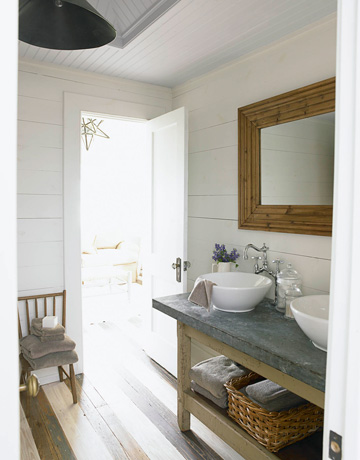
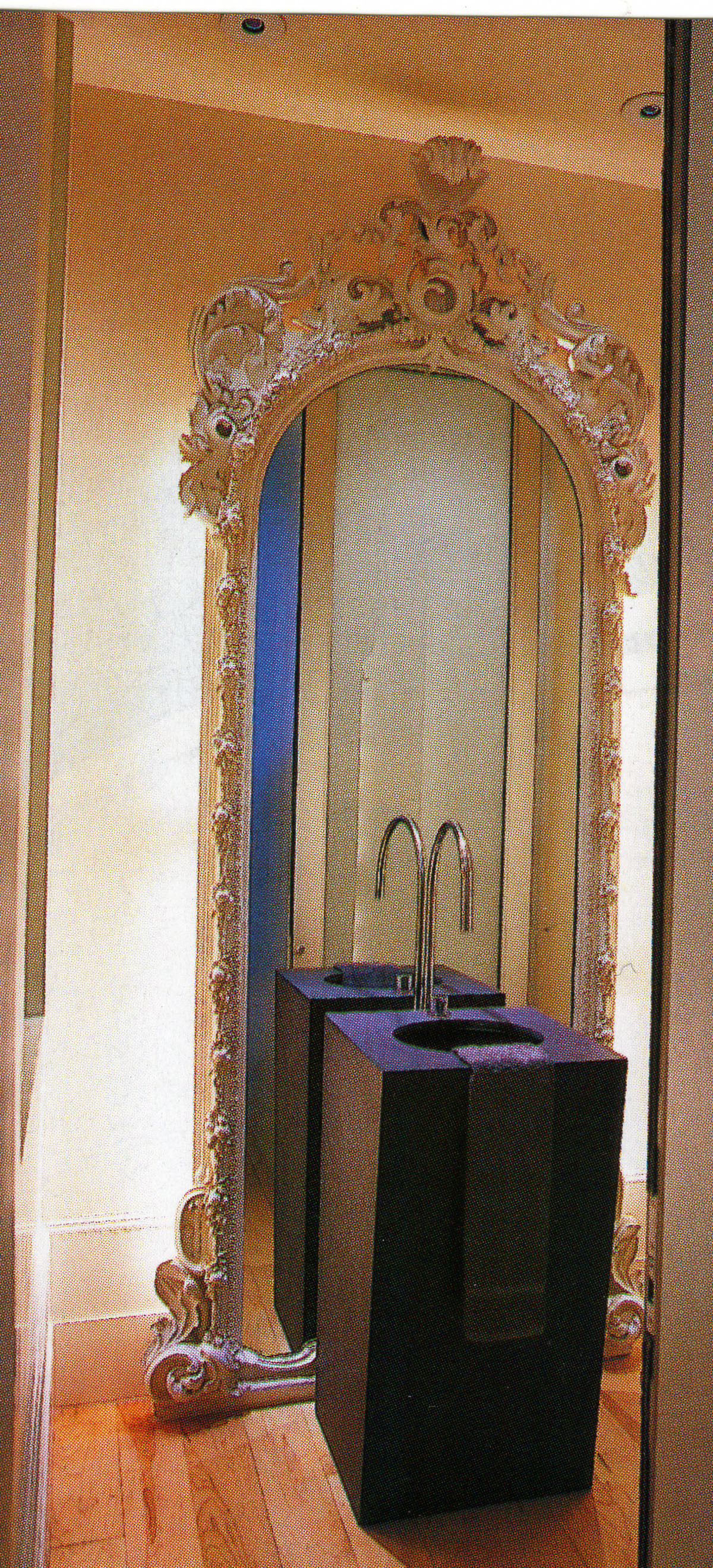
The client wants natural materials, and cannot decide if the two small bathrooms should be combined into one or stay as two with the option of being able to open up one to the other. Pocket doors, opaque windows, open truss ceilings with skylights or mirrors could do that. A funky light fixture or a sconce to brighten a corner could pull the focus to different places in the small rooms. Pedestal sinks with a continuous cantilever shelf above, fixtures that look like furniture, old stand alone tubs, open cabinetry, or a small armoire for storage. Updating a bathroom is an opportunity to introduce low-flow plumbing fixtures as well. I am going to propose a before and after water bill comparison.
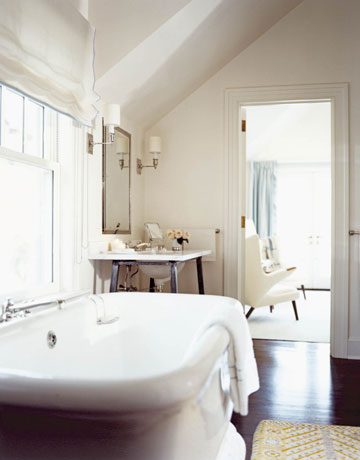
Where do you go for inspiration on projects? This dreaming stage is the most critical and the most fun. It is a small portion of what it takes to renovate, but is the direction of the project. The design idea should initiate enthusiasm to carry forward and prompt construction to complete it!
Beneath my resolution of knowing what I want to do lies the prospect of developing my Interiors Portfolio. Knowing steps to achieve this begins with knowing what I like. Every month when I receive House Beautiful I sit down to enjoy the magazine immediately. (Do it Now)
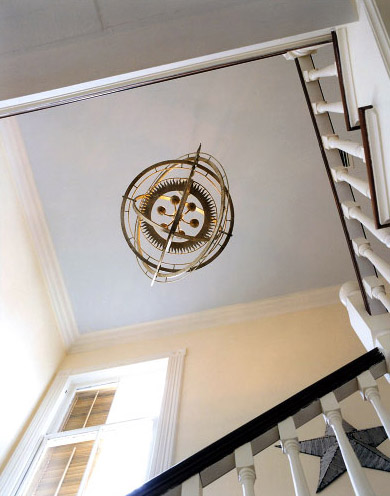
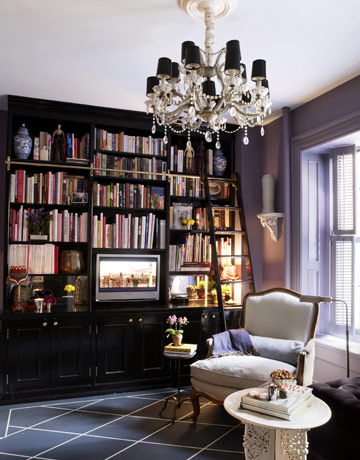
The July, August House Beautiful talks about the opportunities of ceilings. Colored ceilings, floating ceilings, light cove ceilings. (Like this ceiling by Malcolm James Kutner) Designers in the magazine described yellowed ceilings to create warmth, blue ceilings to imitate a sky, and since reading the article, I’ve been looking up. The six surfaces of a room all play a role in the intent of design.
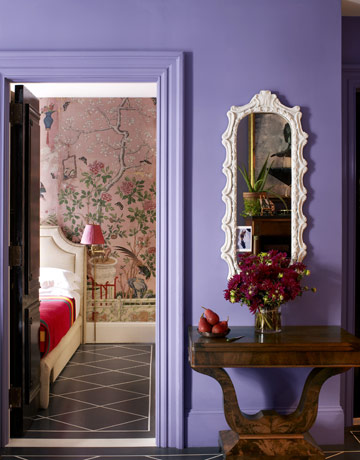
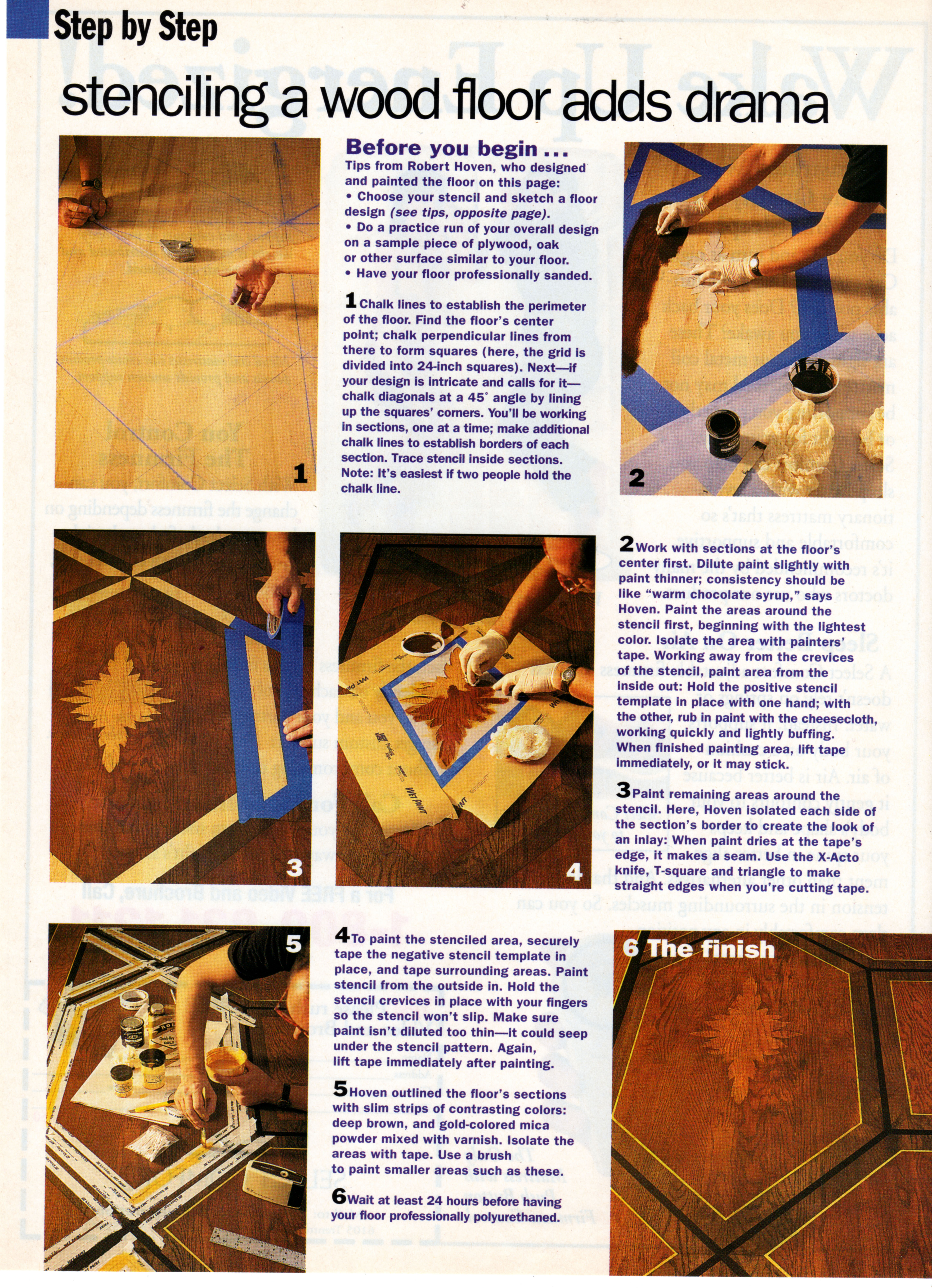
Check out the painted floor by David Kaihoi in his East Village apartment.

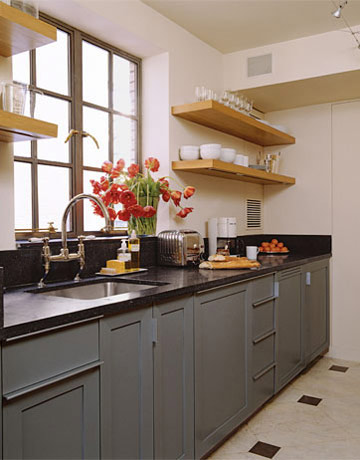
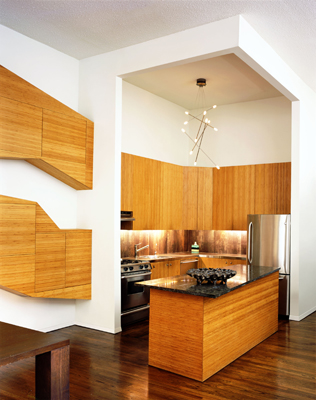
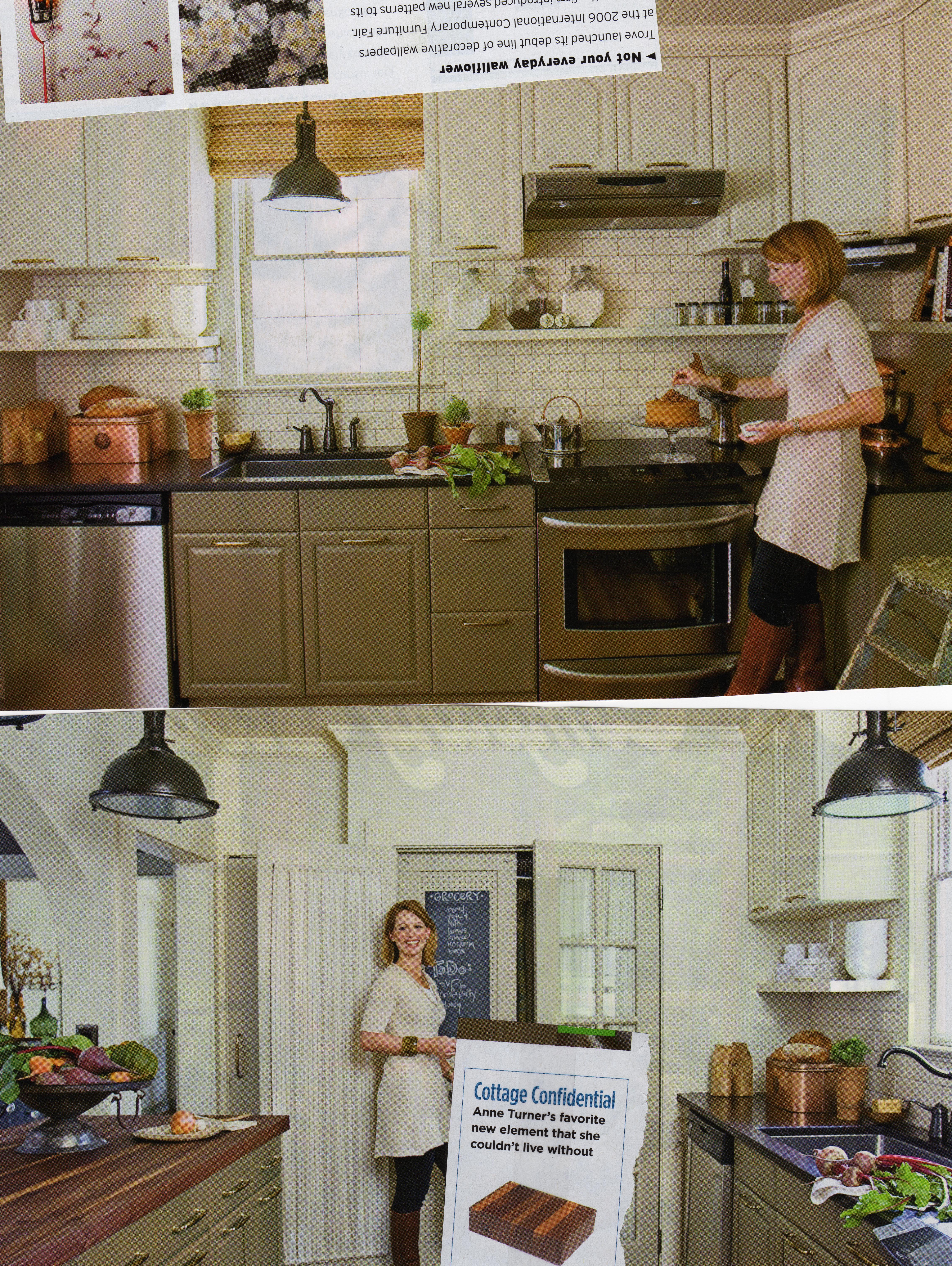
I am very fond of cantilevered kitchen shelves. In college with the limits of a small room to house a bed, desk and closet, I built shelves for my clothes in the place of hanging them in my closet, then stuck my desk into the nook for extra room. The kitchen of the month by Ruard Veltman is stunning, simple, efficient and clean. The shelves represent for me an honest expression of real life in a home. It expresses order and immediate use. It looks lived in and presents the idea for guests that they can be at home, seeing where everything they may need lives.

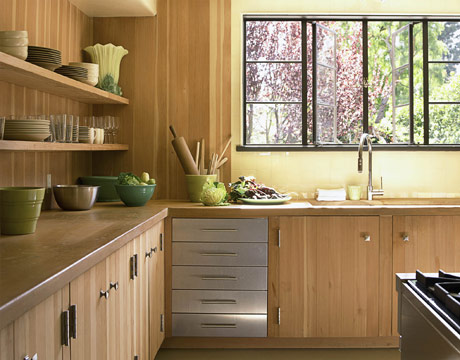
These next few images are other cantilever shelves in various designer’s kitchens.
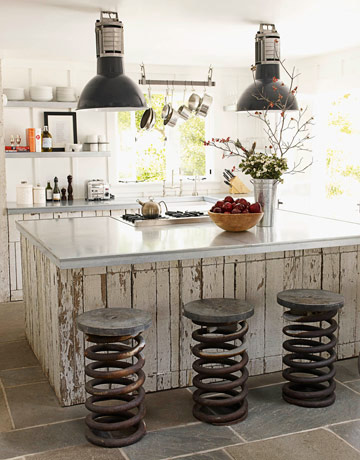
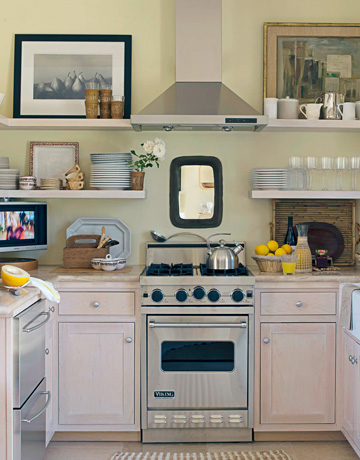
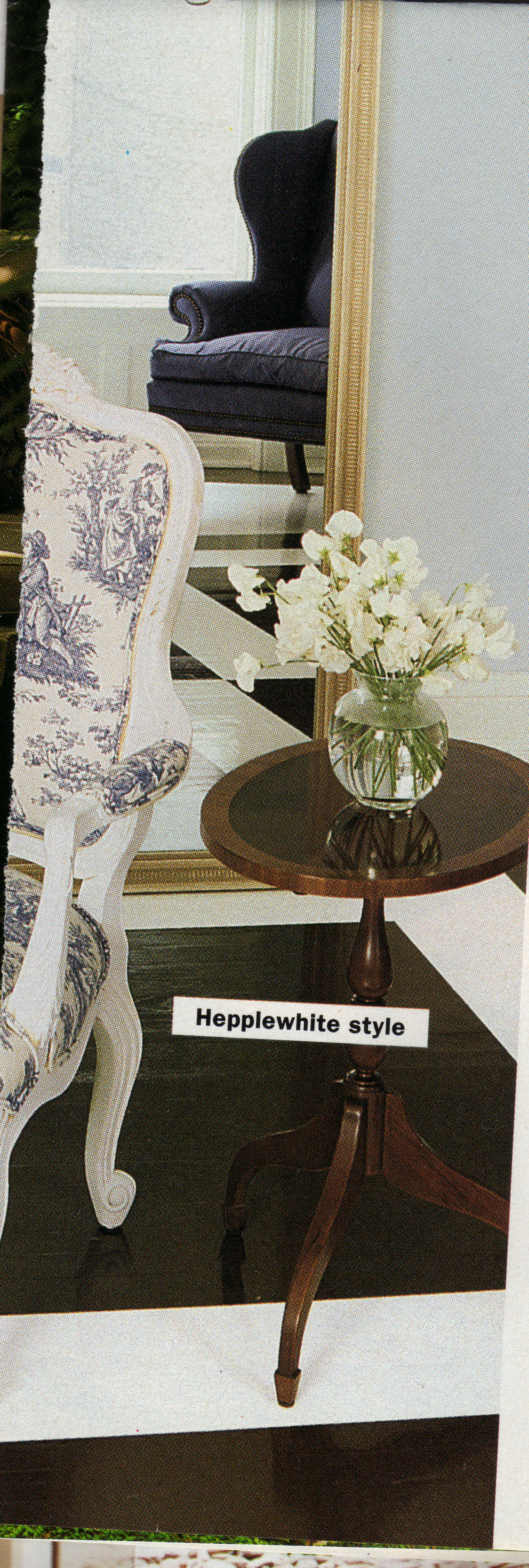
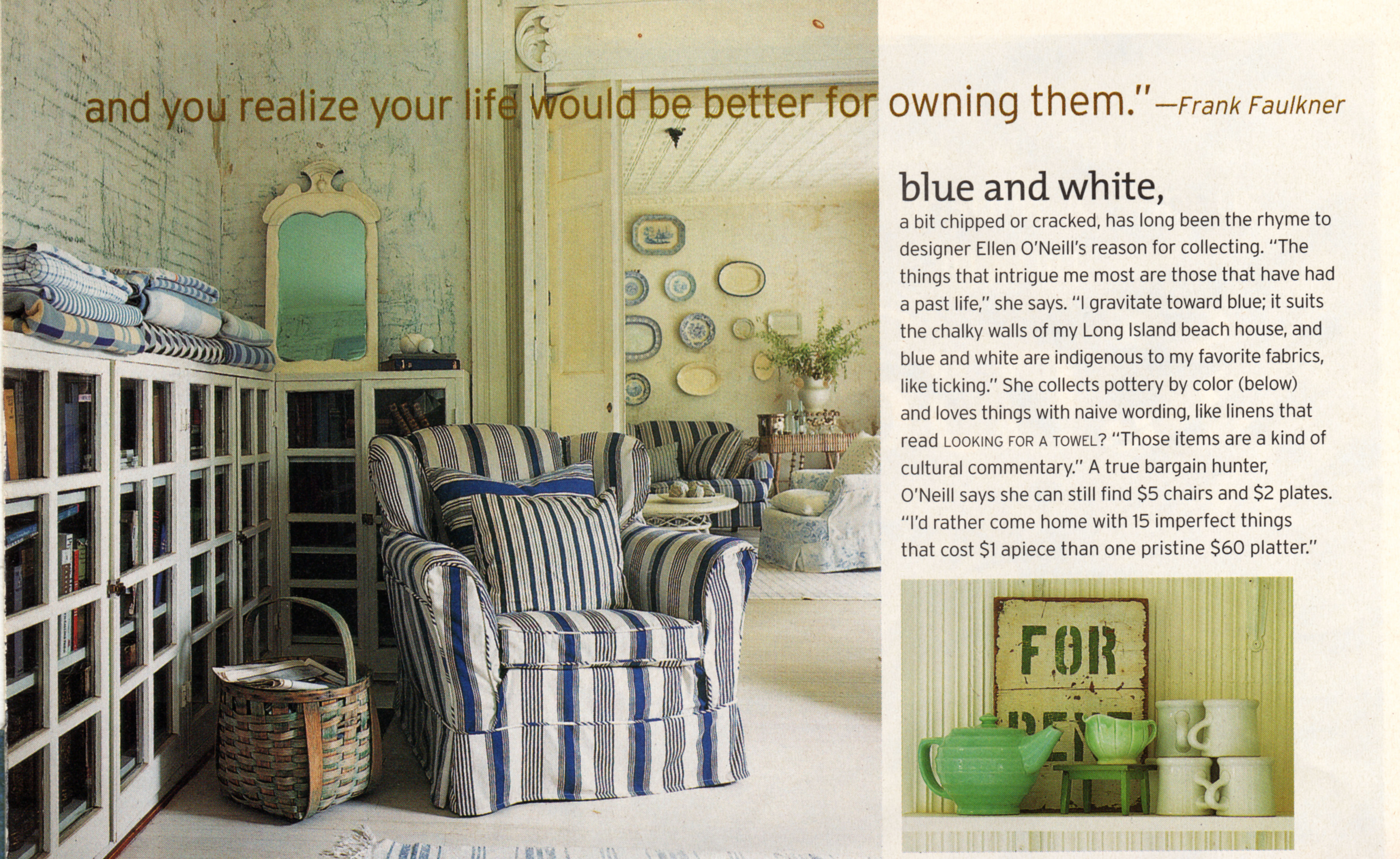
Why do Parisian styled spaces, large mirrors, white poppies and white cotton chair covers make me happy? Picture Ellen O’Neil’s space in Manhattan.

Other findings in my latest House Beautiful that relate to my search for sustainable practices in architecture and green products are below.
I came across PB Teen, a Pottery Barn company I think. While I can’t find anything about their environmental commitment, the designs of these great bedside tables make me want to commission a local furniture maker to replicate one of them someday.


Upcycled Accessories by Mothology.
Furniture made by artisans at McGuire in San Francisco.
Furniture by Bernhardt at Macys and Today’s Home in Pittsburgh.
Bath Mat of hand-woven vetiver root fibers by Gaiam.
‘We like to have the saints watching over us.’ Commented the groom’s sister. A weekend wedding in New Kensington Pa. A town full of marbled faces, happy family, italian babies and a celebration this weekend. 
The happy couple married in Mount St. Peter Church.


Mansion moved, brick by brick, gold fixtures and chandeliers. The marbles from India, Japan, China and Italy walked 27 miles from one mansion to the mount over the course of six months just to break ground, and begin construction.

The church is made from reconstructed materials partitioners moved from the Carnegie Mansion in 1940. The 60-room home, now the grounds of Mellon Park, still boasts some of the walled gardens and is open to the public. After the wedding ceremony the couple stopped by to take a few photos in these terraces.


In the spirit of a rich Italian heritage, the church has many gifts to commemorate past partitioners. Stone etchings, writings in the marble, poetically chant their names, peak from grottos above arches, bronze busts aligned in the oval circles encompassing the hill upon which the church is built.


A walk in the Mellon Park.


Check out this nice exposed aggregate walk into the University Club…landscape architecture nerds.

And a little fun to boot, dancing to Cityscape, a fantastic Pittsburgh band!
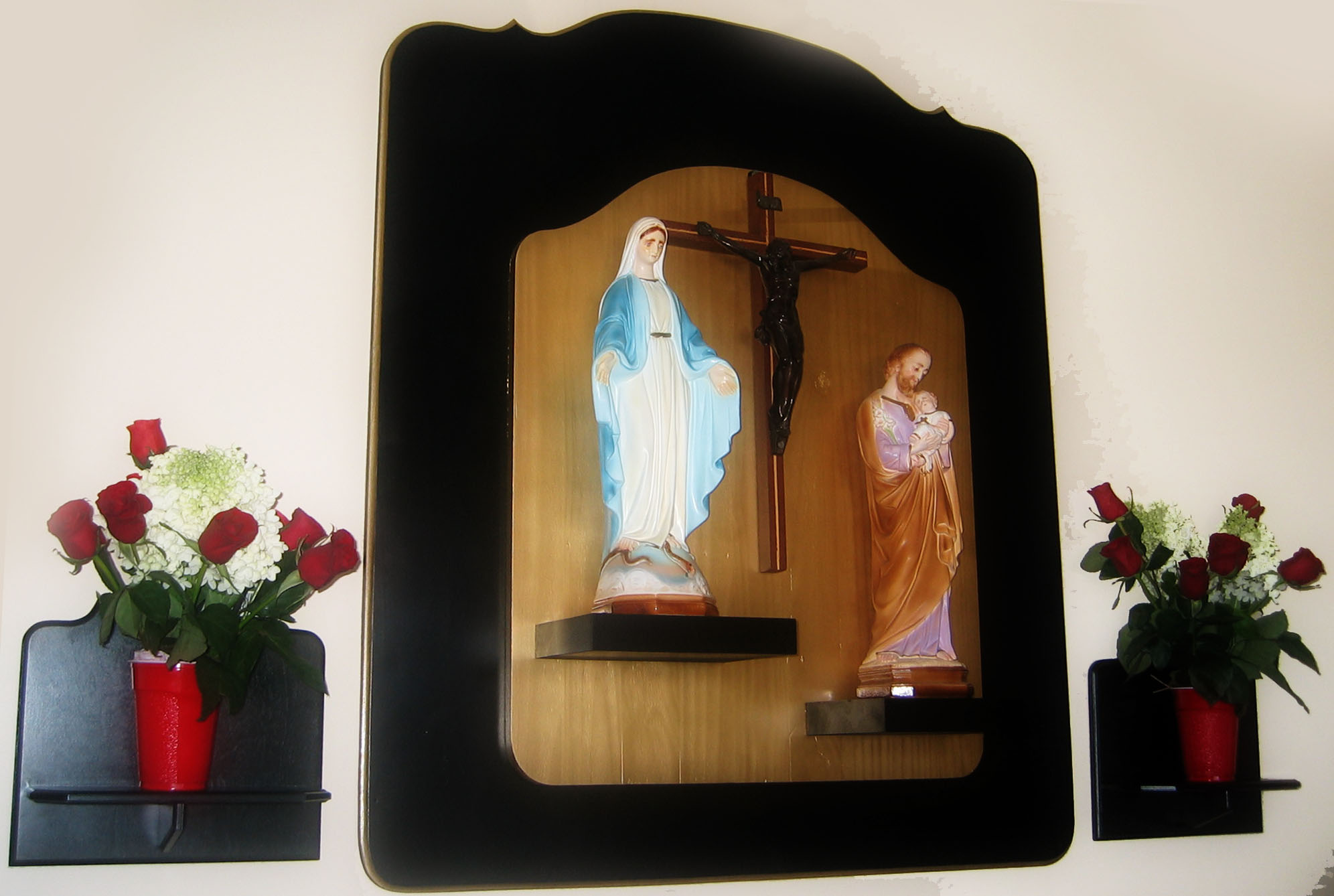
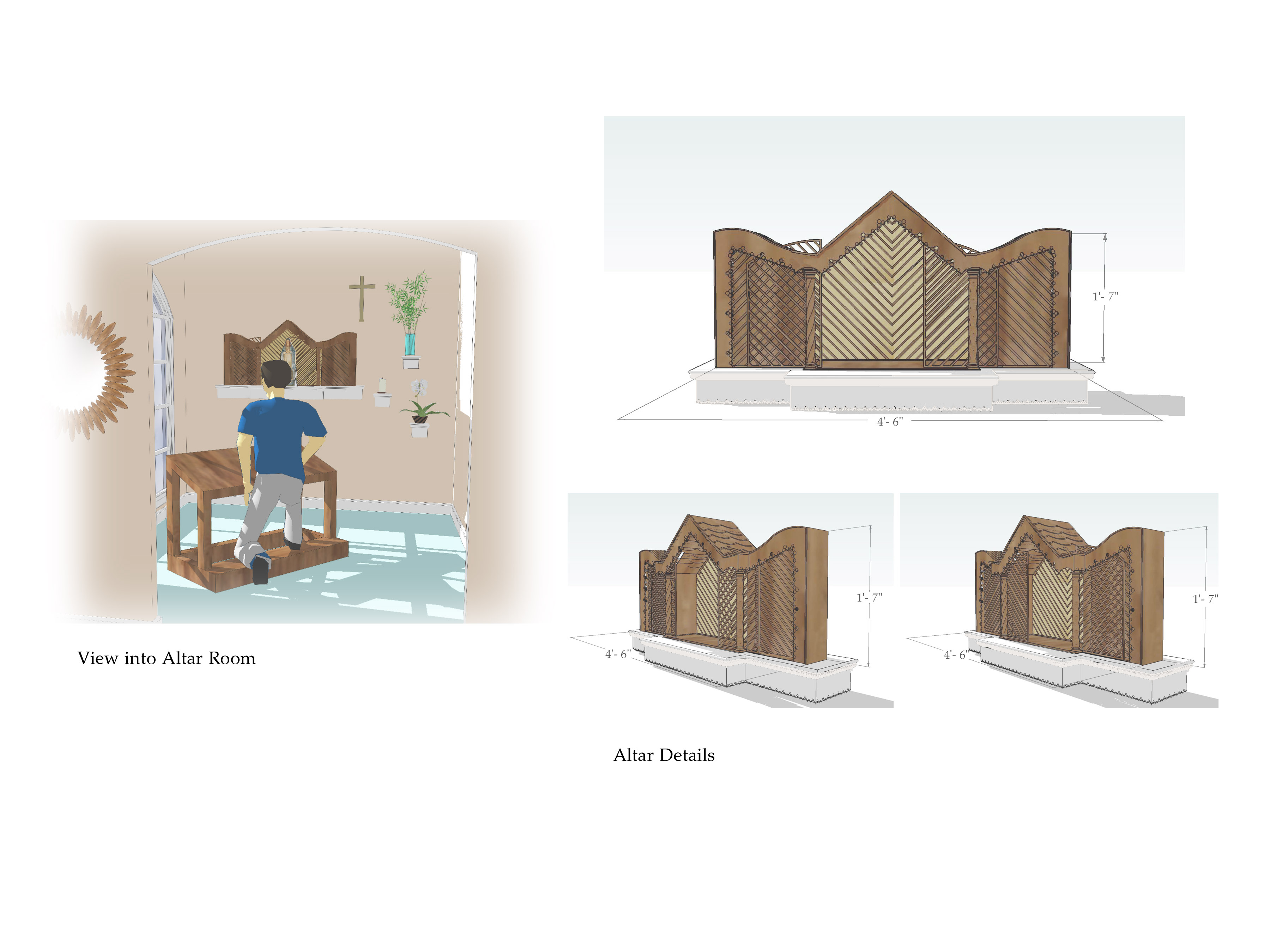
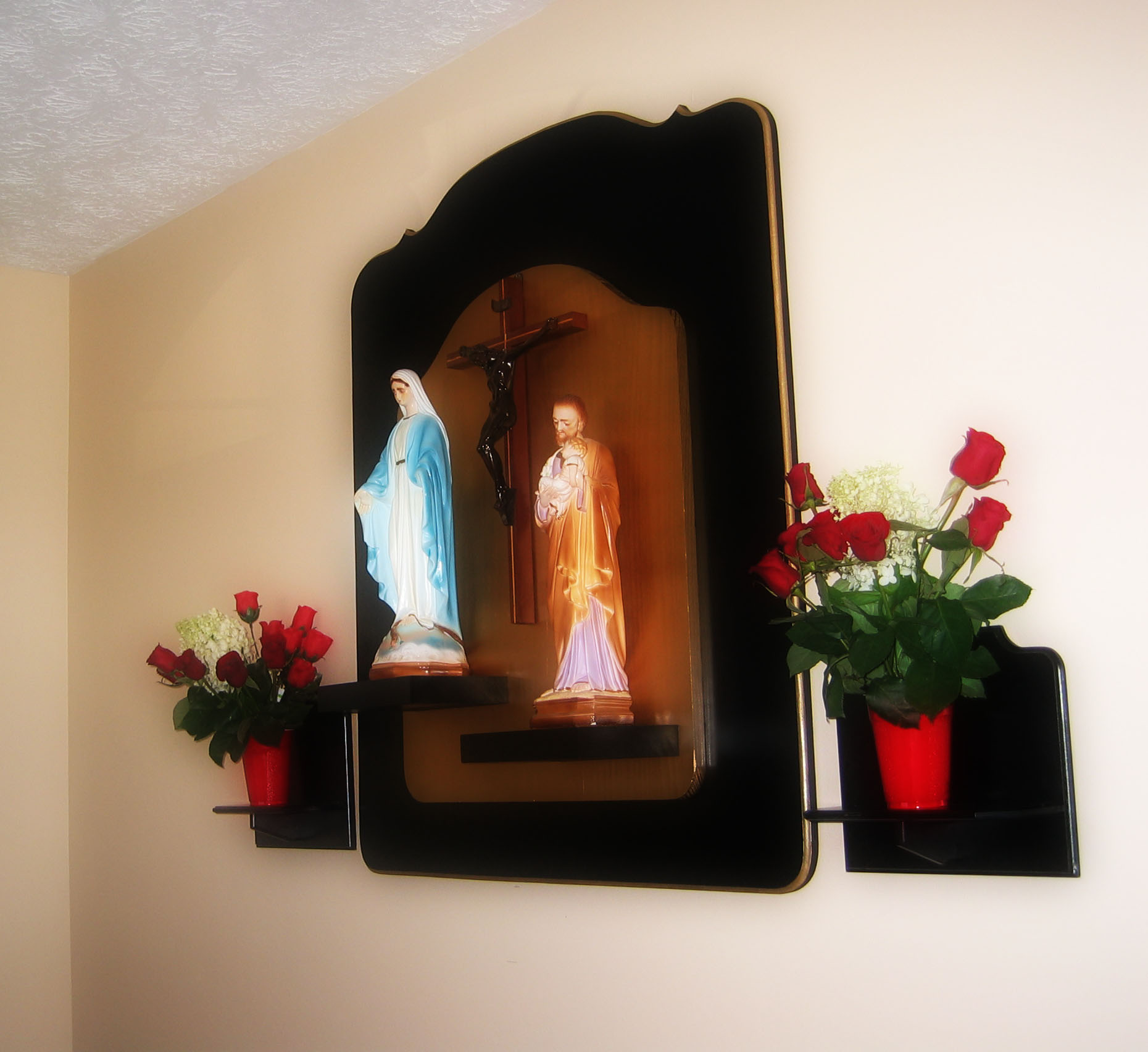
A client approached me with the desire for a home altar. After the inital design proved to be way too complicated a second one was agreed upon.
Then, voila! Paired with local carpenter Jeff who completed the second design then hung the altar in the home, we left a happy home owner to pray.
Blue Earth Design custom constructed the two adjacent shelves. I found the right Colorado craftsman through Etsy.

When I take vacation I try to draw every day. When I traveled abroad in 2002 I carried only a camera, journal and sketch book all day. In every day life and at my job it is a treat when I get to draw.
But what it is about drawing? Is it similar to my kinesthetic learning preference? I will not design creatively if I am producing in cad. In a production type job, where time is money and delivering in a quick fashion is what the client prefers, when can I allow myself the luxury of using a pen and paper? I cannot choose colors on a computer either. I cannot get a feel of a place or figure out a detail without jotting down a three-dimensional problem. It is like solving math equations in your head. It is just easier to write it down.
The computer is a drafting tool helpful for repetitive and square foot programming. But in a recent project, once I devised a plan that worked for the client, I printed it out, overlayed it with trace and began to imagine living in the space. Looking down the street, helped by the ability to walk anywhere in the world with Google street view, judging where the sun would be and how people could be served off of the street helped fit the design to its place. Then, once the day dreaming phases with my pencil were over, I relayed the design into the computer for the first run of documents.
Voila, the computer is used as the production tool, and I push drawing into this fast paced world of architecture.

What green initiatives are directed at Interiors? Positive indoor air quality, durable materials, local materials and production, upcycled products, and the aesthetically pleasing arrangement of these items to encourage a healthy lifestyle. A plan that responds directly to each site is important for the Interior Design as it relates to natural light, comfort, distinctively framed views, and overall wellness of the inhabitant with the land and surrounding community.
While being in the daydreaming stages of a proposed new job, I developed a presentation and directed the above new statement to the beginning of my cause; and that was to develop a design for the interior of a home that met with the strict rules of a Net Zero Home. The project goes on without me but is still alive in my thoughts. I am encompassed with the ideas that floated in and out of my mind as new clients, programs and experiences tend to, so, I decided to share them in writing. The setting for the new home is within a forest community. The site has a tall canopy of existing trees through which natural paths have formed. A grown-over right-of-way allows easy access to the nature of the site.
I have a philosophy of what a house is for. That is to eat, clean, sleep, work and play. In this project and others, I want to promote this in a sustainable, healthy, growing way. I pulled together inspirational images from my files. These images have a lot of character, they show the importance of texture varieties and together assemble a pallet that is right for each place.
I began to think of natural materials in relation to specific functions of a home and how these materials may change in relation to where the house resides. The materials should speak with the site, pull together and define places so that the inhabitants are aware of themselves and their activities.
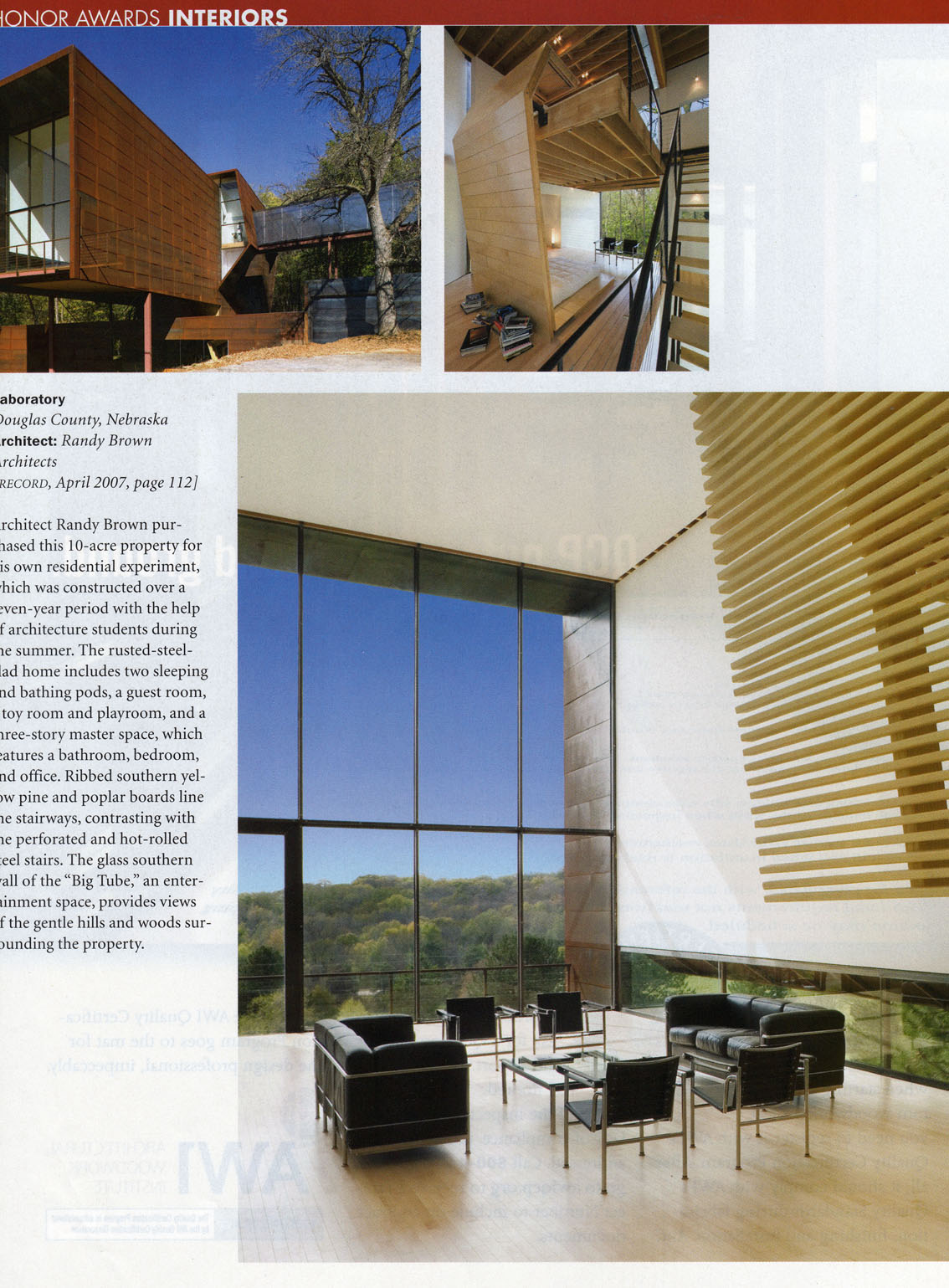
Light and view became a common theme as I critiqued what drew me to each image. Therefore, Light and View developed into a category.
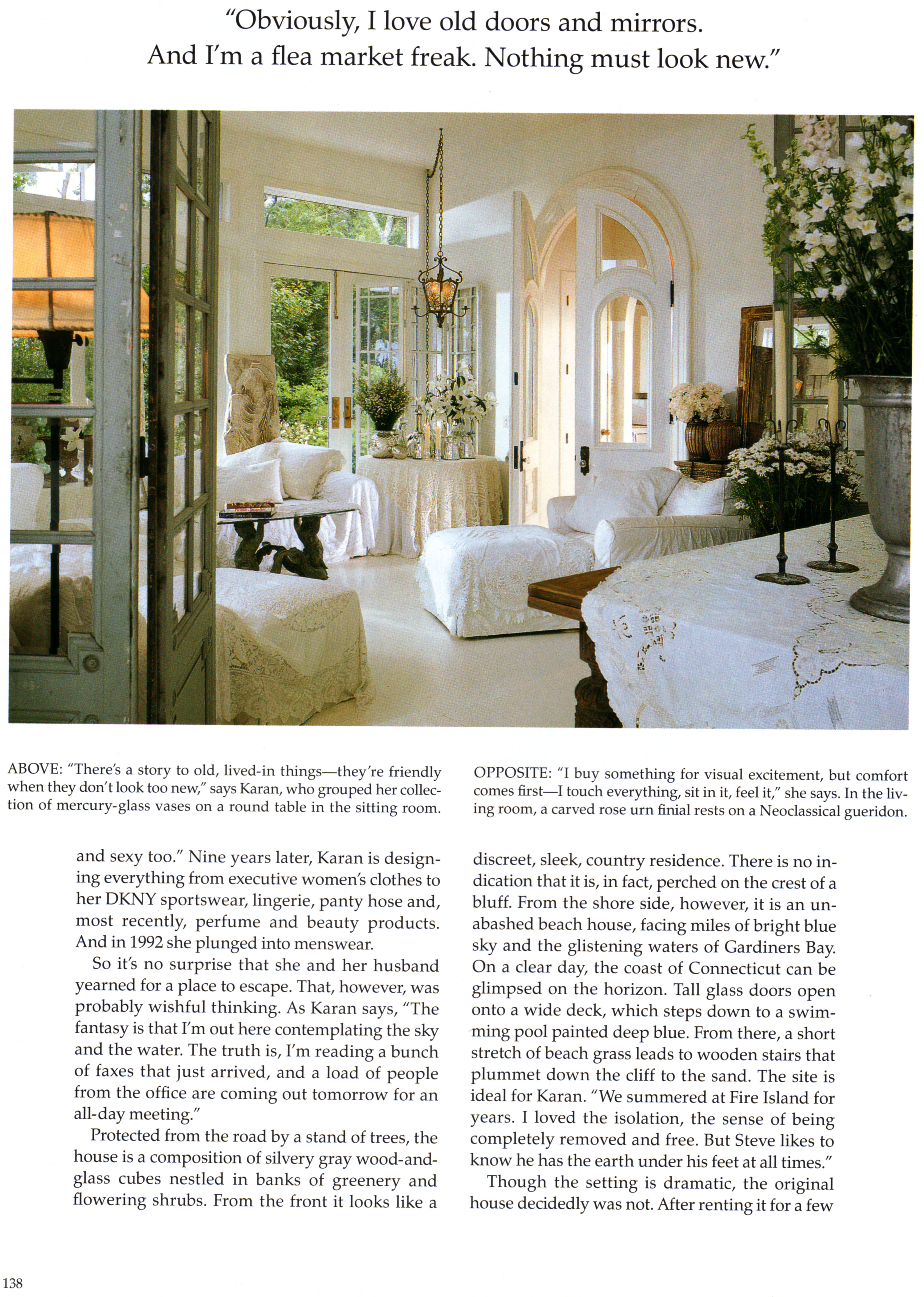
The limits of light and view shape spaces, they define a material arrangement around the opportunities of each room. A space may be open to allow light deep within the room, making the function of the room more versatile. Designs to incorporate natural light have high windows, and a specific percentage of floor area dedicated to translucent material.

Mirrors and light shelves are used to bounce the light through the interior. Natural light is important for work. Specific to a project in the mountains and woods would be particular attention to framing the views from inside and not forgetting the opportunity to frame a view of the interior from a path in the forest.

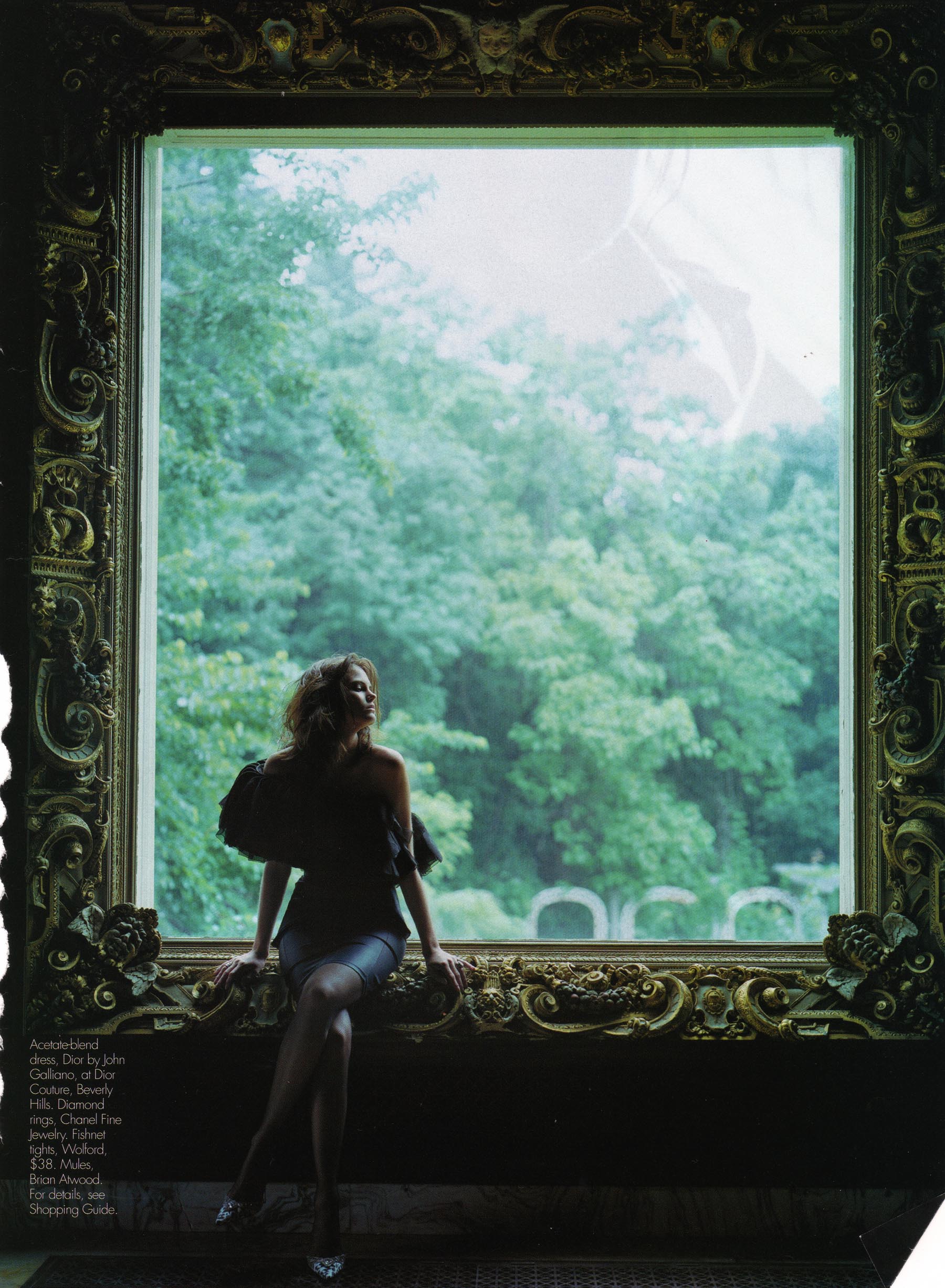


Lighting fixtures may be used to light spaces of course, but also may define spaces as well depending on their arrangement and size. Unique alteration of traditional things are playful such as the crystal chandelier in a modern shape.


Another focus on the images became the apparent ability of the place, the site, the home, to sustain oneself. Light and stone materials merged into this category together. Stone became the focus of sustaining comfort.
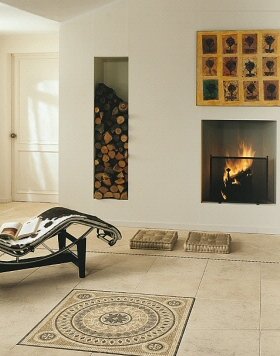




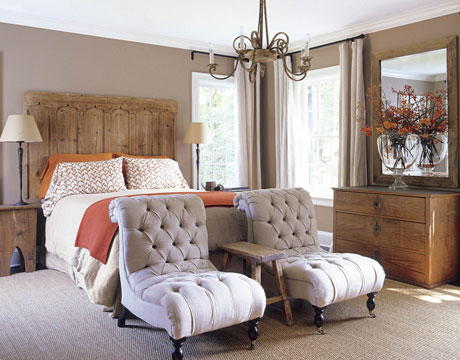
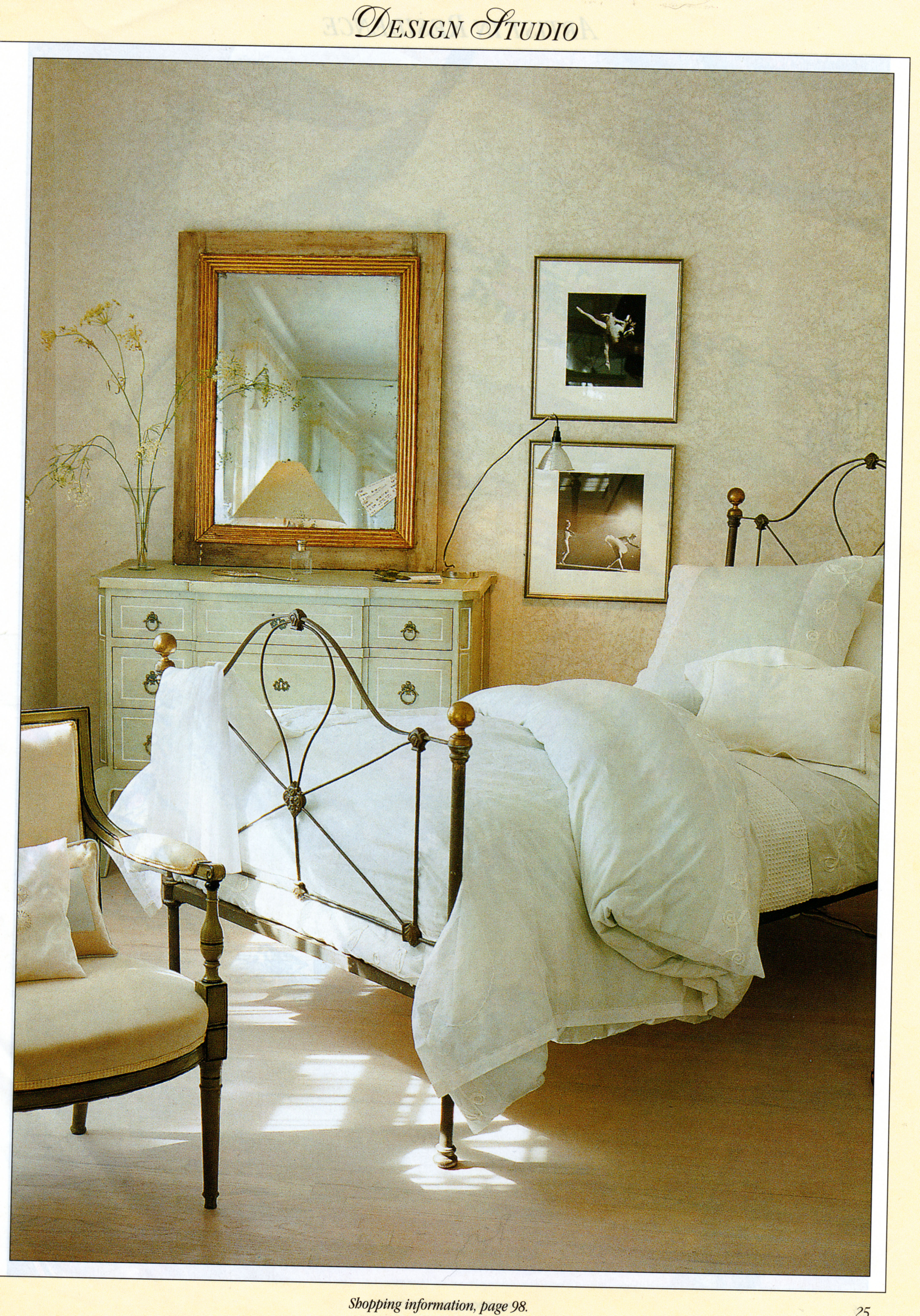
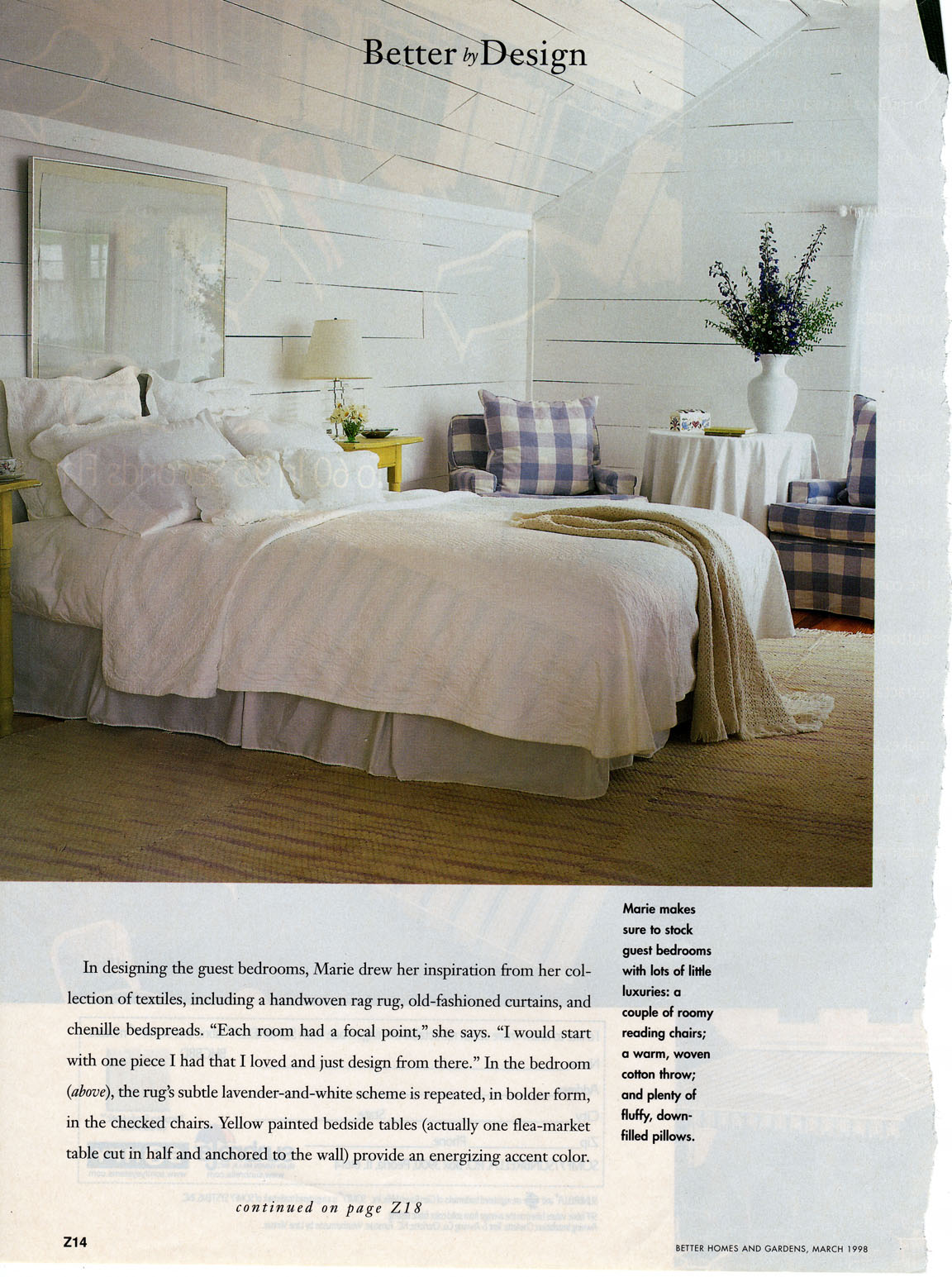
There are beautiful radiant floors with unique concrete stains made to look like majestic stone. Concrete holds heat well, and if they are installed to orient toward direct sun in the winter time, the chill of the cold is offset by warm feet. The sparse, open nature of some of these stoned places were very restful to me. I realized what materials should be in the sleeping rooms by studying these restful relaxing spaces. Linen and wood played a large role in these rooms. The colors were varied, light and dark, cool and warm. I found out that I had a soft spot for white attic bedrooms. These looked like they belonged at a beach more than a mountain forest though.



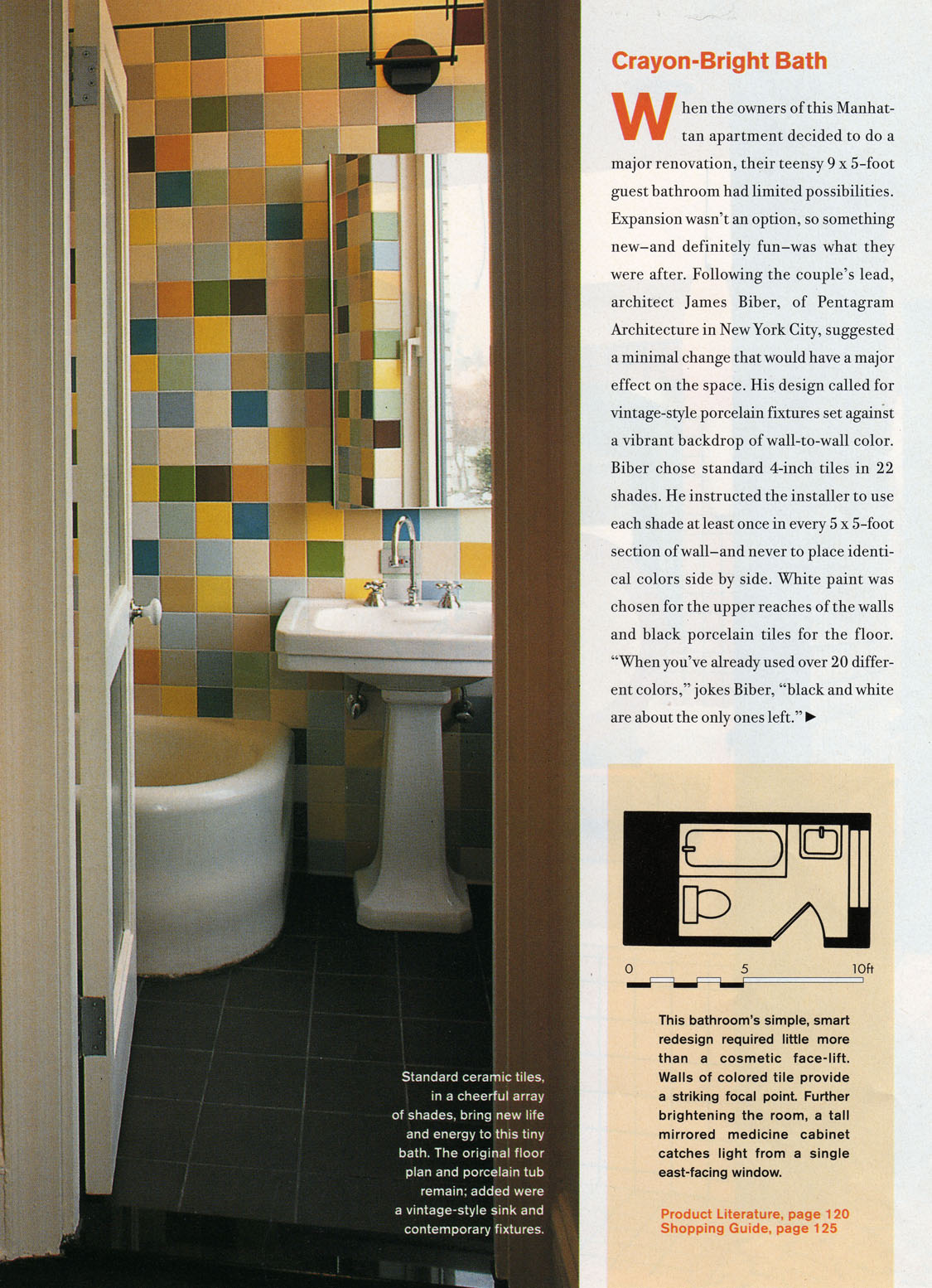
A lot of images I pulled began to fit into a playful and fun category. Along with being efficient for the function they served the bathrooms were colorful, thrown off-balance and surprising with the introduction of purple sinks and oversized mirrors. The background tiles matched colorful memories of my own youth and inner desires of comfort and glee. Imagine writing on these chalk board walls, organizing in glass shelves and feeling a breeze by an invisible fan.


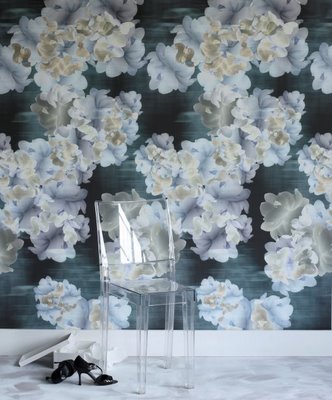


Melissa Warner is a designer I admire. She uses forgotten furniture and blends color with function and repurposed house-hold times to create a place that is invigorating as well as inviting.


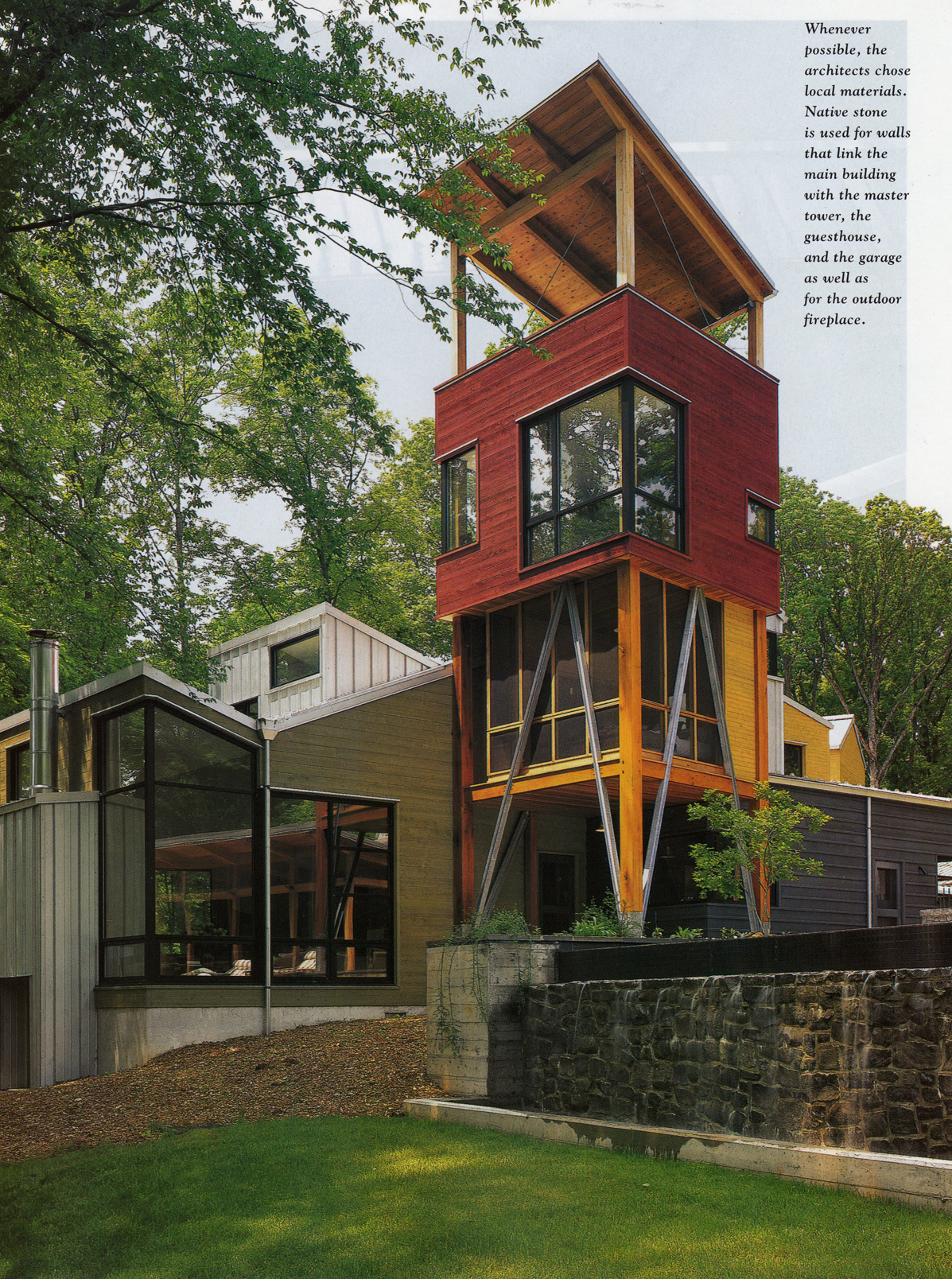
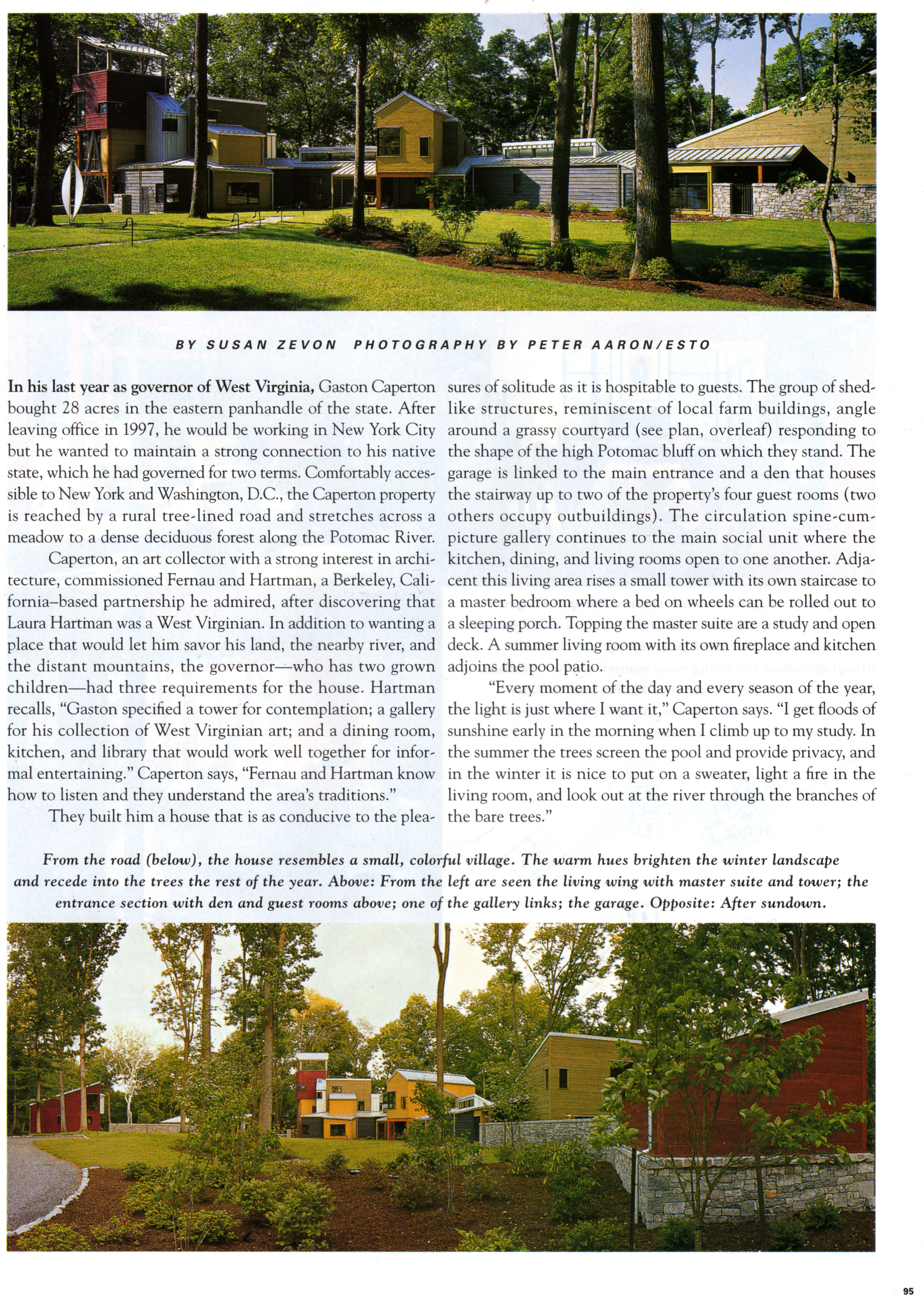
A project in the forest, a lodge, a vacation home for guests in the mountains assumes that you use earthy products in versatile spaces. In this home that appears to be made of wooden framed views, one can study how wood spans and the introduction of high windows, helps to arrange a continuity of rooms scattered in a West Virginia site. The house forms its own community, giving visitors and the hosts a vacation together.


Another take on timber framing is this room set to the south side of this house that is used for heat storage. A trombe wall is set up behind the glass, and is the vertical transgression through the house.

Another interesting design concept is a ‘stack house.’ This is a house that uses the passive strategy of natural ventilation. An open stairwell with open treads can do this simply in any two or more story home.
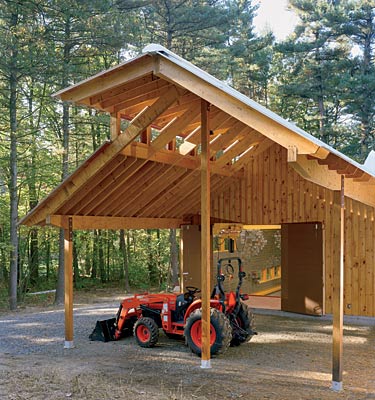
Architects can use the program of a home to come up with a completely different design tailored to the use of a client. This is seen in the barn structure extension of wood supports as it is used for a cover that is still careful to incorporate natural light from above. This focused design effort leads into the categories of intricate, deep and made-for-the-place.
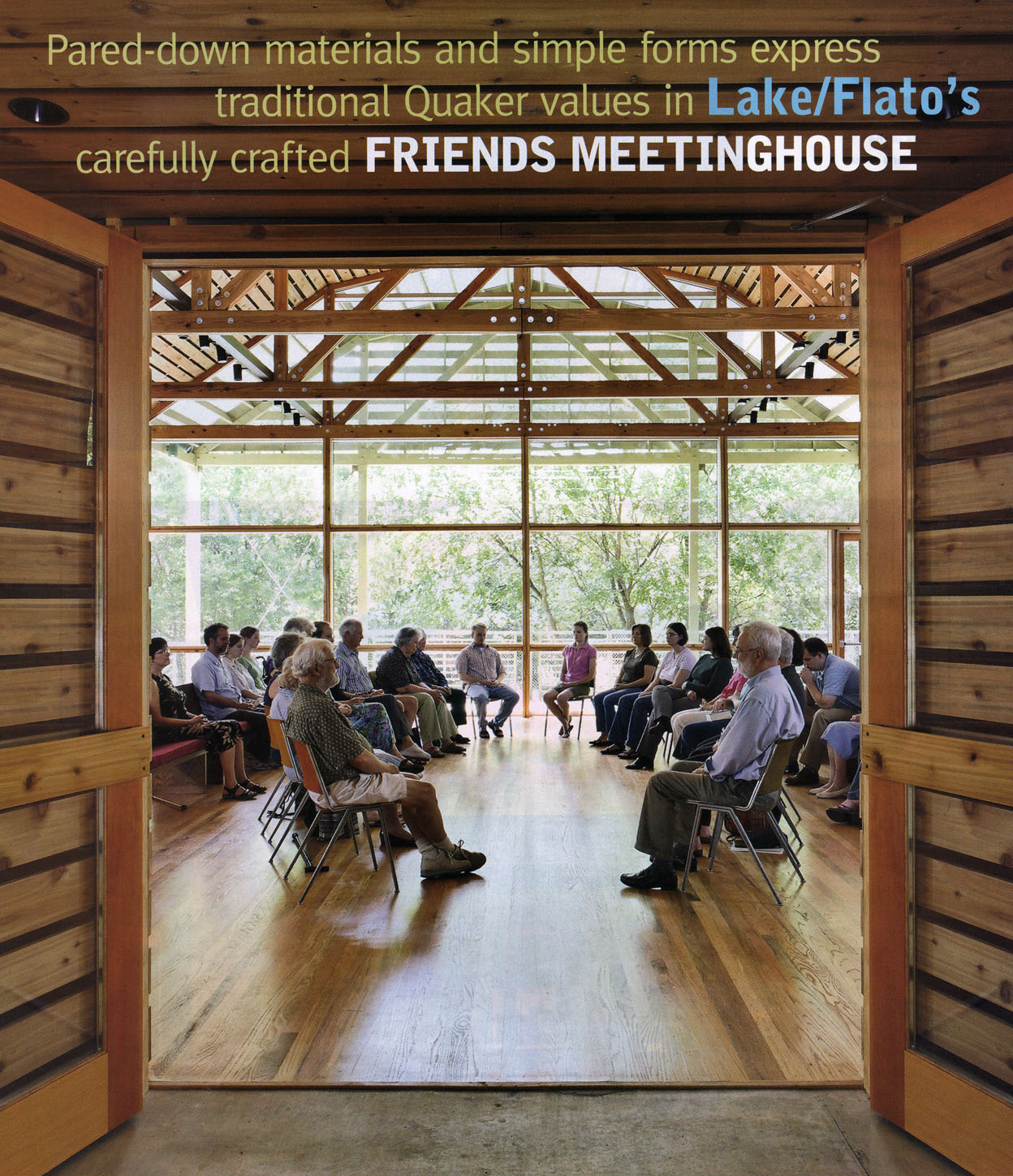
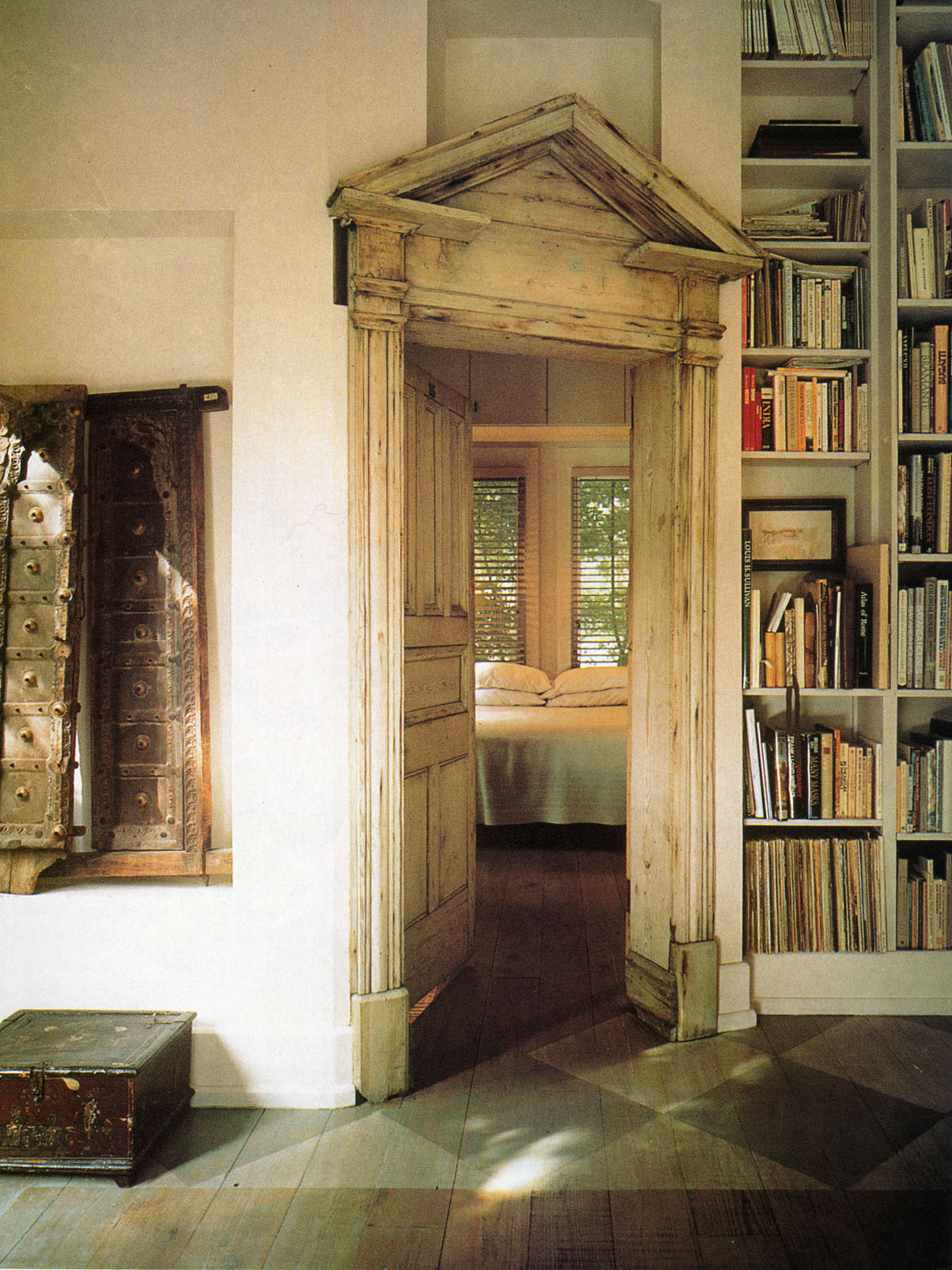
Spaces that fit in and respond to a site take more time as the incorporation of a new use is fit into an existing place. Take for instance this parquet floor, stained and painted areas are used to define a grouping. Simple treatments of an overhead bulkhead give interest and depth to areas that may otherwise go unnoticed. Curved windows, courtyards with large table settings and built-in bookshelves make use of what a room has to offer in its’ arrangement.




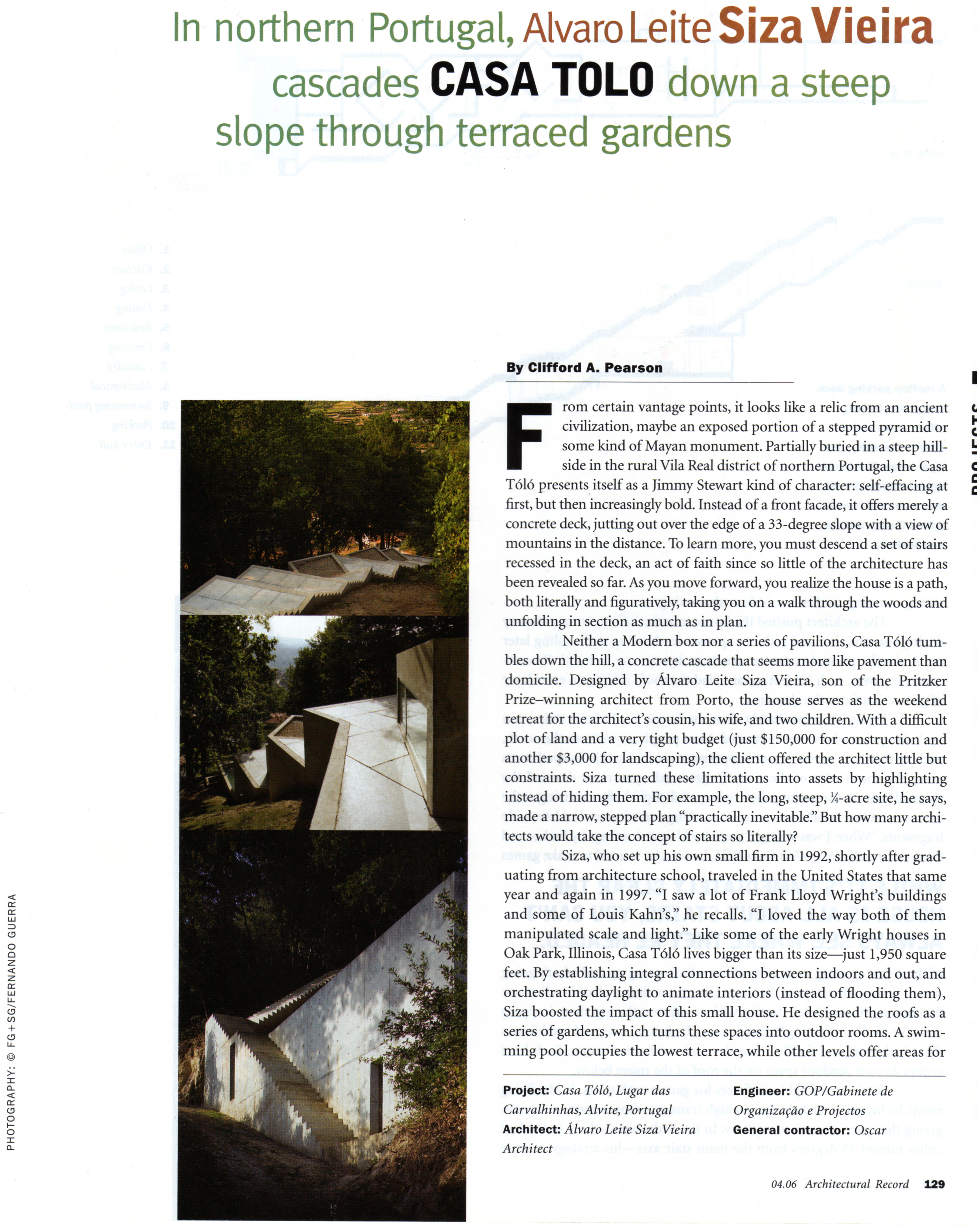
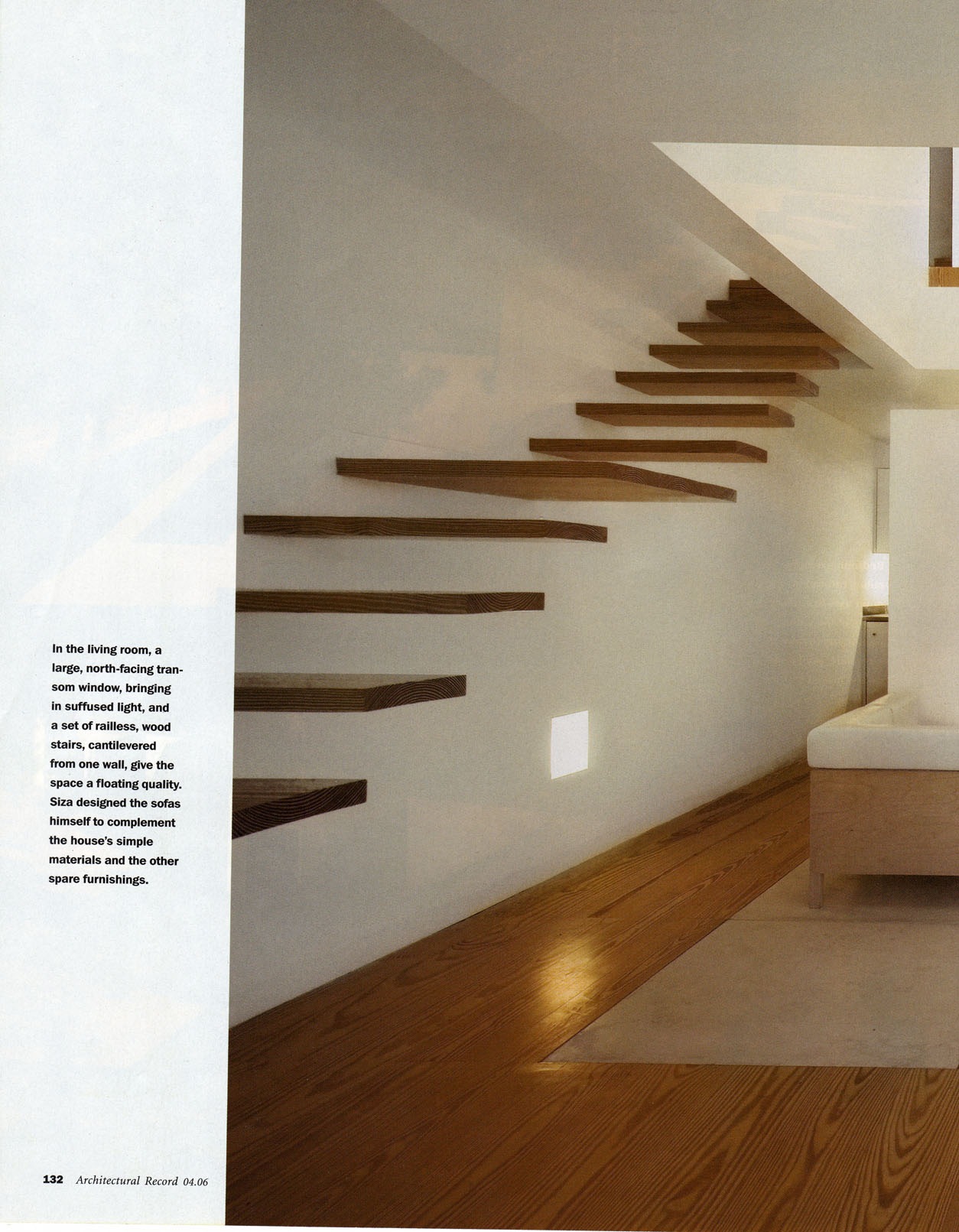
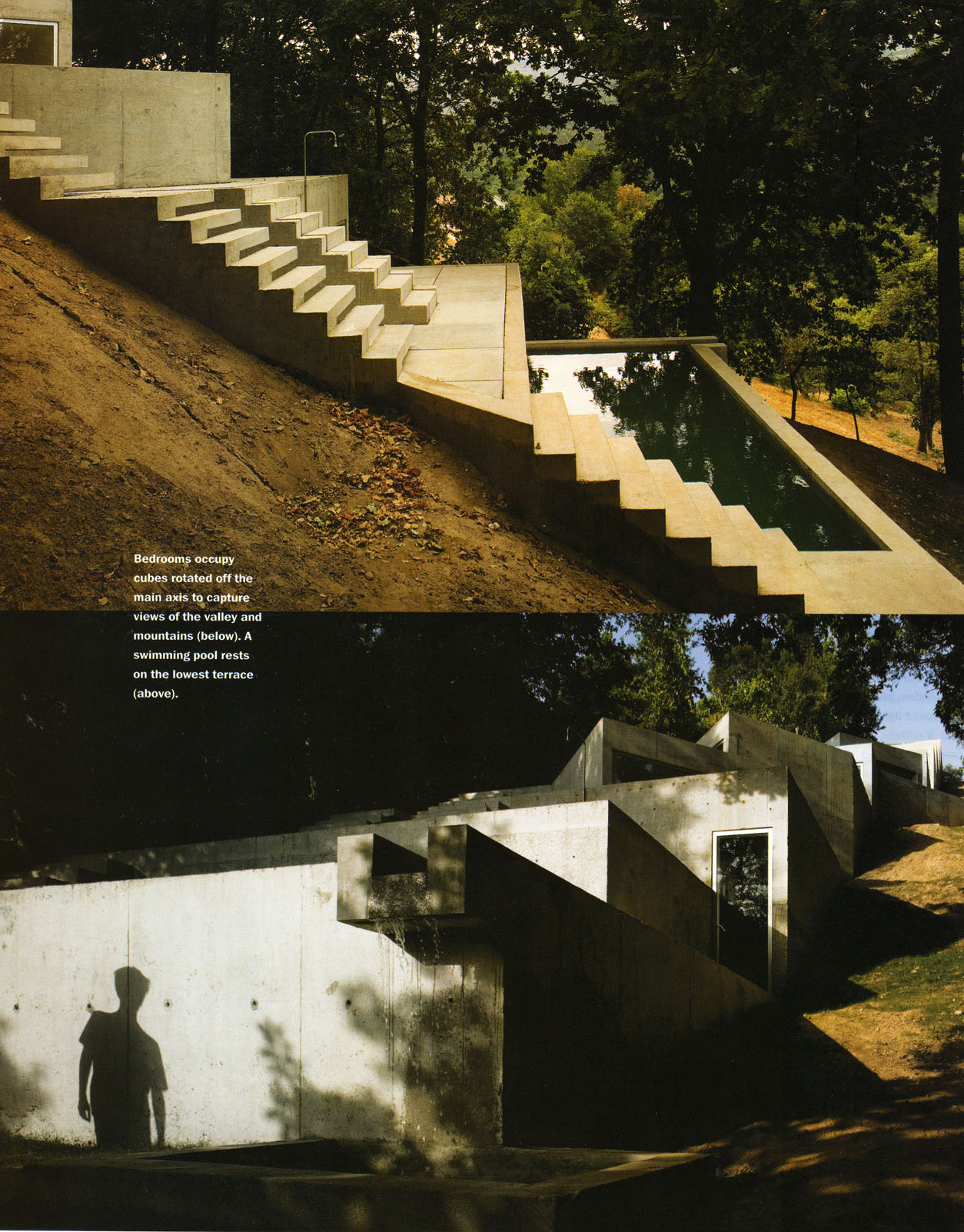
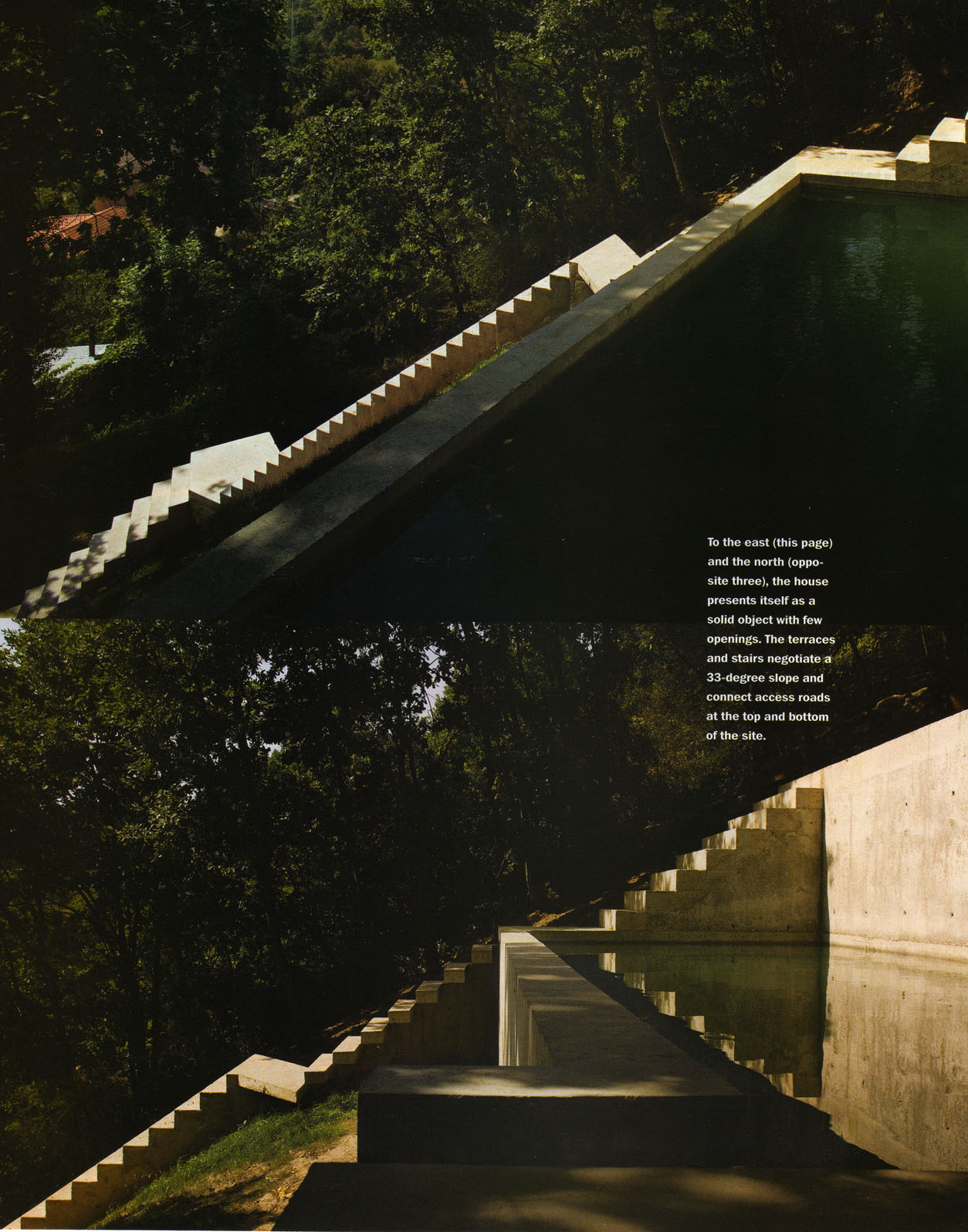
Two entire buildings that respond to the site are Alvarao Leite Siza Viera’s Casa Tolo project and Legorreta & Legorreta’s Hotel La Purificadora in Puebla, Mexico.
With Siza Viera’s house, the stair house, reacts to a sloping site. The transgression through a cemented step in the forest is imitated in floating treads to the interior. The definition between room to room is made naturally by following the grade. You keep stepping down and down into the next room.


At Hotel La Purificadora, natural stone spaces from a 16th century building are brought to life with the modern use materials of glass, purple cushioned furniture and cantilevered metal balconies.

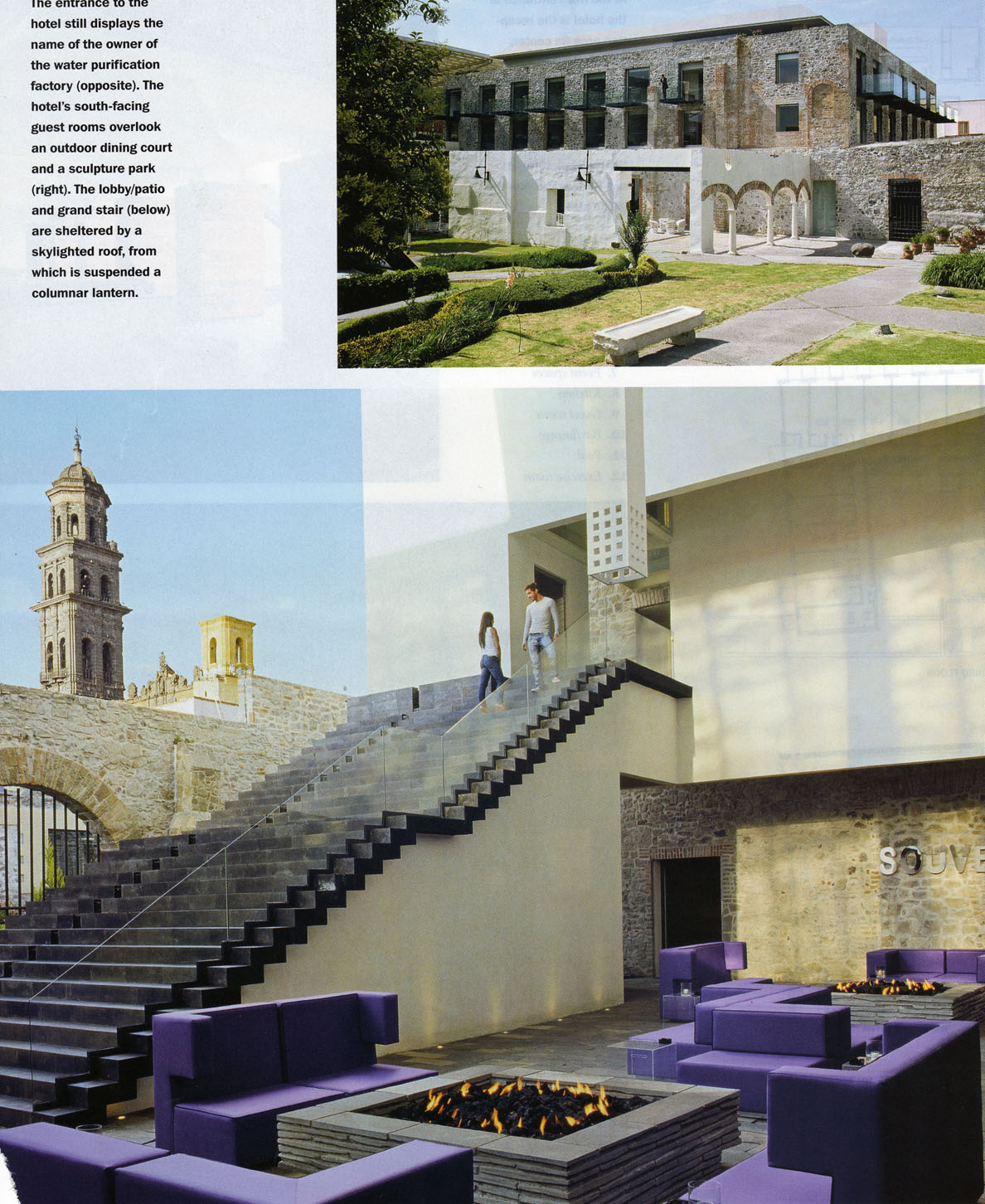
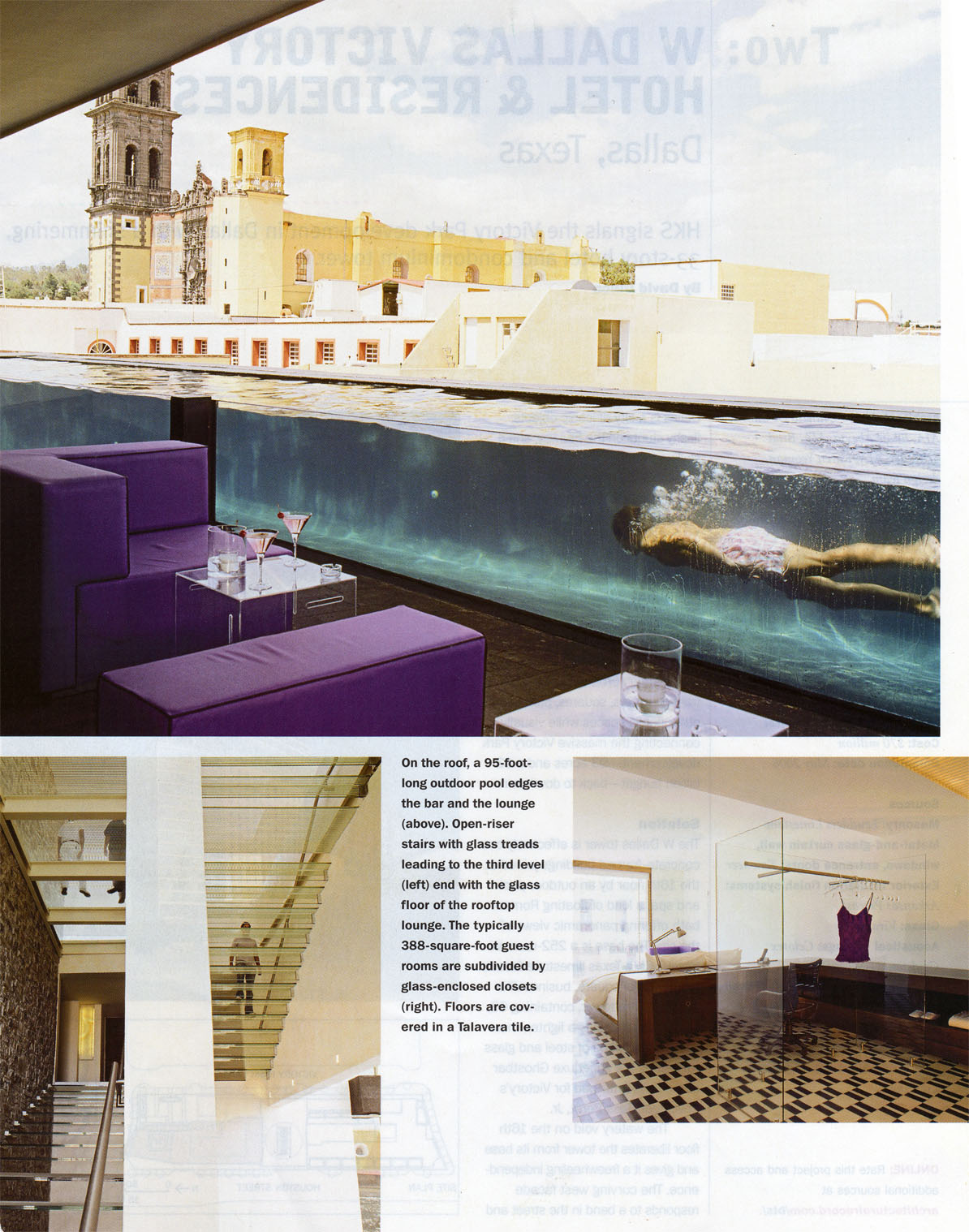

Reclaimed wood is used to encase columns, a space left between the top of these and the second floor makes the second story seem weightless. Other rooms are divided by deep shelves, an organized grid that serves the purpose to separate and contain.
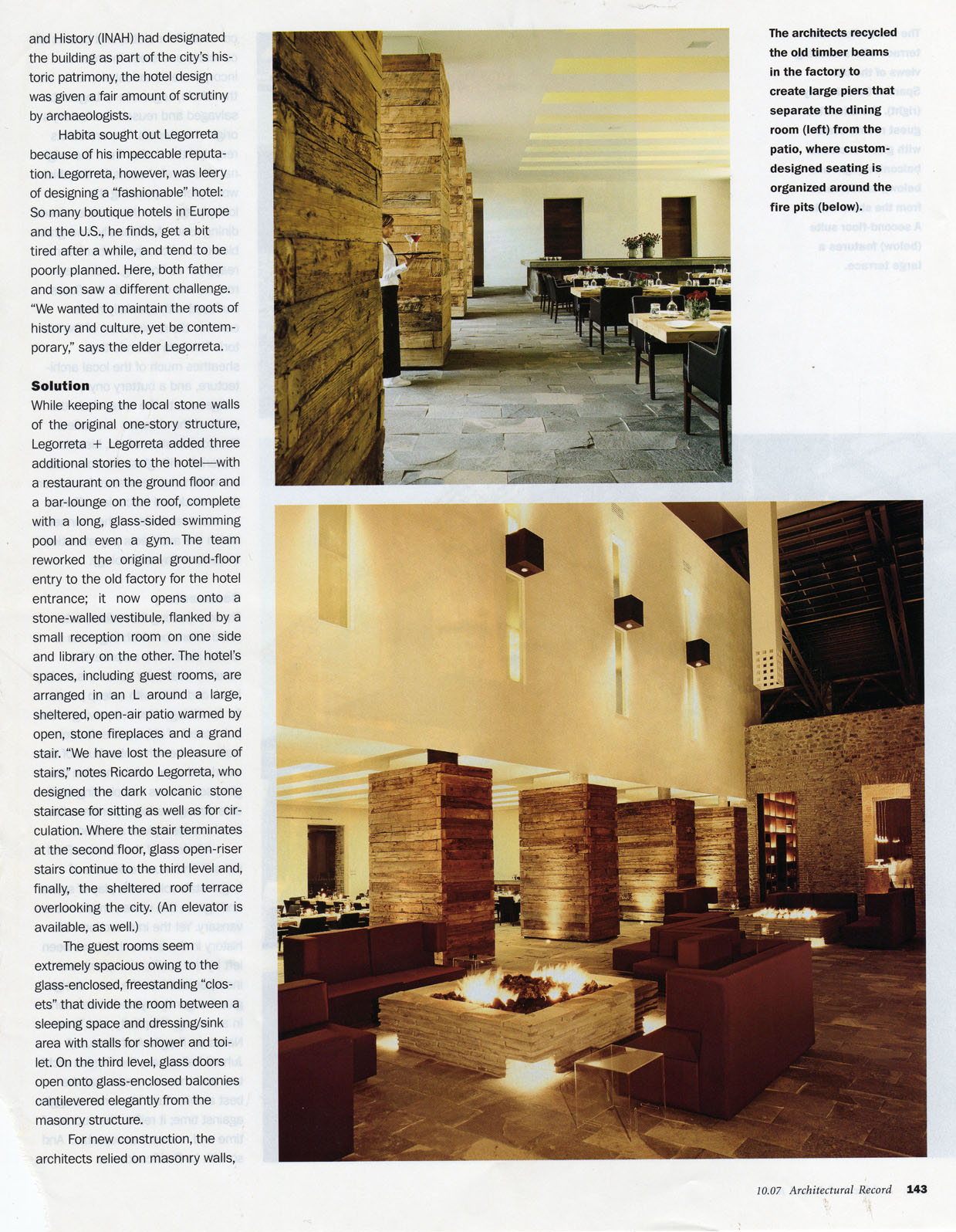
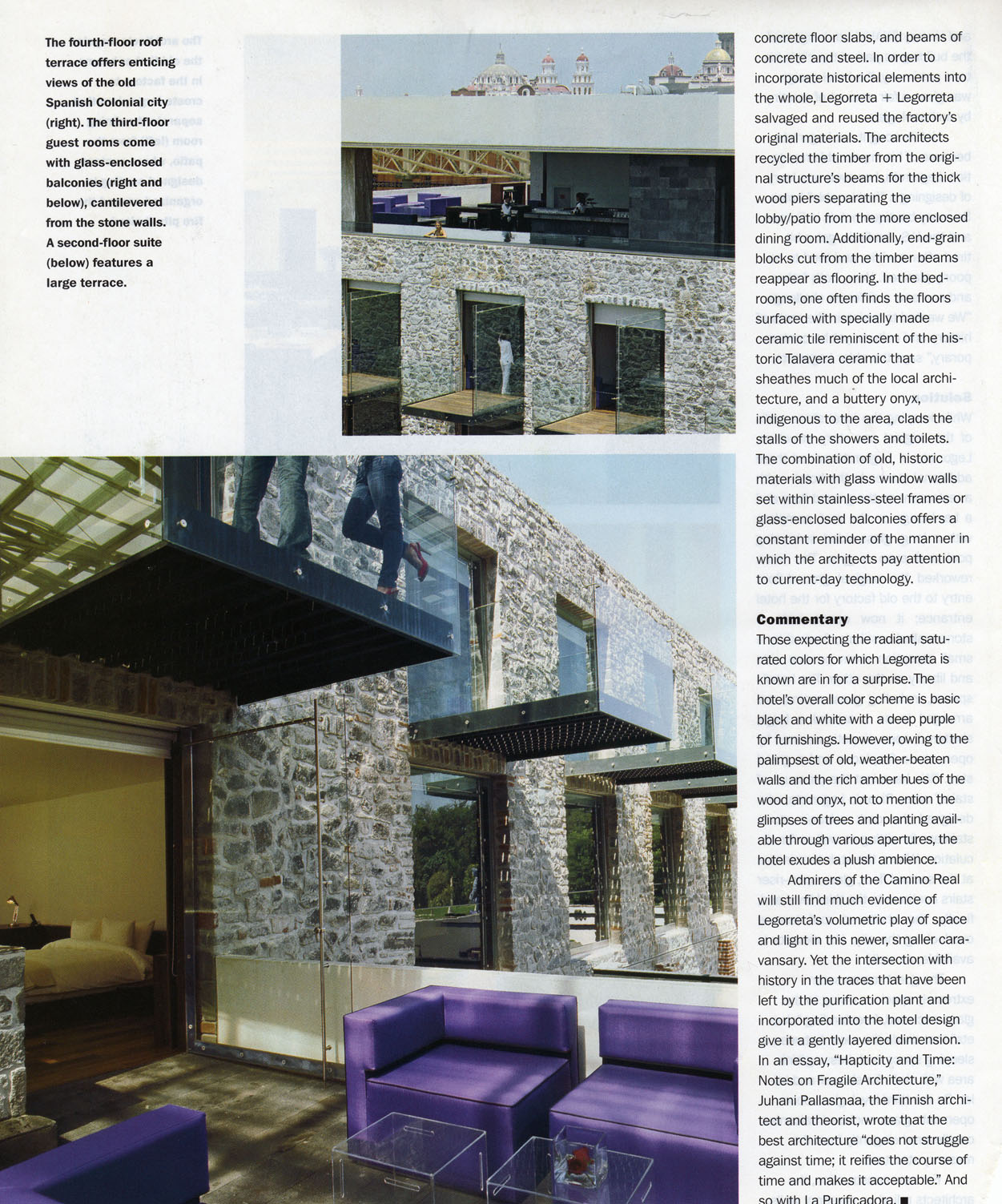
In these two projects, aesthetics and the acute realization of place make the effect of space better than if materials were assigned to only fulfill the program and build the job.
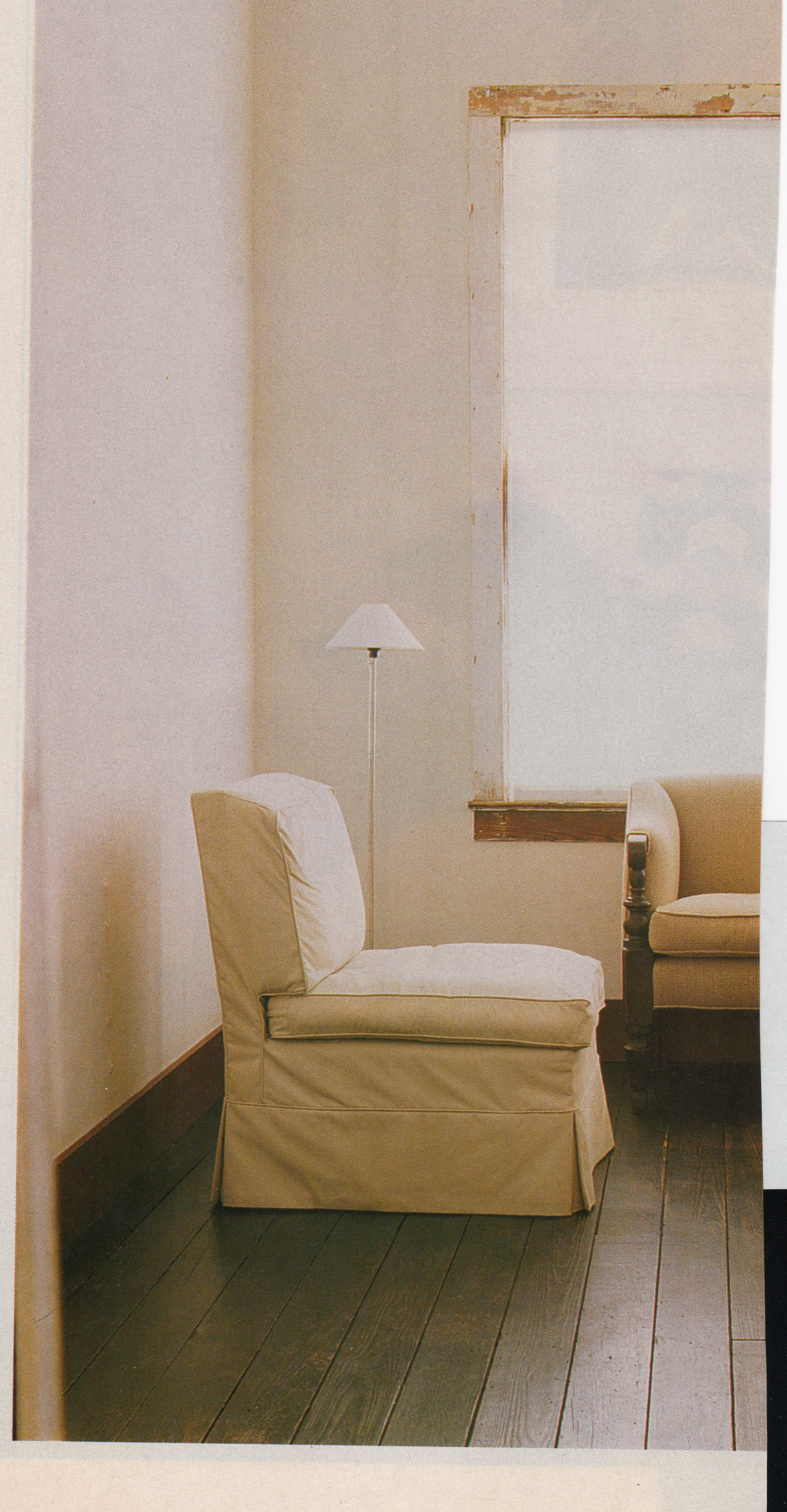
What about spaces for entertaining? I found the ones I most preferred to have many different materials in some instances with off kilter patterns and mixed up uses, and some to have flat, simple wood floors with an overfilled, simple lined chair. The quality of light was important in all of these cases. A soft light preferred.



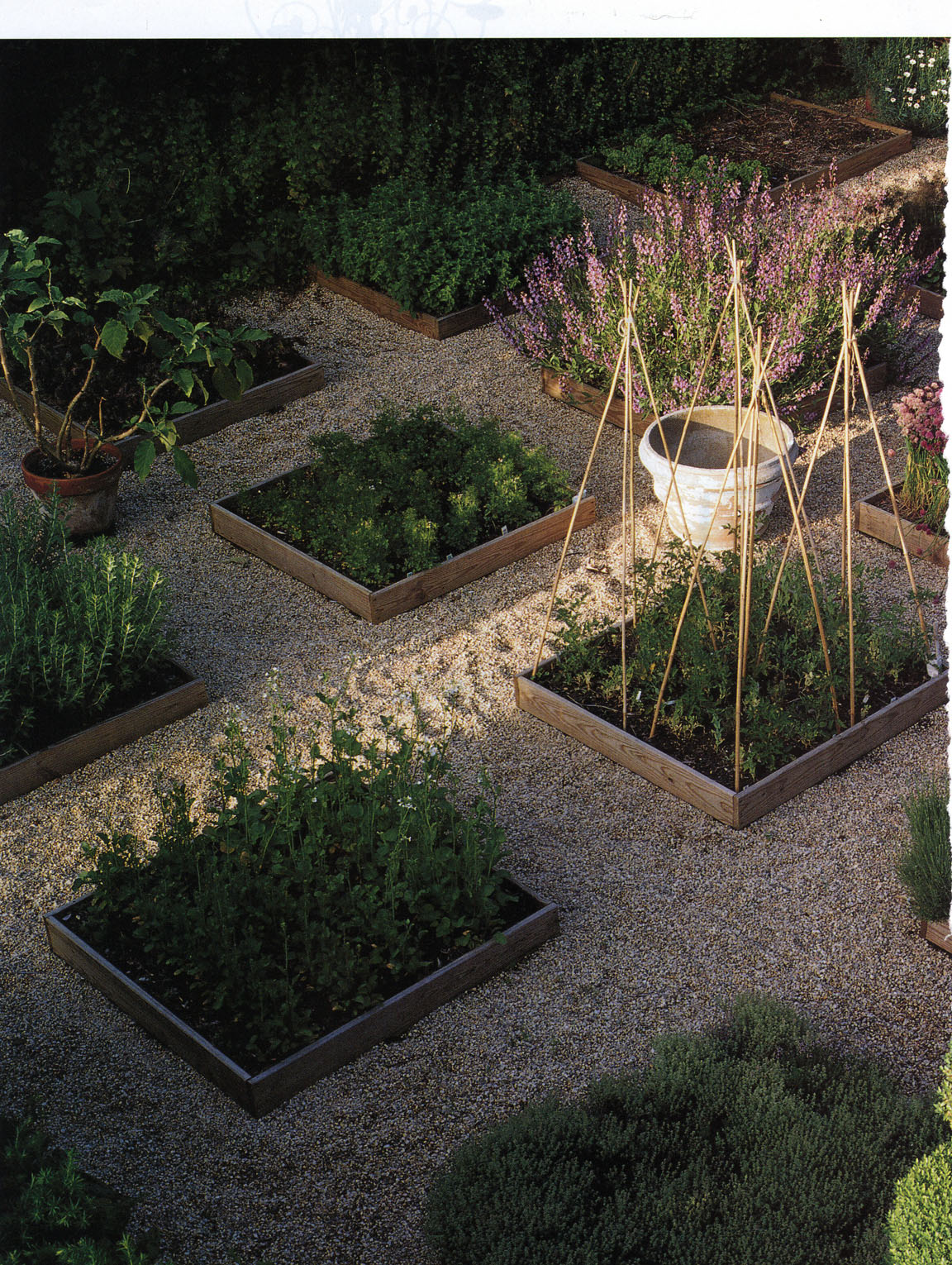
Last but not least of course is returning to nature and going back outside. The land supports the house. The house should allow a positive impact on this place where one did not exist. The site allows visitors to enter and entertains their first impression.



Before I began this analysis I had a predisposed desire to assign materials to spaces. What made sense was the following guideline:
o Stone – How Can we sustain ourselves every day?
o Light – Eat and heat, Natural light, glass allows view
o Wood – Sleep
o Metal – Clean
o Wood & Metal – Work
o Wool & Silk – Play
o Plaster – Surface and definition of space
This could only be carried out with sustainable, local, well made, durable, healthy products. So went my research into certain systems and a product checklist particular for this project. I used the outline below:
Systems and Products Checklist
o Flooring
o Trim
o Wall Coverings, Finishes, & Interior Partitions / Bulkheads (including the use of 4 x 8 sheets of sustainable goods that could replace gwb.)
o Casework
o Work Surfaces
o Doors, Frames and Hardware
o Ceiling
o Furniture & Artwork
o Plumbing Equipment & Energy Star Appliances with Smart Metering
o Fabric, Curtains & Shades
o Lighting Fixtures / Solar Tube
o Caulk & Material Finishes (waxes, paints)
o Windows
o Linens, Dishware, Toiletries, Cleansers, & other Household necessities
So, for now, I can draw, learn more about sustainable products that are local, and look forward to the next opportunity where I may be able to apply materials to a real place!