Categories
Architecture Book Review Building Sustainably Environmental

The search for The Greenest way I can build a new Home

The best methods, The best materials

What is Green Building in the Northeast U.S.? I’ve consulted the following book many times in designing new spaces. I’ve found the information in what has been provided to me through searching The Passive Solar House links.


The Passive Solar House by James Kachadorian

Book Review

Rule #1: Build in Reference to your Surroundings

Position the long direction of the house in the East/West direction and plant deciduous trees along the South. James gives direction for how to know your site. ‘Make a point of being on site at sun rise and sunset at different times of the year. Develop a sense for which direction the prevailing wind comes from…in addition to solar orientation, consider access, view, wind, direction, snow removal, power, septic and water.” In the past when I have mentioned Slow Building, this is the direction I was seeking.

Rule #2: Design on a 12 month basis. ‘Accommodate and benefit from the sun’s shifting patterns and other natural seasonal cycles.’

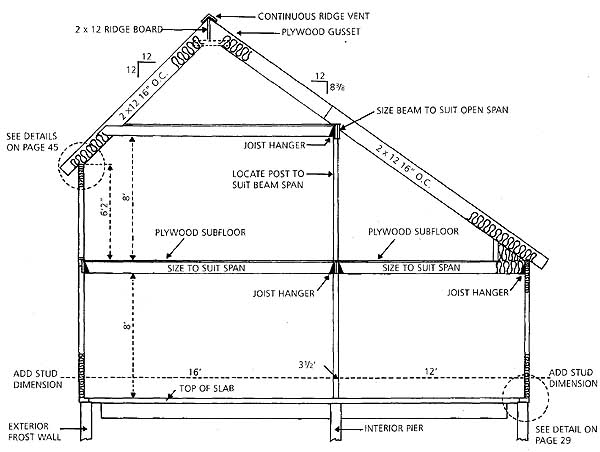
Rule #3: Provide effective thermal mass to store free solar heat in the day time for nighttime use. The above diagram is a graphic from the book where he notes ‘achieve thermal balance by sizing the storage capacity of the thermal mass to provide the heating needs of the building through the night.

4″ slab over 12″ CMU is approximately 10″ of solid concrete.

10″ x by the building x and y dimensions = the ____ cubic feet of volume.

Ways of keeping the heat in include thermo-shutters, as described in the image below. However, you want to make sure that your building envelope is a closed cell construction to protect the R values you’ve invested in it as well as to prevent insect damage. The envelope is something that you may ‘Dress as you please.’

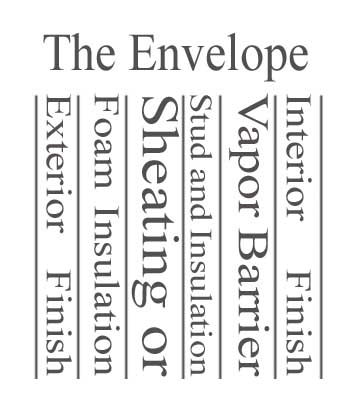
This is a graphic for a wall section, envelope, that you would find in the north-eastern United States. For example, the vapor barrier is always to be on the warm side, and in this area the warm side is the heated side of the home, on the interior because we heat in the winter. This leads us to Rule #4:  Insulate thoroughly and use well-sealed vapor barriers.

While constructing a home for my family I studied Advanced Framing, also termed Value Engineering. This means building with typical construction methods, but arranging the building components  in a smarter way. The simple spacing of 2×6’s at 2′ on center versus 16″ or the ways in which to construct a corner and header of a window frame are two examples in which less wood can be used to build a solid home.  Look at these sites listed:  Building Science Consulting and The Energy and Environmental Building Alliance

Getting back to the book, the author makes it a point to differentiate between house wraps and vapor barriers. House wraps are designed to stop wind, not moisture, and a vapor barrier is an extremely important part of the building envelope sandwich.

Tightly sealed buildings should exhaust and vent to the outside through controlled or deliberate openings. For example, areas that have excessive moisture such as the bathroom, kitchen and laundry rooms. So, what are deliberate and controlled openings about?

I sought out the information on the internet and found Scandinavian Homes; Passive houses who described a Ventilation heat-recovery system by Temovex. These systems control the air-exchanges in a home, and in the winter months when we don’t want to pump out our expensive heated air with necessary ventilation, they have a way of recovering the heat without compromising our inside air quality.  Click here to see how the Temovex works in expanded terms.

With a balanced mechanical system, you control the amount of ventilation in the house. Not too much on windy and cold days and enough on humid and mild days…A whole house ventilation system helps to provide consistent temperatures though-out the house or apartment. The house or apartment must be reasonably well insulated and draft-proofed for the system to work to its highest potential…Temovex units make your home into a thermos! You retain the heat in the building without the need for unnecessary new thermal energy…

In chapter five the book begins to describe floor plans and layouts in the same way it invites you to learn your site. ‘We should layout the home’s rooms in relation to the patterns of the sun; that is, morning areas and activities should be planned for the east side of the home, and evening activities generally on the west side.’ The sun and normal living habits migrate from the east to the west. For example the living room should be well warmed by mid day, but the breakfast area should be warming first. I found these images on this site.

This plan uses space efficiently and uses the space below the stairs for storage of the water tank and air circulation equipment.

This leads us to two important and key rules to this entire passive strategy.

Rule #5: Utilize windows as solar collectors and cooling devices.

Rule #6: Do not over-glaze.

What the book provides here is an in-depth lesson on how to calculate exactly what your home needs to maintain a comfortable living environment. I suggest you find the book to learn about this exactly. You can find the book at Amazon by clicking the picture below.

The author tells us that ‘There are not cookbook recipes for solar design.’  A summary of the design procedure is provided by Google Books, and is represented below.

Rule #7: Consider the contribution of solar energy (indicated by insolation values for your region) and natural processes (including breezes and shade) to the heating and cooling of the home, in order to avoid over sizing a backup heating system or air conditioner. A home that is oriented to true south, is tightly constructed and well insulated, and has operable windows for air circulation should not require large fossil-fuel burning equipment to maintain thermal comfort.  Size the conventional backup systems to suit the small, day-to-day heating and cooling needs of the home.

Rule #8: Provide fresh air to the home without compromising thermal integrity.

Rule #9: Use the materials you would use for a conventional home, but in ways that maximize energy efficiency and solar gain.

Rule #10: Remember that the principles of solar design are compatible with diverse styles of architecture and building techniques.

Other ideas to come… what about Malcolm Wells Earth Sheltered Homes or those by Jacques Couelle?

Categories
Book Review Poetry

What I’ve Read this Year – Part 1


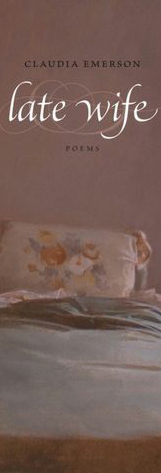
I have a library full of thin spines. I read a lot of poetry, and was lucky enough in February to listen to my favorite poet, Claudia Emerson, at Waynesburg University. Other books that I’ve read this year include the end of the Harry Potter Series, Son of the Wilderness: The Life of John Muir, Bel Canto by Ann Patchett, and Late Wife by Claudia Emerson. What would you recommend?


Categories
Architecture Book Review Building Sustainably

Biomimicry and Slow Building

I am involved in an Environmental Book Club at Oglebay’s Schrader Center.

I have read many new books thanks to this club, and every Third Thursday presents a discussion with wiser environmentalists than me. Many of these books are written in a cohesive long arrangement of definitions. No plots or climax, but critically arranged facts from beginning to end. Like portions titled Eco-Inventions from Janine Benyus’s book Biomimicry.

Here are a few of my favorite thoughts.

The biomimicry revolution introduces an era based not on what we can extract from nature but on what we can learn from her. Pg 2

The cost of money, the price of my time and why the bottom thread of my new winter coat falls off.

From being taught a ‘human centered approach’ in forestry management Benyus began to look to organisms and ecosystems for their ‘cooperative relationships, self-regulating feedback cycles and dense interconnectedness.’ Pg 3

‘Adapting to earth (as a new reality), the changes we make now no mater how incremental they seem, may be the nucleus for this new reality.’ Pg 5

The cannon of nature’s laws

Nature runs on sunlight

Nature uses only the energy it needs

Nature fits form to function

Nature recycles everything

Nature rewards cooperation

Nature banks on diversity

Nature demands local expertise

Nature curbs excesses from within

Nature taps the power of limits (which means maintain a balance) Pg 7

‘Because nature spins her spell in such a small space, her creations read like a poem that says only what it means.’

30,000 land tailored variations of rice – farming that mimicked industry, not nature. Pg 17

Her ideas on polyculture in the prairies. What about the idea of a polyculture at home in our own garden. Plants that feed, nourish and sustain the winter without our work. Pg 30

If you had a place to pull down the sun, the ASU campus in Tempe would be the place. Pg 63

Nature wants a balance – entropy – like ink dispersing in H20, it wants everything to have equal parts. Pg 67

What is Hydrogen gas?

Molecules into membranes Pg 82

Chemical graffiti

Garden-type sunshine

Purple bacterium reaction center photo

200 billion output increase every two years… why we are faster in the untactile world? Pg 241

Take back laws or ‘asset recovery’ as Xerox puts it. Pg 256

We are using the ancient sun. Pg 261

When she talks about using the condensed matter that didn’t have oxygen to decompose properly? Is the earth getting larger in diameter, or how  is this upcycle working from the exterior to center of our earth core?

Closed Loop

A community designed system to use a better as a whole, water, better land, air water, build, shelter feed.

Things I’ve started thinking about since our book club began:

World population

I am my own responsibility, I must live with what I do and try not to push it on somewhere else.

Low Impact Man / Family

Hollow under-layer shifts

We fall into perfectly round holes

Circular sink holes

Whole cities swallowed down the serpents throat. Hollowed from within, termites practicing their limits.

Pouring the unused black remains of dinosaurs

Aloe plants and grub worms into our copper lines.

Instead of quickly building Architecture, perhaps time in concept-to-foundation-to-finish should take us longer, so we are taking more controlled and thoughtful steps in the process. Perhaps I should invest my time in Slow Building.

Categories
Architecture Book Review Building Sustainably Environmental

The Interior – Making $ense

The Interiors

Because I am always in search of great and healthy ways of Interior Designing I was glad to come across a few products I hadn’t researched yet. I have a full list on my blog in the tab ‘Sustainable Interiors.’ This is the last post of the Book Review  I did of Eric Corey Freed and Kevin Daum’s book

Green $ense for the Home

The counter top chart was extensive and fantastic!

Healthy Wall Coverings:

Mioculture wallpaper of 100% recycled paper. This company created by two Columbian boys has a neat sit full of lighting furniture and accessories.

Home $ense gives a Homemade Wallpaper Paste Recipe too! There are lots on the Internet, like this one from Tree Hugger.

There are companies such as Design Tex and Len-Tex who have achieved Cradle to Cradle certification, and others such as:        Maharam       MDC Wall coverings       Milliken      Mod Green Pod    Pallas Dialtones (made of discarded Japanese telephone books)         Sinan Natural Wallpaper Adhesive

Below those wall coverings can be fully recycled content drywall too. Gypsum is a coal combustion byproduct. I looked that up and found useful in formation through the University of Kentucky. Resources for Recycled DryWall include  : EcoRock from Serious Materials   Synthetic GYP from CertainTeed or G-P Gypsum or the recycled content from CleanBoard   National Gypsum Company   Temple-Inland Forest products or USG Corporation

Other interior products highlighted in the book are ~

Cork and Bamboo: Expanko     Habitus   Nova Distinctive Floors   US Floors     Teragren    Eco Timber     Cali Bamboo      Smith & Fong

To protect our Indoor Air Quality  Formaldehyde-free fiberboard: Columbia Forest Products    Flakeboard   Kirei   SierraPine

Cabinets built out of formaldehyde free wood: Breathe Easy Cabinetry    Neff Kitchens    Neil Kelly Cabinets     Custom Cabinets from  Greenline  &  Humabuilt

For Carpet, look at Sheeps wool carpet.

.

Tomorrow I will share how all this knowledge actually applies to a project, when I showcase

7 Sustainable Choices

I made when designing the interior of a recent doctor’s office.

Categories
Book Review Food & Exercise

Food Matters . Discussion Tonight!

http://ecobookclub.files.wordpress.com/2010/02/foodmatters1.jpg?w=500

Tonight, at Oglebay’s Schrader Environmental Center –

Mark Bittman’s Food Matters  .  Ecobookclub.wordpress

Like everything else that seems apparent on the outside, there is so much more beyond what meets the eye.

For the food industry, and behind the avocados and almond health benefits being toted for good fat lately, lurks a marketing plan for these foods. Yogurt sales, for example, over the last twenty years have doubled. (p34)  America is being sold more calories, and we are consuming them. Even the solid foundations of the USDA’s food pyramid can’t be trusted… the same pyramid in which, growing up and until one month ago, I based my diet off of.

What are others, at the mercy of the media, have to defend themselves with?

Bittman approaches eating food in the most basic way and offers in this book a concise history of eating versus the food industry.

The 2000 calorie diet so many people base their diet on is up 25% from 1970 when most people averaged eating 1500 calories a day. (pg44) Advice on a 2000 calorie per day diet goes hand in hand with the 1992 birth of a food pyramid. Louise Light, a nutrition expert at New York University, was consulted in its conception. (pg47-48) However, the pyramid flopped upside down against her advice, changing the recommended daily servings of (whole) grains at 4 servings to 11 max servings of bread, cereal, rice and pasta, in support of people behind the production of the grain industry. I find myself wondering how such a simple system of food growth and eating has become so difficult to untangle and understand.

Bittman writes with candor in response ‘Cereal, efficiently a boxful of small cookies’ (Pg35) and it boasts a larger question for me -not only, who can be trusted? But, how do I treat these seemingly simple, but now complex systems?  The more elements that there are to a system the more difficult it becomes to service it. Think of your HVAC system or your car, and the technology intricacies it takes to maintain their performance. It is more difficult to pinpoint problems when something goes wrong because there is an influx of likely scenarios. The other problem of finding clean information is that companies who sell a product, a pharmaceutical, don’t want to lose a profit and as soon as a study is complete with unfavorable findings, a second one is funded (by the company) to disprove the first. Apparently that’s a cheaper option to losing profit. It reminds me of Malcolm Gladwell’s ‘The Tipping Point’ and the powers of influence society’s views on items have on their success or failure.

Society doesn’t need any more stimulation or confusion, but by defense, and by design, there will always be conflicting information, because it is making someone money.

Bittman brings up a question that makes me think. He asks, ‘Who sees meals with home-cooked breads, desserts, and soups for example?’ (pg 46) He is right of course, when I bring three-ingredient beer bread to a dinner party, people can’t believe I actually made the bread in an oven!

I was in the middle of reading the chapter on the food pyramid…and the story of our food pyramid is an interesting one. It has been changed over the years. In 2005 it became more vague, and did not base the image or food suggestions on any distinct nutrition we need, such as water, protein, carbohydrates, and fats.

My husband was in the middle of The Colbert Report and consequently the new Plate diagram appeared. Type in mypyramid.gov and you will be forwarded to choose My Plate! I think this is an act to fix the misrepresented nutrition needs for us, mislead people all these years. You can download a complete history of the USDA’s food guidelines here at: ABriefHistoryOfUSDAFoodGuides and see for yourself.

This begs me to ask how I can help the education of solid principles. Those based one health, personal choices, community, fairness and consideration? What can I be inspired with, to develop my own weekly habits and promote a sustainable model for me, my family, and my community? The answer has always been for me to live as an example.

It’s neat. Two years ago I looked out my back yard and saw my neighbor’s three pine trees. Now, I see two gardens with a better bounty than my own, a rotating composter over there, and often a friendly face offering me bok choy over the fence.

What can stop our habits of seemingly simple means of preparing foods out of a freezer box, poor choices, and a neglectful attitude towards our health? Bittman responds ‘What’s stopping this, largely, is inertia, habit, a lack of good information, and a drive to maintain the status quo b the people who profit from it.’ (pg 65)

In Bittman’s view on foods, he uses a bang-for-buck method comparing calorie density versus nutrition to measure how foods are good for us. In my favorite chapters, he offers a fantastic lesson in what we should be eating: Protein, Carbs and Fat. (pg 85-92)

Protein: ‘The meat industry has tried hard to make protein synonymous with meat’ (and it’s worked.) ‘However, per calorie, cooked spinach has more than twice as much protein as a cheeseburger.’ He states too, that ‘there isn’t a point to over eating protein either. Your body will dispose of the excess. Consuming too much protein causes calcium loss, increases your need for fluids and causes your kidneys to work harder.’

Carbs, like ‘those found in whole grains and legumes (considered complex) are necessary. Fiber, in the category of carbohydrates, (useful in the digestion of food, but not a direct nutrition) helps you to feel full and satisfied after eating. Simple carbs are the ones to avoid –white flour found in commercial bread, bagels, cakes, muffins, and pizza, sugars, and processed foods including cereal. Instead, look for whole grains –oatmeal, polenta, grits, rice, wheat quinoa, barley and some whole grain breads.

For Fat! Fat is important! But, we all are getting too much of that found in processed foods, refined carbs and animal protein, and not enough of that found in plants. He talks about cholesterol here and states that ‘it is not the cholesterol that you eat that is of concern, but the type of fat you eat and how much cholesterol your liver produces in response to the type (found most in animals.) Try to eat natural occurring fats in plants (and in limited quantities animals.)

After reading these few pages on Protein, Carbohydrates and Fat, we peered into Mark Bittman’s own pantry, and his advice on the types of food never to be without. The easiest way to maintain his ‘vegan before six’ diet is to always have fresh fruit, veggies, nuts and berries on hand to hold you over until you can make your meal.  Here is what is in his cupboard:

Grains: rice, cornmeal and whole grain flours

Beans: Dry beans, all colors and kinds.

Oils:  Extra-virgin olive oil, minimally processed sunflower or peanut oil, sesame oil

Staple Veggies and Fruits: onions, garlic, spinach, peas, corn, carrots, potatoes, sweet potatoes, celery, lemons, and limes. Can tomatoes too.

Fresh Herbs: basil, mint, dill, rosemary, thyme, and cilantro

Spices:

Vinegar: sherry vinegar, balsamic, red and white wine vinegar

Soy Sauce:

Dried fruits and Nuts:

Meat, Dairy and cheese: Bacon, parmesan cheese, butter and eggs.

Baking powder, baking soda, and instant yeast

.

What’s in your pantry?

.

I read my response to reading this book, and then one by Laura Miller, who writes for Salon.com, titled How to live what Michael Pollan preaches and realized how negative my review in comparison seemed. I recommend reading her response, influenced with religious associations that I found on target and clever.

The Environmental Book club At Oglebay’s Schrader Center meets tonight, the third Thursday of the month, at 7pm. In preparation for leading the book club, I am bringing the following discussion points.

What do you think about a diet that requires a regimen and planned days-worth of food, but allows relaxation or non-conscious eating after 6pm?  Does this plan help someone who would like to tackle a diet, and feel good about achieving it, all in a day?

Bittman with colleague Keri Conan devised a plan ‘Vegan till 6’ that means no animal products, no simple carbs and no junk food before 6pm everyday. What diets do we practice, and how are they compared to this, how affective are they?

Where do we find time to schedule our meal times and prep?

What do you think about the basic foods we should always have stocked in our kitchen?

How do we stock our pantries and what part of these skills have manifested as an attitude through our regular practice?

What Good Practice tips should we add to:

Preparing more than one serving at once

Cutting / peeling all veggies at once

He is described as a practical cook (Laura Miller), in some reviews of his book. What do you think?

How important is changing our diet and can we do this in part to foster community and health?

Bittman encompasses three huge promises in writing his book: weight loss, environmentalism and penny-pinching. (Laura Miller) What do we think of this?

How can we profess a true education at a local level, to combat the media’s influence of product pushers? I ask what is in it, and where does it come from?

Categories
Book Review Building Sustainably Environmental

The Building Envelope

House Warming in the Winter:

I would love to be able to keep my $15 gas bills year round, but in a 1930’s house with an antiquated furnace what are my options? My monthly bill from November – April on average, raises $100.

I can make sure that the air I am heating in my furnace is being delivered to my rooms the best it can by checking all of my ducts to see if there are any leaks. Duct Sealing with ‘Duct Mastic’ can be applied with a brush or caulk gun. Find one that is a water based formula like Uni-Mastic 181 Duct Sealer, that is safe for you and your indoor air. Use mesh tape if the gaps are larger than 1/4″

EHow tells you step by step what to look for in leaks and what to use. Green Sense adopted an image from the Department of Energy and offered six places where leaks are most likely to occur: Duct Connections, return leaks, furnace and filter slot leaks; ineffective duct tape seal, fallen duct insulation, supply leaks, or restricted airflow because of duct work kinks.

Speaking of leaky ducts.. how about leaky houses?

Making sure you have a good building envelope is the first step. The easiest way to keep the conditioned air in your home is by caulking and weather-stripping. Check any place where two different materials are next to one another, for example, wood door to metal threshold or aluminum window to wooden frame.

You can get an energy audit, hire a contractor or perform the maintenance yourself.

In Ohio, AEP offers In-Home Energy programs for Energy Efficiency. Columbia Gas in Ohio offers Home Performance Solutions, and a link to a cute adobe flash presentation on home performance solutions. Ohio even offers a Home Weatherization Assistance Programs. Wonderful!

Replacing old windows? – Think about replacing the sashes. Great Efficient Windows Collaborative here!

We need more insulation over here! I’ve done a lot of research on insulation and I show what I’ve found to be good here, at my Green Building Supply Matrix. But, through this book I found a little more. Here in Ohio we are in zone 5, almost 6. If you go looking on the DOE website they have a nice insulation calculator. The book directs me to peek into my walls through my outlet boxes to see if my walls have insulation. They probably don’t, so I’ve been looking into a few types of blow in insulation that can be for homes built before modern construction methods.  Recycled newspaper is used in cellulose blow-in applications such as NuWool, but I still want to make sure that these materials aren’t compromising my indoor air quality. At the Pittsburgh Home Show I came across USA Premium Insulation, so I am currently comparing these products for my own home.

If I were building new I’d look into Green Polyiso from Atlas Roofing. This building product provides an R value of 7 per inch! And, I’d consider making my roof as light as possible. Light in color, that is.  A roof coating can be applied to make an existing roof lighter or reflective. An SRI of 29 or higher is good and what that means in the roof’s Solar Reflectivity Index number, being higher is more reflective, and less hot… and that’s good summer news.

~The Building Envelope and the Things we Build With~

Now, let’s talk about the things we build with.  It is important to me to choose local materials that contain no toxic chemicals. In some cases I may even find repurposed materials that would do the job! Look for buildings coming down (so sad!) in your area and create discussion for disassembling versus demolishing them. Then, use the materials in a new way. Habitat for Humanity has ReStores across the country. Check out Habitat for Humanity or the Re Use People. Other places to find reclaimed materials are: Building Materials Reuse Association Salvage Web

If you are considering using concrete in construction look into companies that use fly ask cement from Coal plants. This is the left over soot that can go into the concrete mix and replace portland cement. This gives concrete a smoother and stronger finish and by using the by-product, we turn waste into something useful!

These are just a few notions the book led me too… research in this area of the things we build with is ongoing. It consumes my thoughts and research daily and I really enjoy learning about how to be more energy-efficient so that I can share my knowledge with clients and the general public… and hold intelligent conversations with people who have been practicing a light lifestyle a lot longer than me.

Categories
Book Review Building Sustainably Environmental

Utilities Use – Water

What about Water?

Using less water means that first we need to identify where we use the most.  In the bathroom, kitchen and laundry room we can reduce the amount of water we use without compromising anything else. We can look at the toilet, the shower, sinks and the washing machine as large water users. The steps below can reduce the water your toilet uses by 25% and what water pumps through your shower head by a 30% reduction. (see book for full disclosure of % calculations) A little knowledge and investment in conservation methods saves more money in the long run that it costs to replace parts in the beginning.

To use less water in the toilet, all you need is a soda bottle and pebbles. See this Wiki Step by Step for how to use less water when you flush if you have an older non efficient toilet. One step up, for about $50, is to install dual flush converter.

The book offered a dual flush converter by Brondell. The image below shows how this works.

Next, I learned about the new wave in water conservation from Water Saver Technologies. Their AQUS, a grey water system, recycles water used from the sink and pipes it to your toilet.

Oh, and get this, some states will actually give you money if you replace your existing toilet. Check out Toilet Rebates in your state here.

If you want to consider a Whole House Gray Water System, look at case studies on homes and commercial spaces that have integrated this type of plumbing.

Shower Water Savers:  Evolve Showerheads Oxygenics AquaHelix Or, start a ripple with the Ripple Shower Timer From Ripple.

Not that I am a big proponent in consumption, but if there are ways I can acknowledge what I am using to use less, then I may weigh the purchase against that.

How about Electricity to Heat Water?

If you are building new and want to recover water to use again, or the heat in that waste water, here are a few resources the book offered:  Clivus Multrum   ReWater Systems    EcoInnovation Technologies   RenewABILiTY Energy Inc   ReTherm Energy Systems   WaterFilm Energy

A simple solution to keeping water hotter after it leaves your water tank is to insulate the hot water pipes or the tank itself! Or, have you ever thought about only heating water when you need it. If you work away from home all day, or sleep a normal nights rest, do you really need hot water at 3am or at 1 in the afternoon during the week? There is a green solution for this! A programmable thermostat. I found one at Cardellos, a local Wheeling WV store for $60. You may also want to check the temperature. 123 degrees is ideal and for every 10 degree reduction you can save  3-5% in the energy that it takes to heat that unused hot water.Wrapping your hot water tank in a blanket of insulation allows you to turn the tank down 2-4 degrees… which means that you can do a math problem with your electricity bill to figure out the rate of return in the savings it allows you once the 3-5% energy cost reduction equals the cost of the insulation blanket. Warm up with this idea from recycled cotton to hot water tank blanket from Bonded Logic.

Call your local utilities to find out about rebates on your conservation efforts and check out DSIRE for state incentives, or call your local architect! 🙂

Solar Hot Water Heaters:    EnerWorks Inc. Heliodyne, Inc. North American Board of Certified Energy Practitioners Solar Energy, Inc Taylor Munro Energy Systems Inc.

Hot Water Heaters:

The Gas Tankless saves more!  It is more difficult to install though because running a larger gas line is probably necessary.  And, if you plan to have a radiant heating system underfoot you needs a conventional tank, or use a conventional tank to be a fire burner.  Some rebates and tax credits are available.  Eternal Water Heater – These tankless models by lasts twice as long, at 20 years!

Solar Hot Water Heater- you’ll need 10sf of roof space per person in the house. There are three types of collectors and they are the batch, flat plate and the evacuated tube collector. The most efficient being the evacuated tube collectors. The simplest is a passive system, where no pumps are needed. Use pylene glycol as solution in cold weather climate as a closed loop system. This method of water heating will run 3,600 – 9,000 big ones.

What’s this about?  NABCEP.org

Water Bottle fact: It takes 2-3x the water to make a plastic bottle compared to what the little plastic guy holds. Invest in a filter. I researched a few different kinds and came to an easy solution with PUR’s Mineral Clear faucet attachment.

What about water conservation in the yard? The book discussed drip irrigation and using native plants in your yard instead of tending to a lawn.

In drip irrigation, water is run through pipes (with holes in them) either buried or lying slightly above the ground next to the crops. Water slowly drips onto the crop roots and stems. Unlike spray irrigation, very little is lost to evaporation and the water can be directed only to the plants that need it, cutting back on water waste. –USGS’s Water Science for Schools

Our Ohio offers some advice for getting your lawn off of grass, and gives advice on planting native plants. Or, we could all be a bit more like Damali Ayo and plant your entire yard as your edible garden! You’ll have something to do with all of that compost if your community ever initiates a Pay-As-You-Throw program.

Think about rain water harvesting for showers, laundry, and  plants. You could consider investing in a rain barrel to water your yard or garden. Make sure that your roof is made of non toxic asphalt tile, metal or plastic.

Hope you are enjoying all of these Green tips from Green $ense!

Categories
Architecture Book Review Building Sustainably Environmental

Utilities Use – Electricity

How to help the fact that we need light!? Solution: arrange what functions you do in houses and buildings to take advantage of natural light. A window facing south will give you light 2.5 (x) the height of the window  into the length into the room. Clerestory windows are best at the ceiling height because they bounce the light right off of your ceiling, illuminating your room. Or, install a solatube, which can tunnel light to where you need it if the only thing between you and the sun is your roof.

and at night…

Plug load of light bulbs reduce by 75% when switching to LED and CFL bulbs. CFL rebates are available as are recovery centers for all bulbs.

Installing occupancy light sensors may be the best option in commercial settings, when no one person in in charge of turning off, say, the conference room lights when not in use. Wattstopper has a power strip that senses people and turns plugs on just like light sensors do. See the strip here and others from Smart Home USA. Light Occupancy Sensor Resources are listed in the book: Evecto GreenGate Levitron Lutron Sensor Switch , or take a look at WattStopper’s Energy Saving Calculator.

Sometimes the easiest way to understanding consumption of energy is to determine what you use. Like eating less when you count calories, a Kill a Watt may be plugged in an outlet like a power strip, and will display the power usage that anything you plug into it may be pulling.

“You can calculate your electrical expenses by the day, week, month, even an entire year. Also check the quality of your power by monitoring Voltage, Line Frequency, and Power Factor. Now you´ll know if it is time for a new refrigerator or if that old air conditioner is still saving you money.” From P3 International.

Begin by analyzing your home room by room. Look at your dryer and think of how often you use it. Most of us spend 10% of our energy bills on the dryer. It could be a good time to visit the Urban Clothesline site.

Look at the setting in your refrigerator, or just keep all of your cold items in a tupperware bin outside through the winter. (I’ve really wanted to do this!) You should set your temperature between 35-38 degrees, and keep the freezer at 0. Green $ense referred to: Absocold   ConServ Equator MicroFridge    Summit Compact Refrgerators, Sun Frost as models to reference.

Dishwashers:  Ariston   Asko   Bosch   Danby   Miele

Oh, and lets not forget hot to get rid of old appliances… Energy Star Refrigerator Recycling program Recycle.. it’s the perfect ending.

I’ve recently gotten cash for my electronics through BoneYard.

Do you know that in Rhode Island several communities have adopted a Pay-As-You-Throw program to manage the excessive waste of trash? You have to pay for the bright orange trash bags for trash disposal. The program aims to reduce waste and increase recycling. It allows residents to gauge what comes in because of the price attached to what goes out.

Energy consumption in heating and cooling the places where we live and work is astronomical! Later, when a good building envelope is discussed, we can learn how to keep our inside air in places where it should be. But, as far as how to make a comfortable environment in the first place is another story.

During the summer, when most places are hot, our home attics are extremely warm.  If your house isn’t a passive house which would direct that hot air through natural ventilation, you may consider a few natural ways to let the hot air out by letting it rise. The book discusses solar powered attic fans by Sunrise Solar and I’ve seen them by SolaStar as well. A whole house fan is another option, and Green $ense offered one by Jet Fan USA.

A programmable thermostat is a great idea to consider. In Ohio right now Columbia gas is offering in home Audits for $50. With that a programmable thermostat is offered in the package. This allows you to have heat when you need it most. Not when you aren’t at home, and not when you are under the covers. If you are thinking about building a new home, imagine your house broken into temperature zones. Places where you have a lot of southern light will be warmer, and tend to need different air conditions than do the shady Northern facing rooms. A good architect 😉 can make sure your temperature zones are ducted to properly. See more at the future House Warming post.

The book discussed a fireplace heat exchanger upgrade or and EPA certified insert which I looked up on E How to try to understand a bit better. The idea is that you can insert a new energy-efficient unit into your existing hearth and allow the heat generated by the fire to help generate heat into your home through a blower door.

Inserts for wood-burning fireplaces improve the safety and efficiency of the unit. An insert is a metal firebox, often with a glass door for visible flames, which fits within the fireplace opening, allowing the smoke to be vented through the existing fireplace chimney.-E How

The next idea after lowering consumption is to consider creating your own power using the sun, a local stream, or passing wind.

The hubbub about Solar Panels: Think of them as an appliance you can move with you. the DSIRE is a great website source that offers the most up to date incentives for renewable energies.

Micro-hydropower uses a water to be a generator of energy.

Micro-hydro power systems use an intake box to divert water from the stream and prevent debris from flowing into the system. The water moves through a pipe that is connected to a turbine. The pressure of the water rushing through the turbine causes it to move, which generates electricity. Excess energy is then stored in batteries or diverted to a dump load. –Acreage Anywhere

You must contact several authorities before doing this, such as the Federal Energy Regulatory Commission (here), the Army Corps of Engineers, the local county engineers office,   and the system may cost between $5,000-20,000. But, before dismissing this all together, think about cost holistically. The cost of what you are paying your electric or gas company, the cost of what they are possibly doing to the air where they make your power, what is lost in translation, etc. Gauging all factors makes things a different story.

I’ve recently been introduced to the Fujitsu Mini-Split heat pump by a friend who uses the system to create a warm room in his super-insulated home. It is a ductless system that runs coils through your walls to a wall or ceiling mounted unit that heats or cools your air for comfort.

How cool! or… warm?!

Come back Monday for the next series post!

Categories
Architecture Book Review Building Sustainably Environmental

Green Sense Book Review

Book Review

of Eric Corey Freed and Kevin Daum’s book

Green $ense for the Home

I’ve been greenwashed! Not by this book that I chose to read, but in my magazines with new products, with emails and commercials. Everyone is All Natural now (what were we?), I am buying Artisan Bread, I can breathe easier, my soaps are Locally Made… yeah yeah yeah, but is all of this good?

That is the most difficult question because being Green and living Sustainably has so many facets. In my own practice I try to weigh a Green Thing by questioning:

  • What’s in it?
  • Where did it come from?
  • Is it something I could make or do myself?
  • Is this a product being marketed as good only to make a buck?
  • How does it add up on the grand scheme of my lifestyle?
  • Is it something I could use in my work or home?
  • Will it or the idea of it make life easier? Less complicated?

Green $ense made me look at their green solutions in two important categories:

The Building Envelope    &   Utilities Use

The book breaks down contents of going green into three categories: 16 green home projects you can do today, 21 you can do tomorrow, and 13 green home projects you can do when building new.  Conclusions are given after each topic after Eric the Architect and Kevin with the financial perspective go back and forth. They call it the bottom line.

.

I have decided to split up this post over the course of a few days to help in understanding the sheer amount of information it contains. So, tomorrow we can begin with the first part of Utilities Use!

Categories
Book Review

The Power of Community. Curious?

.

 Tonight is the Third Thursday of the month!

That means that the Environmental Book Club at Oglebay is meeting. Tonight we will watch the

Film Viewing of The Power of Community: How Cuba Survived Peak Oil at 7pm with special guest, director of the film, Faith Morgan!

~I hope you can join us another time too~

Click to download a Poster – 2011BookClub