Categories
Poetry

Vietnamese Midtown

Vietnamese Midtown

Lace curtains

boarded up corners

inside sheltered windows

things hanging in a wooden park

floating blue tides

white cascaded rooms

desks among us all

in this desolate city

old black and white galleries

full curtains and closed off closets

the Exxon stations, abandoned

at least dust was still on the horizon

as I got up to leave.

Categories
Poetry

Turn up your music, please

Turn up your music, please

Be the abiding daughter

and do as your fathers expects you to

without his saying.

.

Dark tea swaying

yell at me in the middle of a work day

and ask me embarrassing questions

say too much and act offended

or, just pretend to be yourself.

(just pretending to be yourself.)

.

Rebel child tamale

don’t be afraid

I’ve never done this here before

take it personally

and offend me.

.

Piercingly sinister stare

with cat like eyes

.

I thought I knew you

when I first met you.

Categories
Book Review Food & Exercise

Food Matters . Discussion Tonight!

http://ecobookclub.files.wordpress.com/2010/02/foodmatters1.jpg?w=500

Tonight, at Oglebay’s Schrader Environmental Center –

Mark Bittman’s Food Matters  .  Ecobookclub.wordpress

Like everything else that seems apparent on the outside, there is so much more beyond what meets the eye.

For the food industry, and behind the avocados and almond health benefits being toted for good fat lately, lurks a marketing plan for these foods. Yogurt sales, for example, over the last twenty years have doubled. (p34)  America is being sold more calories, and we are consuming them. Even the solid foundations of the USDA’s food pyramid can’t be trusted… the same pyramid in which, growing up and until one month ago, I based my diet off of.

What are others, at the mercy of the media, have to defend themselves with?

Bittman approaches eating food in the most basic way and offers in this book a concise history of eating versus the food industry.

The 2000 calorie diet so many people base their diet on is up 25% from 1970 when most people averaged eating 1500 calories a day. (pg44) Advice on a 2000 calorie per day diet goes hand in hand with the 1992 birth of a food pyramid. Louise Light, a nutrition expert at New York University, was consulted in its conception. (pg47-48) However, the pyramid flopped upside down against her advice, changing the recommended daily servings of (whole) grains at 4 servings to 11 max servings of bread, cereal, rice and pasta, in support of people behind the production of the grain industry. I find myself wondering how such a simple system of food growth and eating has become so difficult to untangle and understand.

Bittman writes with candor in response ‘Cereal, efficiently a boxful of small cookies’ (Pg35) and it boasts a larger question for me -not only, who can be trusted? But, how do I treat these seemingly simple, but now complex systems?  The more elements that there are to a system the more difficult it becomes to service it. Think of your HVAC system or your car, and the technology intricacies it takes to maintain their performance. It is more difficult to pinpoint problems when something goes wrong because there is an influx of likely scenarios. The other problem of finding clean information is that companies who sell a product, a pharmaceutical, don’t want to lose a profit and as soon as a study is complete with unfavorable findings, a second one is funded (by the company) to disprove the first. Apparently that’s a cheaper option to losing profit. It reminds me of Malcolm Gladwell’s ‘The Tipping Point’ and the powers of influence society’s views on items have on their success or failure.

Society doesn’t need any more stimulation or confusion, but by defense, and by design, there will always be conflicting information, because it is making someone money.

Bittman brings up a question that makes me think. He asks, ‘Who sees meals with home-cooked breads, desserts, and soups for example?’ (pg 46) He is right of course, when I bring three-ingredient beer bread to a dinner party, people can’t believe I actually made the bread in an oven!

I was in the middle of reading the chapter on the food pyramid…and the story of our food pyramid is an interesting one. It has been changed over the years. In 2005 it became more vague, and did not base the image or food suggestions on any distinct nutrition we need, such as water, protein, carbohydrates, and fats.

My husband was in the middle of The Colbert Report and consequently the new Plate diagram appeared. Type in mypyramid.gov and you will be forwarded to choose My Plate! I think this is an act to fix the misrepresented nutrition needs for us, mislead people all these years. You can download a complete history of the USDA’s food guidelines here at: ABriefHistoryOfUSDAFoodGuides and see for yourself.

This begs me to ask how I can help the education of solid principles. Those based one health, personal choices, community, fairness and consideration? What can I be inspired with, to develop my own weekly habits and promote a sustainable model for me, my family, and my community? The answer has always been for me to live as an example.

It’s neat. Two years ago I looked out my back yard and saw my neighbor’s three pine trees. Now, I see two gardens with a better bounty than my own, a rotating composter over there, and often a friendly face offering me bok choy over the fence.

What can stop our habits of seemingly simple means of preparing foods out of a freezer box, poor choices, and a neglectful attitude towards our health? Bittman responds ‘What’s stopping this, largely, is inertia, habit, a lack of good information, and a drive to maintain the status quo b the people who profit from it.’ (pg 65)

In Bittman’s view on foods, he uses a bang-for-buck method comparing calorie density versus nutrition to measure how foods are good for us. In my favorite chapters, he offers a fantastic lesson in what we should be eating: Protein, Carbs and Fat. (pg 85-92)

Protein: ‘The meat industry has tried hard to make protein synonymous with meat’ (and it’s worked.) ‘However, per calorie, cooked spinach has more than twice as much protein as a cheeseburger.’ He states too, that ‘there isn’t a point to over eating protein either. Your body will dispose of the excess. Consuming too much protein causes calcium loss, increases your need for fluids and causes your kidneys to work harder.’

Carbs, like ‘those found in whole grains and legumes (considered complex) are necessary. Fiber, in the category of carbohydrates, (useful in the digestion of food, but not a direct nutrition) helps you to feel full and satisfied after eating. Simple carbs are the ones to avoid –white flour found in commercial bread, bagels, cakes, muffins, and pizza, sugars, and processed foods including cereal. Instead, look for whole grains –oatmeal, polenta, grits, rice, wheat quinoa, barley and some whole grain breads.

For Fat! Fat is important! But, we all are getting too much of that found in processed foods, refined carbs and animal protein, and not enough of that found in plants. He talks about cholesterol here and states that ‘it is not the cholesterol that you eat that is of concern, but the type of fat you eat and how much cholesterol your liver produces in response to the type (found most in animals.) Try to eat natural occurring fats in plants (and in limited quantities animals.)

After reading these few pages on Protein, Carbohydrates and Fat, we peered into Mark Bittman’s own pantry, and his advice on the types of food never to be without. The easiest way to maintain his ‘vegan before six’ diet is to always have fresh fruit, veggies, nuts and berries on hand to hold you over until you can make your meal.  Here is what is in his cupboard:

Grains: rice, cornmeal and whole grain flours

Beans: Dry beans, all colors and kinds.

Oils:  Extra-virgin olive oil, minimally processed sunflower or peanut oil, sesame oil

Staple Veggies and Fruits: onions, garlic, spinach, peas, corn, carrots, potatoes, sweet potatoes, celery, lemons, and limes. Can tomatoes too.

Fresh Herbs: basil, mint, dill, rosemary, thyme, and cilantro

Spices:

Vinegar: sherry vinegar, balsamic, red and white wine vinegar

Soy Sauce:

Dried fruits and Nuts:

Meat, Dairy and cheese: Bacon, parmesan cheese, butter and eggs.

Baking powder, baking soda, and instant yeast

.

What’s in your pantry?

.

I read my response to reading this book, and then one by Laura Miller, who writes for Salon.com, titled How to live what Michael Pollan preaches and realized how negative my review in comparison seemed. I recommend reading her response, influenced with religious associations that I found on target and clever.

The Environmental Book club At Oglebay’s Schrader Center meets tonight, the third Thursday of the month, at 7pm. In preparation for leading the book club, I am bringing the following discussion points.

What do you think about a diet that requires a regimen and planned days-worth of food, but allows relaxation or non-conscious eating after 6pm?  Does this plan help someone who would like to tackle a diet, and feel good about achieving it, all in a day?

Bittman with colleague Keri Conan devised a plan ‘Vegan till 6’ that means no animal products, no simple carbs and no junk food before 6pm everyday. What diets do we practice, and how are they compared to this, how affective are they?

Where do we find time to schedule our meal times and prep?

What do you think about the basic foods we should always have stocked in our kitchen?

How do we stock our pantries and what part of these skills have manifested as an attitude through our regular practice?

What Good Practice tips should we add to:

Preparing more than one serving at once

Cutting / peeling all veggies at once

He is described as a practical cook (Laura Miller), in some reviews of his book. What do you think?

How important is changing our diet and can we do this in part to foster community and health?

Bittman encompasses three huge promises in writing his book: weight loss, environmentalism and penny-pinching. (Laura Miller) What do we think of this?

How can we profess a true education at a local level, to combat the media’s influence of product pushers? I ask what is in it, and where does it come from?

Categories
Book Review Building Sustainably Environmental

The Building Envelope

House Warming in the Winter:

I would love to be able to keep my $15 gas bills year round, but in a 1930’s house with an antiquated furnace what are my options? My monthly bill from November – April on average, raises $100.

I can make sure that the air I am heating in my furnace is being delivered to my rooms the best it can by checking all of my ducts to see if there are any leaks. Duct Sealing with ‘Duct Mastic’ can be applied with a brush or caulk gun. Find one that is a water based formula like Uni-Mastic 181 Duct Sealer, that is safe for you and your indoor air. Use mesh tape if the gaps are larger than 1/4″

EHow tells you step by step what to look for in leaks and what to use. Green Sense adopted an image from the Department of Energy and offered six places where leaks are most likely to occur: Duct Connections, return leaks, furnace and filter slot leaks; ineffective duct tape seal, fallen duct insulation, supply leaks, or restricted airflow because of duct work kinks.

Speaking of leaky ducts.. how about leaky houses?

Making sure you have a good building envelope is the first step. The easiest way to keep the conditioned air in your home is by caulking and weather-stripping. Check any place where two different materials are next to one another, for example, wood door to metal threshold or aluminum window to wooden frame.

You can get an energy audit, hire a contractor or perform the maintenance yourself.

In Ohio, AEP offers In-Home Energy programs for Energy Efficiency. Columbia Gas in Ohio offers Home Performance Solutions, and a link to a cute adobe flash presentation on home performance solutions. Ohio even offers a Home Weatherization Assistance Programs. Wonderful!

Replacing old windows? – Think about replacing the sashes. Great Efficient Windows Collaborative here!

We need more insulation over here! I’ve done a lot of research on insulation and I show what I’ve found to be good here, at my Green Building Supply Matrix. But, through this book I found a little more. Here in Ohio we are in zone 5, almost 6. If you go looking on the DOE website they have a nice insulation calculator. The book directs me to peek into my walls through my outlet boxes to see if my walls have insulation. They probably don’t, so I’ve been looking into a few types of blow in insulation that can be for homes built before modern construction methods.  Recycled newspaper is used in cellulose blow-in applications such as NuWool, but I still want to make sure that these materials aren’t compromising my indoor air quality. At the Pittsburgh Home Show I came across USA Premium Insulation, so I am currently comparing these products for my own home.

If I were building new I’d look into Green Polyiso from Atlas Roofing. This building product provides an R value of 7 per inch! And, I’d consider making my roof as light as possible. Light in color, that is.  A roof coating can be applied to make an existing roof lighter or reflective. An SRI of 29 or higher is good and what that means in the roof’s Solar Reflectivity Index number, being higher is more reflective, and less hot… and that’s good summer news.

~The Building Envelope and the Things we Build With~

Now, let’s talk about the things we build with.  It is important to me to choose local materials that contain no toxic chemicals. In some cases I may even find repurposed materials that would do the job! Look for buildings coming down (so sad!) in your area and create discussion for disassembling versus demolishing them. Then, use the materials in a new way. Habitat for Humanity has ReStores across the country. Check out Habitat for Humanity or the Re Use People. Other places to find reclaimed materials are: Building Materials Reuse Association Salvage Web

If you are considering using concrete in construction look into companies that use fly ask cement from Coal plants. This is the left over soot that can go into the concrete mix and replace portland cement. This gives concrete a smoother and stronger finish and by using the by-product, we turn waste into something useful!

These are just a few notions the book led me too… research in this area of the things we build with is ongoing. It consumes my thoughts and research daily and I really enjoy learning about how to be more energy-efficient so that I can share my knowledge with clients and the general public… and hold intelligent conversations with people who have been practicing a light lifestyle a lot longer than me.

Categories
Book Review Building Sustainably Environmental

Utilities Use – Water

What about Water?

Using less water means that first we need to identify where we use the most.  In the bathroom, kitchen and laundry room we can reduce the amount of water we use without compromising anything else. We can look at the toilet, the shower, sinks and the washing machine as large water users. The steps below can reduce the water your toilet uses by 25% and what water pumps through your shower head by a 30% reduction. (see book for full disclosure of % calculations) A little knowledge and investment in conservation methods saves more money in the long run that it costs to replace parts in the beginning.

To use less water in the toilet, all you need is a soda bottle and pebbles. See this Wiki Step by Step for how to use less water when you flush if you have an older non efficient toilet. One step up, for about $50, is to install dual flush converter.

The book offered a dual flush converter by Brondell. The image below shows how this works.

Next, I learned about the new wave in water conservation from Water Saver Technologies. Their AQUS, a grey water system, recycles water used from the sink and pipes it to your toilet.

Oh, and get this, some states will actually give you money if you replace your existing toilet. Check out Toilet Rebates in your state here.

If you want to consider a Whole House Gray Water System, look at case studies on homes and commercial spaces that have integrated this type of plumbing.

Shower Water Savers:  Evolve Showerheads Oxygenics AquaHelix Or, start a ripple with the Ripple Shower Timer From Ripple.

Not that I am a big proponent in consumption, but if there are ways I can acknowledge what I am using to use less, then I may weigh the purchase against that.

How about Electricity to Heat Water?

If you are building new and want to recover water to use again, or the heat in that waste water, here are a few resources the book offered:  Clivus Multrum   ReWater Systems    EcoInnovation Technologies   RenewABILiTY Energy Inc   ReTherm Energy Systems   WaterFilm Energy

A simple solution to keeping water hotter after it leaves your water tank is to insulate the hot water pipes or the tank itself! Or, have you ever thought about only heating water when you need it. If you work away from home all day, or sleep a normal nights rest, do you really need hot water at 3am or at 1 in the afternoon during the week? There is a green solution for this! A programmable thermostat. I found one at Cardellos, a local Wheeling WV store for $60. You may also want to check the temperature. 123 degrees is ideal and for every 10 degree reduction you can save  3-5% in the energy that it takes to heat that unused hot water.Wrapping your hot water tank in a blanket of insulation allows you to turn the tank down 2-4 degrees… which means that you can do a math problem with your electricity bill to figure out the rate of return in the savings it allows you once the 3-5% energy cost reduction equals the cost of the insulation blanket. Warm up with this idea from recycled cotton to hot water tank blanket from Bonded Logic.

Call your local utilities to find out about rebates on your conservation efforts and check out DSIRE for state incentives, or call your local architect! 🙂

Solar Hot Water Heaters:    EnerWorks Inc. Heliodyne, Inc. North American Board of Certified Energy Practitioners Solar Energy, Inc Taylor Munro Energy Systems Inc.

Hot Water Heaters:

The Gas Tankless saves more!  It is more difficult to install though because running a larger gas line is probably necessary.  And, if you plan to have a radiant heating system underfoot you needs a conventional tank, or use a conventional tank to be a fire burner.  Some rebates and tax credits are available.  Eternal Water Heater – These tankless models by lasts twice as long, at 20 years!

Solar Hot Water Heater- you’ll need 10sf of roof space per person in the house. There are three types of collectors and they are the batch, flat plate and the evacuated tube collector. The most efficient being the evacuated tube collectors. The simplest is a passive system, where no pumps are needed. Use pylene glycol as solution in cold weather climate as a closed loop system. This method of water heating will run 3,600 – 9,000 big ones.

What’s this about?  NABCEP.org

Water Bottle fact: It takes 2-3x the water to make a plastic bottle compared to what the little plastic guy holds. Invest in a filter. I researched a few different kinds and came to an easy solution with PUR’s Mineral Clear faucet attachment.

What about water conservation in the yard? The book discussed drip irrigation and using native plants in your yard instead of tending to a lawn.

In drip irrigation, water is run through pipes (with holes in them) either buried or lying slightly above the ground next to the crops. Water slowly drips onto the crop roots and stems. Unlike spray irrigation, very little is lost to evaporation and the water can be directed only to the plants that need it, cutting back on water waste. –USGS’s Water Science for Schools

Our Ohio offers some advice for getting your lawn off of grass, and gives advice on planting native plants. Or, we could all be a bit more like Damali Ayo and plant your entire yard as your edible garden! You’ll have something to do with all of that compost if your community ever initiates a Pay-As-You-Throw program.

Think about rain water harvesting for showers, laundry, and  plants. You could consider investing in a rain barrel to water your yard or garden. Make sure that your roof is made of non toxic asphalt tile, metal or plastic.

Hope you are enjoying all of these Green tips from Green $ense!

Categories
Food & Exercise

Uncle Andy’s 26.2 miles

‘Let’s go run Pittsburgh,’ 18,000 people decided this morning. Among them was Uncle Andy, who has been working hard for the last four months lifting weights, eating right, cross training, spending YMCA time, city running…well, a LOT of time running, to gear up for his first marathon.  He said to me one day that he’d like to look back at some point in his life and say that he’d run thirty or so marathons.  My sister and I, our parents, and our husbands were there to cheer him along his first one!

The city is alive with people during the marathon, supportive husbands, young mother runners, old-timers, new-timers, people who have lost weight and are completing their first marathon, boyfriends and girlfriends running the 1/2 together. The momentum generated from all of these determined people does something to the soul. It’s difficult not to be overwhelmed by the power of it -the Pitt band on the corner, the singers, announcers, the view of a hundred people running across Smithfield street bridge to the finish line from our hotel window.

The race began at 7am in downtown Pittsburgh. At the 8-mile mark or so Andy passed us at the Sheraton hotel on Carson street looking strong. It wasn’t until 17 miles later that we caught him again at the Roberto Clemente bridge. My family spaced out along the hundreds of fans that crowded the streets with cheerful voices, clapping hands, and bouts of pride as we stood along the sidelines of these marathon accomplishments.

Some finishers were crying, others invited their young children along to help them cross the finish. There was The Joker, families of three in step together, some characters and then Andy came running through. Mom and Dad were at the finish line. After he passed us, Phil and I sifted through the thousands of people to find an exhausted and accomplished Andy. I was so proud!

Watch the video my husband just made of him here:  Uncle Andy’s 26.2

Way to go!

Categories
Architecture Book Review Building Sustainably Environmental

Utilities Use – Electricity

How to help the fact that we need light!? Solution: arrange what functions you do in houses and buildings to take advantage of natural light. A window facing south will give you light 2.5 (x) the height of the window  into the length into the room. Clerestory windows are best at the ceiling height because they bounce the light right off of your ceiling, illuminating your room. Or, install a solatube, which can tunnel light to where you need it if the only thing between you and the sun is your roof.

and at night…

Plug load of light bulbs reduce by 75% when switching to LED and CFL bulbs. CFL rebates are available as are recovery centers for all bulbs.

Installing occupancy light sensors may be the best option in commercial settings, when no one person in in charge of turning off, say, the conference room lights when not in use. Wattstopper has a power strip that senses people and turns plugs on just like light sensors do. See the strip here and others from Smart Home USA. Light Occupancy Sensor Resources are listed in the book: Evecto GreenGate Levitron Lutron Sensor Switch , or take a look at WattStopper’s Energy Saving Calculator.

Sometimes the easiest way to understanding consumption of energy is to determine what you use. Like eating less when you count calories, a Kill a Watt may be plugged in an outlet like a power strip, and will display the power usage that anything you plug into it may be pulling.

“You can calculate your electrical expenses by the day, week, month, even an entire year. Also check the quality of your power by monitoring Voltage, Line Frequency, and Power Factor. Now you´ll know if it is time for a new refrigerator or if that old air conditioner is still saving you money.” From P3 International.

Begin by analyzing your home room by room. Look at your dryer and think of how often you use it. Most of us spend 10% of our energy bills on the dryer. It could be a good time to visit the Urban Clothesline site.

Look at the setting in your refrigerator, or just keep all of your cold items in a tupperware bin outside through the winter. (I’ve really wanted to do this!) You should set your temperature between 35-38 degrees, and keep the freezer at 0. Green $ense referred to: Absocold   ConServ Equator MicroFridge    Summit Compact Refrgerators, Sun Frost as models to reference.

Dishwashers:  Ariston   Asko   Bosch   Danby   Miele

Oh, and lets not forget hot to get rid of old appliances… Energy Star Refrigerator Recycling program Recycle.. it’s the perfect ending.

I’ve recently gotten cash for my electronics through BoneYard.

Do you know that in Rhode Island several communities have adopted a Pay-As-You-Throw program to manage the excessive waste of trash? You have to pay for the bright orange trash bags for trash disposal. The program aims to reduce waste and increase recycling. It allows residents to gauge what comes in because of the price attached to what goes out.

Energy consumption in heating and cooling the places where we live and work is astronomical! Later, when a good building envelope is discussed, we can learn how to keep our inside air in places where it should be. But, as far as how to make a comfortable environment in the first place is another story.

During the summer, when most places are hot, our home attics are extremely warm.  If your house isn’t a passive house which would direct that hot air through natural ventilation, you may consider a few natural ways to let the hot air out by letting it rise. The book discusses solar powered attic fans by Sunrise Solar and I’ve seen them by SolaStar as well. A whole house fan is another option, and Green $ense offered one by Jet Fan USA.

A programmable thermostat is a great idea to consider. In Ohio right now Columbia gas is offering in home Audits for $50. With that a programmable thermostat is offered in the package. This allows you to have heat when you need it most. Not when you aren’t at home, and not when you are under the covers. If you are thinking about building a new home, imagine your house broken into temperature zones. Places where you have a lot of southern light will be warmer, and tend to need different air conditions than do the shady Northern facing rooms. A good architect 😉 can make sure your temperature zones are ducted to properly. See more at the future House Warming post.

The book discussed a fireplace heat exchanger upgrade or and EPA certified insert which I looked up on E How to try to understand a bit better. The idea is that you can insert a new energy-efficient unit into your existing hearth and allow the heat generated by the fire to help generate heat into your home through a blower door.

Inserts for wood-burning fireplaces improve the safety and efficiency of the unit. An insert is a metal firebox, often with a glass door for visible flames, which fits within the fireplace opening, allowing the smoke to be vented through the existing fireplace chimney.-E How

The next idea after lowering consumption is to consider creating your own power using the sun, a local stream, or passing wind.

The hubbub about Solar Panels: Think of them as an appliance you can move with you. the DSIRE is a great website source that offers the most up to date incentives for renewable energies.

Micro-hydropower uses a water to be a generator of energy.

Micro-hydro power systems use an intake box to divert water from the stream and prevent debris from flowing into the system. The water moves through a pipe that is connected to a turbine. The pressure of the water rushing through the turbine causes it to move, which generates electricity. Excess energy is then stored in batteries or diverted to a dump load. –Acreage Anywhere

You must contact several authorities before doing this, such as the Federal Energy Regulatory Commission (here), the Army Corps of Engineers, the local county engineers office,   and the system may cost between $5,000-20,000. But, before dismissing this all together, think about cost holistically. The cost of what you are paying your electric or gas company, the cost of what they are possibly doing to the air where they make your power, what is lost in translation, etc. Gauging all factors makes things a different story.

I’ve recently been introduced to the Fujitsu Mini-Split heat pump by a friend who uses the system to create a warm room in his super-insulated home. It is a ductless system that runs coils through your walls to a wall or ceiling mounted unit that heats or cools your air for comfort.

How cool! or… warm?!

Come back Monday for the next series post!

Categories
Architecture Book Review Building Sustainably Environmental

Green Sense Book Review

Book Review

of Eric Corey Freed and Kevin Daum’s book

Green $ense for the Home

I’ve been greenwashed! Not by this book that I chose to read, but in my magazines with new products, with emails and commercials. Everyone is All Natural now (what were we?), I am buying Artisan Bread, I can breathe easier, my soaps are Locally Made… yeah yeah yeah, but is all of this good?

That is the most difficult question because being Green and living Sustainably has so many facets. In my own practice I try to weigh a Green Thing by questioning:

  • What’s in it?
  • Where did it come from?

  • Is it something I could make or do myself?
  • Is this a product being marketed as good only to make a buck?
  • How does it add up on the grand scheme of my lifestyle?
  • Is it something I could use in my work or home?
  • Will it or the idea of it make life easier? Less complicated?

Green $ense made me look at their green solutions in two important categories:

The Building Envelope    &   Utilities Use

The book breaks down contents of going green into three categories: 16 green home projects you can do today, 21 you can do tomorrow, and 13 green home projects you can do when building new.  Conclusions are given after each topic after Eric the Architect and Kevin with the financial perspective go back and forth. They call it the bottom line.

.

I have decided to split up this post over the course of a few days to help in understanding the sheer amount of information it contains. So, tomorrow we can begin with the first part of Utilities Use!

Categories
About Me Travel

Party of the Decade – 30th

I turned 30 in the air. My husband and I were flying back from a week spent in Colorado Springs.

We were welcomed home with cupcakes and pie dessert, made in part by my like-a-sister-friend and her 3-year-old niece. They sang and I blew out candles and we all caught up, it was great.

I came into my office Monday to banners and big balloons! What fun 30 was going to be if these were my first few weeks!

I’d just spent time at high altitude enjoying the sun and friends the week prior. We’d gone snowboarding at Monarch Mountain under a blue sky at 12,000 feet.

Boulder is a low-rise city. I hadn’t realized that. Perhaps it was to preserve the prestigious view of the mountains, though we couldn’t see them through the clouds (what?!) the day we were there.

Adam’s Cafe Saturday night in Manitou Springs: I didn’t realize it when we were eating our delicious fig, brie & onion appetizer, but later realized it when reading the community section of their website, that there is a community table, where anybody and everybody can choose to sit and meet anyone else wanting to converse with someone new.

It is a rich and eclectic but tidy Indian decorated restaurant beside a stream in downtown Manitou Springs.There were deep Indian culture art pieces gilded in gold frames. We sat at a round maple table with vintage chairs in the corner.

The week spent in Colorado held many opportunities to try lots of craft brews (in between water.) We watched a documentary, Beer Wars, on the rising of craft brew popularity.

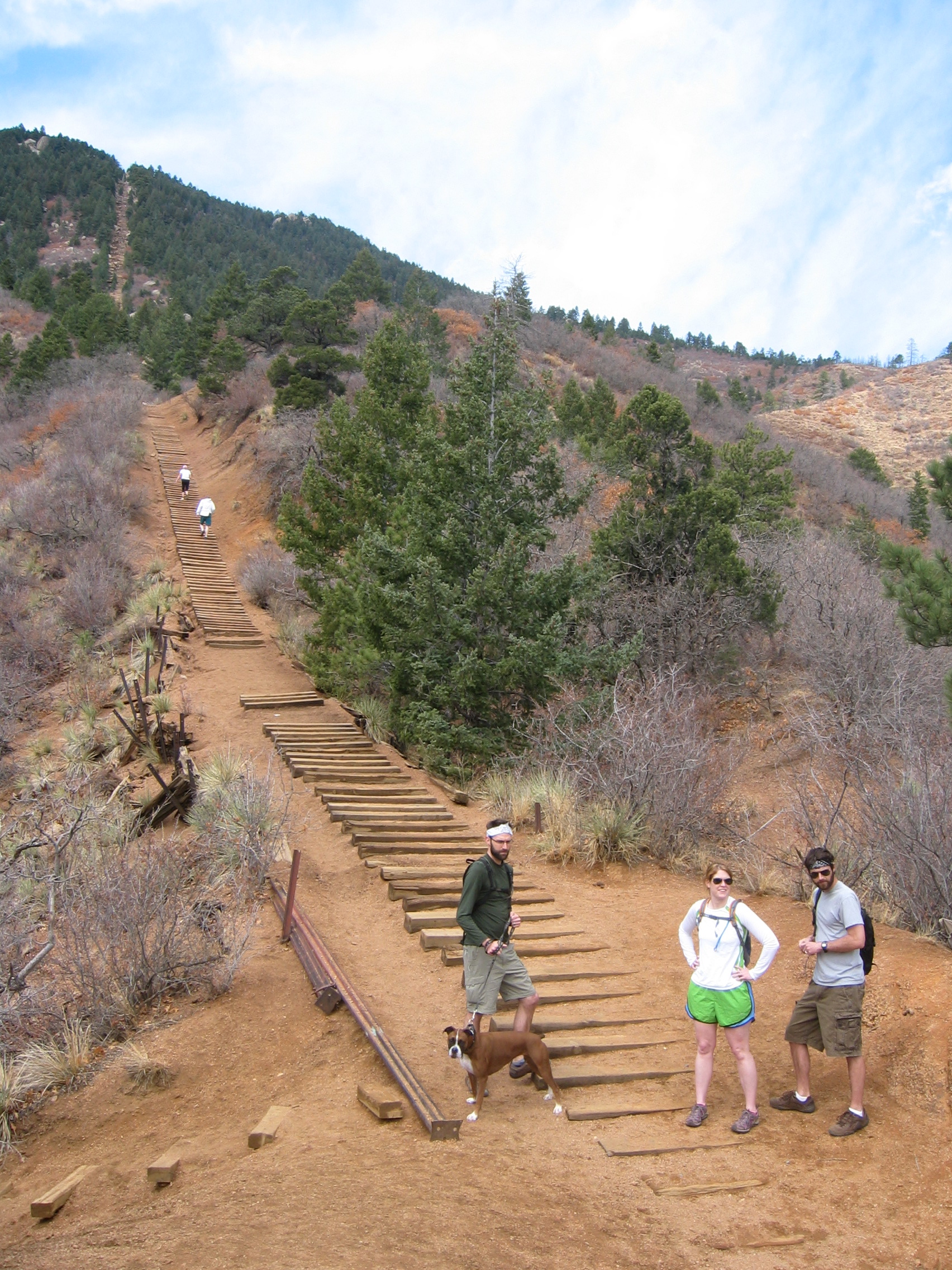
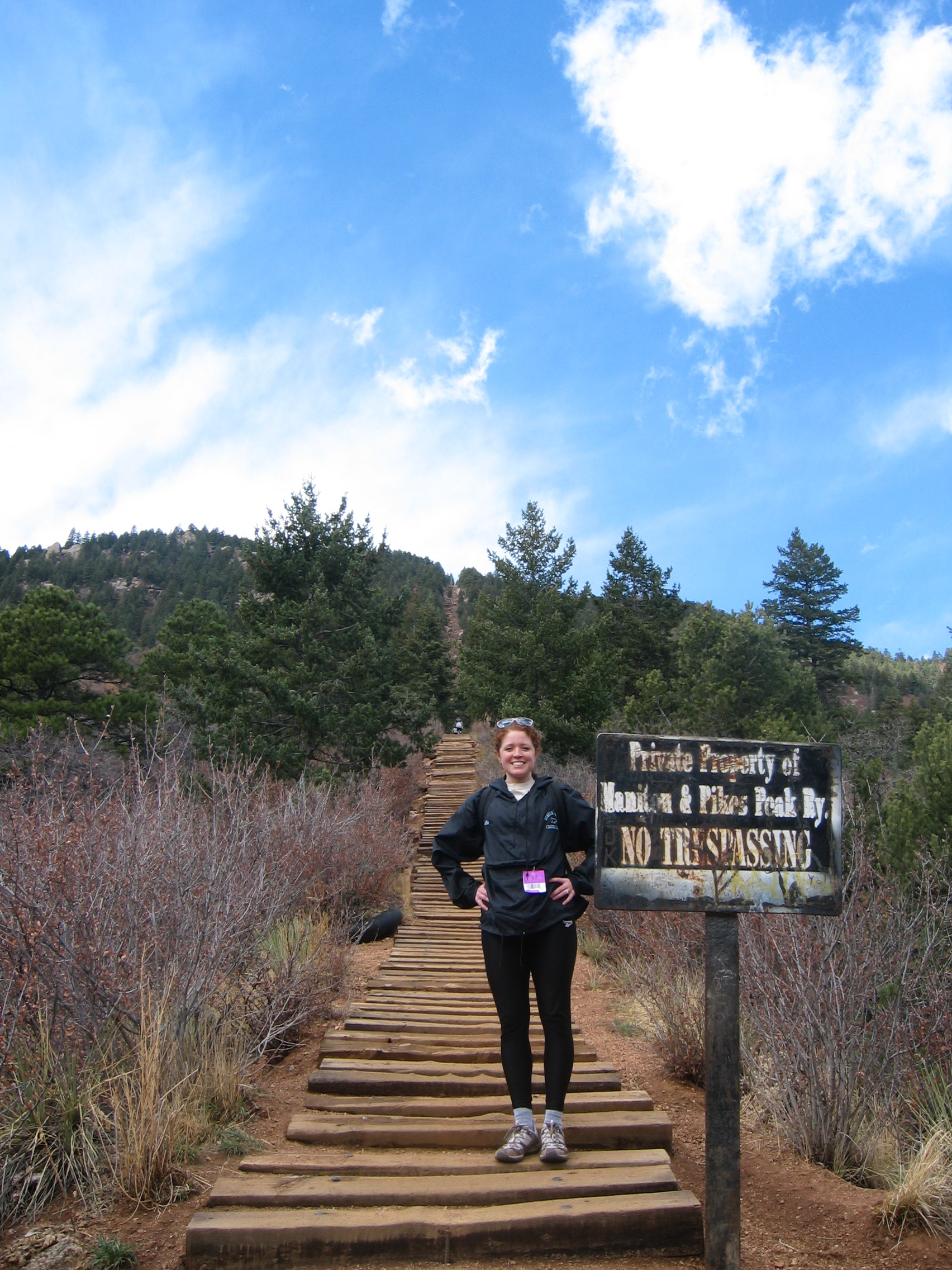
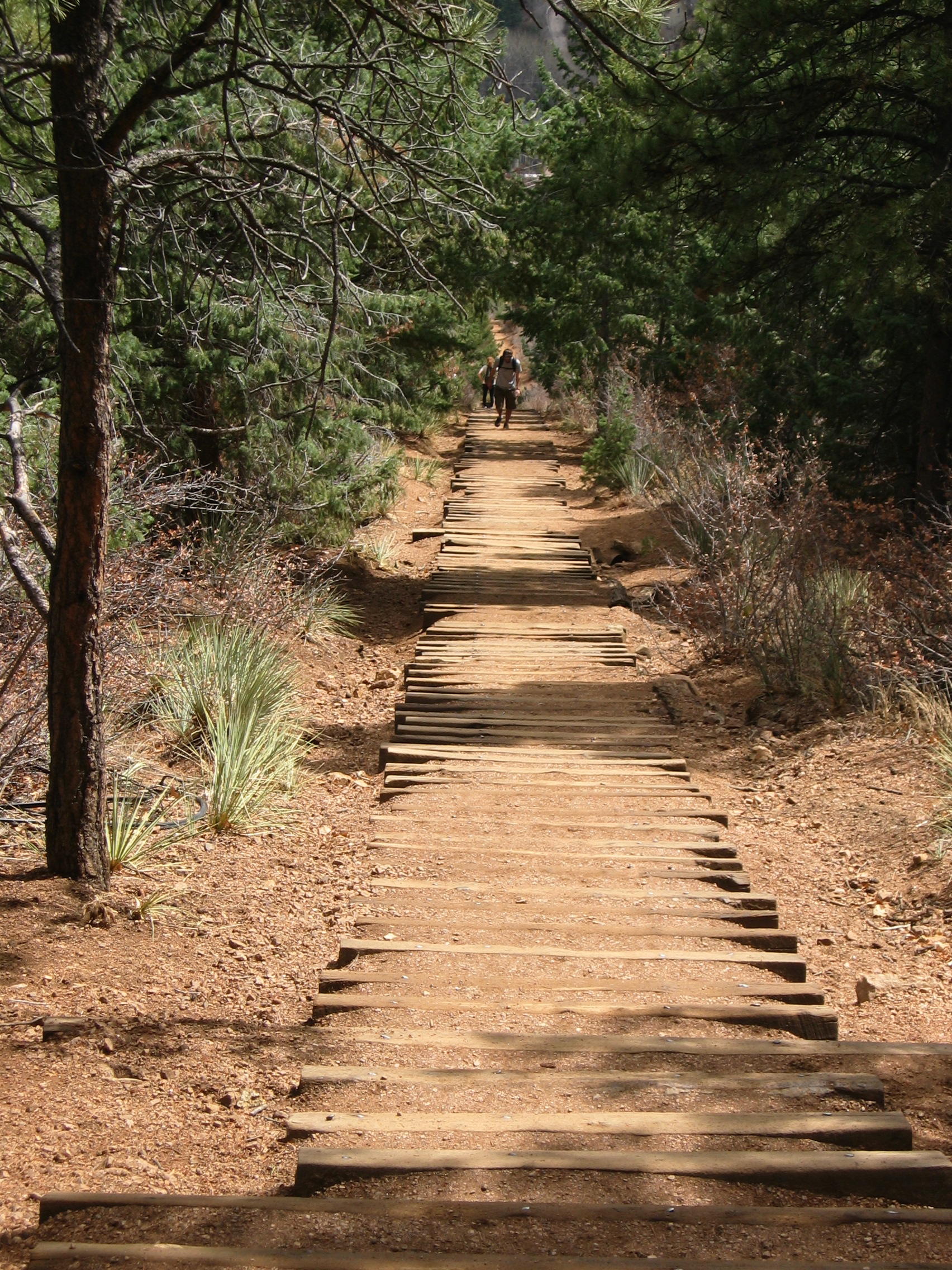
I breathed well during the trip with big gulps of air, expanding my lungs and ribs as deeply as I could just to take it all in. A highlight hike was the illegal Incline. One mile to climb 1800 feet. Many people, about 100 a day, take the journey and if you go at a slower pace some people get to be very open about themselves. There is something along side physical exhaustion and true honesty that goes hand in hand. Everyone feels better after going outside!

I wrote about my husband and I’s rating system with Hikes in a past post titled Interlaken, A town for Extremists. I just added The Incline as a difficulty level of 8. The good thing about this hike was that it was relatively quick!

10    Mt. Saint Helens Summit 8 mi (1 day)
9   Grindlewald -Fulhorn- Schinge Platte – 14 mi (1 day)
8    Gresalp to Murren via Sefinefrugge -10 mi (1 day)
8    Katahdin Summit (AT) 9 mi (1 day)
8    Beaver Brook (AT) NH (to Beaver Brook Shelter) 1.5mi
8     The Incline, Manitou Springs CO

7    Laurel highland Hiking trail (Ohiopyle to Rt. 653) 19 mi (2 days)
6    Warrior Trail (Greensboro to Covered Bridge) 12 mi (1 day)
5    Dolly Sods (Little stone coal -Big stone- breathed mt. Lionshead) seven mi (1 day)
5    Monterosso to Riomagiore (IT) Cinque Terra – 5mi (1 day)

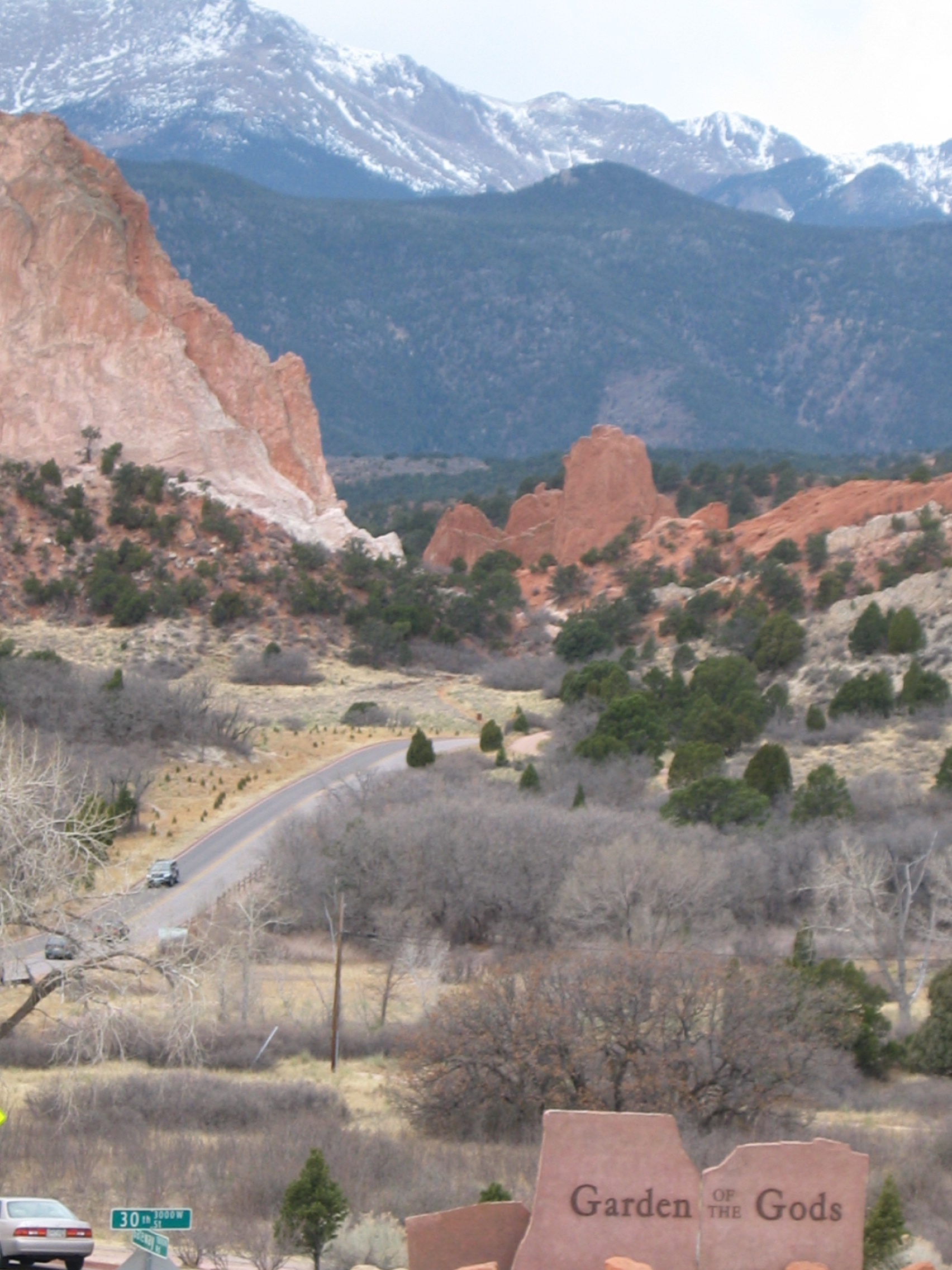
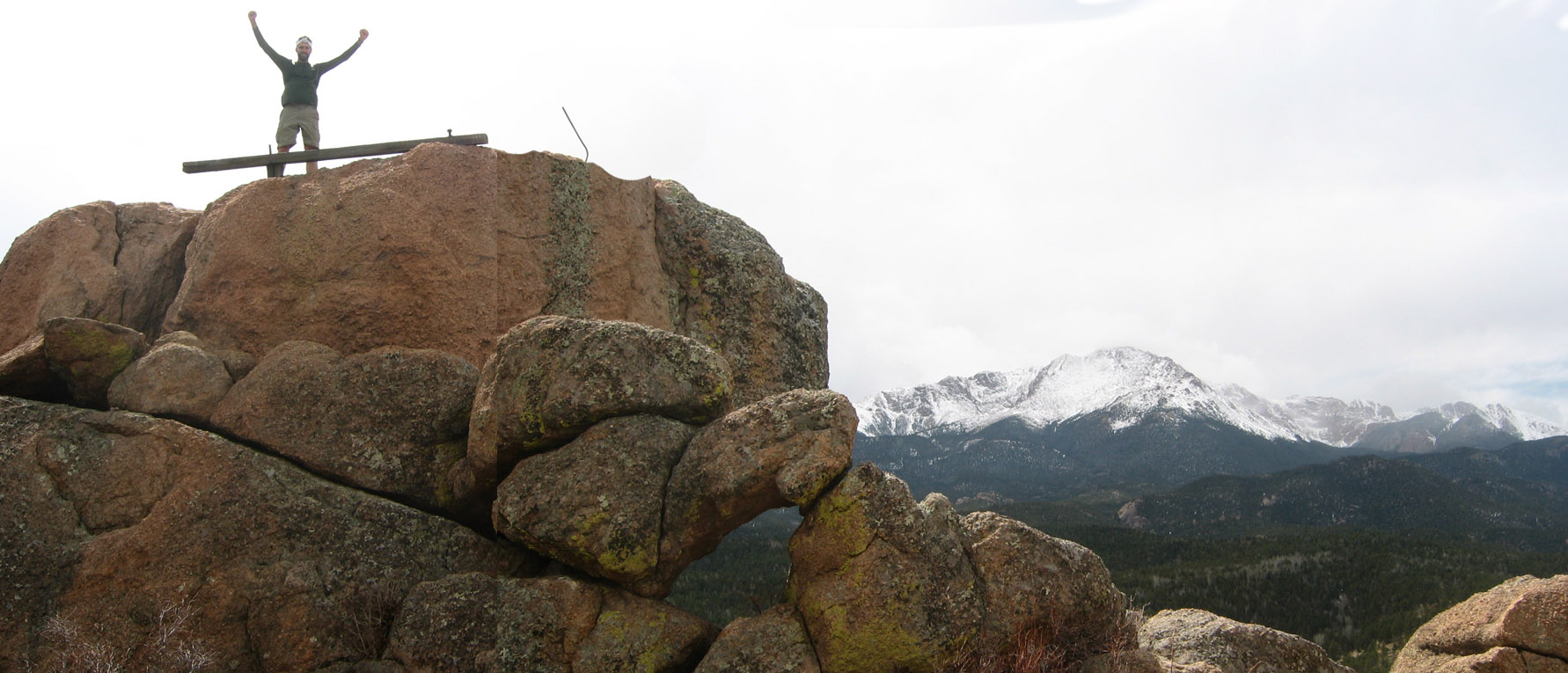
Phil and I kept climbing after the top of the Incline, high enough to look over Manitou Springs and Colorado Springs, high enough to see the east side of the ridges flattening out. We could see the Garden of the Gods from up there and see the reddish land sliding down into the city.

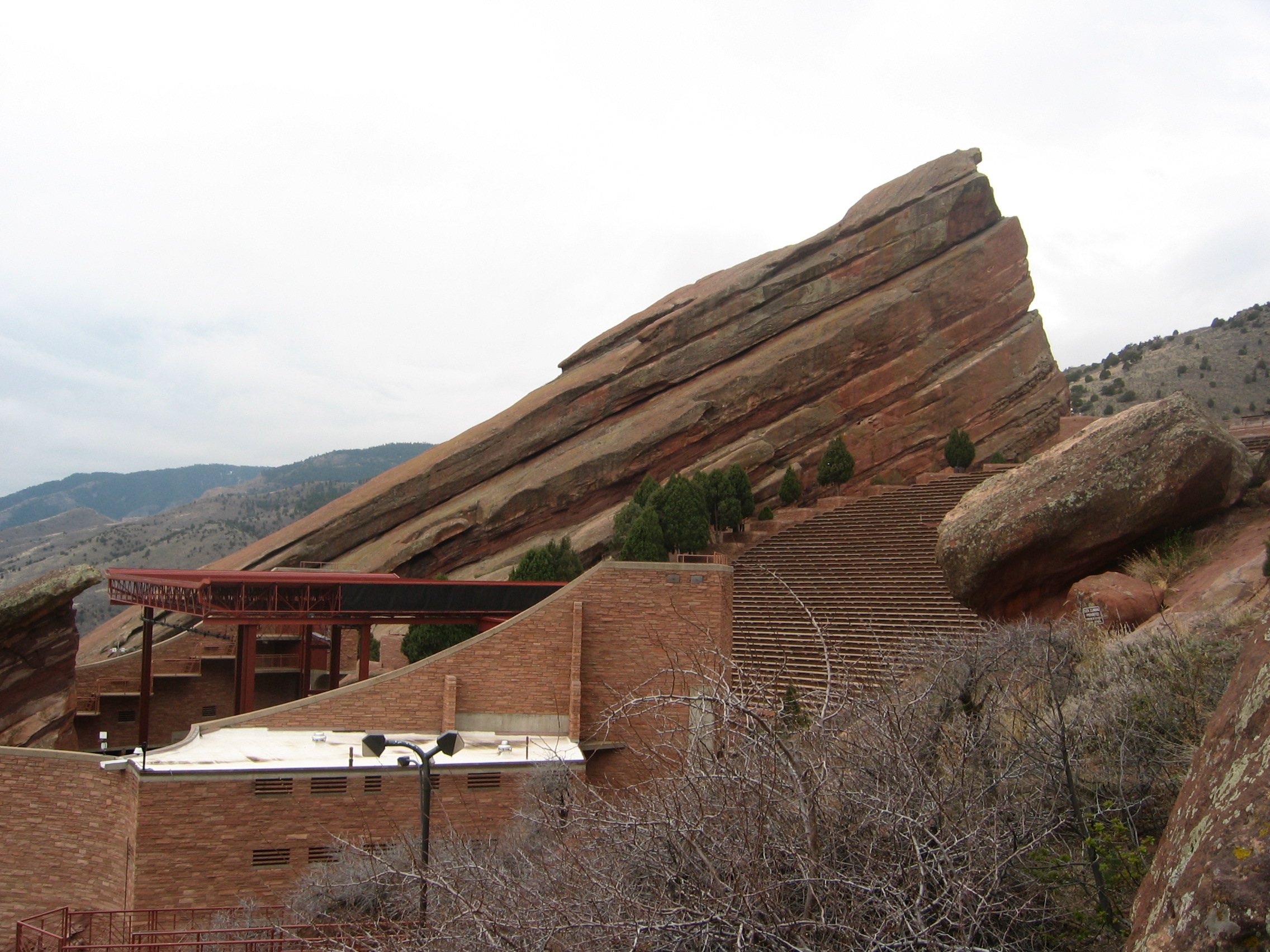
Later in the week we visited a quarry where limestone had been pulled but the Rockies red rock was left to look like the pyramids in Egypt. Could the pyramids have been carved? Or were the apparatuses to build them long ago biodegraded into the nearby sand as to keep the secret?

Hey! Don’t jump!

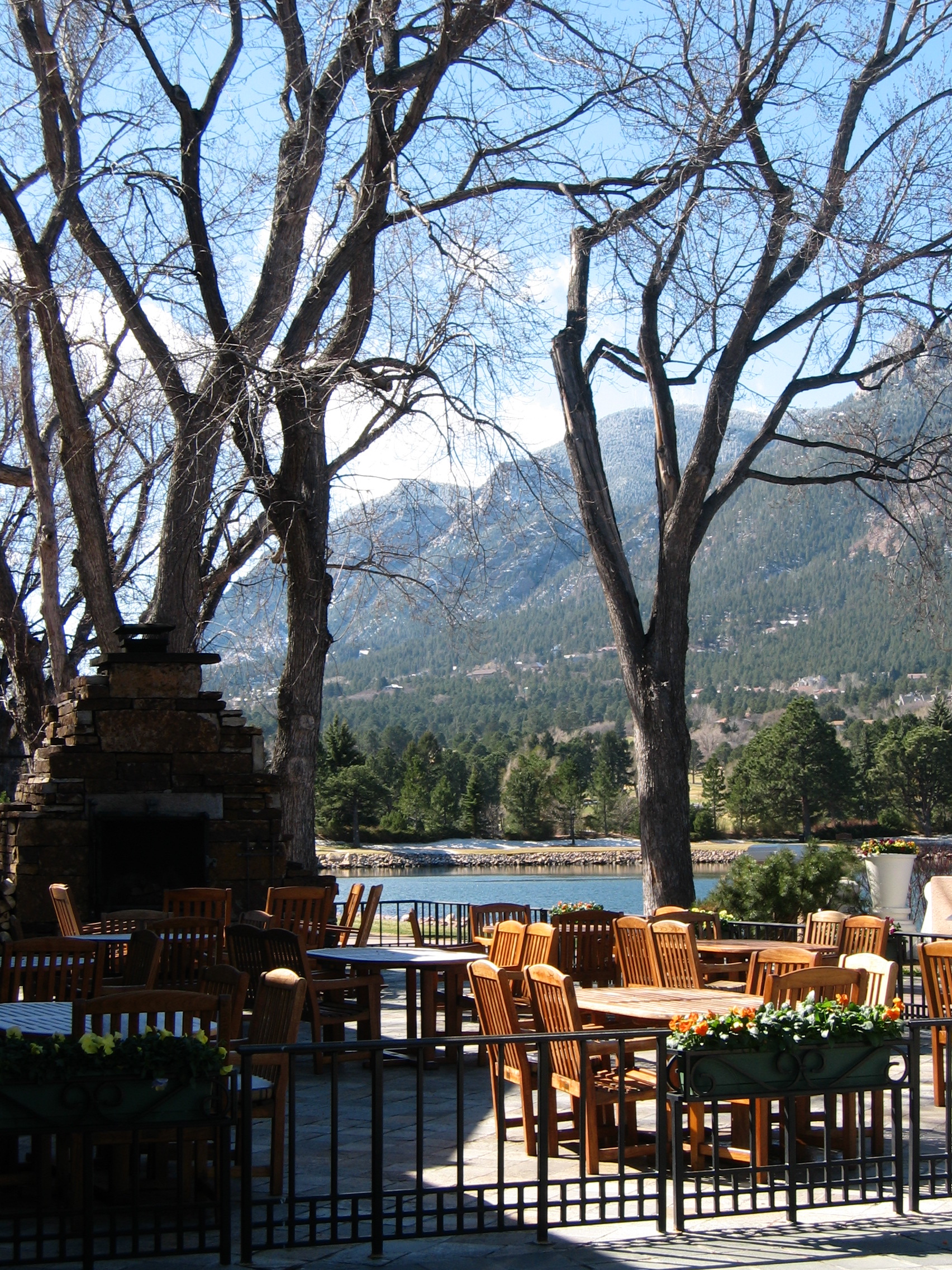
One day we spent time at a mansion on the lake, The Broadmoor… the Oglebay of the Rockies. The main building is of the Italian Renaissance and the interior held many ornate wonders. The lake lies behind, and it all looks toward Cheyenne Mountain. The architectural detailing that pulled me to go was the painted underside of their porte-cochere.

Indian Native Castles

a midnight journal by

Montezuma’s castle

in lattice work ceilings

deep blue starry nights

spanish influence with a Navajo ornateness

ceramic fountains and flower pots

the yellow stripped pool pavilions

I felt trapped in a majestic maze

some sort of mystery among the spirits

thin panes of glass in doors peering

into the next fire lit room

a sun-drenched place

at the windy side of the lake.

.

Categories
Building Sustainably Community Environmental

Americans are Close to the Soil

.

‘Americans are close to the soil.’ Faith said to a group of twenty people who gathered last night to discuss The Power of Community.

That was, the film’s director Faith Morgan. The film, released in 2006 captures how the island people of Cuba have formed alternate ways of transportation, organized the decentralization of universities, and have begun to depend on one another in collective efforts of their community to survive the past 20 years.

The full title of the movie, The Power of Community: How Cuba Survived Peak Oil, more accurately describes the discussion with Faith Morgan after the viewing. What is Peak Oil? Is there an effort to deal with Peak Coal? How can the secluded and resourceful nature of island people help the U.S. to define and enact false boundary definition in order to train ourselves to use the local resources in our own lives?

Faith Morgan spoke to the power of discussion. By simply living, working and depending on your neighbors, we make one another aware by our interaction of life choices. We slowly spread a sustainable life message and make ourselves available to learning from their life experiences as well.  She and her husband, Pat Murphy, have a mission to ‘ Wake People Up! ‘ To engage communities in community solutions. Ms. Morgan, an avid gardener, painter, and film maker is also the executive director of  Community Solutions, founded by her grandfather in 1940. It is ‘a non-profit organization that advocates for small communities and the benefits of face-to-face relationships in a particular place.’

Our group discussed Faith Morgan’s next film about the German Passive House and joining us in the crowd was Linda Wigington from Waynesburg, Pa of Affordable Comfort, Inc. (ACI). She leads the 1000 Home Challenge – enticing us to be smarter than our energy bills. But, how do we get our communities on board? A few people in the group were skeptical, but there were plenty of examples there in the room. Some people have Net Positive homes, others have built underground houses. Faith discussed an involvement by example, or a demonstration house to exhibit the no-brain-benefits of thickened walls and the importance of order in completing efficient home retrofits. These are for any homeowner who wants to lessen their dependence on electricity or gas in their home. Ultimately affordable comfort aims to provide comfort for you, your wallet and our earth.

Scattered notes that I scribbled in a fit of inspiration over the evening are as follows:

.

The bicycle transformation of Cuba after the Soviet Union collapsed.

During the special period.

Permaculture and working within boundaries to clean

every square foot of property has turned into an orchard

working with your neighbors promote a local economy.

Social fabric.

What is our existing collective sense of purpose?

You don’t need that much to be happy.

.

CubaAssocPress.jpg

Photo by Javier Galeano, Found at CityFarmer.info

.

‘Thank you’ to Faith Morgan and everyone who attended last night’s Book Club Event!