Categories
Poetry Travel Uncategorized

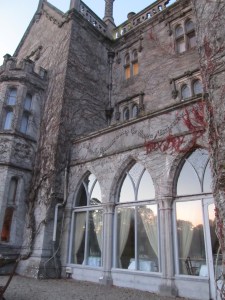
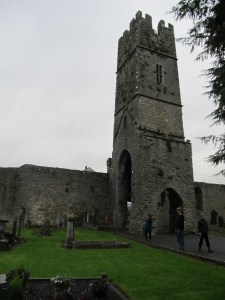
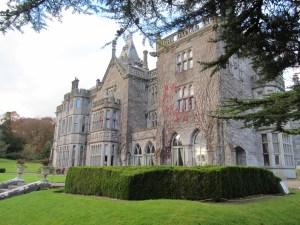
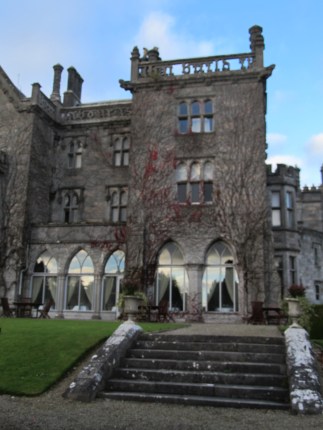
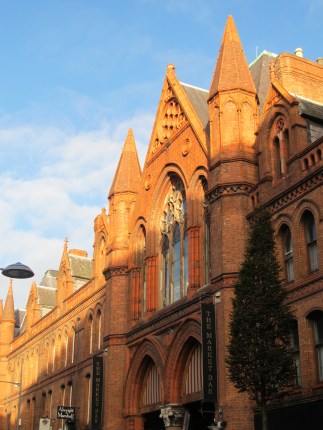
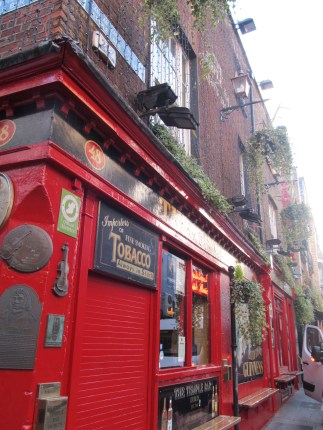
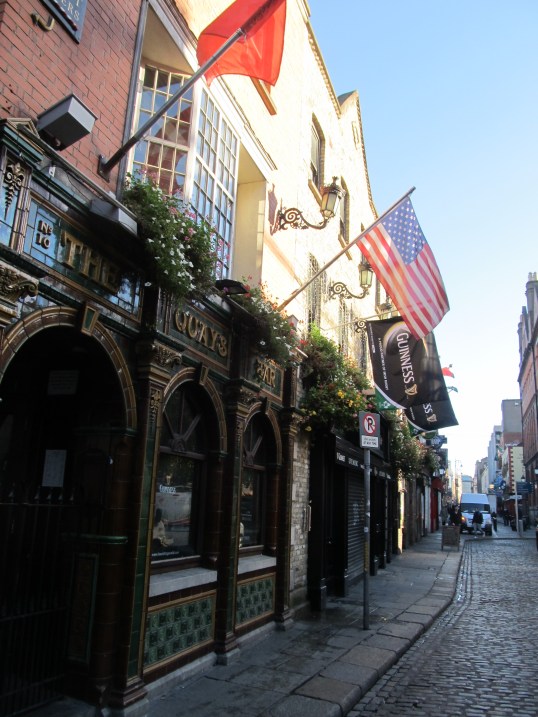
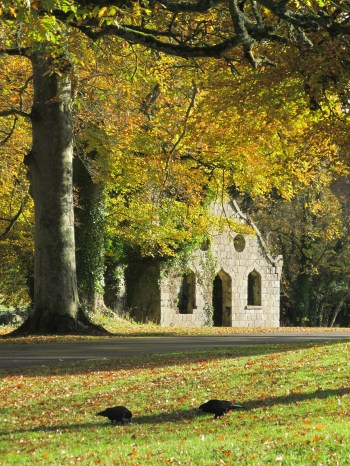
Real Ireland

IMG_2015

Welcome to real Ireland

~

We slipped away

into a dream

my smile was worn out

before we left.

This trip was momentous

a page turning, the new bloom

a bookend.

~

Brush strokes pushed upon the shore.

Ireland, home to the hills,

the midst, the fairies, the folklore

and now us.


Categories
Architecture

Think Tank Talk

Do you want to be hired as a Think Tank? Hired to Inspire, hired to think about the whole and interconnected world we live and work in?

Architects have varied positions in this world. While some build shelters for the wealthy, others build for world disaster victims. These are a few Think Tank focused firms that have caught my attention lately.

AMO

OMA’s Research counterpart, AMO put together a video on a world using 100% Renewable Energy .

VisionArc

VisionArc is a consultancy run in tandem with Toshiko Mori Architect, the practice founded by Toshiko Mori (pictured) in 1981. Mori also teaches at the Harvard Graduate School of Design and chairs the World Economic Forums Global Agenda Council on Design. – Architect Magazine

.

Fast Co writes about why Firms aren’t so great at Sustainability

This is no secret at the management level of top companies. So why is it that even the best American brands, so clever, innovative, and adaptive in all other aspects of business, aren’t able to come up with smart solutions to the resource problem that the culture of consumption has created? The answer is counterintuitive: Our experience tells us that it is exactly because American companies are so amazingly innovative, entrepreneurial, and intensely competitive that they can’t find ways to deal with the global challenges. Finding sustainable solutions isn’t about discovering new, ever-more disruptive ideas. It requires the opposite, something very un-American: standardization, slowness, and centralization. To most, more ideas are always better. But in this case, the more green solutions we have, the less effective and efficient processes become.

~Full Article Here~

.

The Why Factory,

A think tank headed by MVRDV’s Winy Maas questions a multitude of things to be explored!

Categories
About Me

Inspiration Today ~ Living Room Collage

Short and Sweet

~

I’ve been thinking of upholstering my couch in blue velvet and wanted to bring together some existing colors already present in my living room. I recently found this neat online interface for collaging, and combined a few of my interests into a one page, online collage.

What do you think?

Categories
Food & Exercise

Gardening Year Round

{ It’s time to close the Garden }

Gardening has become, in the last few years, a wonderful way in which I release. It grows alone, and well, even when I forget about it for a few days. Composting kitchen scraps and weeds to make black soil is such an easy way to make rich dirt. I enjoy pulling black earth from beneath my compost pile, knowing that I made this! Last week I spent some time pulling up carrots and beets, finding all of the Jerusalem artichokes (if you were wondering what those tree-like flowering bushes were on the left), turning down the tomato plants, and planting a winter rye as a cover crop.

I enjoy knowing how my food is grown. This year my tomatoes and peppers did wonderfully. Last year we had an abundance of potatoes and broccoli.

During the winter my husband and I spend time planning our
garden for the upcoming year.

I recommend referencing a book by Joan Gussow. Her book, This Organic Life, may be found online for a quick peak. My copy is full of markers noting Gussow’s year round planting advice. I thought I’d share the following notes that I’ve found helpful from her book and from my own experience. Enjoy!

Crops to consider for the winter: Buckwheat & Barley. Mache, lollo rosa salad mixes that survive 10 degree weather in a cold frame are great too.

Feb or March, begin artichoke seedlings inside. Plant can go outside in May to get an artichoke in the fall.

Spring planting outside: Snap Peas, Bok Choy, spinach, carrots, beats, potatoes, Jerusalem artichokes, and green beans. (Start broccoli, tomatoes, and peppers inside.)

Late May –  Sweet Potatoes – take newspapers topped with grass clippings, when soil is 70 degrees, slit paper and push through rooted sweet potato (sprouted sweet potatoes put in water, if they don’t root in  week, flip the cutting over). Let the sweet potato ramble, and begin digging them up in September. When sweet potatoes are cut, they need to cure in a warm (80 degrees) humid place for a week.

Transplant indoor plants outdoors.

Ground Cherries, the fruit keep indefinitely as long as you leave them in their husks. The plant produces fruit from June through September.

When spinach went to seed in the summer, we planted parsnips in the same bed as a winter crop. Plant Parsnips, sauté in Feb or January or make parsnip pancakes.

June – broccoli seeded outdoors – when harvesting broccoli heads, cut the stem just above the first two leaves so that the sturdy stalk would send up new shoots for a second crop in early fall.

My brussels sprout just needs a little more time this year… Photo Sept. 2012.

Plant kale: Fall planting.

August – seeded outdoors, carrots, beets, winter salad and spinach

Cover crops: Rye or Austrian winter bean planted in October three weeks before a good frost. We did this last fall, the fall of 2011. We ended up sewing some of them back into the soil in March. Some was left to grow until May, when I pulled it and used it as a base to plant my tomato plants. My aunt and uncle have a method for tomato growing perfected. Check out a blog all about their home and garden at

Old World Garden Farms ~

See this site about year-round gardening tips too: Vegetable Gardening Online

This was a shot in September 2012 that we took after harvesting the Jerusalem artichoke trees… oh there’s an entire garden behind them!

Categories
Community

Main Street Gallery ~ Upcoming and Past Events

Well, I have an idea! Join us at The Main Street Gallery tomorrow, Thursday,

November 1st at 6pm!

Read the article in this past weekends Intelligencer, prepared by Betsy Bethel here! Not only is Betsy a fantastic journalist, but she will also be the entertainment with her bagpipe at this weeks show!

Image from David’s show last month are below. A new bakery coming into town, the V Bakery and Bistro provided delicious macaroons and sweet bread that night. We always offer coffee from our local coffee shop, Grindhouse, as well as some intriguing conversation!

So, we hope you can make it out.

~

~

~

Categories
Community

The Ramsey Anagama Kiln Firing

~ The Main Street Gallery ~

.

We will have an event this Thursday, November 1, to celebrate Ben Steffl Thompson’s work and his recent Ramsey Anagama Kiln firing. Check out the inside of the kiln at Ben’s blog here.
~
I attended a workshop by The Mitch Collective a month ago. Ben lead the workshop and taught us different techniques to achieve pinch pots, sculptures and more. See his work, and then humble beginnings of those at the workshop this Thursday the 1st, at The Main Street Gallery located at 145 E. Main Street in St. Clairsville OH! 6pm
..
The images are taken from:
Check out other events at the Mitch house here!
..
(Images from a past firing)
~
Please join us for a great time this Thursday at 6!
Categories
Food & Exercise

St. Clairsville Fall

A few more picture of the Bike Trail and Union Cemetery in St. Clairsville Ohio, this fall.

This slideshow requires JavaScript.

Categories
Architecture

Museum Rendering

Two weeks at an Architect’s Desk

These are a few renderings I did for the Weirton Museum.

Categories
Architecture

At an Architect’s Desk

 7 years or 10,000 hours – the time in which it takes someone to be good at something after lots of practice.

I did the following sketches two years ago during a cold January. So, here is what is at the desk of an architect ~All in a Month ~

I drew the above space for Tony’s Spa in Triadelphia WV. These interior elevations were to help dictate art and the placement of it. I need to make it to Tony’s with a camera in tow to take pictures of the final product.

I began January working on a Stained Glass Country Church in West Virginia and in one and a half months took a church in need of renovation and additions into a set of construction documents. I  developed 3 color scheme boards for them to choose an interior color scheme from as well.

The 30 x 30 inch finish boards.

Construction Documents included coordinating with a MEP consultant to conceal a horizontal duct.

Here, my firm and I developed a unique solution to incorporate duct work into the simple space of the existing sanctuary.  Solution: develop a horizontal bulkhead, pulled from the ceiling plane, to allow the existing tin ceiling to continue without interruption. The new low bulkhead is detailed with new crown molding and held up with decorative brackets.

Next, I began working on a large addition to a technical college. The first step, to develop finish material schemes.

I’ll leave you with a few architecture thoughts as well:

I’ve been thinking lately that architecture is about the master plan. It seems there are qualified product distributors that have an easier time selling cabinets than I do designing them. An architect’s work has become the arrangement of many systems. I no longer hire a craftsman to make my building space work, I specify instead, pieces that fit in a large space puzzle. I hope they all fit! I find that trying to understand all of the pieces thoroughly becomes a task in itself.

I came across an article in Architect Magazine, that seemed to be thinking along the same lines.

An article written by Kiel Moe titled Do more with Less, Double glazing Vs. Masonry. (about monolithic building structures) Read it here.

Categories
Architecture Book Review Building Sustainably Environmental

The search for The Greenest way I can build a new Home

The best methods, The best materials

What is Green Building in the Northeast U.S.? I’ve consulted the following book many times in designing new spaces. I’ve found the information in what has been provided to me through searching The Passive Solar House links.


The Passive Solar House by James Kachadorian

Book Review

Rule #1: Build in Reference to your Surroundings

Position the long direction of the house in the East/West direction and plant deciduous trees along the South. James gives direction for how to know your site. ‘Make a point of being on site at sun rise and sunset at different times of the year. Develop a sense for which direction the prevailing wind comes from…in addition to solar orientation, consider access, view, wind, direction, snow removal, power, septic and water.” In the past when I have mentioned Slow Building, this is the direction I was seeking.

Rule #2: Design on a 12 month basis. ‘Accommodate and benefit from the sun’s shifting patterns and other natural seasonal cycles.’

Rule #3: Provide effective thermal mass to store free solar heat in the day time for nighttime use. The above diagram is a graphic from the book where he notes ‘achieve thermal balance by sizing the storage capacity of the thermal mass to provide the heating needs of the building through the night.

4″ slab over 12″ CMU is approximately 10″ of solid concrete.

10″ x by the building x and y dimensions = the ____ cubic feet of volume.

Ways of keeping the heat in include thermo-shutters, as described in the image below. However, you want to make sure that your building envelope is a closed cell construction to protect the R values you’ve invested in it as well as to prevent insect damage. The envelope is something that you may ‘Dress as you please.’

This is a graphic for a wall section, envelope, that you would find in the north-eastern United States. For example, the vapor barrier is always to be on the warm side, and in this area the warm side is the heated side of the home, on the interior because we heat in the winter. This leads us to Rule #4:  Insulate thoroughly and use well-sealed vapor barriers.

While constructing a home for my family I studied Advanced Framing, also termed Value Engineering. This means building with typical construction methods, but arranging the building components  in a smarter way. The simple spacing of 2×6’s at 2′ on center versus 16″ or the ways in which to construct a corner and header of a window frame are two examples in which less wood can be used to build a solid home.  Look at these sites listed:  Building Science Consulting and The Energy and Environmental Building Alliance

Getting back to the book, the author makes it a point to differentiate between house wraps and vapor barriers. House wraps are designed to stop wind, not moisture, and a vapor barrier is an extremely important part of the building envelope sandwich.

Tightly sealed buildings should exhaust and vent to the outside through controlled or deliberate openings. For example, areas that have excessive moisture such as the bathroom, kitchen and laundry rooms. So, what are deliberate and controlled openings about?

I sought out the information on the internet and found Scandinavian Homes; Passive houses who described a Ventilation heat-recovery system by Temovex. These systems control the air-exchanges in a home, and in the winter months when we don’t want to pump out our expensive heated air with necessary ventilation, they have a way of recovering the heat without compromising our inside air quality.  Click here to see how the Temovex works in expanded terms.

With a balanced mechanical system, you control the amount of ventilation in the house. Not too much on windy and cold days and enough on humid and mild days…A whole house ventilation system helps to provide consistent temperatures though-out the house or apartment. The house or apartment must be reasonably well insulated and draft-proofed for the system to work to its highest potential…Temovex units make your home into a thermos! You retain the heat in the building without the need for unnecessary new thermal energy…

In chapter five the book begins to describe floor plans and layouts in the same way it invites you to learn your site. ‘We should layout the home’s rooms in relation to the patterns of the sun; that is, morning areas and activities should be planned for the east side of the home, and evening activities generally on the west side.’ The sun and normal living habits migrate from the east to the west. For example the living room should be well warmed by mid day, but the breakfast area should be warming first. I found these images on this site.

This plan uses space efficiently and uses the space below the stairs for storage of the water tank and air circulation equipment.

This leads us to two important and key rules to this entire passive strategy.

Rule #5: Utilize windows as solar collectors and cooling devices.

Rule #6: Do not over-glaze.

What the book provides here is an in-depth lesson on how to calculate exactly what your home needs to maintain a comfortable living environment. I suggest you find the book to learn about this exactly. You can find the book at Amazon by clicking the picture below.

The author tells us that ‘There are not cookbook recipes for solar design.’  A summary of the design procedure is provided by Google Books, and is represented below.

Rule #7: Consider the contribution of solar energy (indicated by insolation values for your region) and natural processes (including breezes and shade) to the heating and cooling of the home, in order to avoid over sizing a backup heating system or air conditioner. A home that is oriented to true south, is tightly constructed and well insulated, and has operable windows for air circulation should not require large fossil-fuel burning equipment to maintain thermal comfort.  Size the conventional backup systems to suit the small, day-to-day heating and cooling needs of the home.

Rule #8: Provide fresh air to the home without compromising thermal integrity.

Rule #9: Use the materials you would use for a conventional home, but in ways that maximize energy efficiency and solar gain.

Rule #10: Remember that the principles of solar design are compatible with diverse styles of architecture and building techniques.

Other ideas to come… what about Malcolm Wells Earth Sheltered Homes or those by Jacques Couelle?