Categories
Architecture Book Review Building Sustainably Environmental

The search for The Greenest way I can build a new Home

The best methods, The best materials

What is Green Building in the Northeast U.S.? I’ve consulted the following book many times in designing new spaces. I’ve found the information in what has been provided to me through searching The Passive Solar House links.


The Passive Solar House by James Kachadorian

Book Review

Rule #1: Build in Reference to your Surroundings

Position the long direction of the house in the East/West direction and plant deciduous trees along the South. James gives direction for how to know your site. ‘Make a point of being on site at sun rise and sunset at different times of the year. Develop a sense for which direction the prevailing wind comes from…in addition to solar orientation, consider access, view, wind, direction, snow removal, power, septic and water.” In the past when I have mentioned Slow Building, this is the direction I was seeking.

Rule #2: Design on a 12 month basis. ‘Accommodate and benefit from the sun’s shifting patterns and other natural seasonal cycles.’

Rule #3: Provide effective thermal mass to store free solar heat in the day time for nighttime use. The above diagram is a graphic from the book where he notes ‘achieve thermal balance by sizing the storage capacity of the thermal mass to provide the heating needs of the building through the night.

4″ slab over 12″ CMU is approximately 10″ of solid concrete.

10″ x by the building x and y dimensions = the ____ cubic feet of volume.

Ways of keeping the heat in include thermo-shutters, as described in the image below. However, you want to make sure that your building envelope is a closed cell construction to protect the R values you’ve invested in it as well as to prevent insect damage. The envelope is something that you may ‘Dress as you please.’
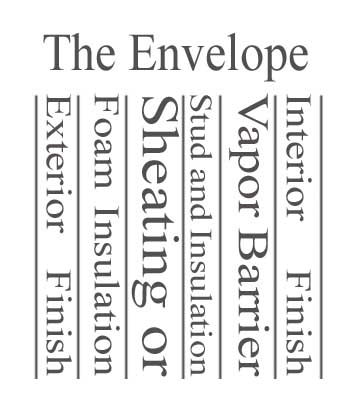
This is a graphic for a wall section, envelope, that you would find in the north-eastern United States. For example, the vapor barrier is always to be on the warm side, and in this area the warm side is the heated side of the home, on the interior because we heat in the winter. This leads us to Rule #4:  Insulate thoroughly and use well-sealed vapor barriers.

While constructing a home for my family I studied Advanced Framing, also termed Value Engineering. This means building with typical construction methods, but arranging the building components  in a smarter way. The simple spacing of 2×6’s at 2′ on center versus 16″ or the ways in which to construct a corner and header of a window frame are two examples in which less wood can be used to build a solid home.  Look at these sites listed:  Building Science Consulting and The Energy and Environmental Building Alliance

Getting back to the book, the author makes it a point to differentiate between house wraps and vapor barriers. House wraps are designed to stop wind, not moisture, and a vapor barrier is an extremely important part of the building envelope sandwich.

Tightly sealed buildings should exhaust and vent to the outside through controlled or deliberate openings. For example, areas that have excessive moisture such as the bathroom, kitchen and laundry rooms. So, what are deliberate and controlled openings about?

I sought out the information on the internet and found Scandinavian Homes; Passive houses who described a Ventilation heat-recovery system by Temovex. These systems control the air-exchanges in a home, and in the winter months when we don’t want to pump out our expensive heated air with necessary ventilation, they have a way of recovering the heat without compromising our inside air quality.  Click here to see how the Temovex works in expanded terms.

With a balanced mechanical system, you control the amount of ventilation in the house. Not too much on windy and cold days and enough on humid and mild days…A whole house ventilation system helps to provide consistent temperatures though-out the house or apartment. The house or apartment must be reasonably well insulated and draft-proofed for the system to work to its highest potential…Temovex units make your home into a thermos! You retain the heat in the building without the need for unnecessary new thermal energy…

In chapter five the book begins to describe floor plans and layouts in the same way it invites you to learn your site. ‘We should layout the home’s rooms in relation to the patterns of the sun; that is, morning areas and activities should be planned for the east side of the home, and evening activities generally on the west side.’ The sun and normal living habits migrate from the east to the west. For example the living room should be well warmed by mid day, but the breakfast area should be warming first. I found these images on this site.

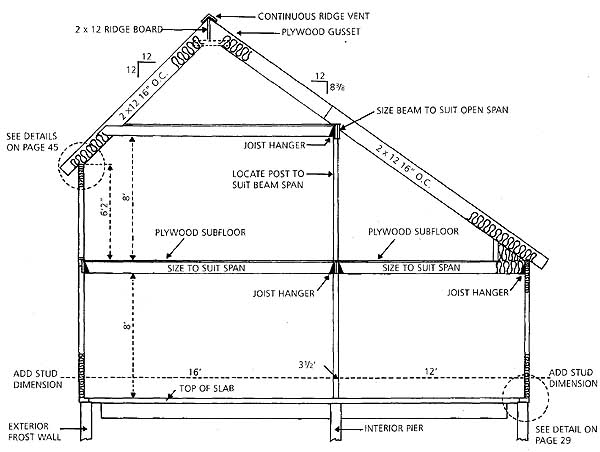
This plan uses space efficiently and uses the space below the stairs for storage of the water tank and air circulation equipment.

This leads us to two important and key rules to this entire passive strategy.

Rule #5: Utilize windows as solar collectors and cooling devices.

Rule #6: Do not over-glaze.

What the book provides here is an in-depth lesson on how to calculate exactly what your home needs to maintain a comfortable living environment. I suggest you find the book to learn about this exactly. You can find the book at Amazon by clicking the picture below.

The author tells us that ‘There are not cookbook recipes for solar design.’  A summary of the design procedure is provided by Google Books, and is represented below.

Rule #7: Consider the contribution of solar energy (indicated by insolation values for your region) and natural processes (including breezes and shade) to the heating and cooling of the home, in order to avoid over sizing a backup heating system or air conditioner. A home that is oriented to true south, is tightly constructed and well insulated, and has operable windows for air circulation should not require large fossil-fuel burning equipment to maintain thermal comfort.  Size the conventional backup systems to suit the small, day-to-day heating and cooling needs of the home.

Rule #8: Provide fresh air to the home without compromising thermal integrity.

Rule #9: Use the materials you would use for a conventional home, but in ways that maximize energy efficiency and solar gain.

Rule #10: Remember that the principles of solar design are compatible with diverse styles of architecture and building techniques.

Other ideas to come… what about Malcolm Wells Earth Sheltered Homes or those by Jacques Couelle?
Categories
About Me

How to make your Deck more Eloquent

  1. $26.00
  2. Time including 48 hours without rain.
  3. Man sipping out of crystal

My husband and I recently spent a Saturday going

From

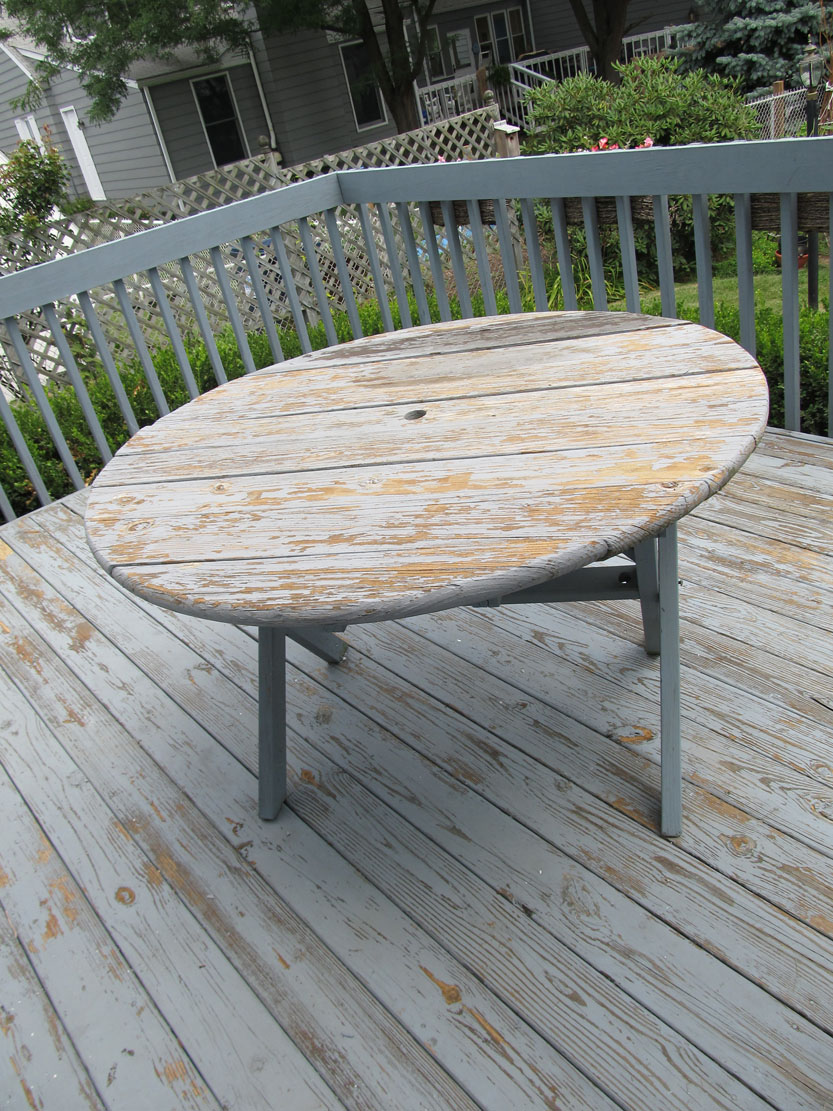
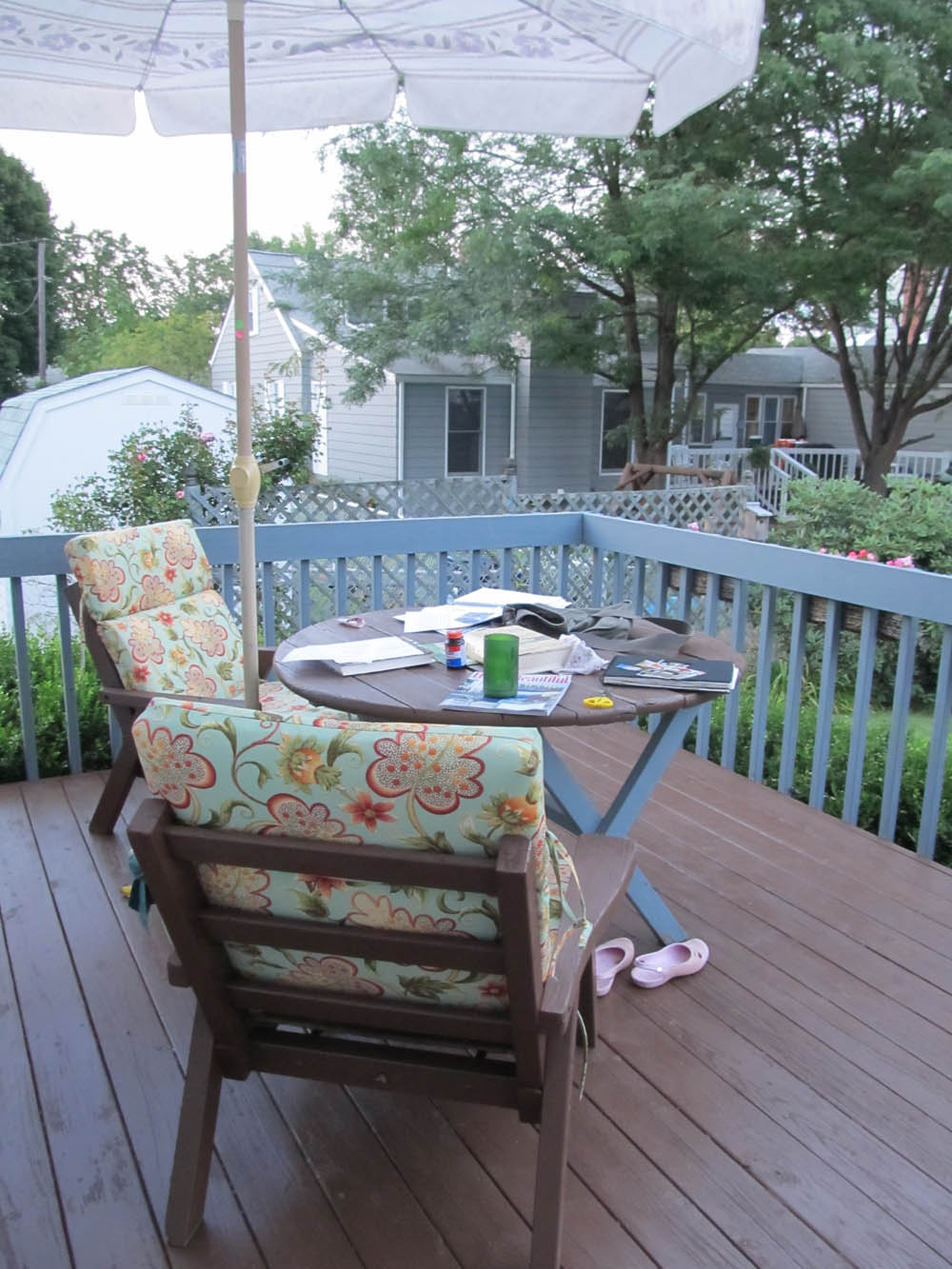
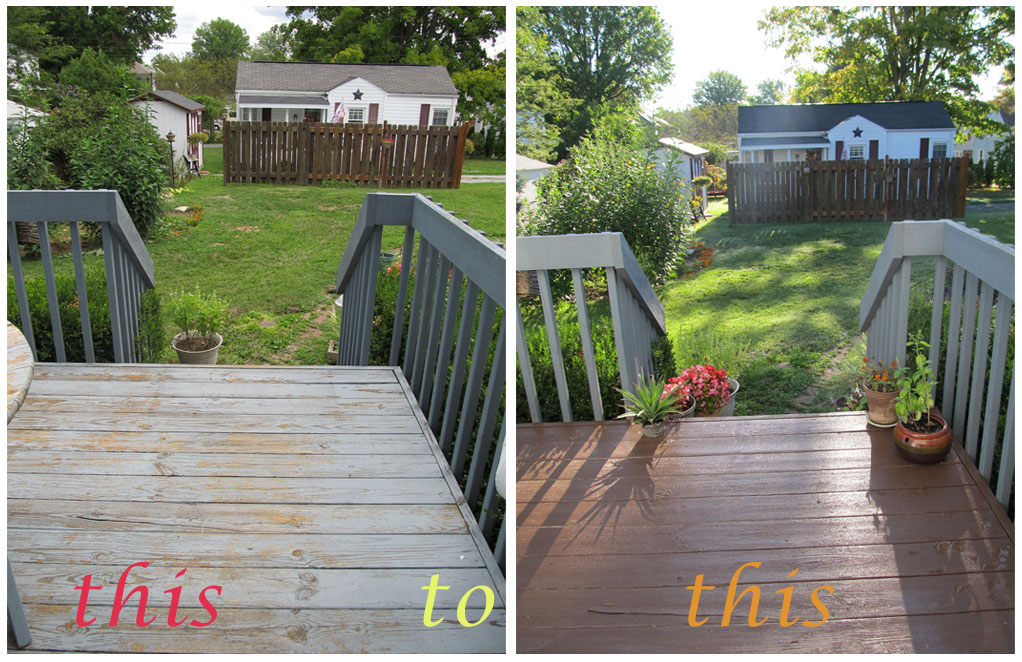
Our deck had been painted six years ago and the floor boards needed some TLC. The spindles and rail looked to be in good shape so we opted to paint a two-tone scheme and chose a deep brown for the floor plane.

We power washed the deck, taped off the spindles, found low VOC deck paint and got to work.

Before

It was the best $26.00 and easiest project we ever did together. It’s opened up an entire new appreciation for dining outside at our house.

After

The day after we finished my husband put on some Kenny G, sat down, began sipping a beverage and even started quoting from Yeats?!

Categories
Community Food & Exercise

Where would the Bike Trail go?

The St. Clairsville rail trail is a valuable asset to all healthy, outdoor-type people living in this town. This historic rail turned trail runs north to south paralleling Route 9 through the center of town. You may access the trail from the north and south ends, near the North Market ball fields or south of I-70 at the Reservoir Rd. intersection. There are a few places to access the trail midway, the gazebo area being the most picturesque.

St. Clairsville Ohio Bike Trail

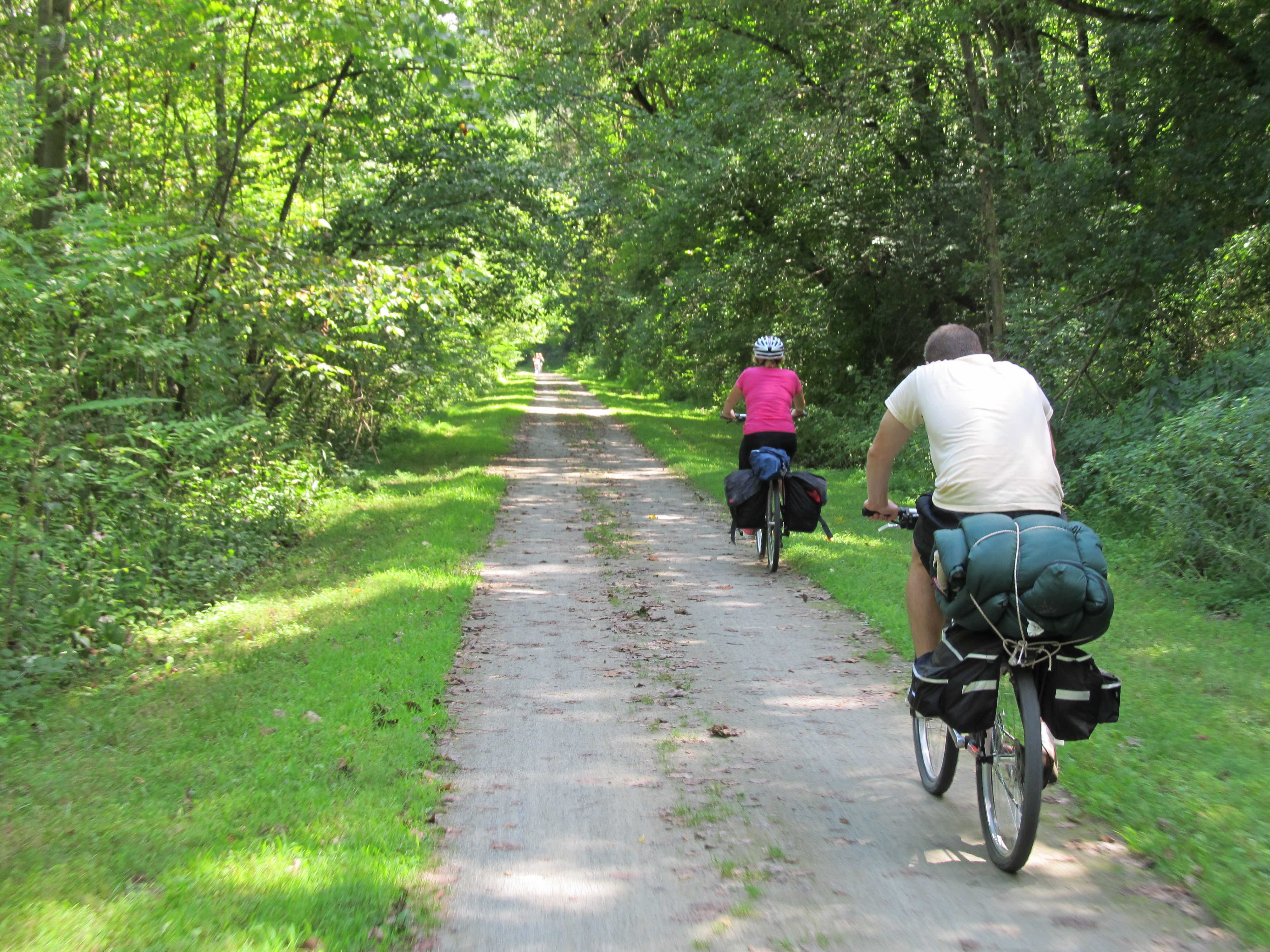
I have run and biked the trail with my husband many times. His sense of adventure lead us to explore the land remnants of where the rail had continued northward. Through an old apple orchard, and into a well-mown strip backed against private properties, we followed the land that was still cut for the rail. Having gone as far as we could on foot, we decided to explore by bike.

Phil found a bike ride that would lead us beneath two of the rail’s bridges. The old railway tracks crossed over Jug Run Road in two places. Jug Run is only a couple of miles past the cemetery if you’re headed north on Route 9. We followed this road, alongside the historic route and stopped to photograph the old structures.

~

~

These are the foundations for what could be a walkable pathway. There is an existing bridge along the rail trail as it crosses above Route 9, and it was done beautifully. I suggest seeking it from below as well as above.

We rode on, northward to Maynard and passed below an even larger structure spanning the creek just before town. As you come into Maynard the pastoral view boasts a farm-house across a field, the sun setting in your face, waving grasses and a rocky road beneath your bike.

~

The best part of the ride though is… that it’s flat?!

{I must give a full disclosure here: if you begin at Jug Run , it’s flat. If you leave from there and head southbound to reach St. Clairsville’s courthouse, you’ve got an Ohio hill to climb.}

~

Know of any other unique bike rides in St. Clairsville? Though new to my bike, this mode of transportation has opened up an entire new way of experiencing my small town. I’d love to hear of more!
Categories
Travel

The Great Allegheny Passage – Day 2

~

Day 2 on the Great Allegheny Passage Trail

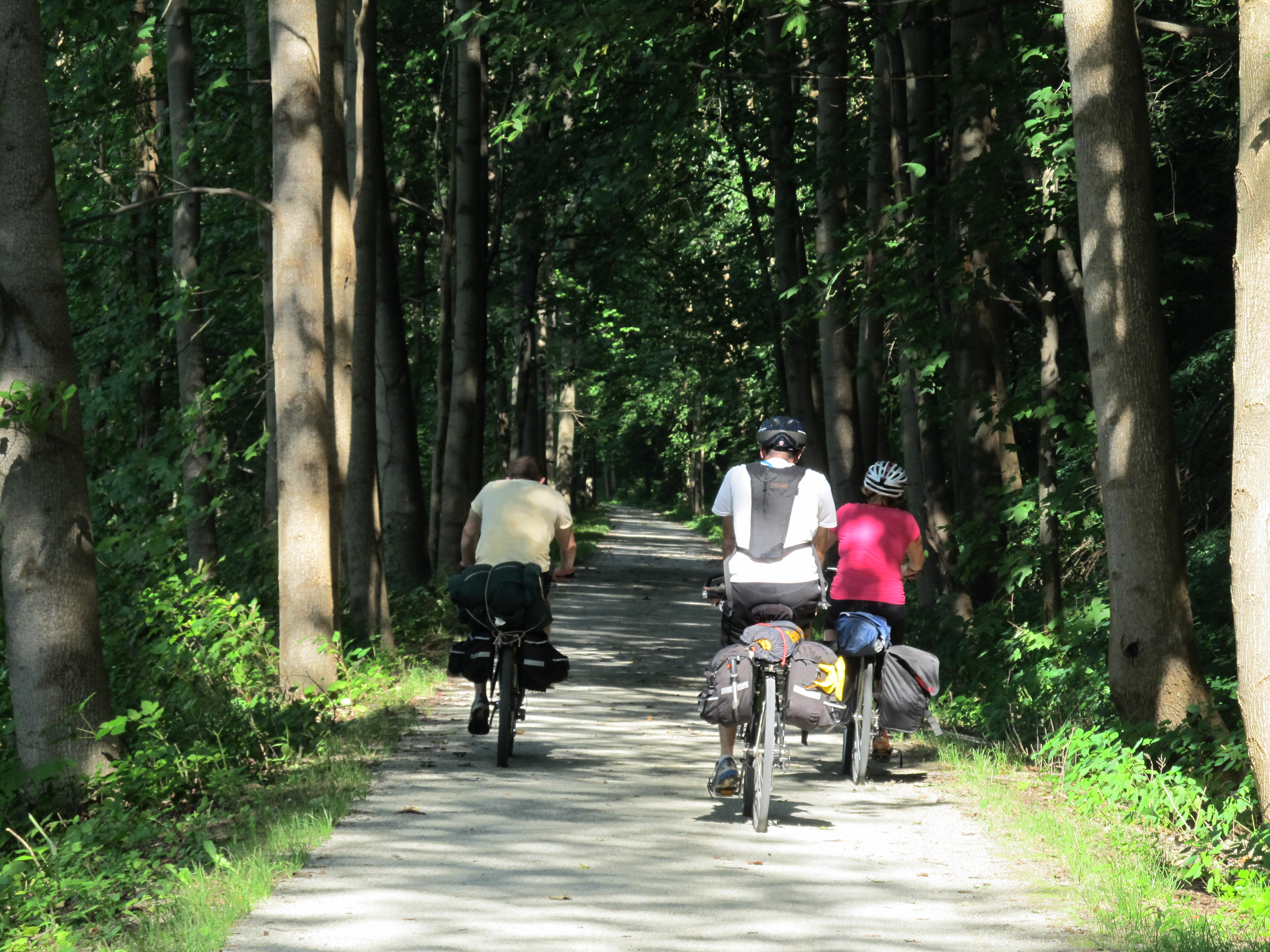
Day two began a ride through ledges of rock with the forest life abounding above that. 20 miles east of Ohiopyle was very similar to the 20 miles into it the day before. We began by 11, having enjoyed a healthy breakfast and awaiting the long train that bisected town and our trail.

~

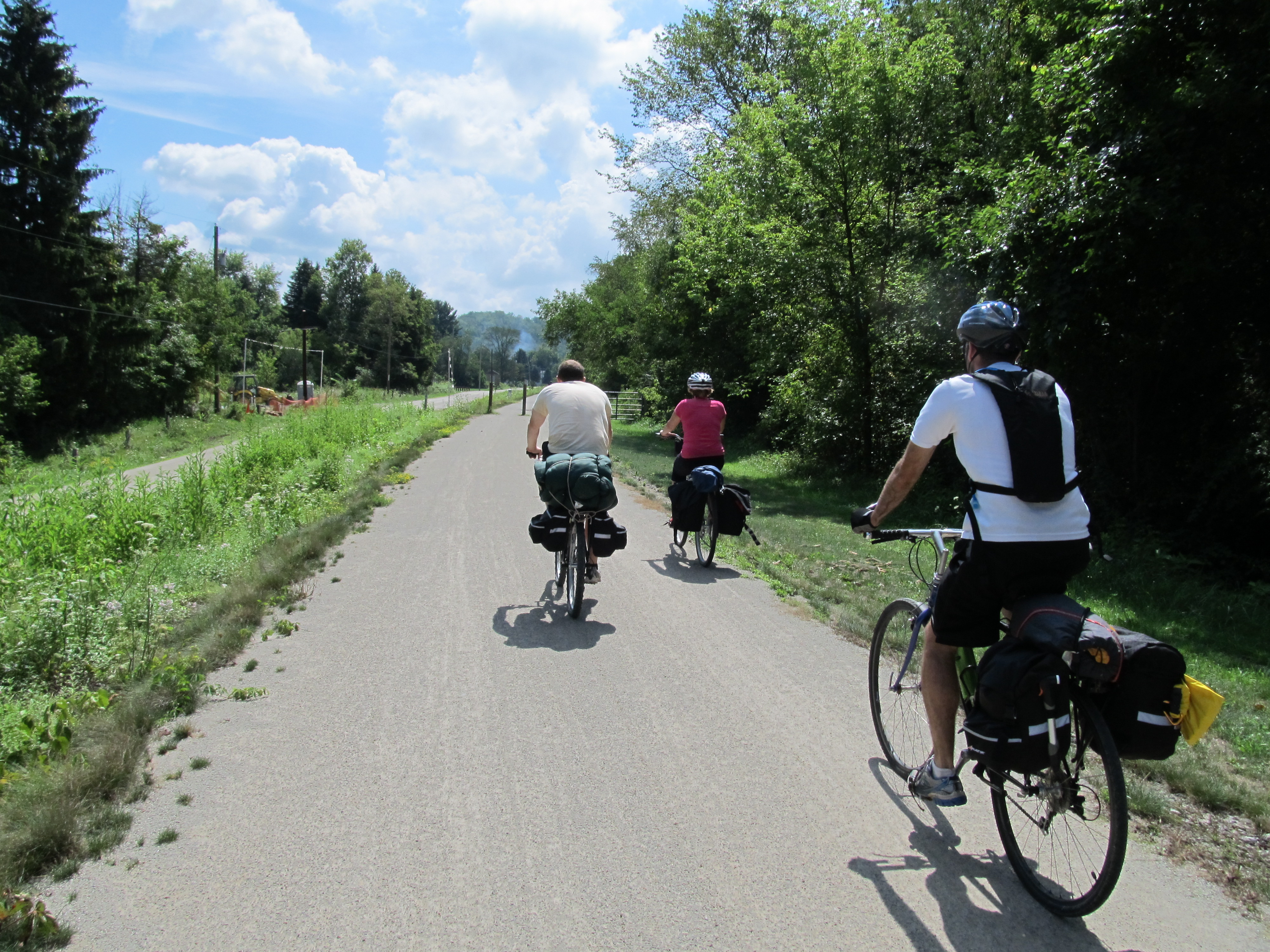
The morning hurried through. At some stretches we rode two by two, right behind one another to play name games and to sweat away the miles. We were going ahead and behind other groups doing similar trips, as we caught up at bike repair shops for air, or they passed us while we ate a snack.

We paused at Pinkerton Tunnel for blasting construction, took in the view of the river below from the shade, and rode a detour around it once we were cleared.

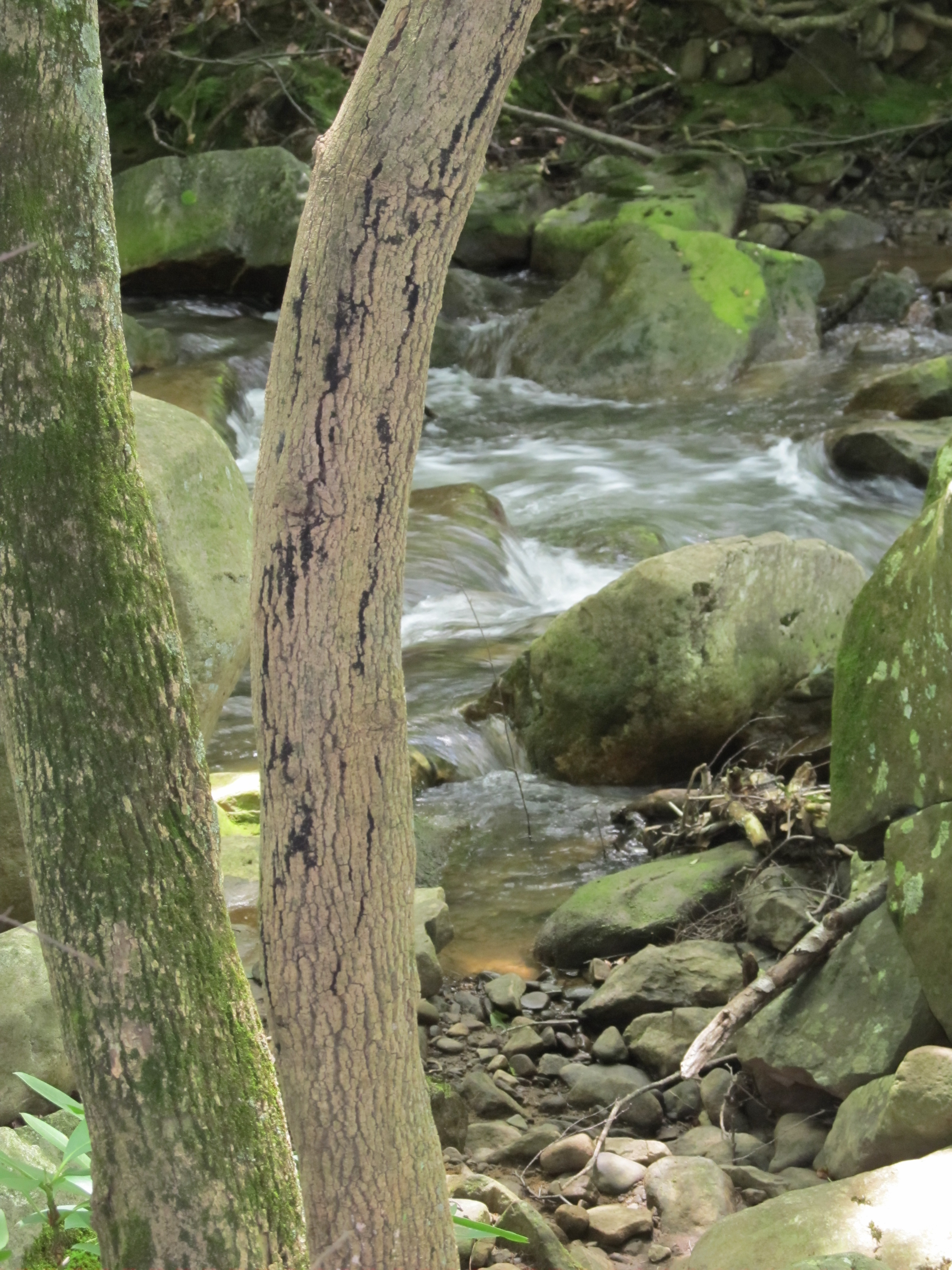
A rest in Markleton lead us with lulling sounds to the most intimate forest stream. We crawled down the bank, careful on the soft floor of fallen needles and growing mushrooms, to step out on a rock.

~

~

The trail was about to become more scenic as we approached, happily, the continental divide – the literal high point of our trip.

~

~

~

~

Here we are, 23 miles to go, since climbing for the past 125 miles to the top of the Continental Divide. We were overjoyed! Check out the climb in this graphic below.

~

Going at the highest speed of 18mph, down down down, was such a relief. It gave us all a second wind, and 23 miles into Cumberland didn’t look difficult at all. We stopped to take pictures at the Mason Dixon, state line. Old iron bridges, and small wooden ones lead us over quick streams. We emerged from a long dark tunnel, going ahead on trust not to run into the dark walls or something worse. It felt like a dream biking through darkness, you relied on a safe intuition to get you to the light at the end. We began to parallel the scenic railway in Frostburg. Humid fields exhausting steamy soil left us in a romantic fog, gleaming at sundown. Rolling hills, and small towns built into them were apart of the entire pastoral view and experience.

~

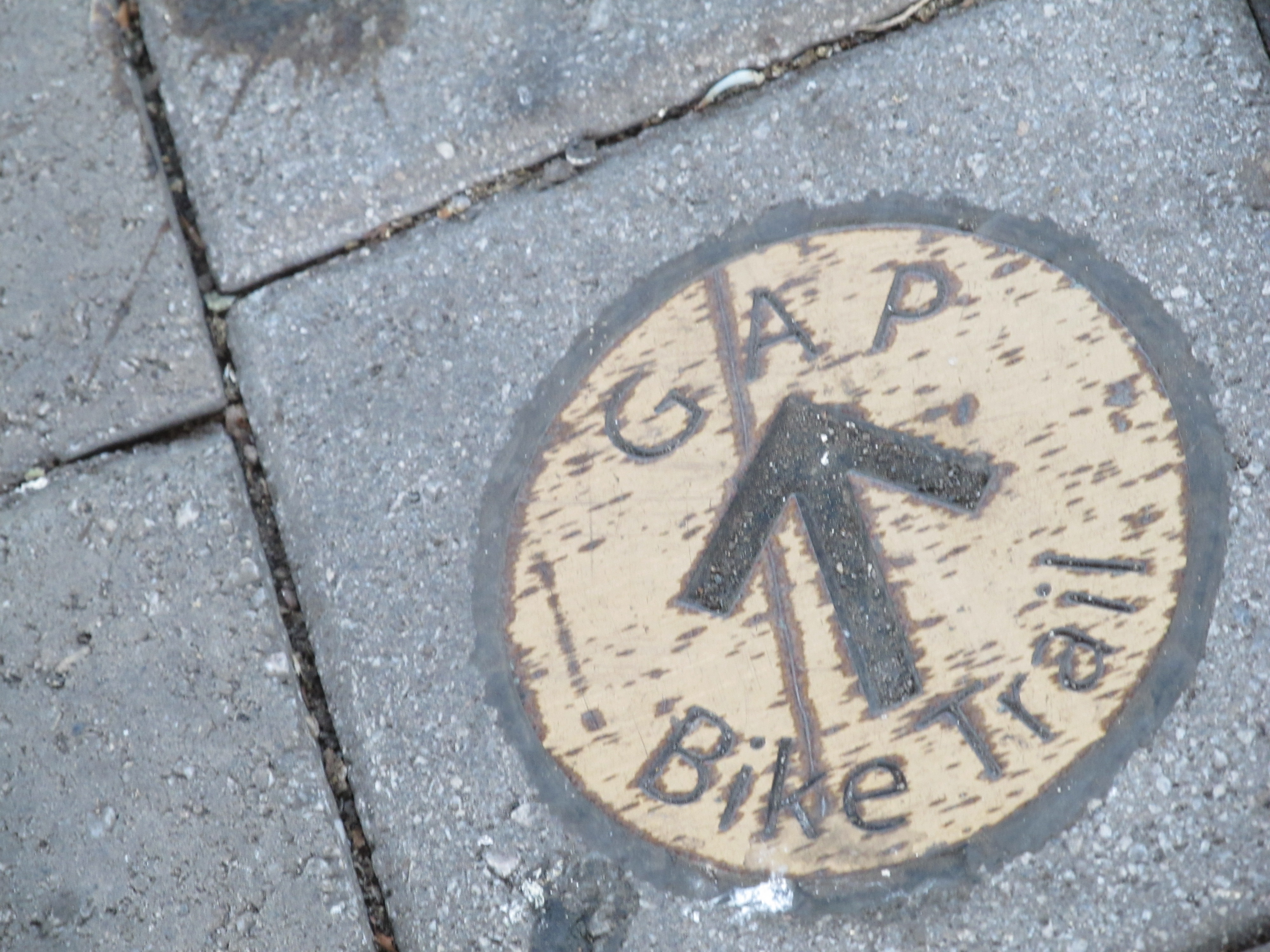
We arrived in Cumberland at sunset. Many walkers, runners and bikers were along the trial. We held our hands high crossing beneath the marking between the G.A.P. and the C&O Canal Towpath trail to D.C. From here the next morning we bid farewell to my brother and his girlfriend! I need to share their digital images to view what the trail looks like from this Cumberland point. What they experienced was a mix of history, ruin, tunnels and great company at campsites.

~

~

Where shall we go on our next trip? I think Phil and I will do the C&O Towpath at some point!
Categories
Travel

The Great Allegheny Passage – Bike Trip 2012

~

Two days, 142 Miles – The GAP Trail – The Great Allegheny Passage

~

Starting in the steel-side Pittsburgh, we began our Monday morning at mile marker 139. The cool day with the bright sun, and three days worth of our belongings on our bikes, made us feel free and unencumbered. My brother and his girlfriend would continue on through storms and high waters to get to D.C. by Friday to catch a train! Phil and I took half of a week to stop our bike trip in Cumberland, Maryland.

~

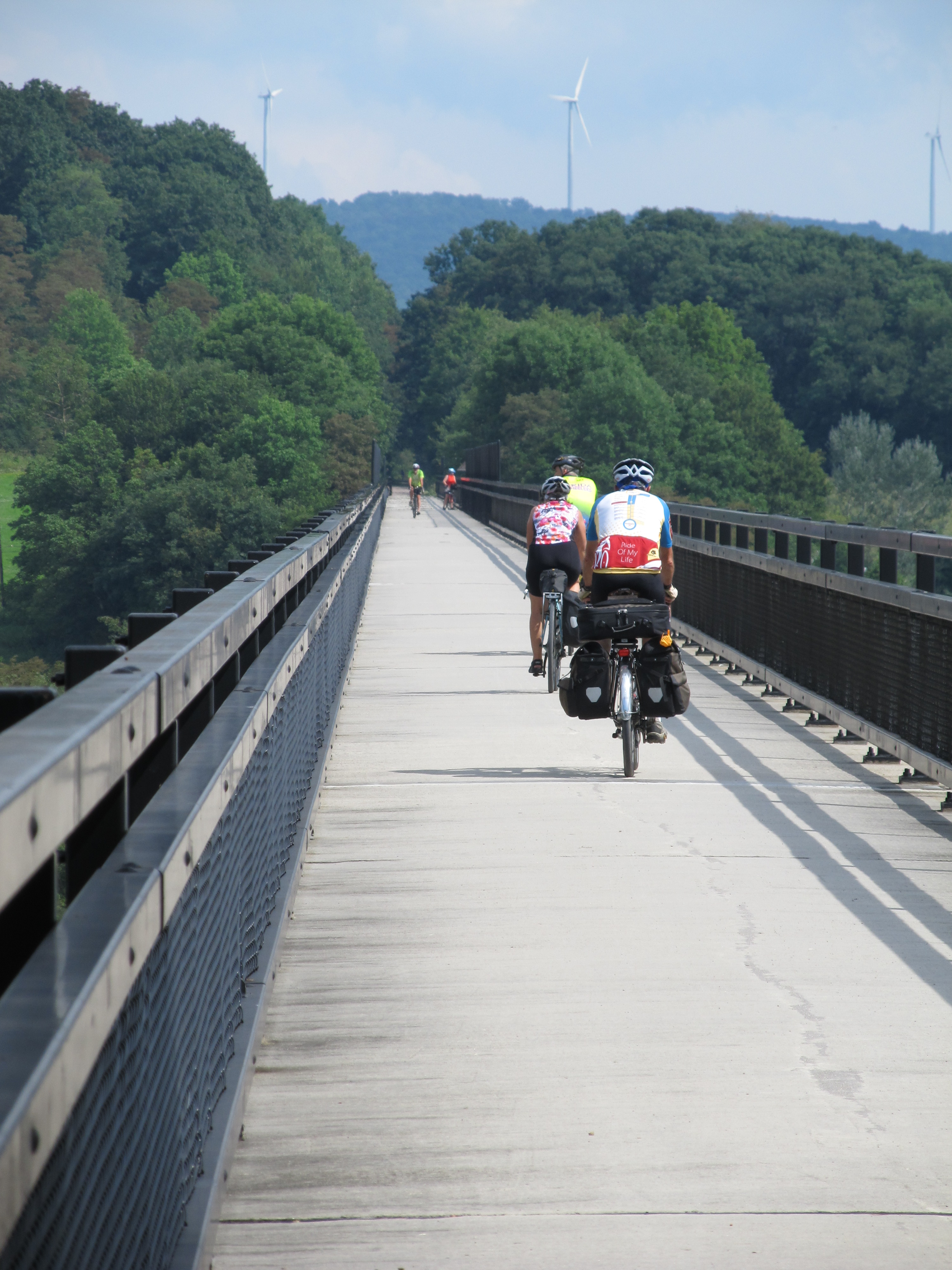
We started out by crisscrossing railroad tracks, biking up to old bridges traveling over rivers, and came to the small working town of McKeesport where the trail weaved through the industrial town.

The recent rain had made a few places muddy, and we drove down one truckers alley-road before claiming the rest of the trail for bikes only.

We tried to break every 15 miles to stand away from our bikes, and grab a snack.

~

We ate in Smithton for lunch, with 40 miles of the trail behind us at this point. Most things in town were closed except for this smoky bar where we were carded to verify that we were 18 !?

~

By mid-afternoon, we had passed the quaint town of Boston and most of the 1950’s vinyl homes that were open to the trail. Connellsville was a town we passed through with beautiful community flower gardens, colorful in the median plantings that separated the bike trail from the car traffic.

We’d gone into the forest climb before Ohiopyle and it was now us, the trail and the river.

The trail, at this point, was also referred to as the Youghiogheny River Trail and was a difficult last 20 miles to finish up to our campsite for the night.

~

Ah, but so worth it once we’d set up camp a quarter mile higher than the trail, trekked back down, and walked 1/2 a mile into town to enjoy a lovely dinner on a back porch. The sun was setting, we laughed and ate merrily having completed a long 68 miles of biking for the day.

~

Categories
Community

Gallery Event ~ St. Clairsville

.

 Join us at

{  The Main Street Gallery  }

~  Located at 145 East Main Street in St. Clairsville  ~

This Thursday evening at 6pm

to welcome artist David Lesako  

Read about the artist here: Lush Experience and view some of his works previously at 43rd Street Gallery in Pittsburgh here.

Hope you can join us!


Categories
Travel

Arizona ~ Nevada ~ Utah

This slideshow requires JavaScript.

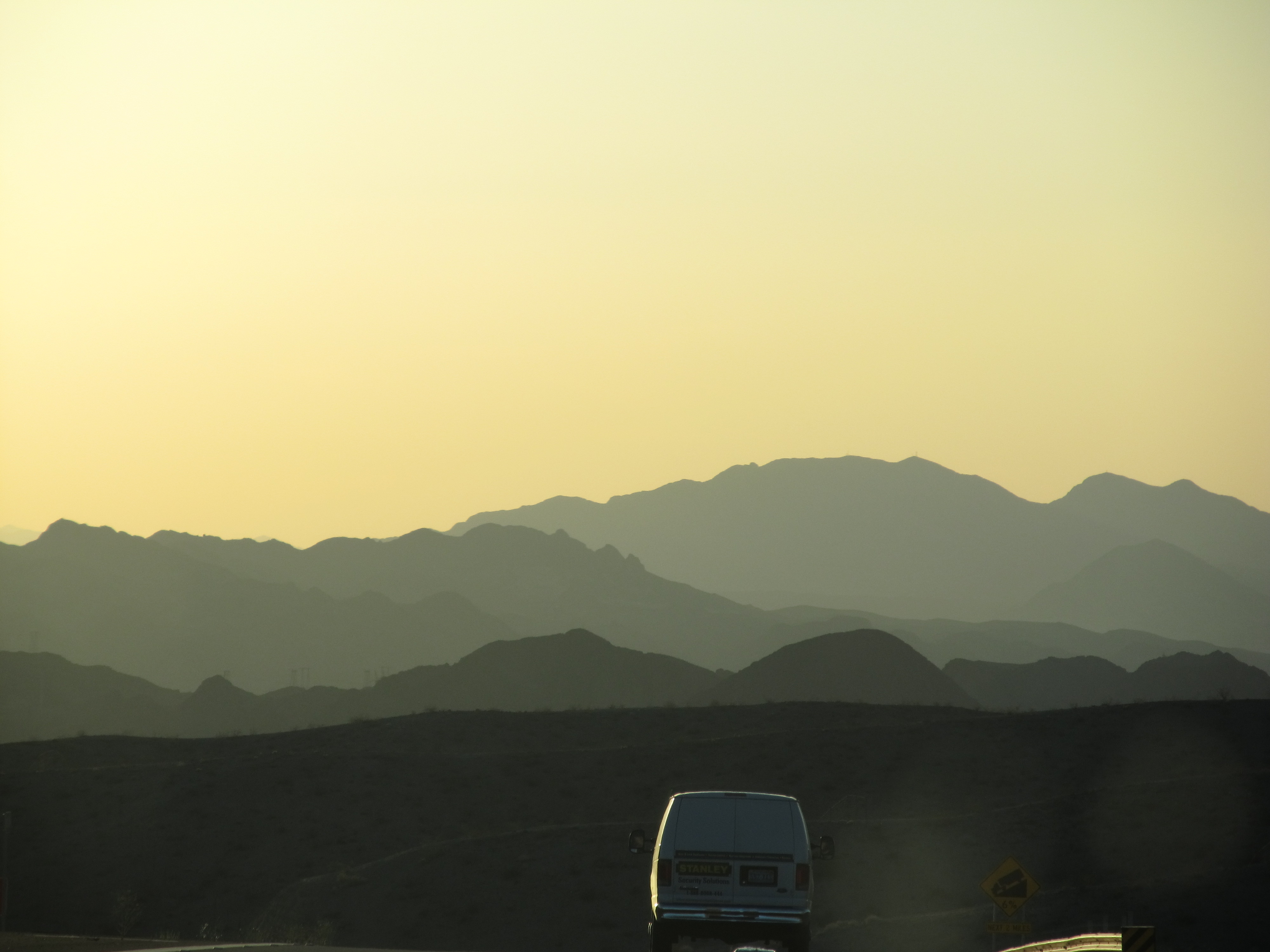
Just a few more shots of a Summer out West;

Nevada, Utah and Arizona.

Categories
Poetry Travel

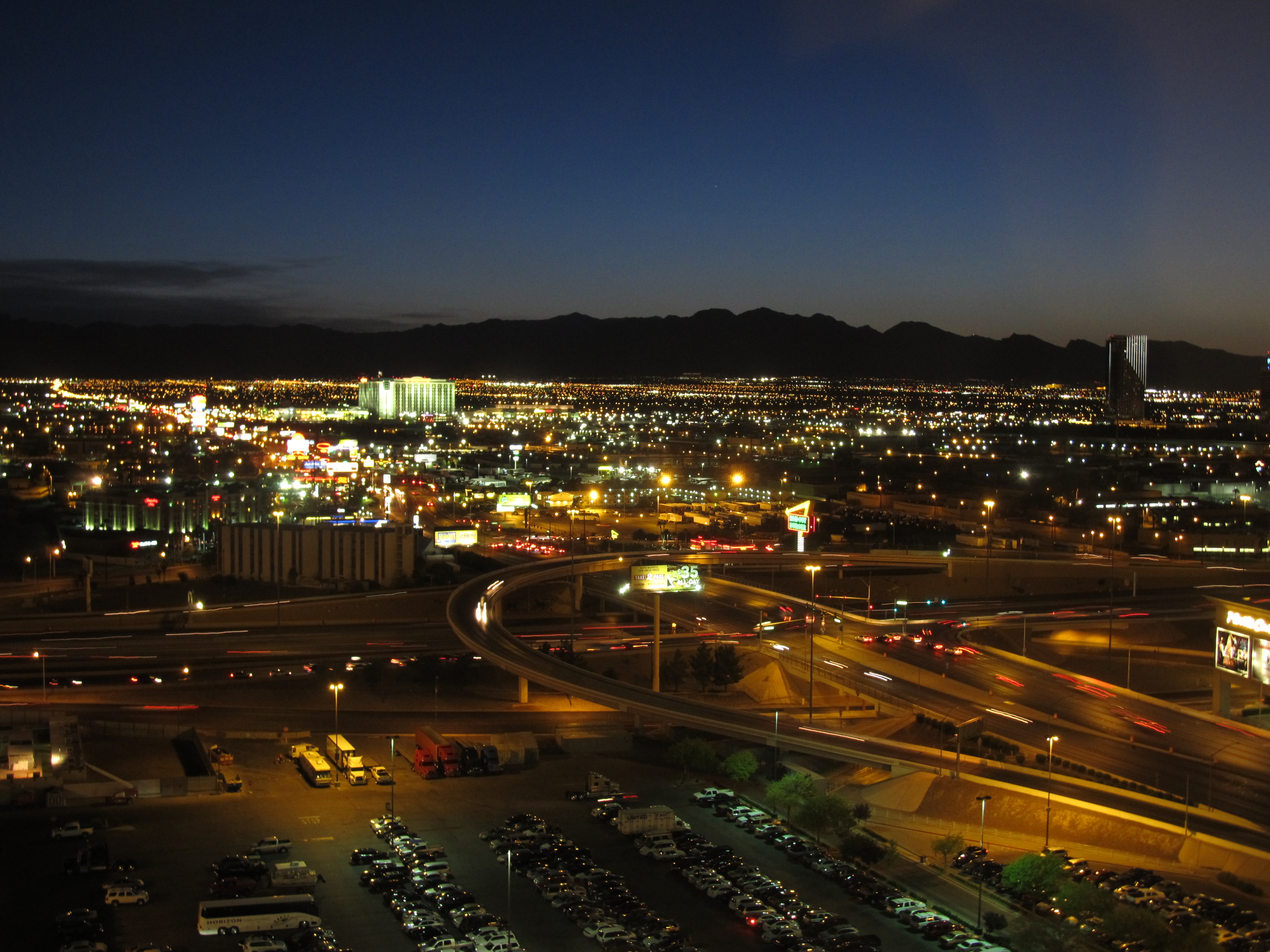
Last Night in Vegas

~


Dressing up and dressing off

.

In Vegas we stayed at a castle

a screaming floor full of ‘winners’

they’d made it here

landed in a bleak desert

from the sky or over dry land.

.

We’ve projected beyond

the desert people camps

the lonely fifty mile road

through a reservation

to a glass U walk suspended

over a natural wonder.

.

But most people stay

in Vegas, if they visit Nevada

the ‘on’ switch turns at 8pm.

Quiet malls become clubs with

long lines and the noise of the street

belongs inside by night.

.

Peace may only rest in the cliff cracks

of Zion two hundred miles east.

Categories
Uncategorized

South Rim GC

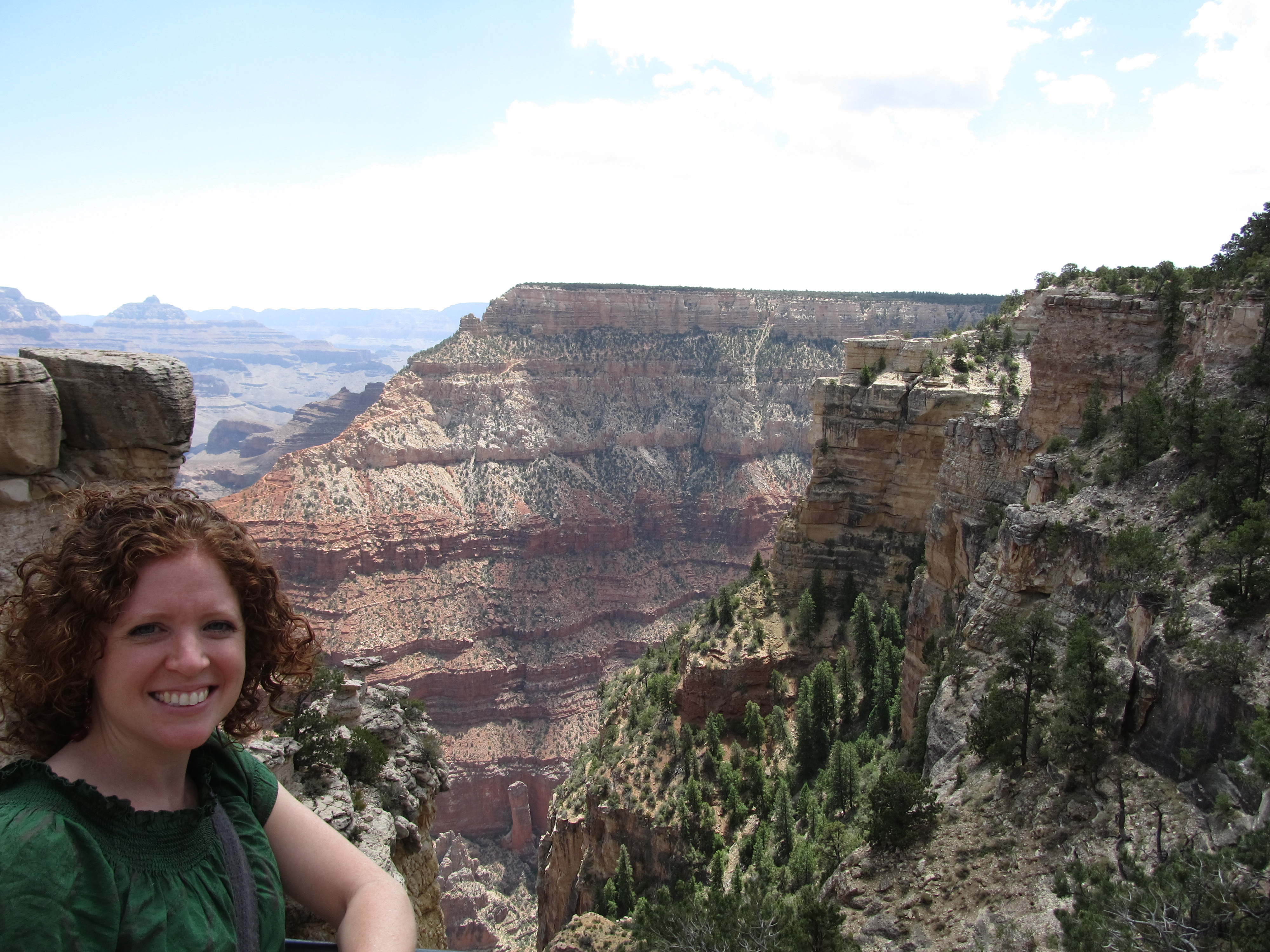
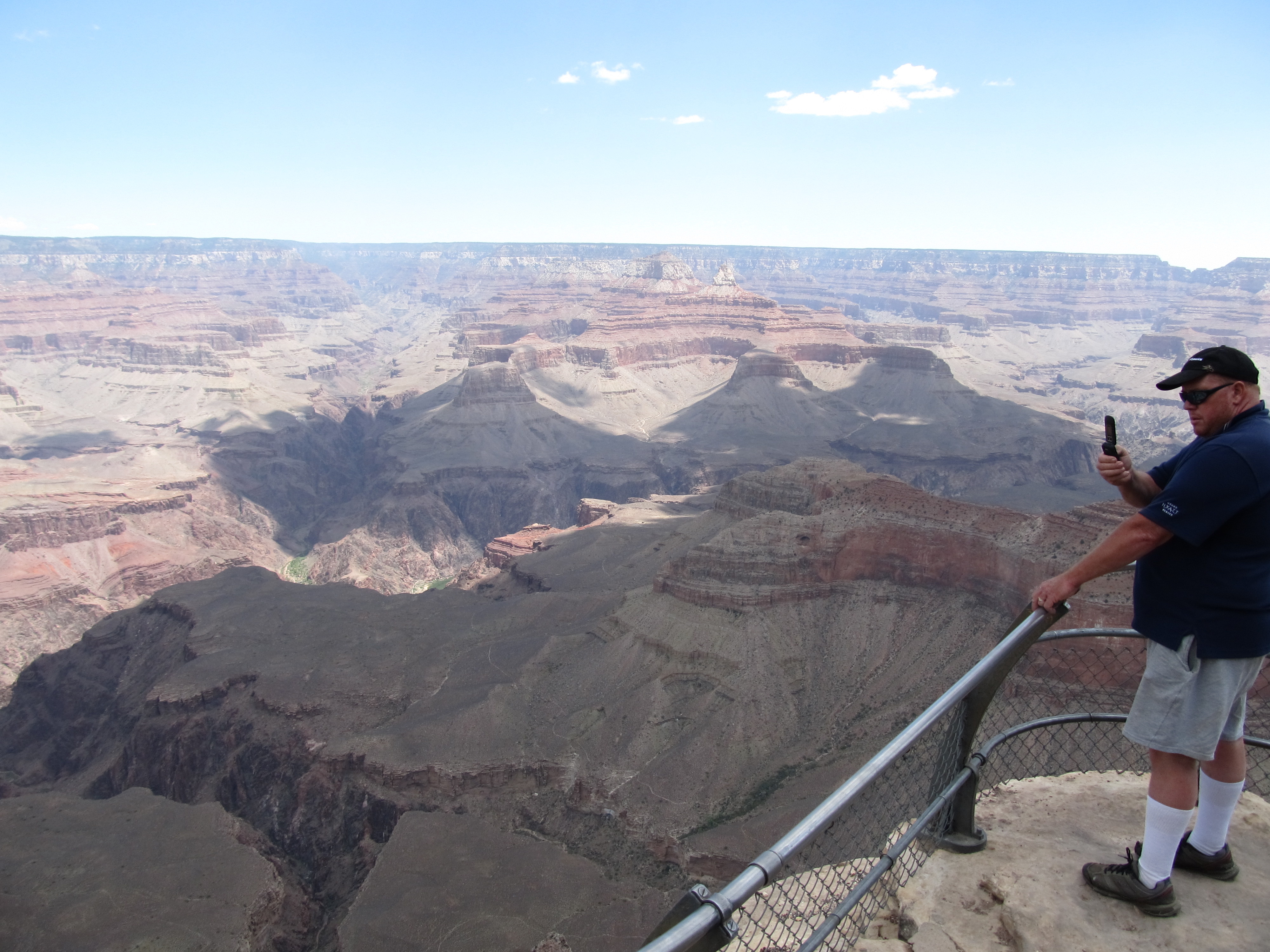
A few more Grand Canyon Shots from the South Rim of the canyon.

Categories
Poetry Travel

Looking Back ~ South Rim GC

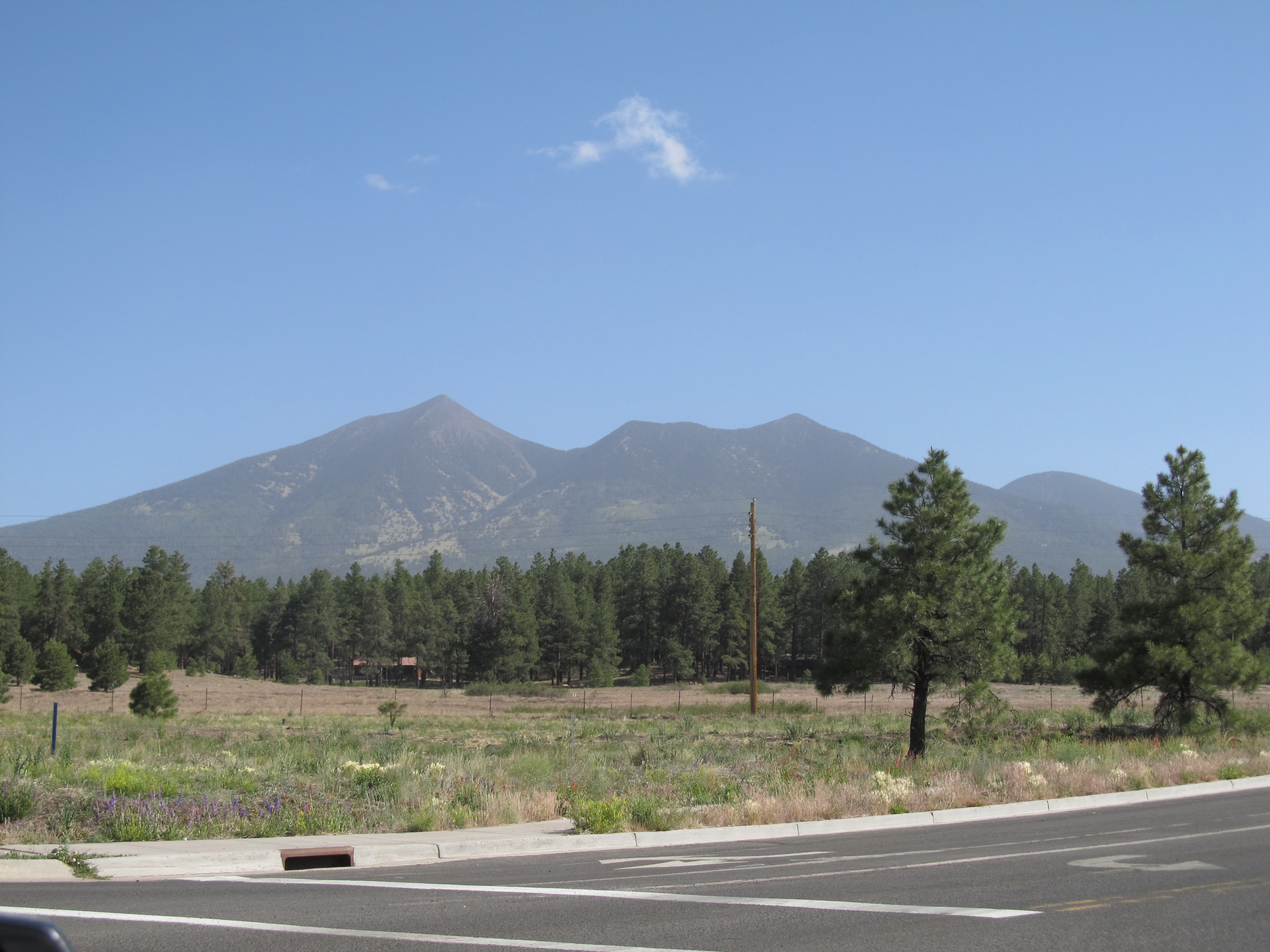
It hovers over the city dwellers, peeking around city buildings, train travelers, and from the North Rim of the Grand Canyon.

.

The next day, we closed in on the South Rim

the north face of Humphreys began to fade

to a mere backdrop

left to stand with common tourists in the

amazement of nature

over the erosion of another natural wonder.

 ~

~

~

~

Caught It!

~

~