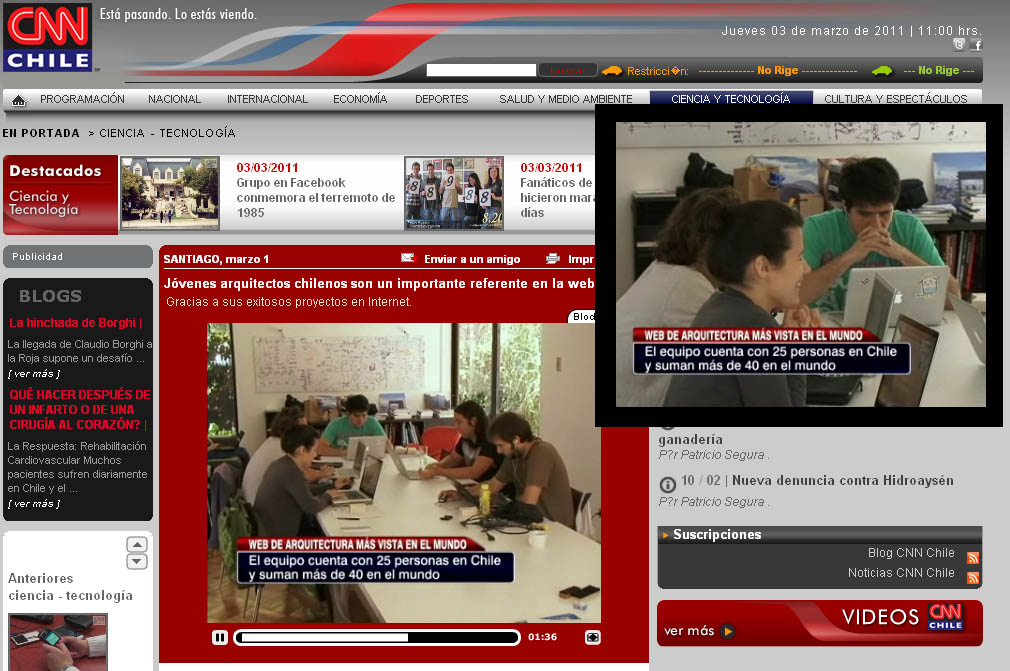
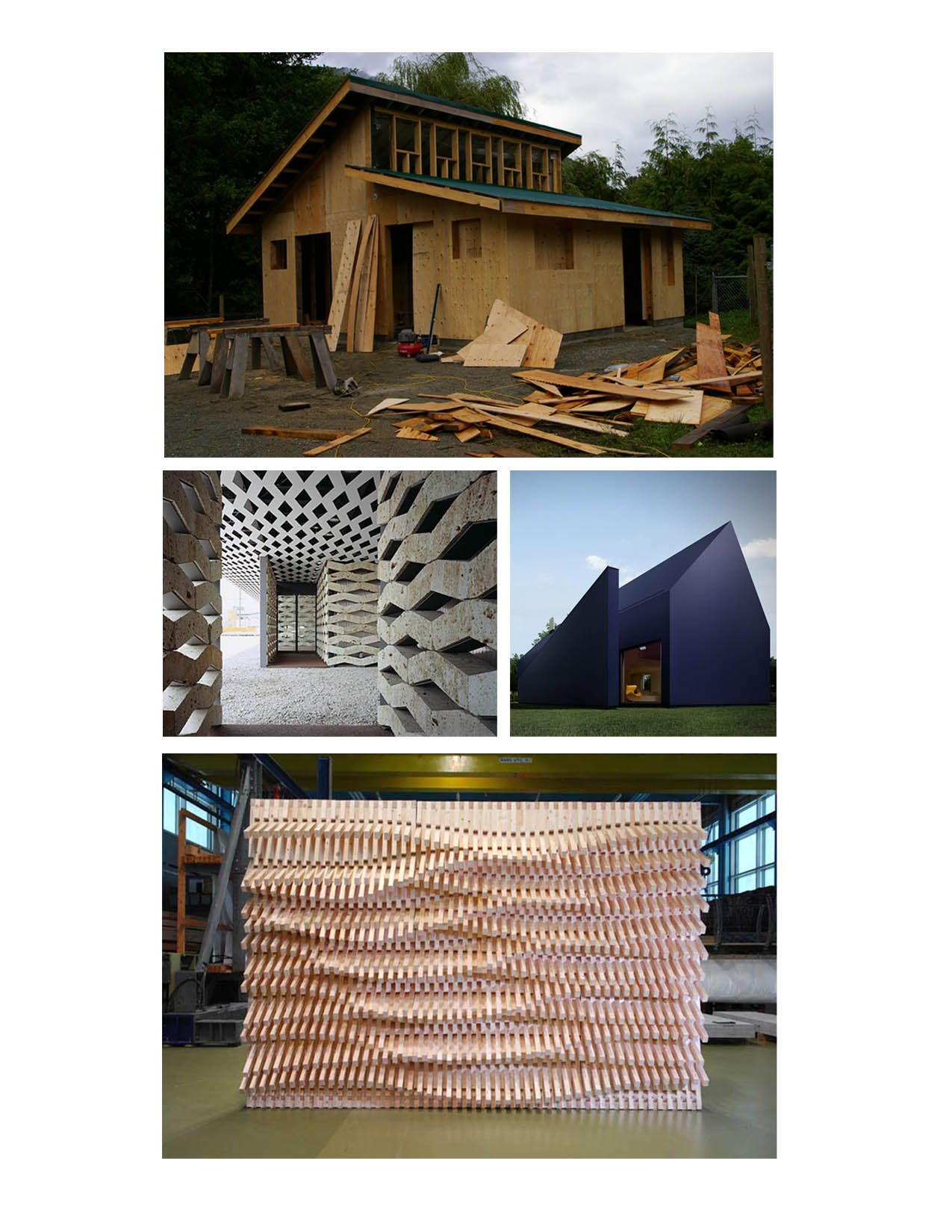
My friend, Pencil In Hand, works with Arch Daily, the worlds most visited architecture website!
And, here they are.. there she is, on CNN Chile! Check out the video here.
My friend, Pencil In Hand, works with Arch Daily, the worlds most visited architecture website!
And, here they are.. there she is, on CNN Chile! Check out the video here.
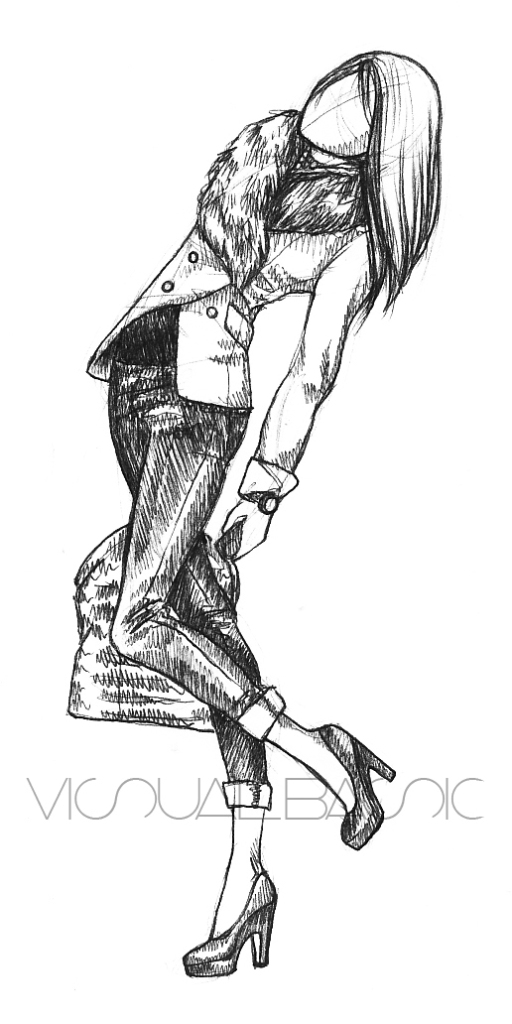
Whenever I need to be lifted out of my world or be more aware of it, I draw. In the last few weeks I’ve found some great new blogs on drawing and I thought I’d share them and others today.
Drawing Inspiration:
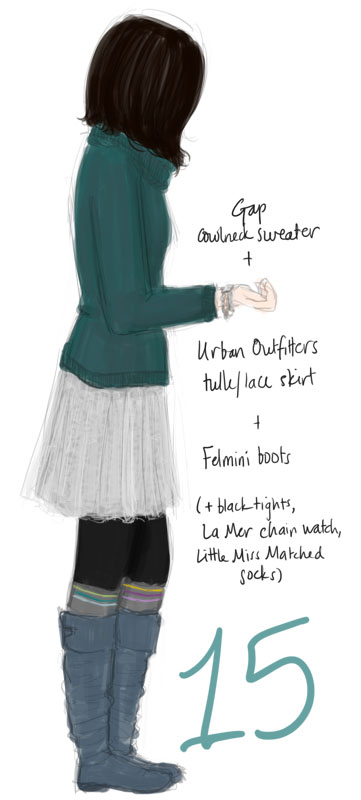
A great Fashion Blog:
Friend & Creative Blogs:
Health Blogs:
Then, I read an article that pertains to architects designing with a computer mouse, versus the very natural and creative design that comes when you put your hand to paper.
The Washington Post article Computers are great for tools for architects, but don’t let CAD go wild by Roger K. Lewis. PDF link: computertoolscadgowild
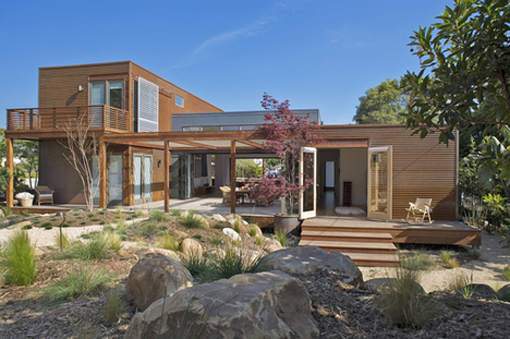
When asked by my sister, What is Modular? Is it more expensive, can it be green? I thought, not necessarily and sure it can, and here’s a quick rendition of how!
One of my favorite Modular House designers is Michelle Kaufman. She has a Basic Process section of her website that you can click to here.
A group that I am a part of does Modular housing too. We are called Online Green Design. Click that to see our website. If you go to Interiors, that is me. Online Green Design is a group of Engineers, Landscape Architects, Architects, & Energy people, that give you a holistic approach to building new. The idea is that all of these people play an integral role in the building of a sustainable building. We work with Haven Homes, a modular builder in Pa.
You can custom design your prefab home or get a predesigned plan. Modular just means that most of the house is made in a controlled environment. That the wood and materials to build the home aren’t exposed to the elements of weather during construction. Your construction loan period is less, there is less waste when homes are built this way and companies have a factory-like system for building your house in parts, then delivering it onto a site, setting it on a foundation, then ‘zipping’ it up. Because the foundation of the house and the house can be built during the same time frame, the construction loan can be less.
The cost of construction is comparable when comparing a ‘modular’ to a ‘stick built’ house. Because Modular is more assembly line in the making, the price is easier determined prior to construction.
Check out the plans Michelle Kaufman has on the bottom of the site I sent you to. Glidehouse Breezehouse, & Solaire.
All ‘modular’ and ‘stick built’ buildings can be green. It just depends on what materials you are selecting. I’ve got an extensive list on my blog. Click that to see. It also matters when building green that the right building systems work together. Plumbing, HVAC, Electrical, Position of Building/House, Coordination of architectural and interior elements to maximize space, and natural light.
Go Fab, Be Mod, FabMod, think Modular.
I came upon Dora Malech’s Love Poem. It made me think about the common figures of speech that I say every day, that really make no sense. I’m collecting my own figures to try a poem with them.
If by truth you mean hand then yes
I hold to be self-evident and hold you in the highest—
K.O. to my O.T. and bait to my switch, I crown
you one-trick pony to my one-horse town,
dub you my one-stop shopping, my space heater,
juke joint, tourist trap, my peep show, my meter reader,
you best batteries-not-included baring all or
nothing. Let me begin by saying if he hollers,
end with goes the weasel. In between,
cream filling. Get over it, meaning, the moon.
Tell me you’ll dismember this night forever,
you my punch-drunking bag, tar to my feather.
More than the sum of our private parts, we are some
peekaboo, some peak and valley, some
bright equation (if and then but, if er then uh).
My fruit bat, my gewgaw. You had me at no, duh.
Friday, February 11th, was a good day. I found out my sister and brother-in-law are due to have a boy in July. I got to write, and I saw the sun. That evening lead to an impromptu dinner at my favorite restaurant in Wheeling, Later Alligator, with 5 girls and Phil. I caught up with an old friend, brought along some new ones and met a young girl staying here. She is an exchange student from Italy. So, I began to remember the language and it brought me back to the first day Phil and I spent in Italy.
Day 8, Interlaken to Como
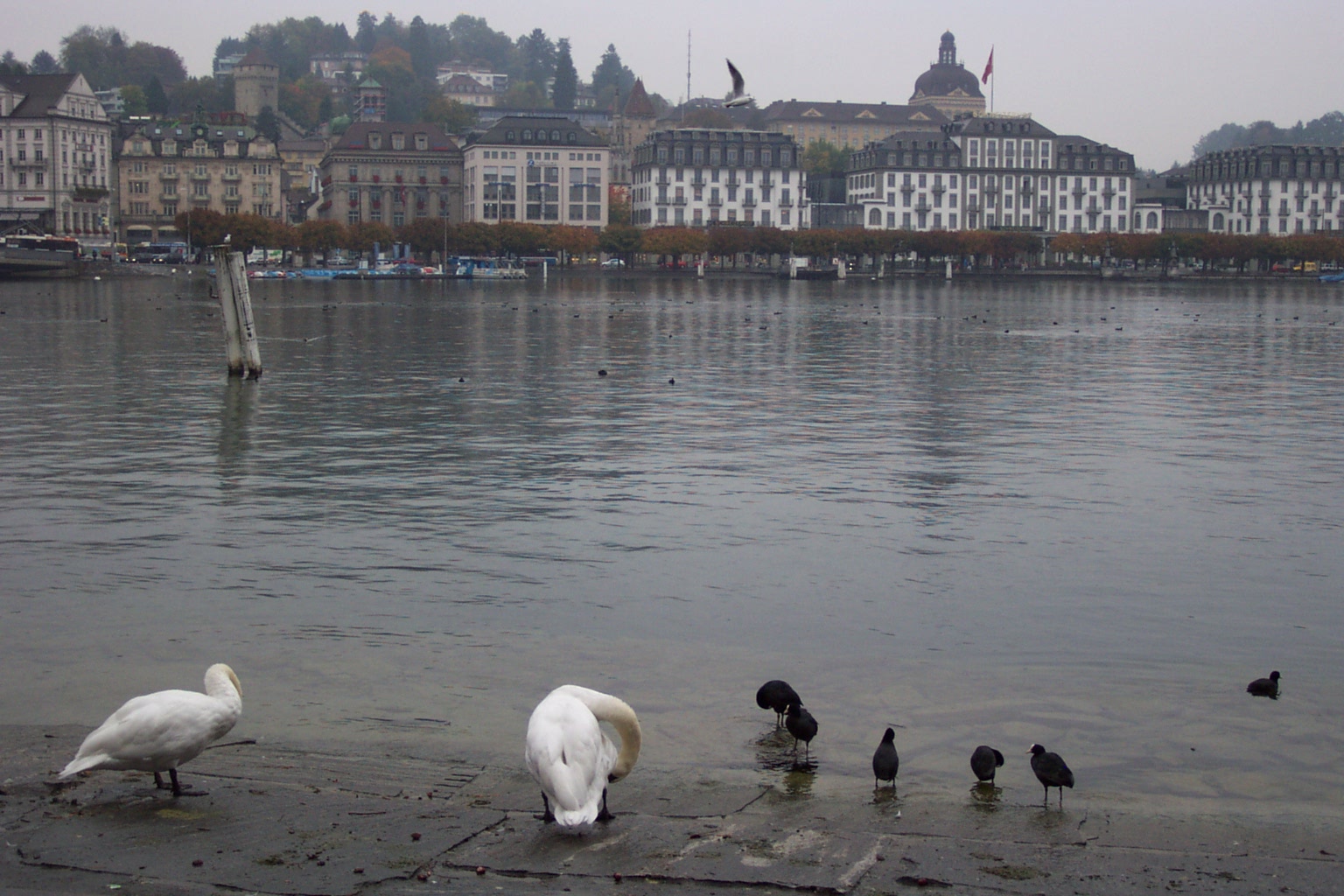
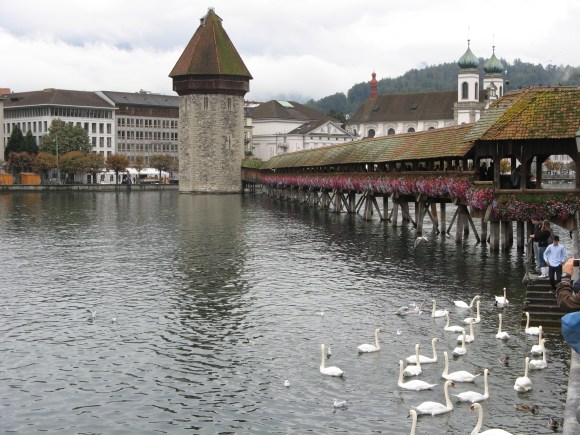
We left Balmers after our meal ticket breakfast and jumped on a bus to get to the train station in the rain. We ran into a grocery store nearby to get pig rolls, (?) nuts, dried blueberries and snacks for our trip into Italy. We boarded into our comfortable seats. I read and wrote. Phil made a video that included music from his ipod buds. We had a train exchange in Luscerne which left us about an hour layover to explore the town. Just like eight years before, it was cloudy and the picturesque mountains were out of sight. We walked the crowded 14th century Chapel Bridge and grabbed a cup of coffee at Starbucks where we nearly didn’t escape the excited tourists gals wanting their photos taken, then another one with the barista, then another one… just because they were in a Starbucks. Fortunately we didn’t run into them near the Chapel Bridge.
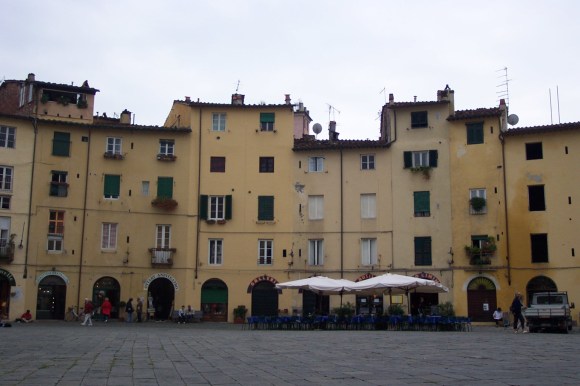
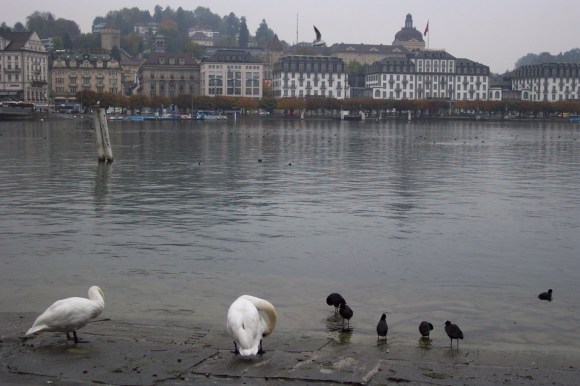
8 years ago I took this picture in Luscerne Switzerland.
This photo of Botta’s work, The Chapel of St. Mary of the Angels was also taken in 2002. This time in Italy Phil and I gazed up at it from our train.
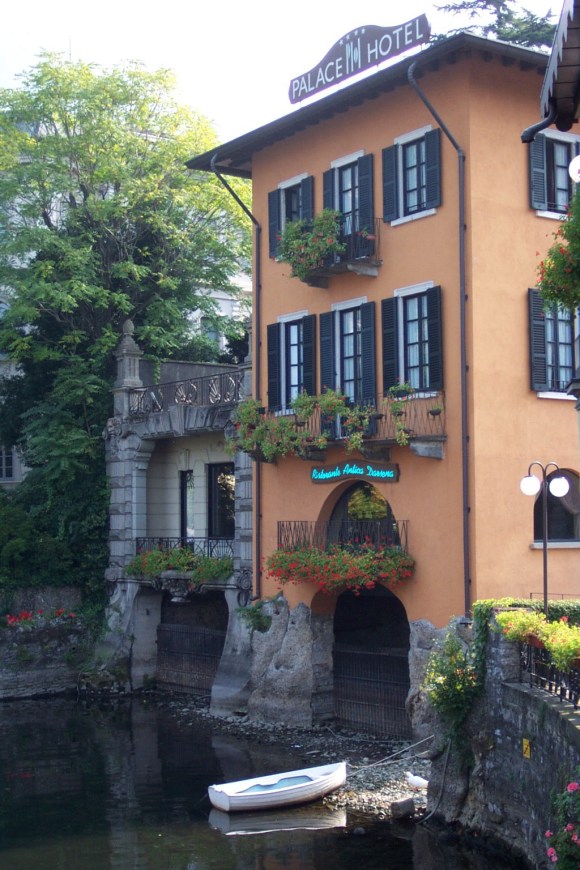
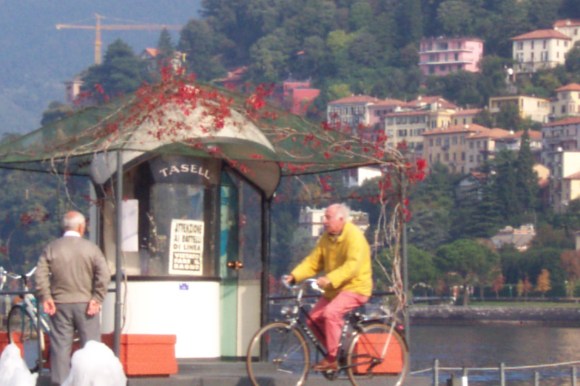
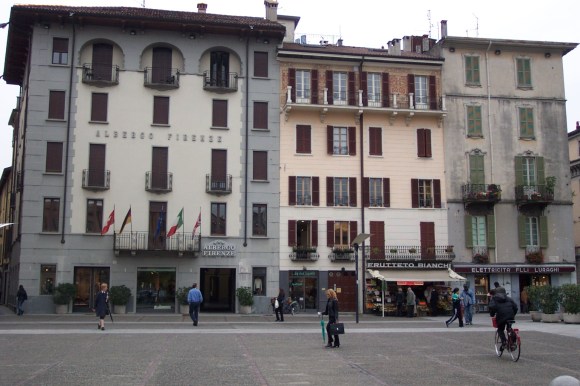
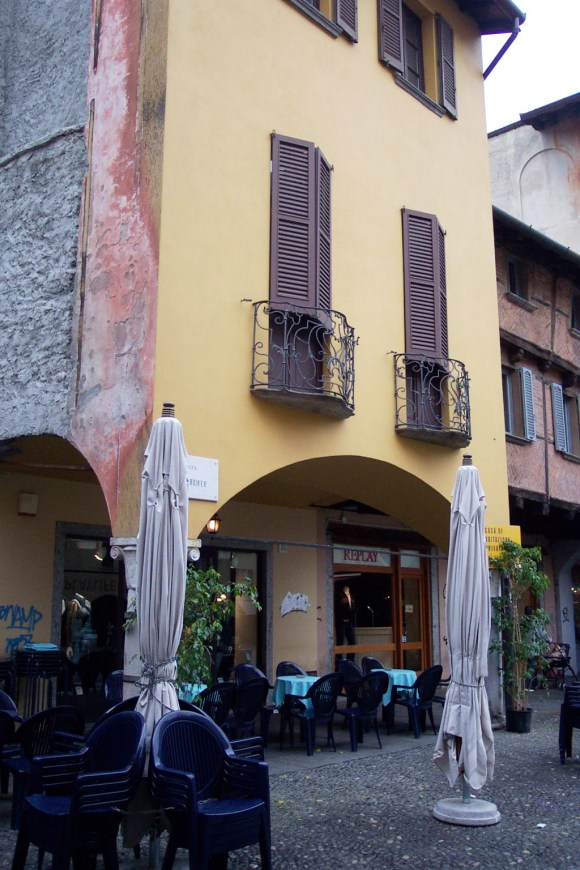
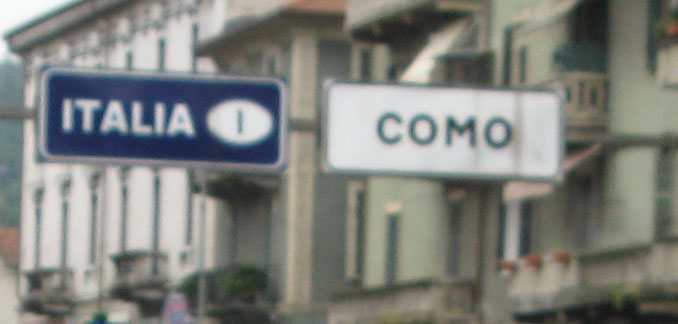
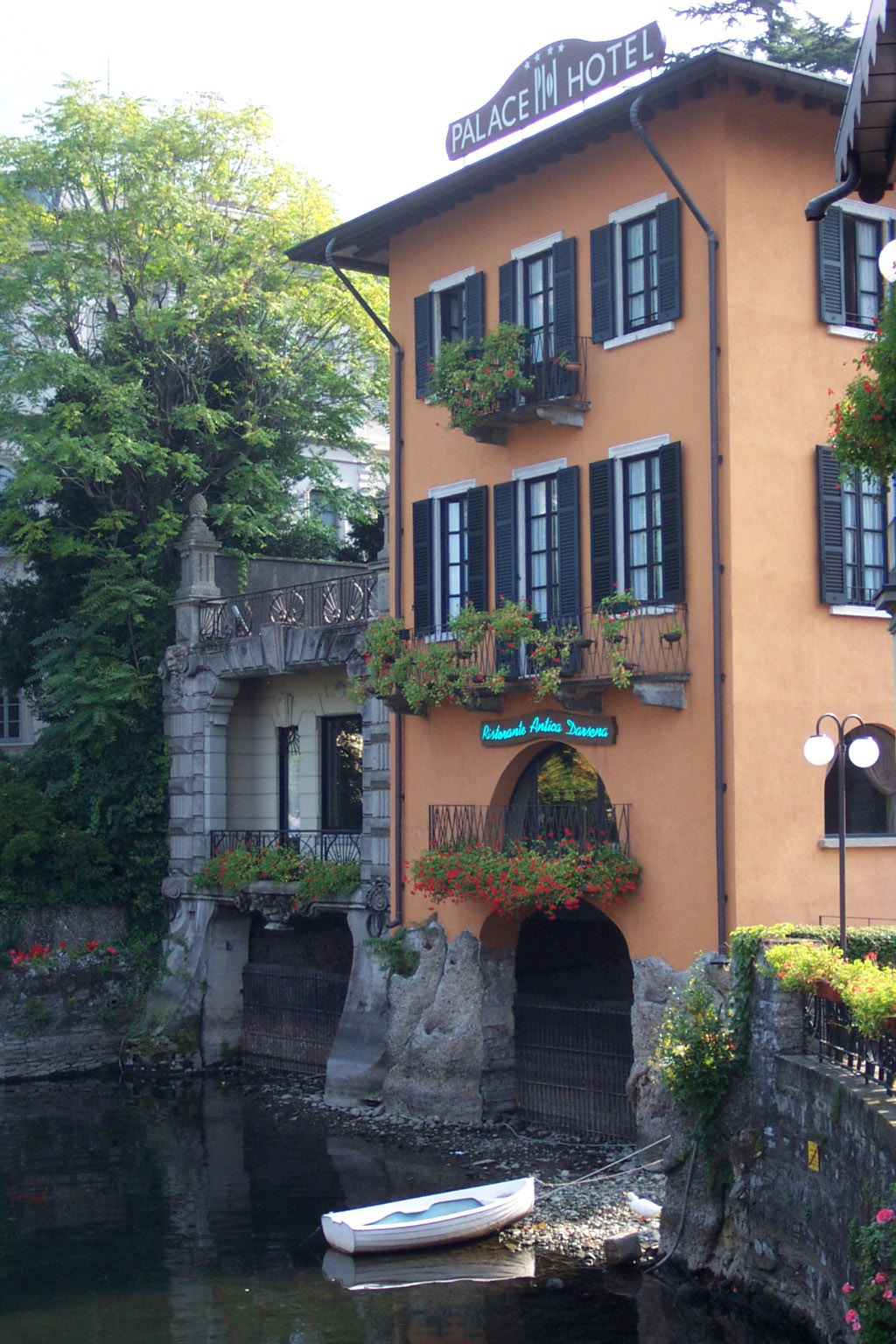
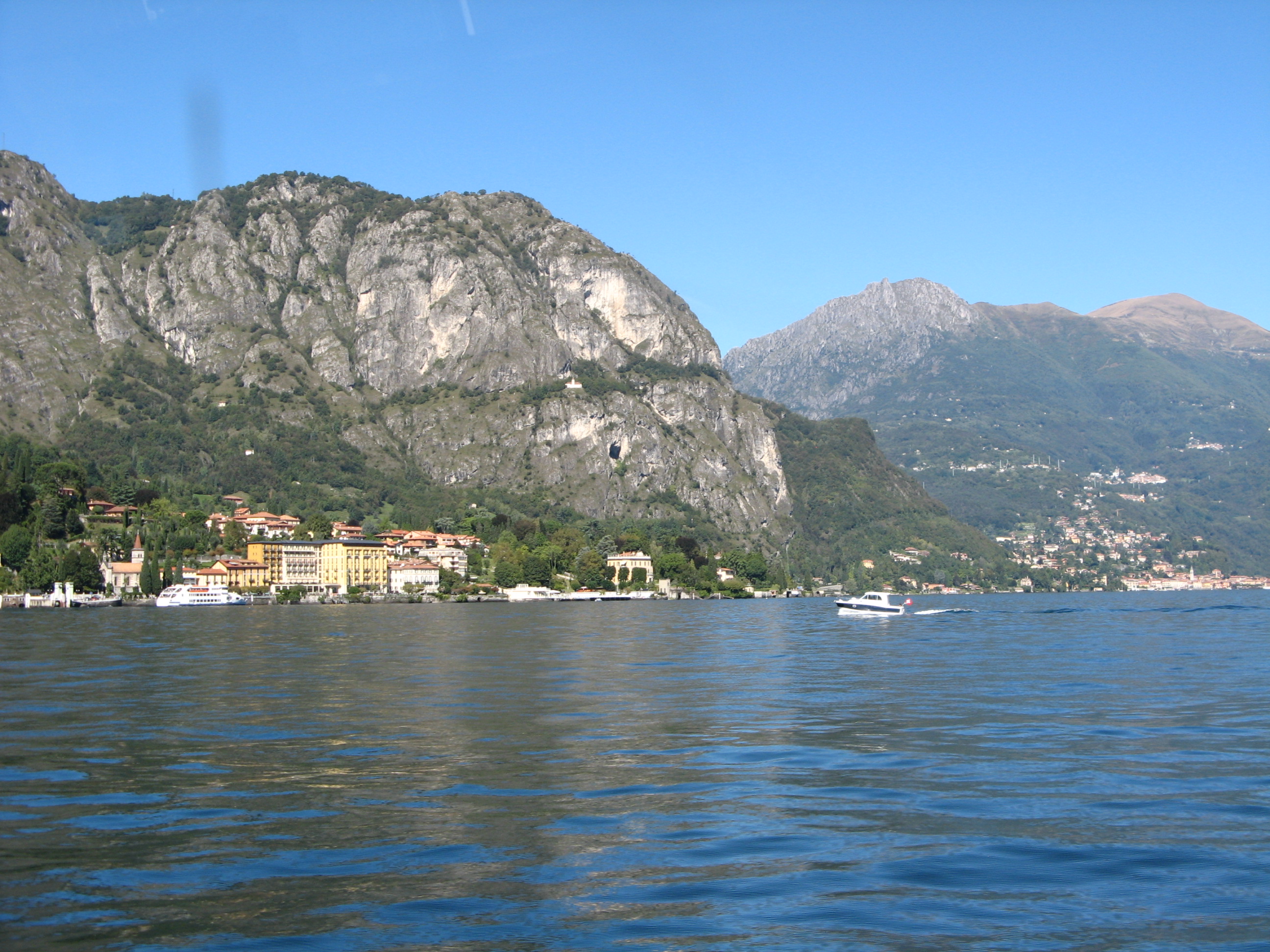
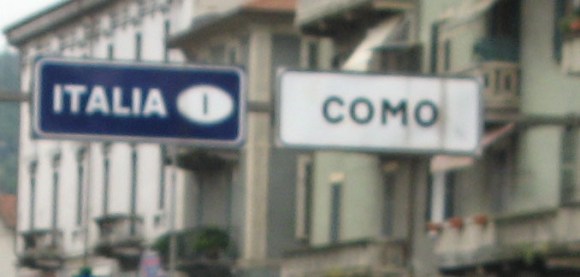
A bus photo taken on the move in 2002. Then, my first time in the border town of Como, Italia.

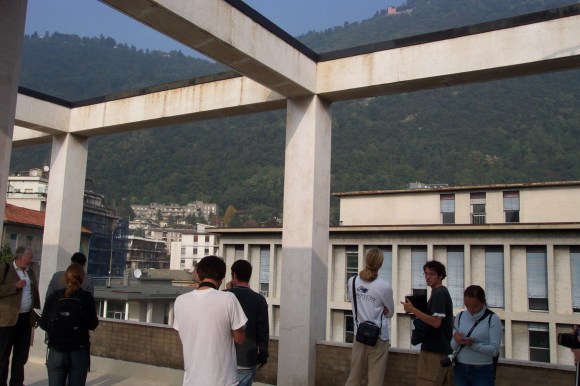
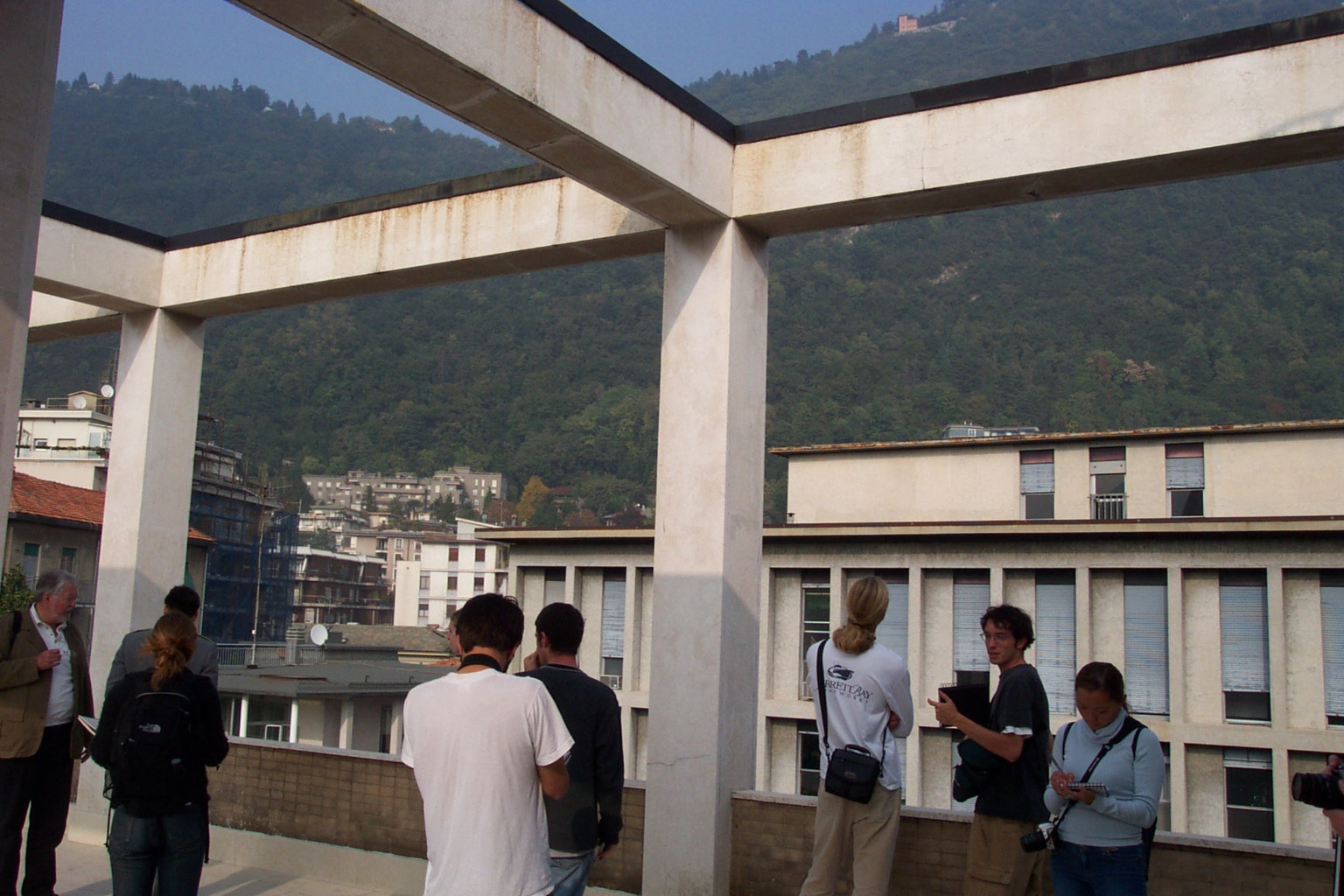
Terragni, Terragni, Terragni. The fascist architect whose public work we toured in o2.
As you may be able to tell… I look a bit younger 8 years ago.
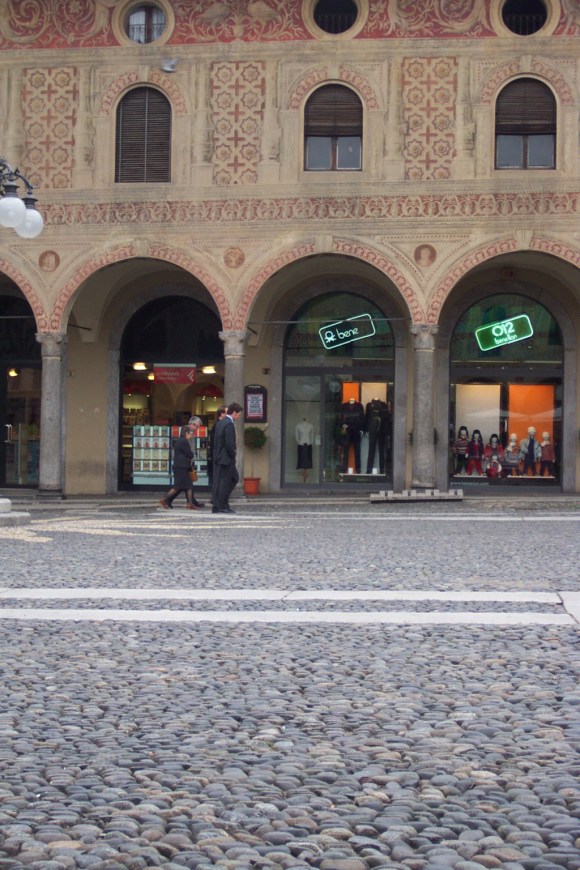
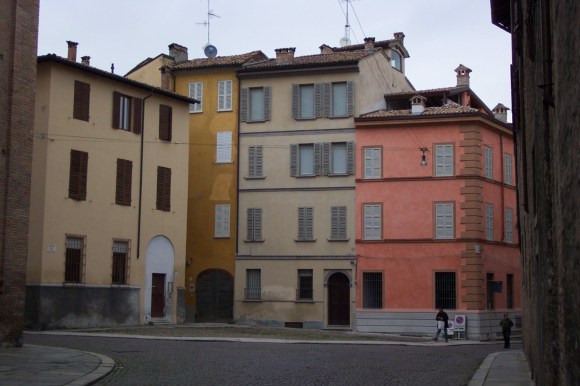
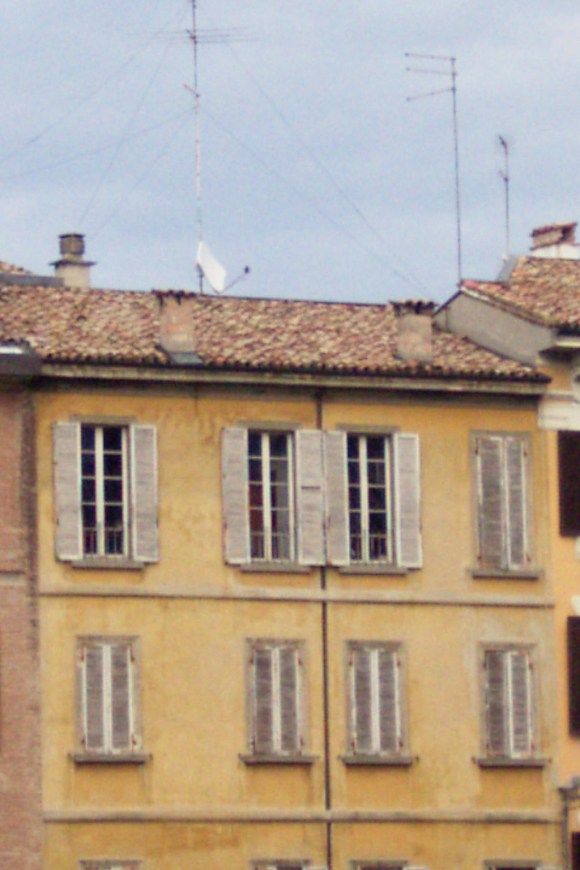
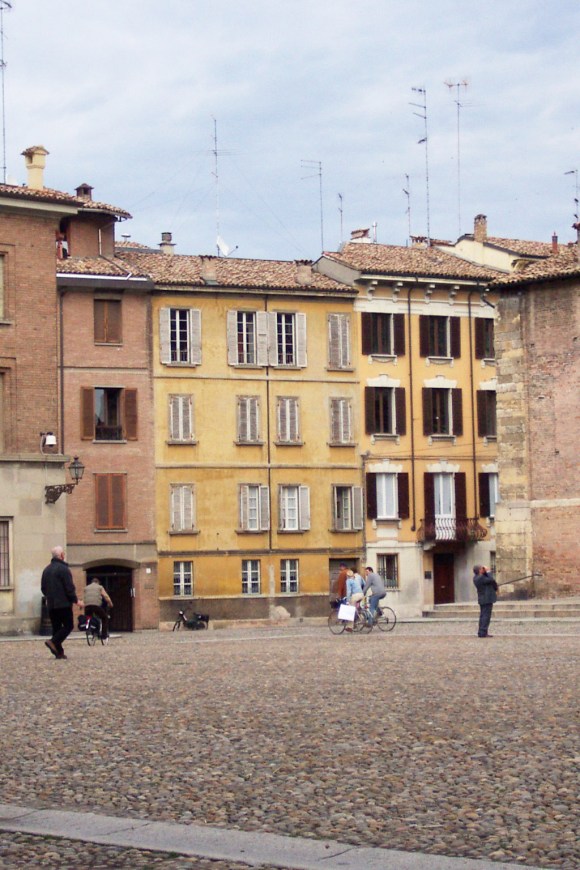
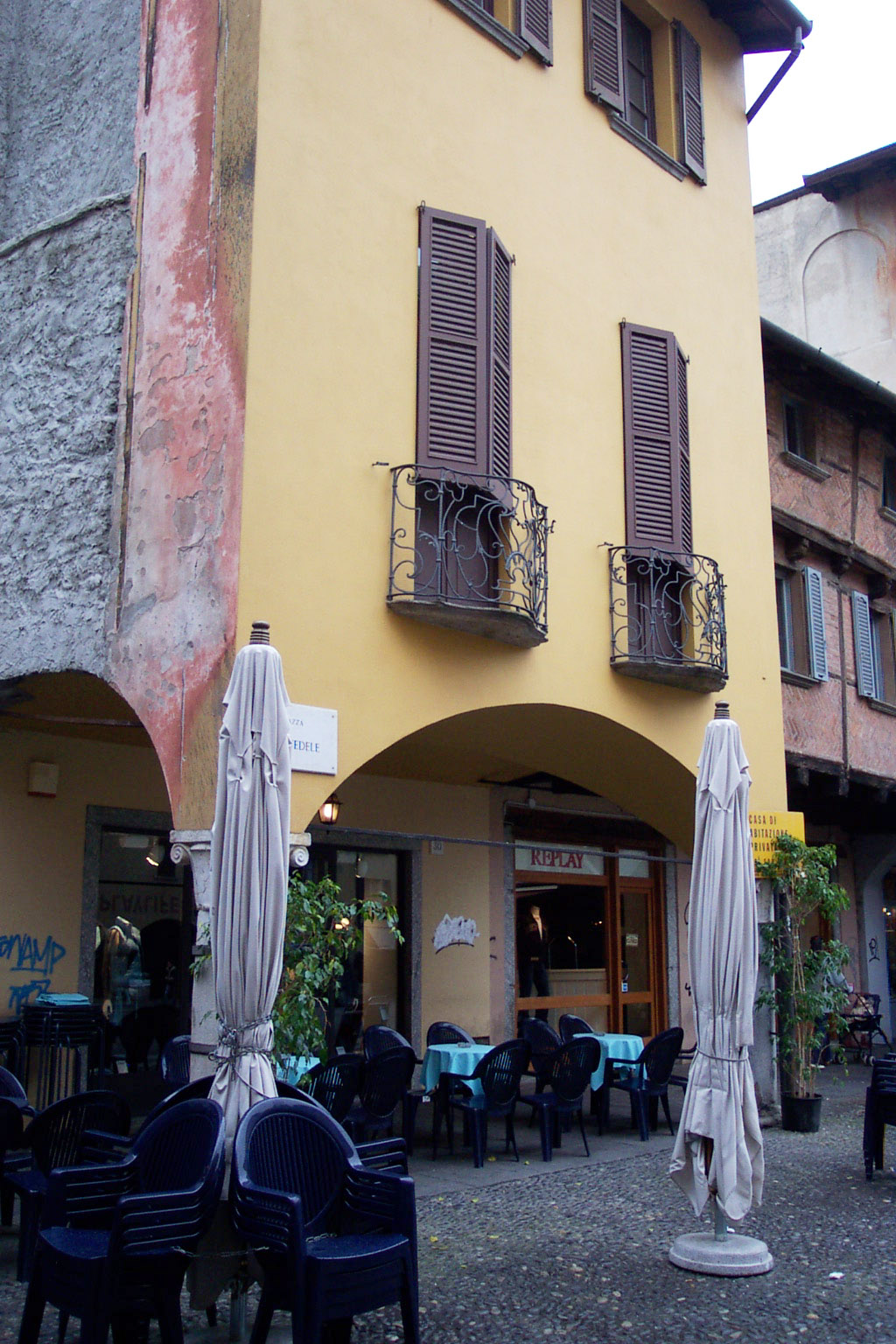
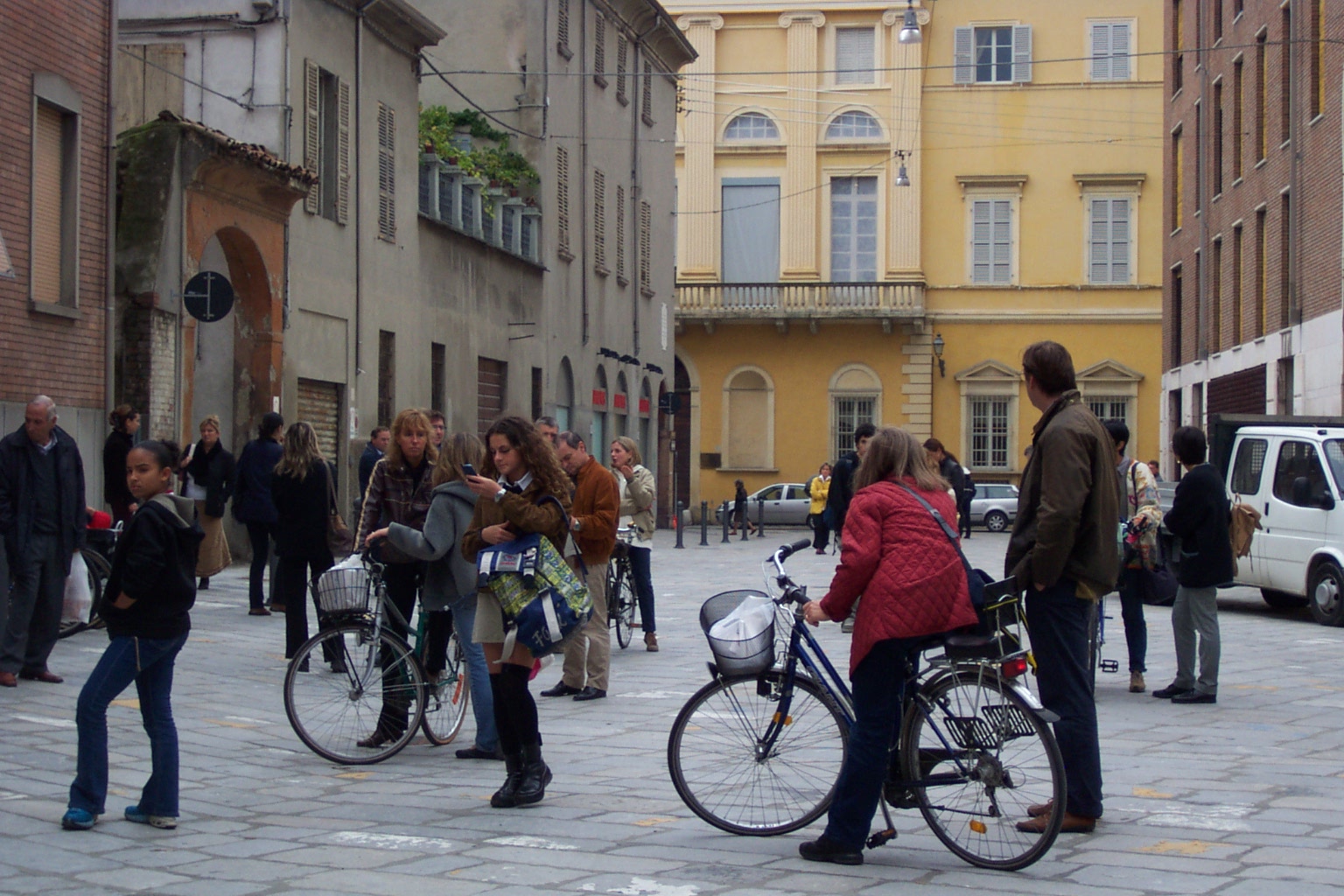
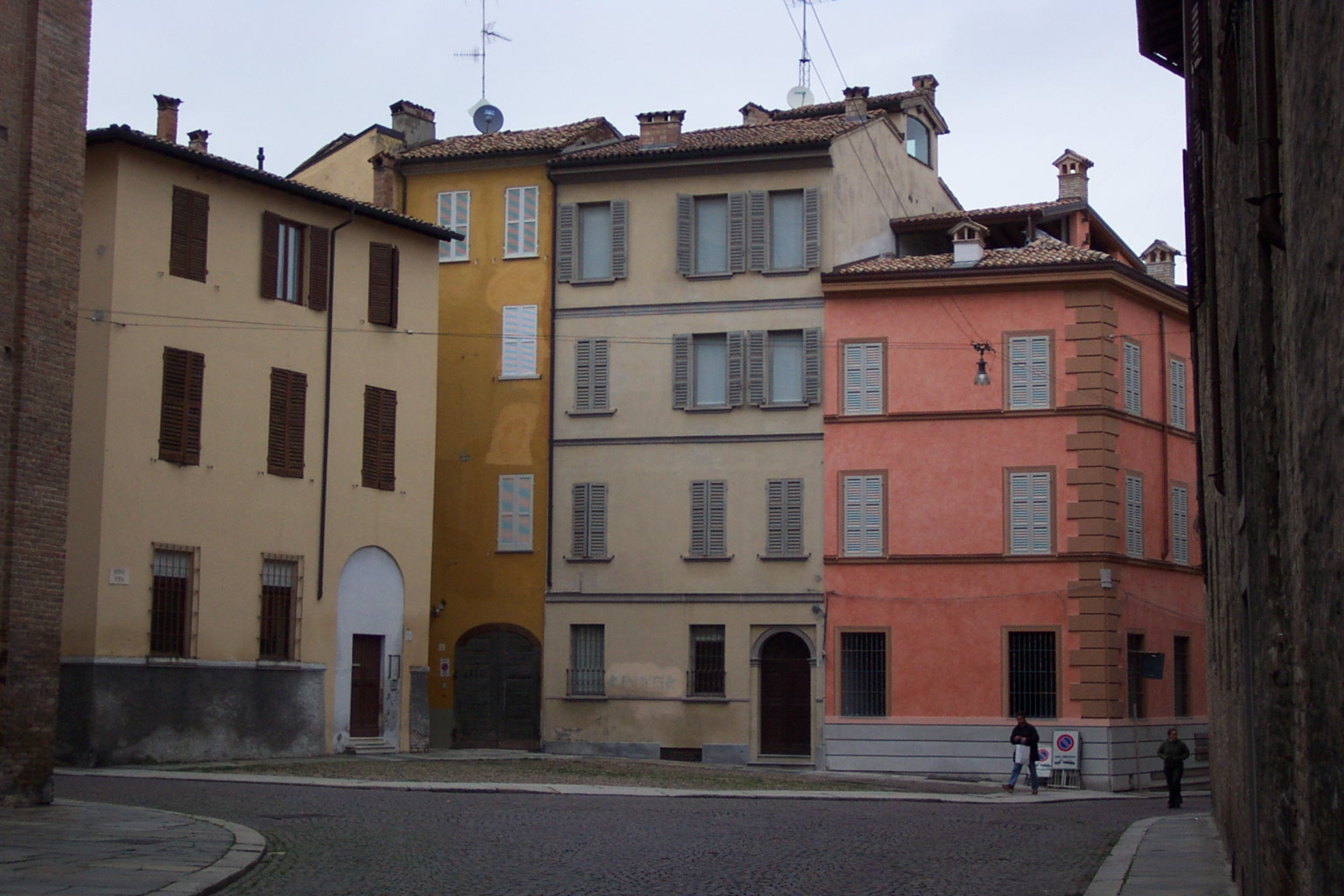
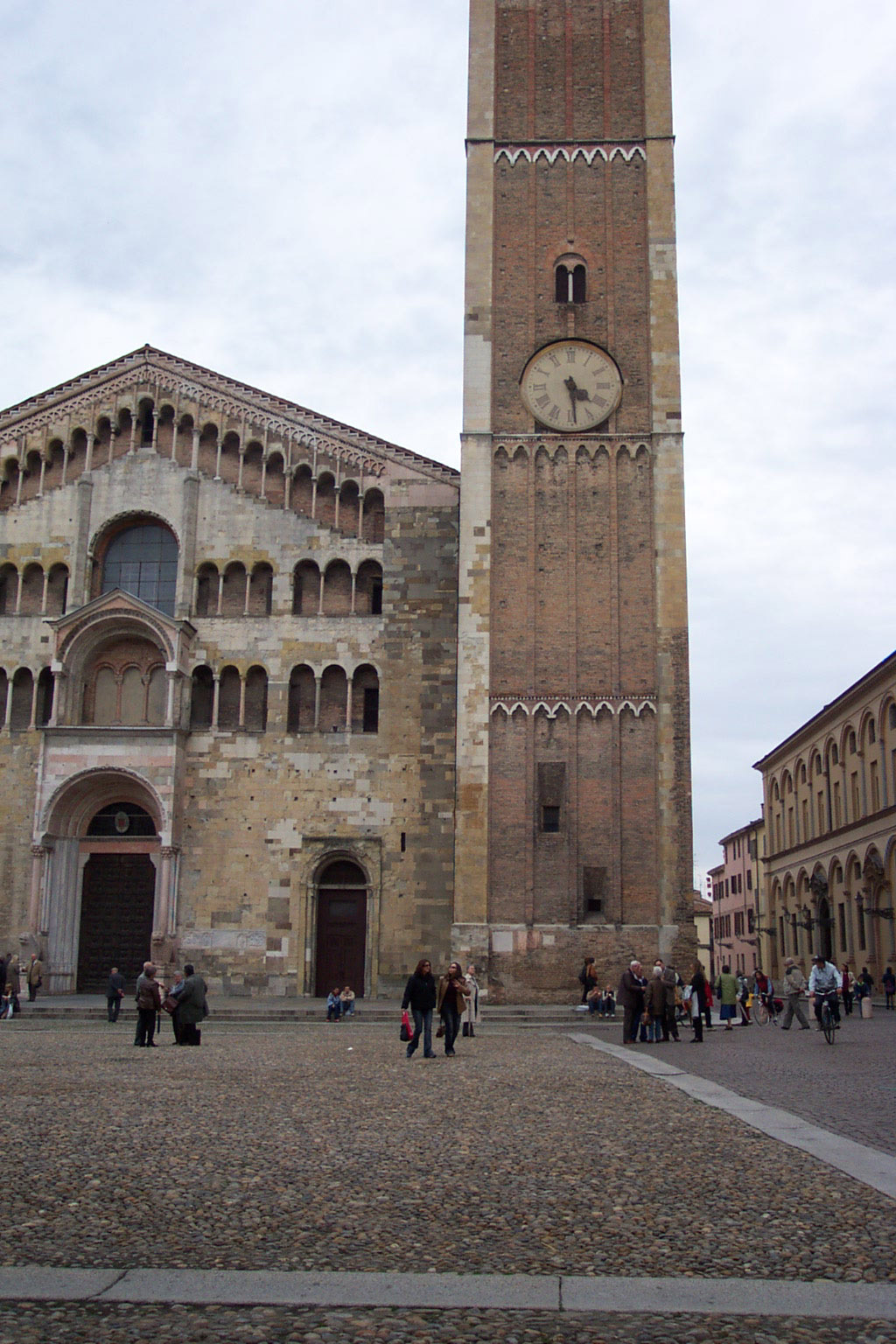
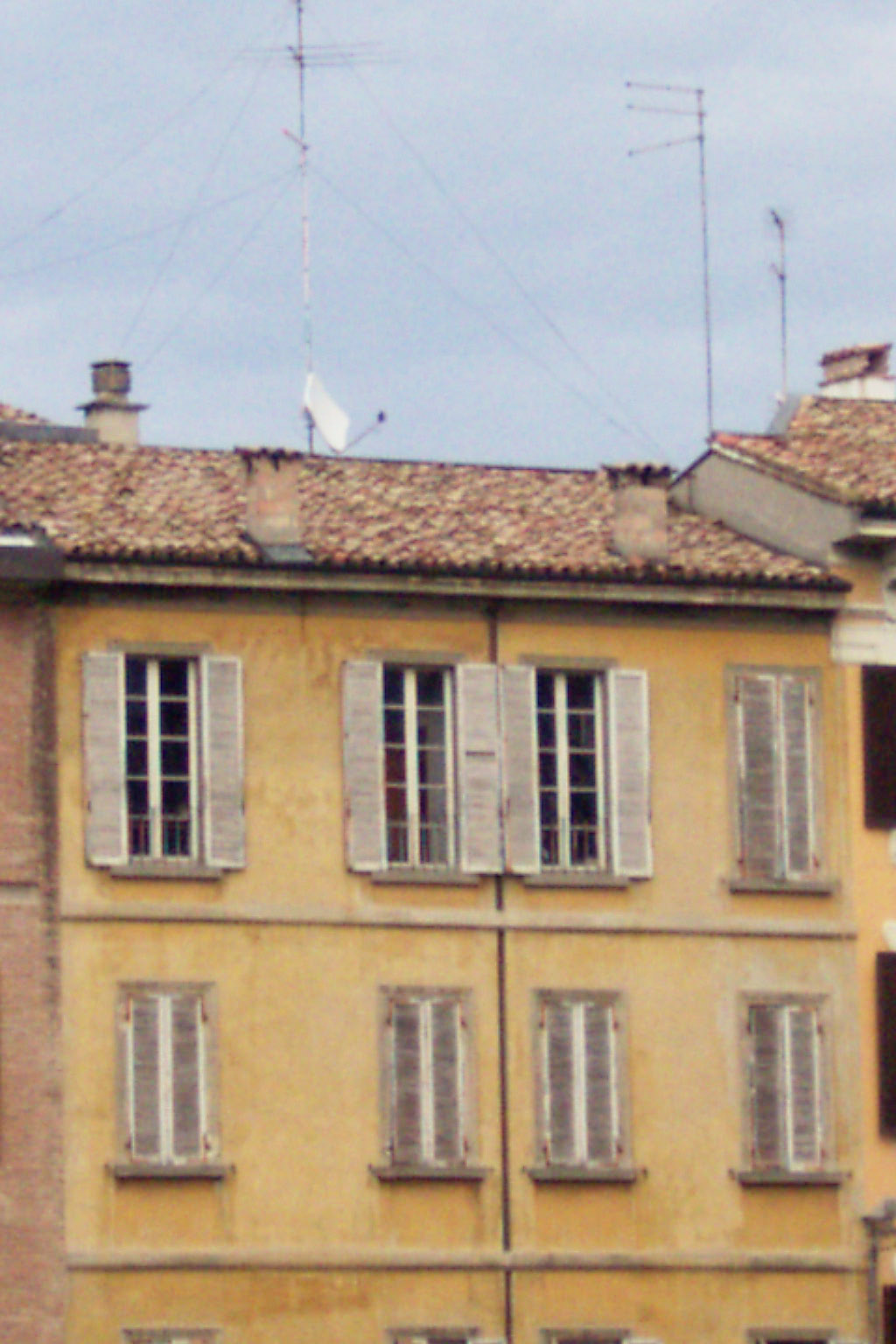
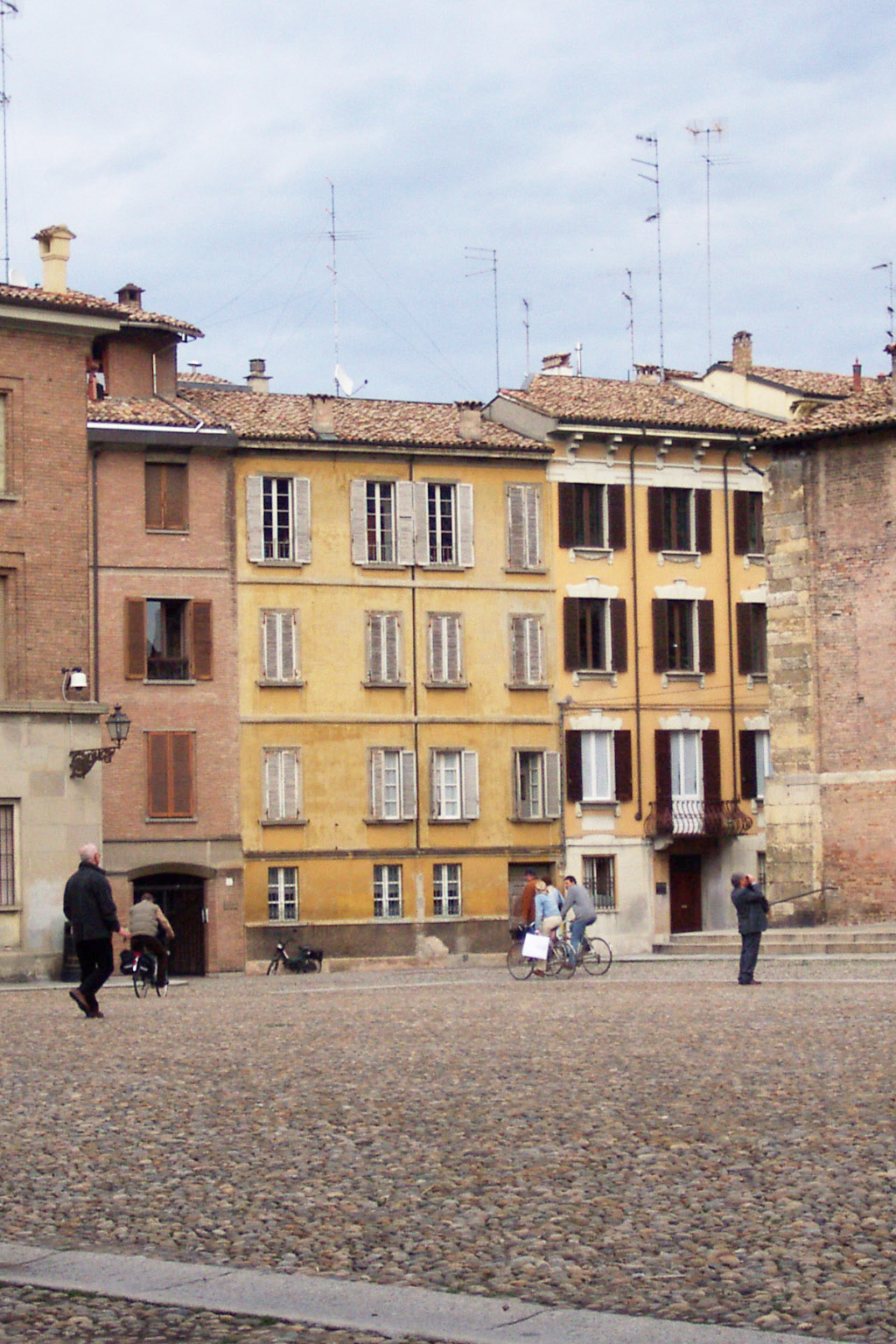
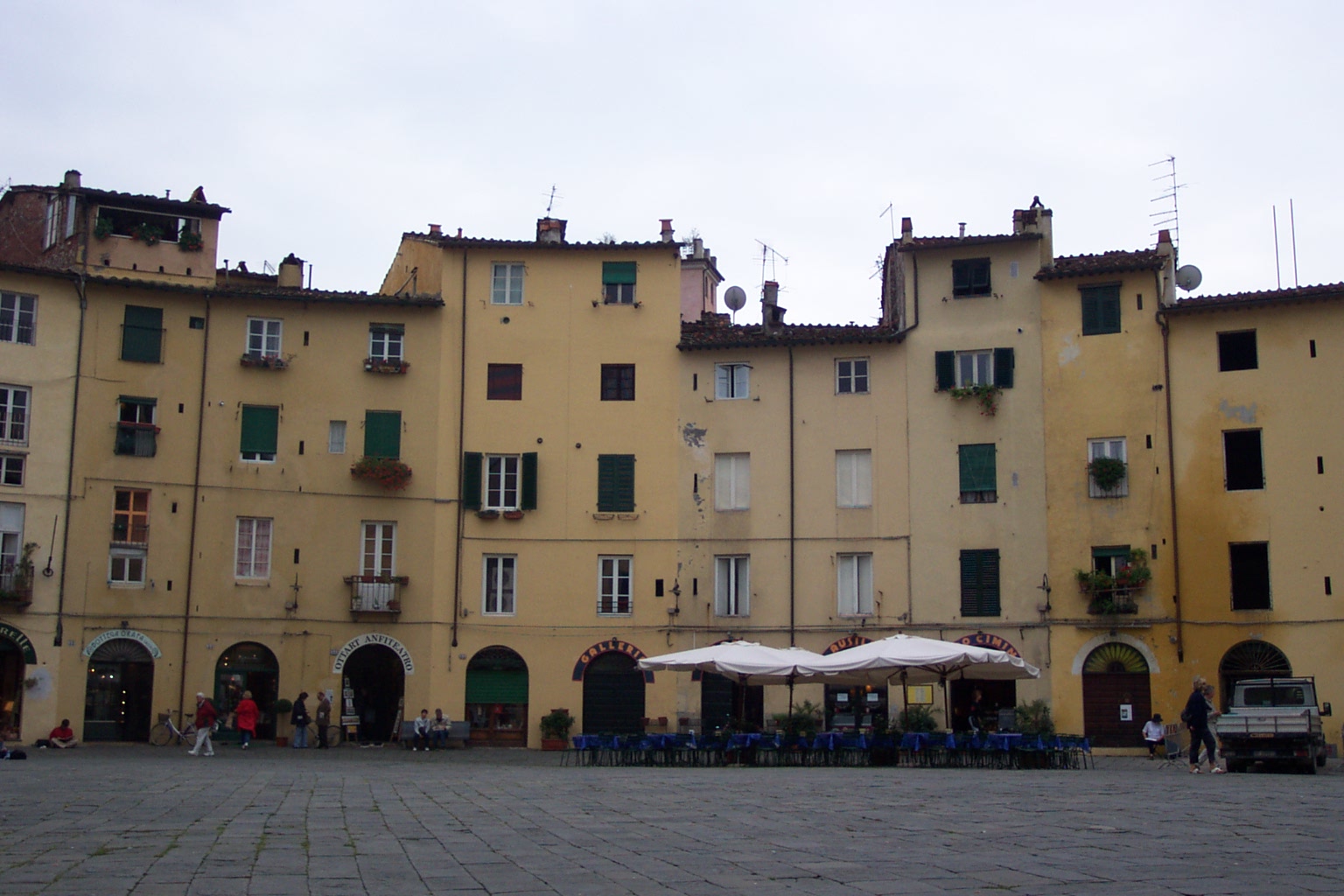
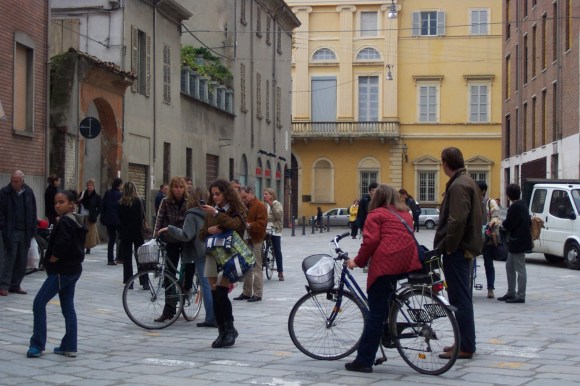
Side trips into the country-side for one night or two. These are from Parma, Pecia, and other hill-top towns outside of Florence.
Phil and I finished a 45 minute loop tour and then jumped on our train to Como.
A birds wings tapping the water
skipping like well-worn rocks
The train a Lugano awaits me, Italia!
After eight years I arrive again.
Ah, Italia and film. Stone washed houses, pink facade worn.
Trains are good for us, through the mountain tunnels to the lump hills of the northern country.
The land of terraced grapes and olives.
.
In the plan of things, looking at a map, a simple 20 minute bus ride to the down town of Como looked easy enough from where our train would take us to the Switzerland/ Italy border. We had our passports ready… and then Italy began.
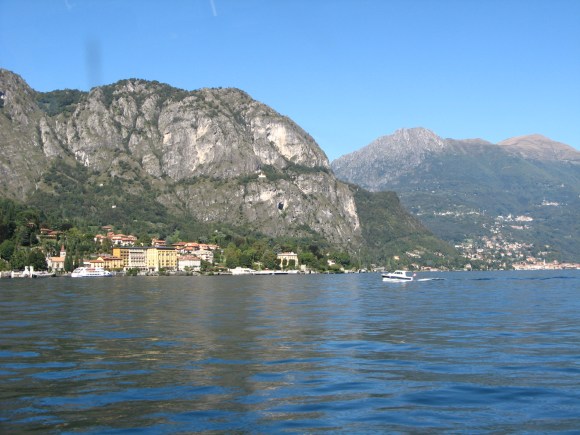
An odd start to Italy. Not even border control knew what to do. It was 4 or 5 in the afternoon on Friday and after walking along a sidewalk into Italy, then, walking back into Switzerland to talk to the Polizia, and again following the sidewalk out, we were entering into another country without a passport stamp. Ok. Then, we decided to walk to Como. Highways were the borders and I knew this was kaotic for Phil. This in-between place, the farthest outskirts of each country touching, no one seeming to care where we walked. We found Via Asiago on my Como map and decided to wait for a bus. After it didn’t come for 5th time the schedule said it would we decided to continue walking. We just weren’t exactly sure we were walking in the right direction. If only we could see the lake. Welcome to Italy, my secret garden, iron gate doors, cobblestone courtyards, skinny women in tight black clothes. It was ok that this was the entrance, it could only get better and I was in love. We walked and found someone to ask which bus to Como Central. The bus took us to the places along the lake that I recognized -sail boats closed up and wrapped tight in the sunlight. (But even the bus ride wasn’t without hiccups. Phil and I tried to pay, but the bus driver kept waving at us.. we noticed the money machine finally and being quite exhausted took a seat.) Then, here was Como Central! We stepped off, heard music in the piazza, found our hotel, the interior clad in ceramic tile, two men I addressed in Italian. One man showed us to our room and showers. Thank You! We left our luggage, opened the shutters and made a quick video to remember our crazy day.
We didn’t walk far for food -ordering Italian pizza in a courtyard set up for a reenactment of a renaissance dinner. Phil got funny and the men with roses, fuzzy animals, and glow sticks didn’t know how to treat a man singing to them. These men were relentless. Some men bought their girlfriends the whole bouquet. In love. I was happy and with my marito. We discussed how we needed to be better aware of what we did at home, walk more, like ourselves and what we did more. We walked arm in arm wrapped around one another as the streets became rainier.
Then, we tucked ourselves into our… bunk beds! What? Yes, the Twin Private Bedroom, second on the list of pre-planned choices of how to choose and book a bed while traveling, was not the option for honeymooners. Oops, oh well. It’s a good think we don’t mind sharing a tiny bed.
Day 7
Signs around Interlaken ask ‘Are you Bad Enough?’ There are children acting as adults –running errands on a bike, jumping off to stop in a store, pick up the latest toy train. Lots of nine-year olds are walking around in grownup hats. Others are buying fruit in the grocery store, or wandering outside of it with no knowledgeable purpose or adult in sight.
After a day out in Interlaken you begin to see the same faces after a few hours. Balmers Hostel shower was so nice last night before dinner. The hot pounding water after walking till we literally dropped. However, you had to keep on top of the shower button, Phil warned, for the fact that pushing it once only allows moments of lather before you must push it again. We were in the attic room with window shutters that opened out onto the main street.
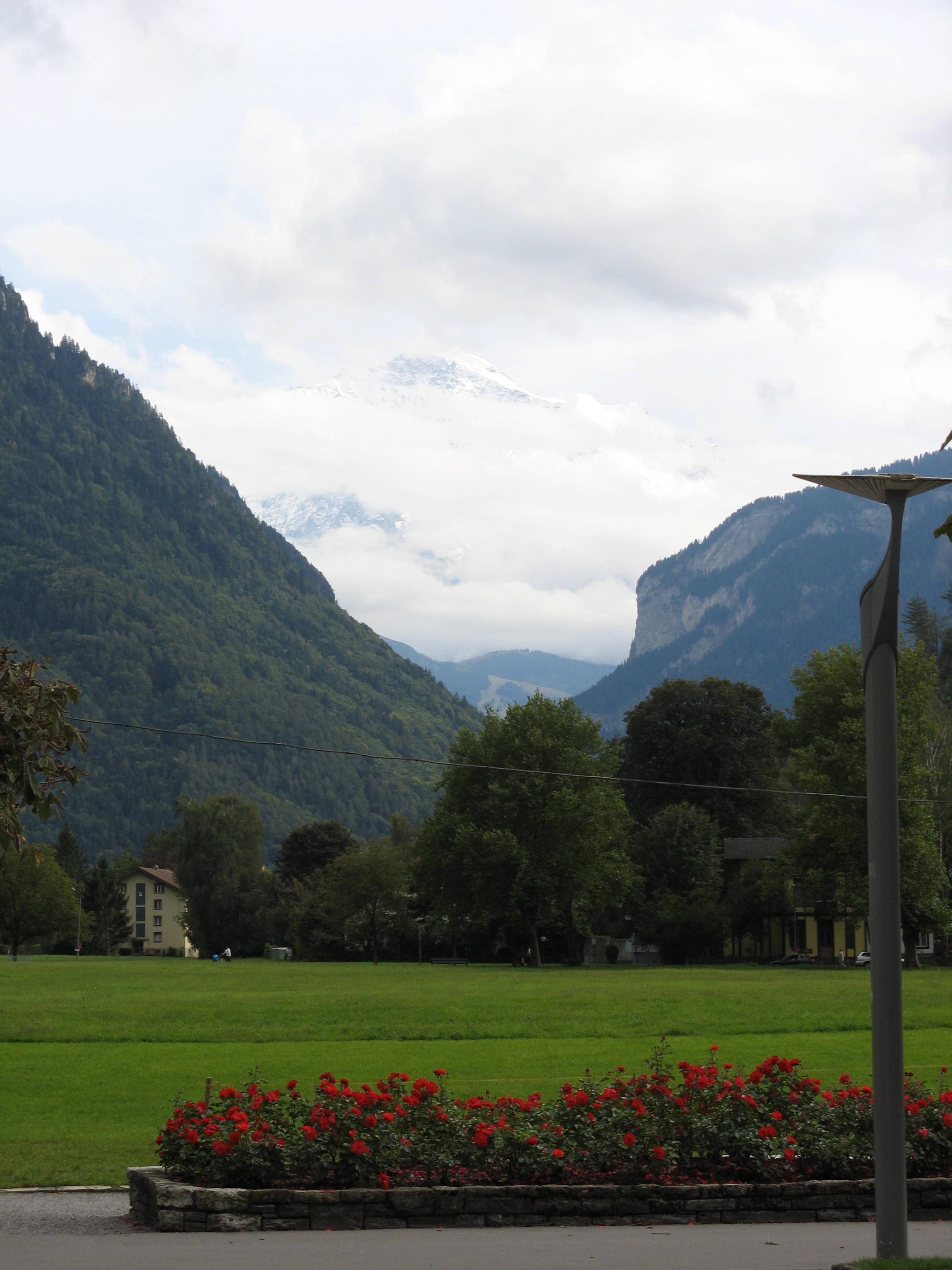
We took our breakfast ticket to the counter down stairs and exchanged a piece of fruit and dried oats for it. We were sill a little dazed. The coffee was instant. We walked North into town, the 5 story buildings looking more commercial and business like. Not as much uniqueness as in the other past rural towns, but more real. I think Interlaken would have been a good hub to climb more of the Jungfrau region. Just days before, the town had hosted the Jungfrau marathon, an incredibly difficult run up to the face of the mountain itself. Extreme. But, other than that, it was an easy town.
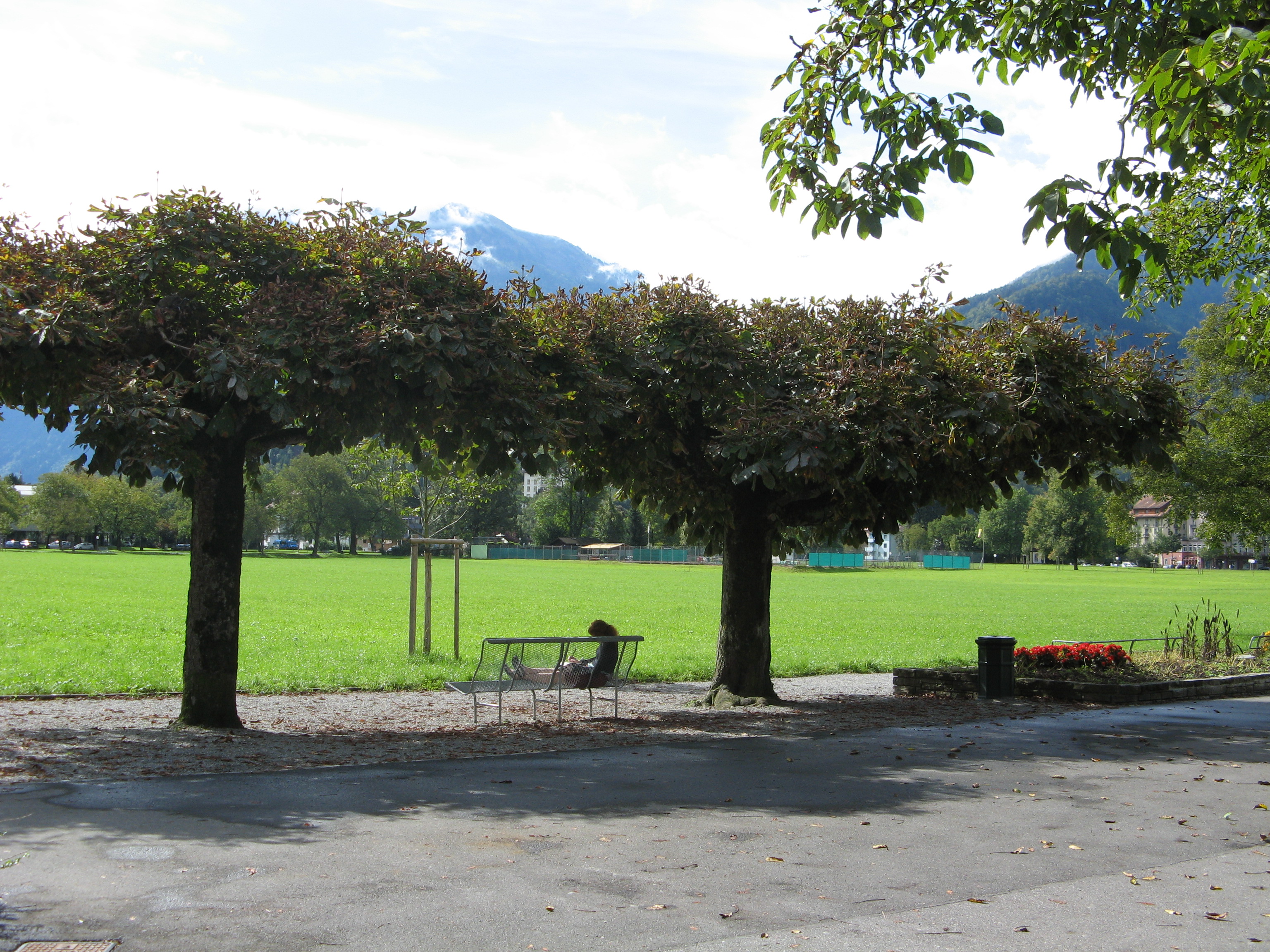
As we crossed an open field and sat below a tree line taking in the sun and writing about yesterday, parachuters were landing in the meadow. Large Indian families were in full dress and riding bikes –the children off and ahead into their own world. The Swiss jobs in this region are very precise, centered around keeping up what they own and do for a living.
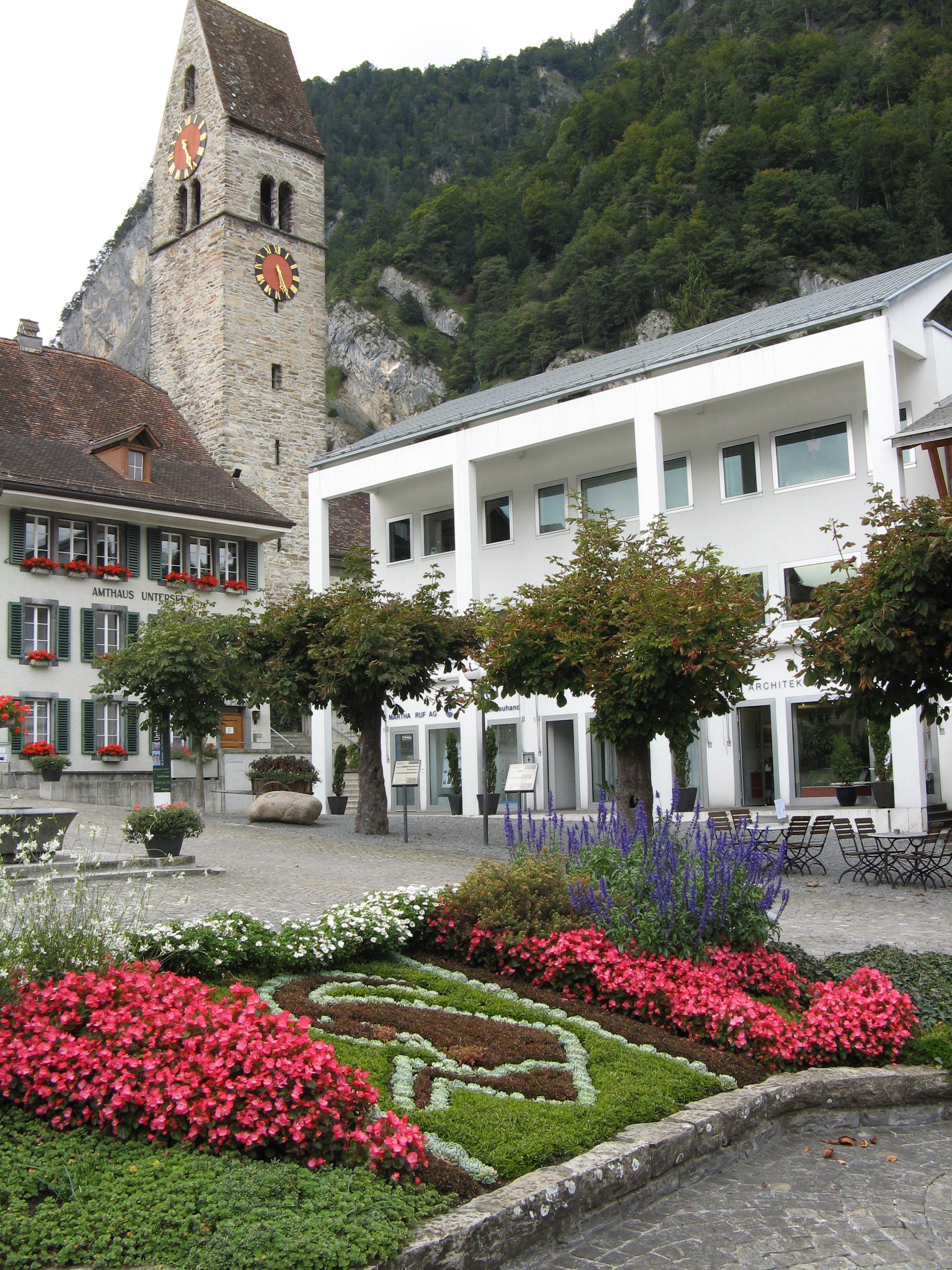
Houses have exquisite painting on the facades, stucco faces have ornate trim boards with edges that drip like lace from the soffits.
We were hungry again and found an outdoor patio nearby with shade trees.
I wrote: Heels clicking as our restaurant waitress strolls by, over the concrete tiles beneath low trees in the alpine plains.
We ate an expensive lunch of mushroom ravioli and delicious white soup and ordered coffee and a beer. The sun is high. Most people in this restaurant are reading a newspaper, looking over the nearby meadow, just south of us, into the sun. It seems to be brunch time well into the afternoon, and it is just lovely.
Phil and I begin to rate our hiking, determine a level system, based on our physical ability and age. We think of all our hikes and give them a number of difficulty. 10 being Mt. St. Helens Hard and 1 being something a toddler could do.
10 Mt. Saint Helens Summit 8 mi (1 day)
9 Grindlewald -Fulhorn- Schinge Platte – 14 mi (1 day)
8 Gresalp to Murren via Sefinefrugge -10 mi (1 day)
8 Katahdin Summit (AT) 9 mi (1 day)
8 Beaver Brook (AT) NH (to Beaver Brook Shelter) 1.5mi
7 Laurel highland Hiking trail (Ohiopyle to Rt. 653) 19 mi (2 days)
6 Warrior Trail (Greensboro to Covered Bridge) 12 mi (1 day)
5 Dolly Sods (Little stone coal -Big stone- breathed mt. Lionshead) seven mi (1 day)
5 Monterosso to Riomagiore (IT) Cinque Terra – 5mi (1 day)Then, Phil loves to climb high points…
Highest Vertical Climb
1. (4922 Vert) 8,297 Fulhorn, Switzerland- from 3,375
2. (4620 Vert) 8,365 Mt. Saint Helens- from 3,745
3. (4183 Vert) 5,268 Katahdin – from 1,085 (HP)
4. (3810 vert) 8,550 Sefinefrugge, Switzerland – from 4740
5. (3195 Vert) 5,695 Mt. Grona, IT – from 2,500
6. (2300 vert.) 6,800 Grand Canyon (Bright Angel) from 4500
7. (2000 vert) 4,000+/- Beaver Brook Trail, NH (AT) from 2,000+/-
8. (2000 vert) 2,075 Multnomah Falls (back way) from 75
9. (1700 vert) 1,750 Monterosso to Venazza (Road beyond church of Madonna) -from 50
10. (1415 vert) 3,075 Falcon Cliffs, WV (north fork) – from 1660
11. (1400 vert) 2,700 Pt. Along LHHT, Pa – from 1,300
12. (1330 vert) 4,700 Chimney Tops, TN – from 3370
13. (1049 vert) 5,729 Mt. Rogers – from 4680 (HP)
14. (950 vert) 950 Punta Mesco, IT (cinque Terra) -from 0
15. (860 vert)2,400 Seneca Rocks – from 1540
16. (830 vert) 850 Beacon Rock, WA -from 20
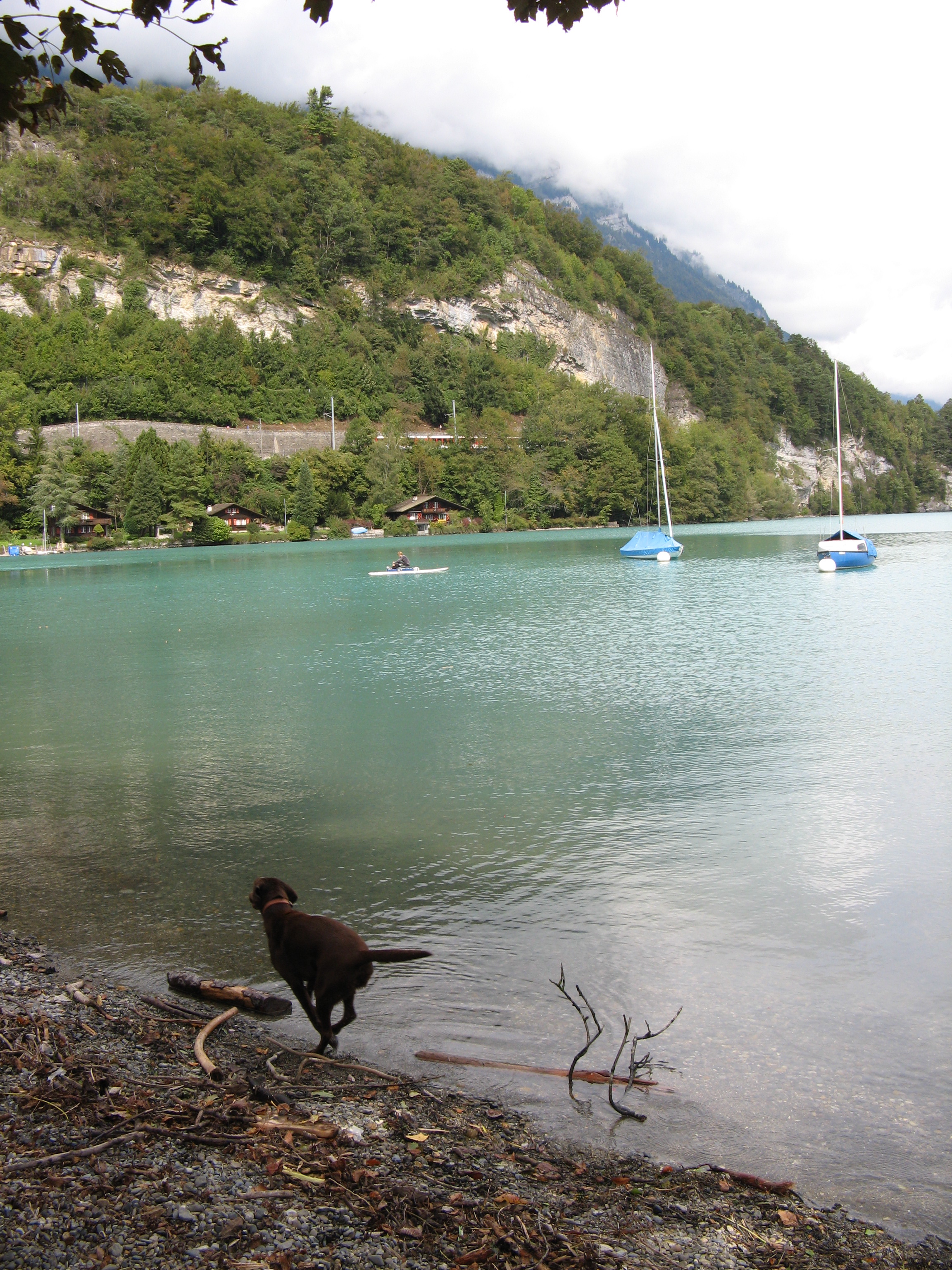
Being an off day when you have the curious couple, meant another 2-4 miles walking. We walked to the West train station (east) where we’d travel to Italy tomorrow from. (Ost meant west?) We followed the train tracks and a trail to the aqua sea. The path that turned into a cattle line through a field lead us to a small beach there where children were throwing rocks and sticks into the water for their lab to fetch.
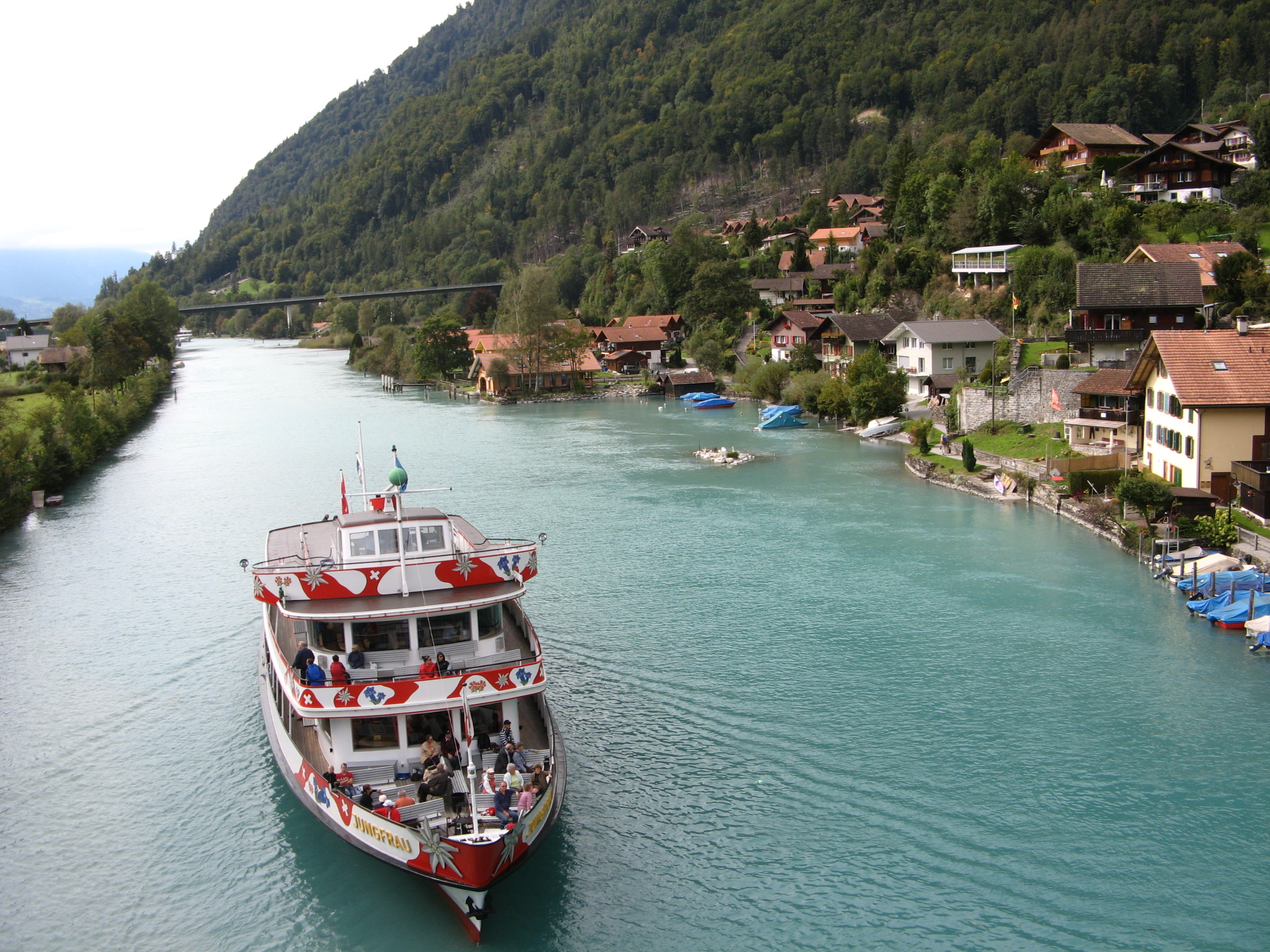
We found a bridge to cross that would lead us to a ruine castle, up a stone path, that lead to a tower among a cemetery. We couldn’t climb up but marveled at the pristine plots again and then walked down the uncut rambling path that lead back to a road that went into town. I needed to sit so we found an outside wine bar on a patio with comfortable chairs. I read Walden and drank a glass of white wine while Phil moseyed over to the Ost Side of Town, further along the river walk we’d found when crossing over the bridge earlier in the day.
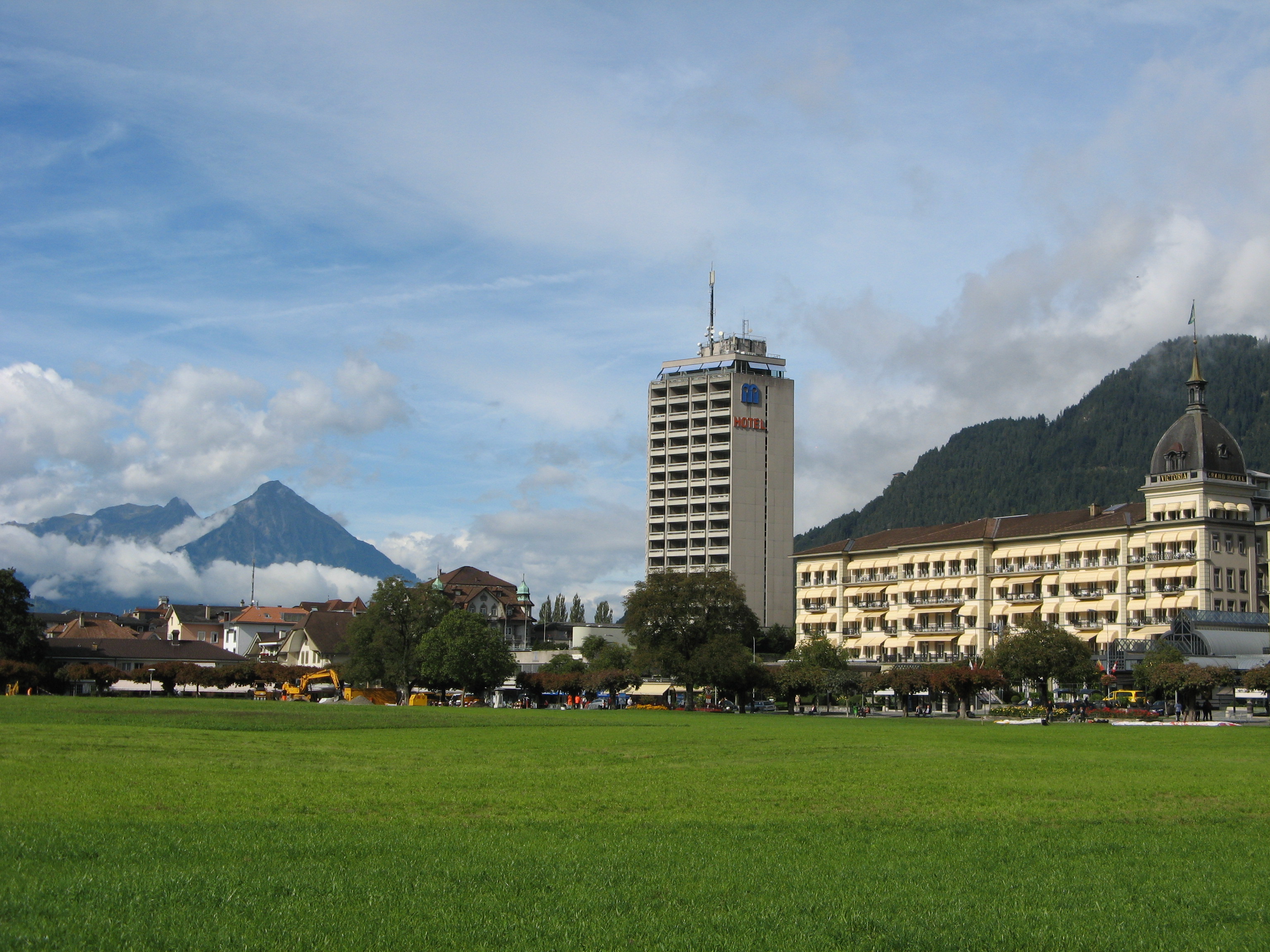
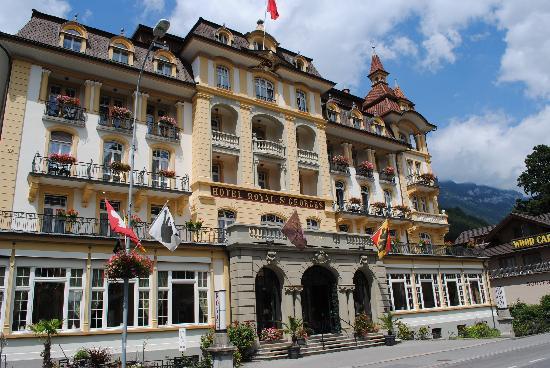
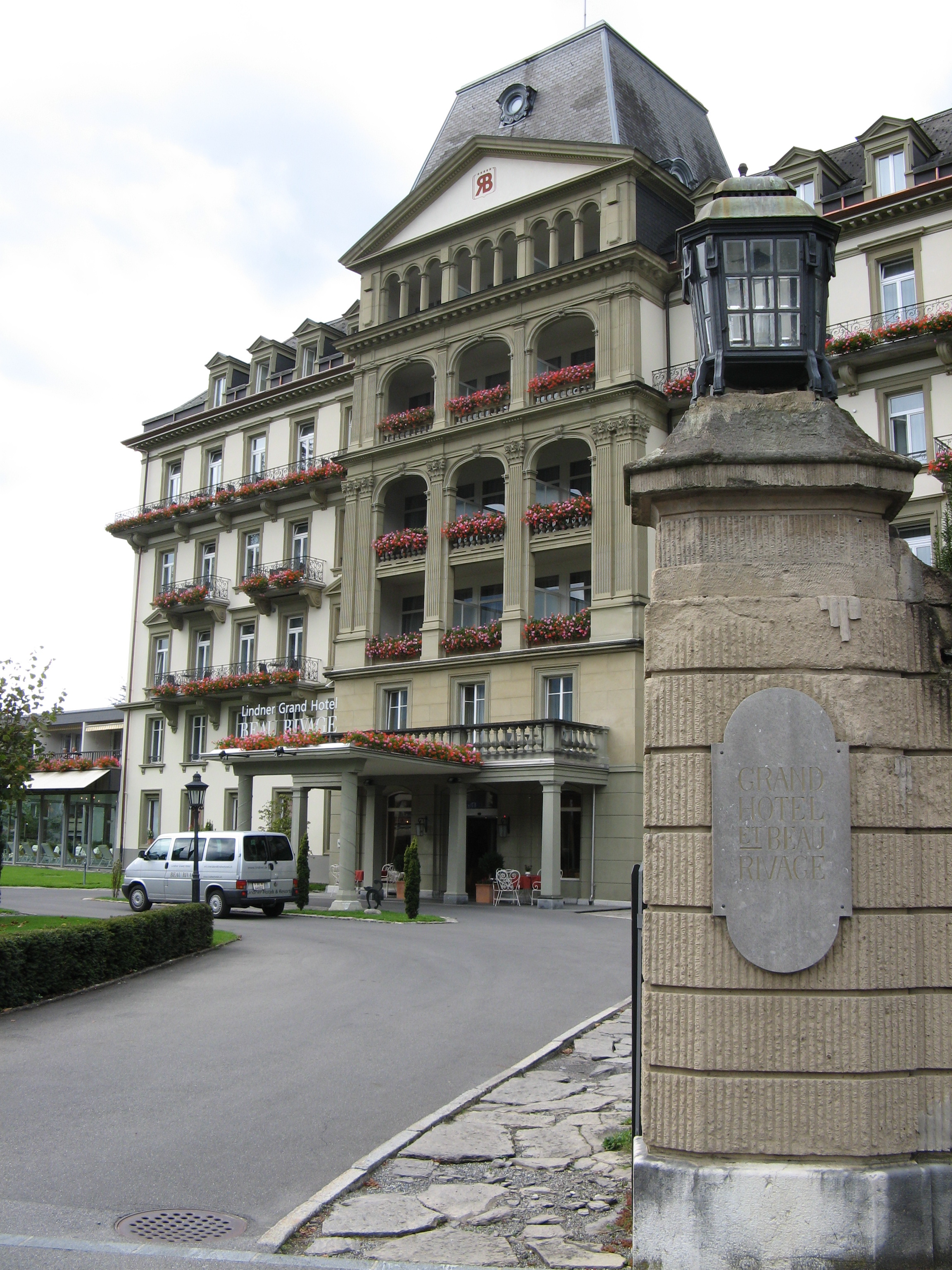
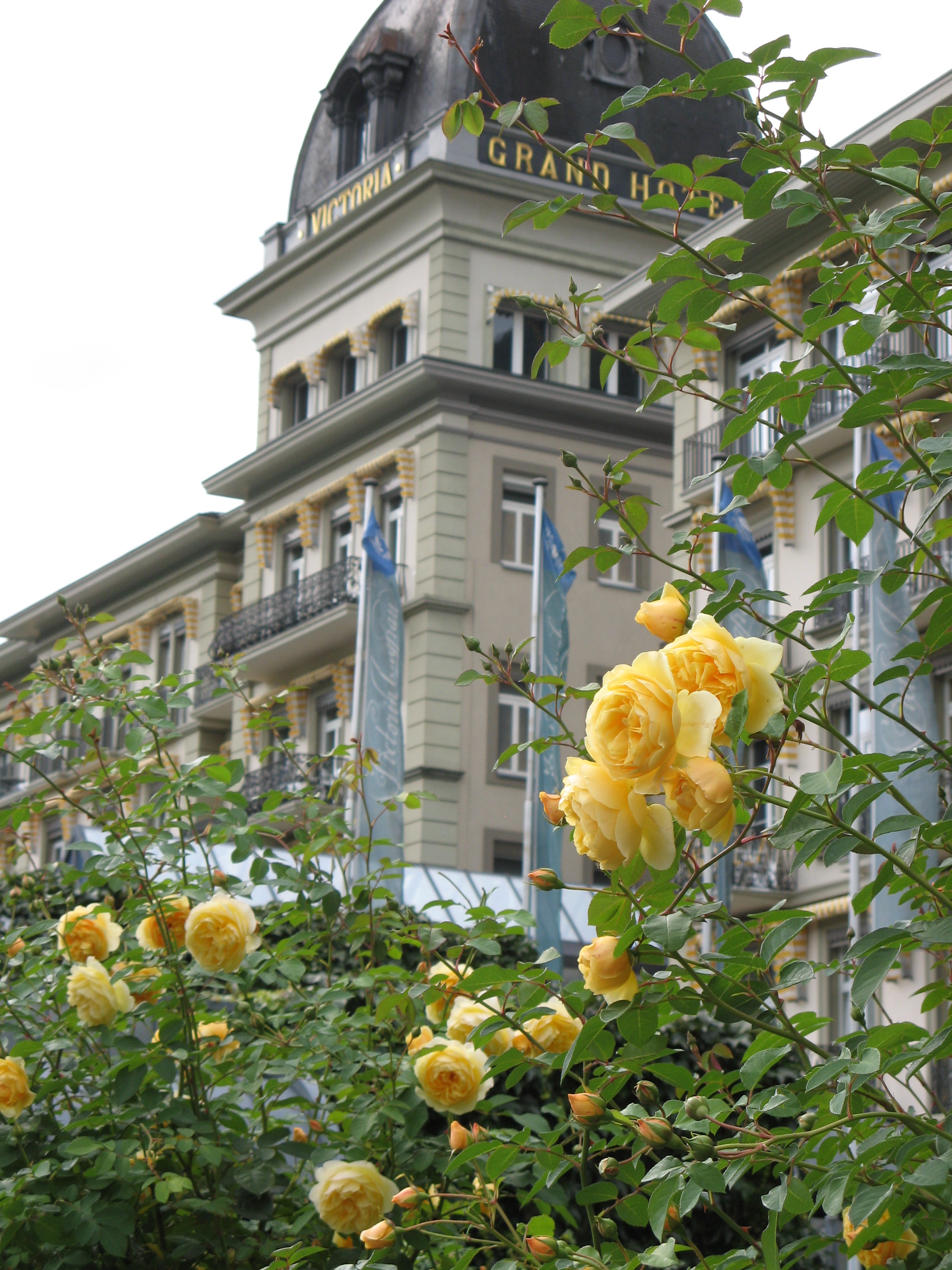
Hotels along Hoheweg were beautiful, very luxurious with dining in the lawns.
The grand Hotel Et Beau Rijage
He took beautiful pictures in the low sun, bright water day… the sun that comes just before the looks of a storm. Then, he joined me for another drink. We refreshed ourselves at Balmers not knowing what else to do and being so tired we set out for 1 last Swiss dinner. On our way ot the Hostel we located Mad Cow bead shop, recommended as a must stop and I bought a beautiful bead ring from the Australian woman shop owner. (Trip Adviser recommends..)
She recommended Tai food over any swiss patty here. I’d call the ring the Allison Ring because upon coming home Allison, our friend, would buy all the materials and begin to make them herself! Oh, but we didn’t, unfortunately, take The Mad Cow woman’s dinner advise and began to try to locate something close. We made concentric circles around the residential parts of the city and we found Hotel Regina here too. We saw more 80$ meat driven dinners and settled on a small cottage hotel looking restaurant with fine linens, glass mirrored walls with wood battens, and an Italian family with children in the corner and fake flower spreads in the foyer. There were murals on the walls in the back when we took the liberty to walk around and find out if we could take a seat. It looked like a forgotten movie set of some sort and the waitress treated us like she really didn’t care to. We had our last rosti and a beer and salad each and the total came to 70$ which made us feel as mad as a cow and then we left feeling ripped off and full of potatoes.. then we went to sleep in our last night of the Alps.
Day 6
36 Miles and Three more weeks to go.
The breakfast fare was typical and I ate what I’d usually eat – yogurt, granola, and coffee. My hiking pants were beginning to get a little snug. The nice thing about having few clothes was that I took care of what I had. The day looked sunny and it turned out cloudy with spotted sun, no rain but a lot of wind.
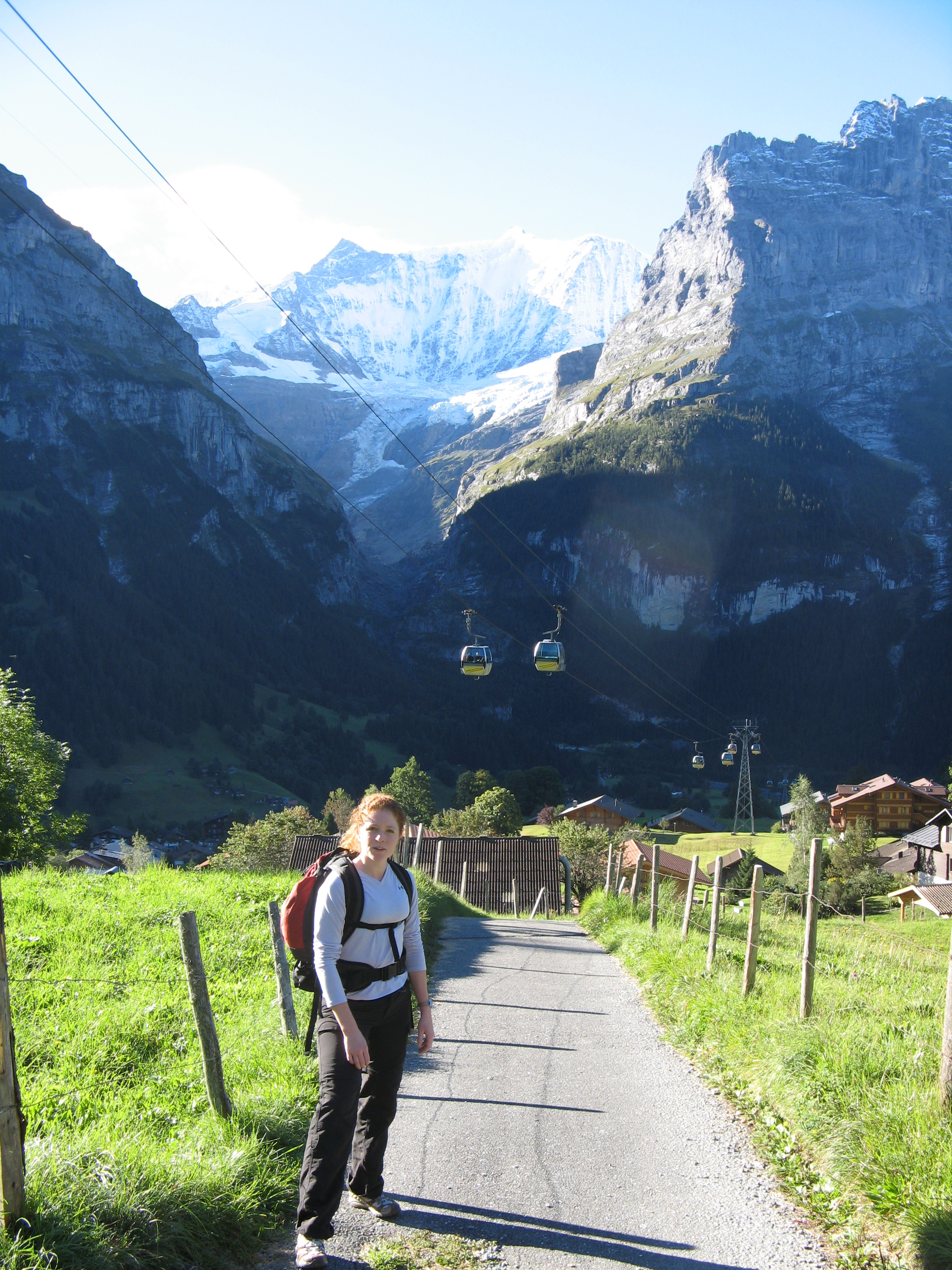
We arranged our packs and headed out. I was glad to leave Grindelwald this way. We found the chalet we were unable to find yesterday -the house on the knoll. We passed small fields and yards, flowers and people working. There was dew on the ground and the 64 franc gondolas passing over head. The extra 3-4 miles this was adding onto our hike was worth it. The beginning of our climb had asphalt roads used as paths.
I wrote this in my journal:
Two hours up from Grindelwald mountains growl with the passing airplanes. We walk through the topiary forest, a natural japanese garden with water fall streams and organic made bamboo see saws, tipping and bouncing off rocks. Smooth wooden benches formed from hiker butts. New glaciers form in front of a clear blue sky.
It was getting pretty cold. We were sweating through and when we took our backsacks off I would begin to freeze. It was on this hike that I took one of my favorite photos – showing everything we carried, and all we took for a month. I had to leave room for eventual souvenirs too.
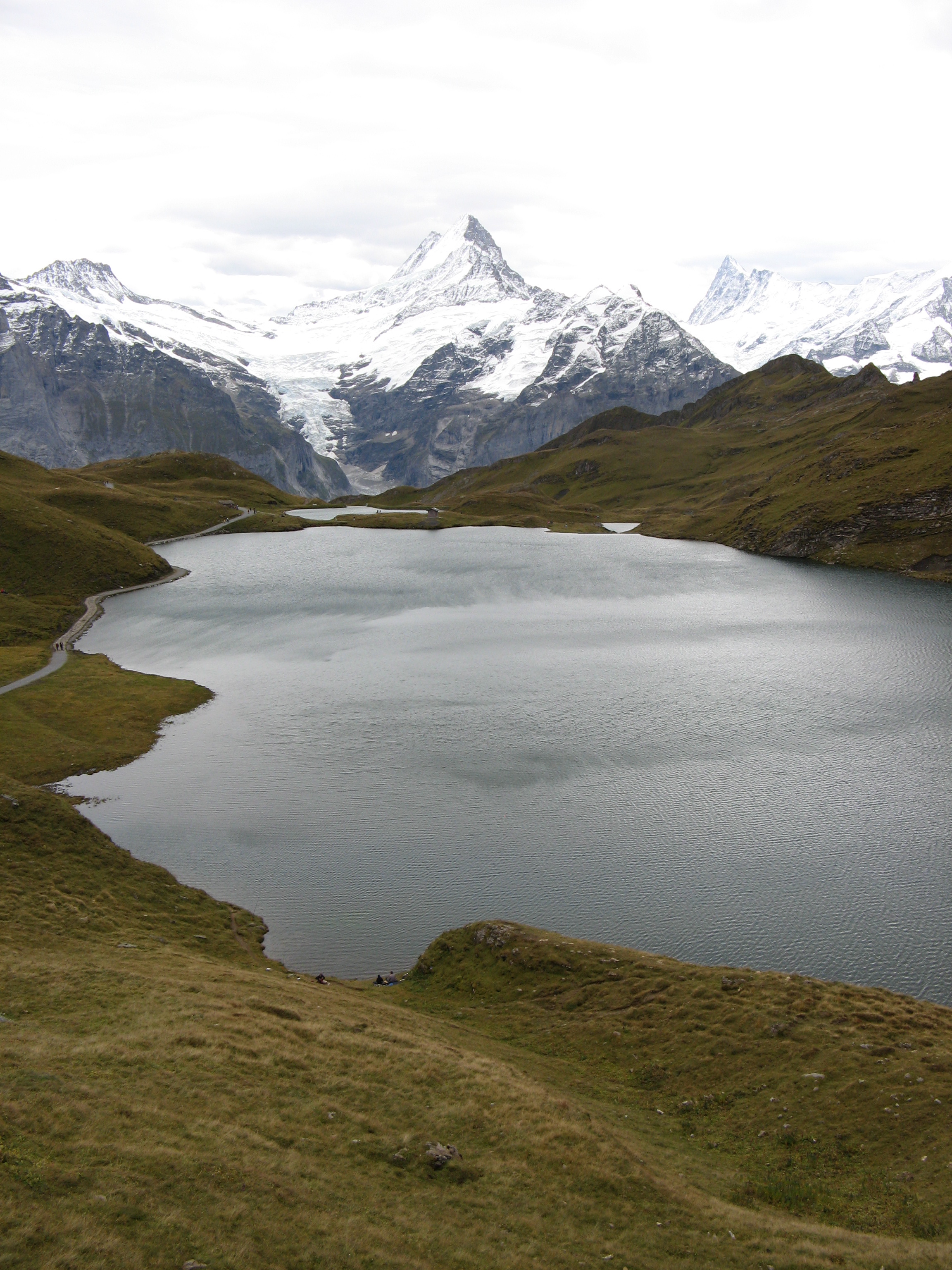
We began to pass a few structures in mucky fields. Older people were hiking down. Maybe by now it was 10 or 11 in the morning. The fact that so many 60-70 year olds were doing this amazed me. The area had a lot of cow waste smells, the field turned to rock and grass slopping meadows and I was really ready to find this picturesque view of Balchapasee. Then we came upon the lower lake.
Everyone raved of the clear days, the reflections of the mountains off of this pristine lake. Not until we climbed up to the other side of it, sat down to eat and look from where we’d come from did we truly appreciate the view. At first we were both thinking…what’s all the hype about? We ate our nut mix and gummy bears. Phil filmed me and watching myself made me realize that I sometimes spoke without a point. I spoke with pointlessness actually and it was annoying to watch me open my mouth and let spill out whatever my mind was piecing together. hm. Amazing what you can learn watching yourself.
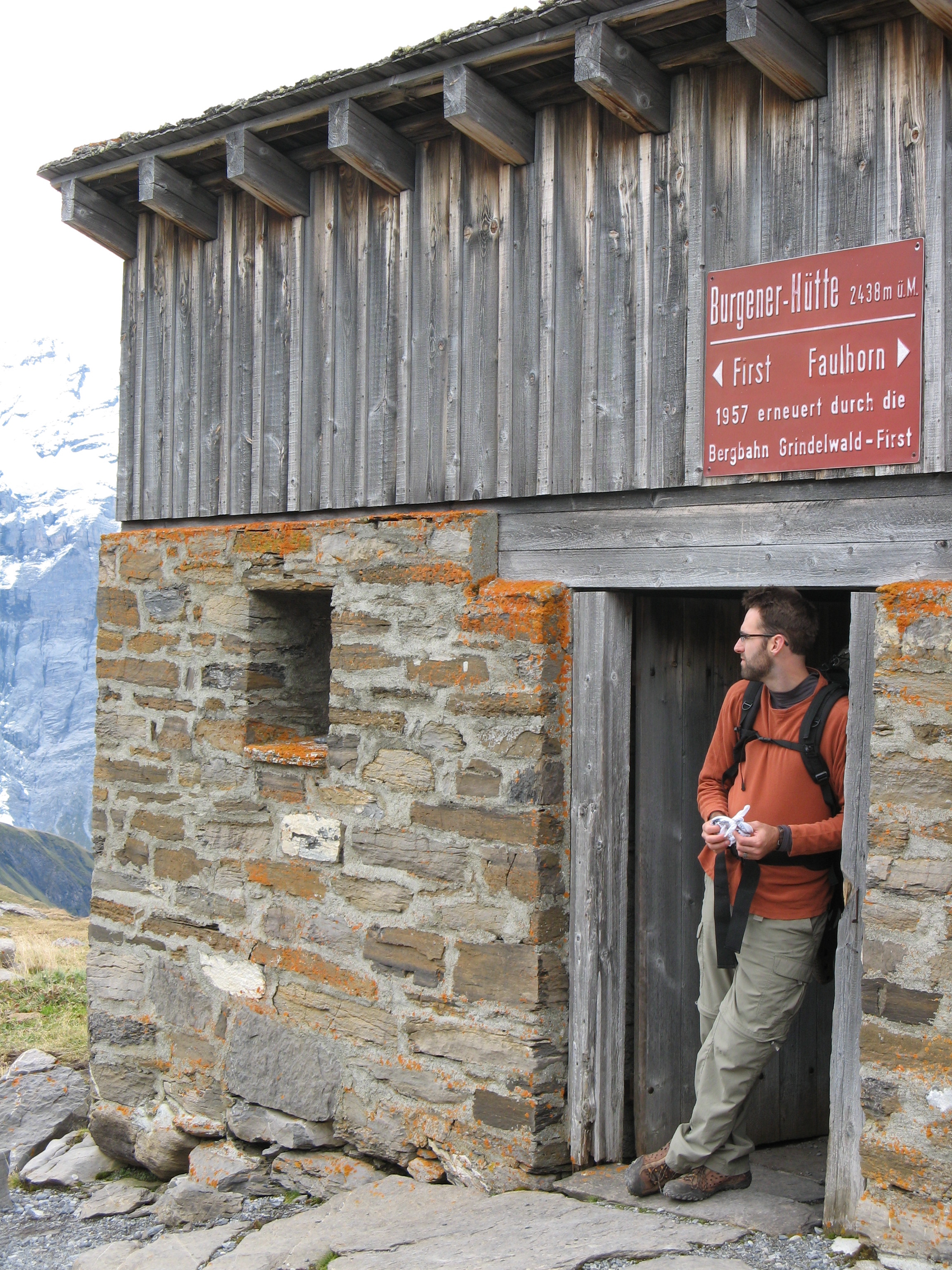
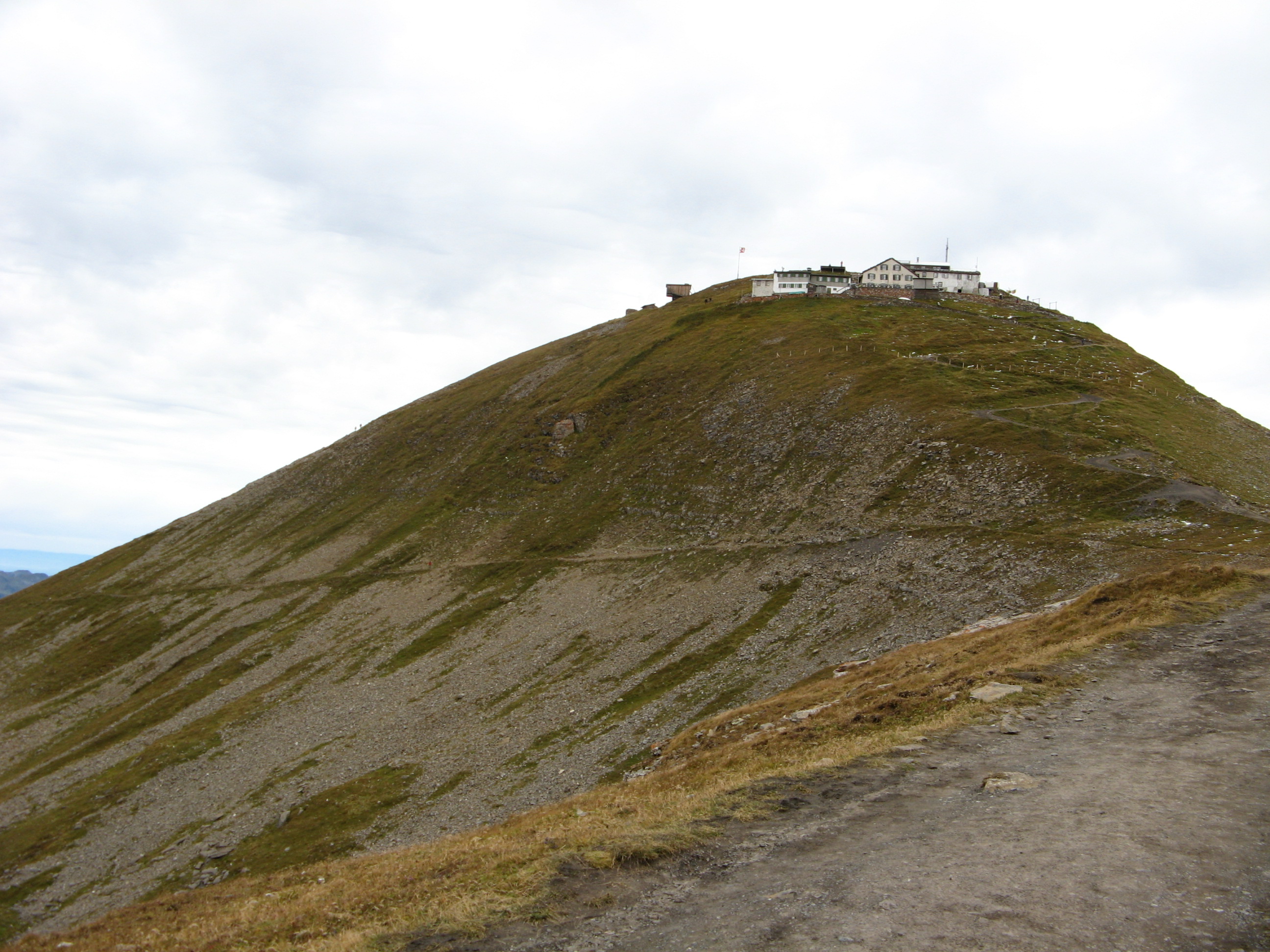
It took us 4.5 hours from Grindelwald to Faulhorn. From there we could see the gem sea trapped by the mountains, Interlaken. Up 1200 feet per hour was tiring to a late 20’s couple. There were some grassy fields with open vistas back toward a framed view of the mountains. But, what was about to come was more varied, from Faulhorn to Schynige Platte. In hindsight we could have gotten a bus from Grindelwald to Buesalp, or even stayed at a different place like Wanderweg nearby instead. Taking a hike from Buesalp via Rotihorn to Balchapsee and then onward to Faulhorn would have worked nicely too.
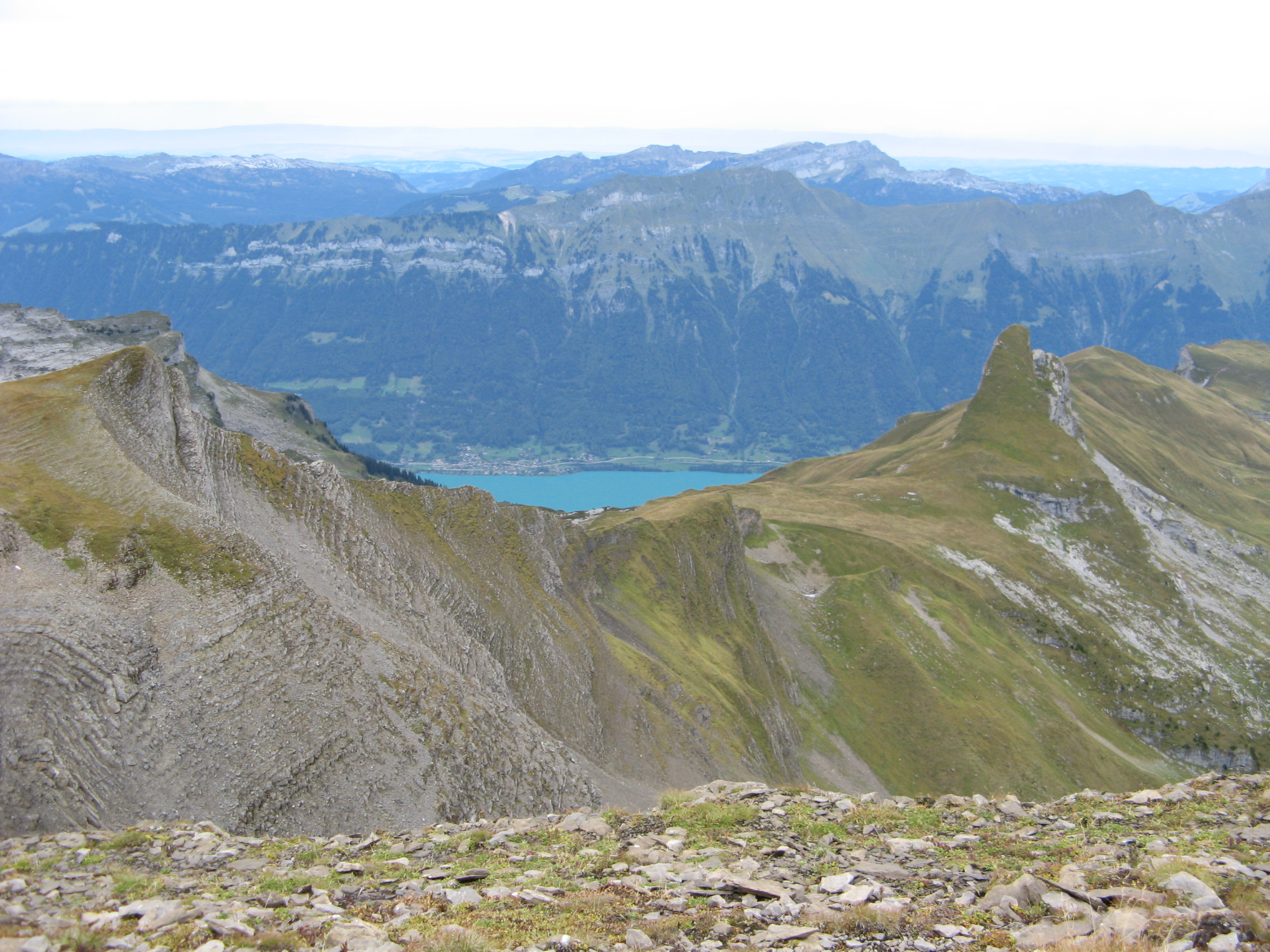
Ah, but Falhorn. It is the first hike we have taken to peer down on any mountains in this trip. From here we see our first glimpse of the aqua lake, and crisp clear teal water of Thurnsea and Brienzersee. The seas are strung like a bead threading through land connecting range to range, North to South.
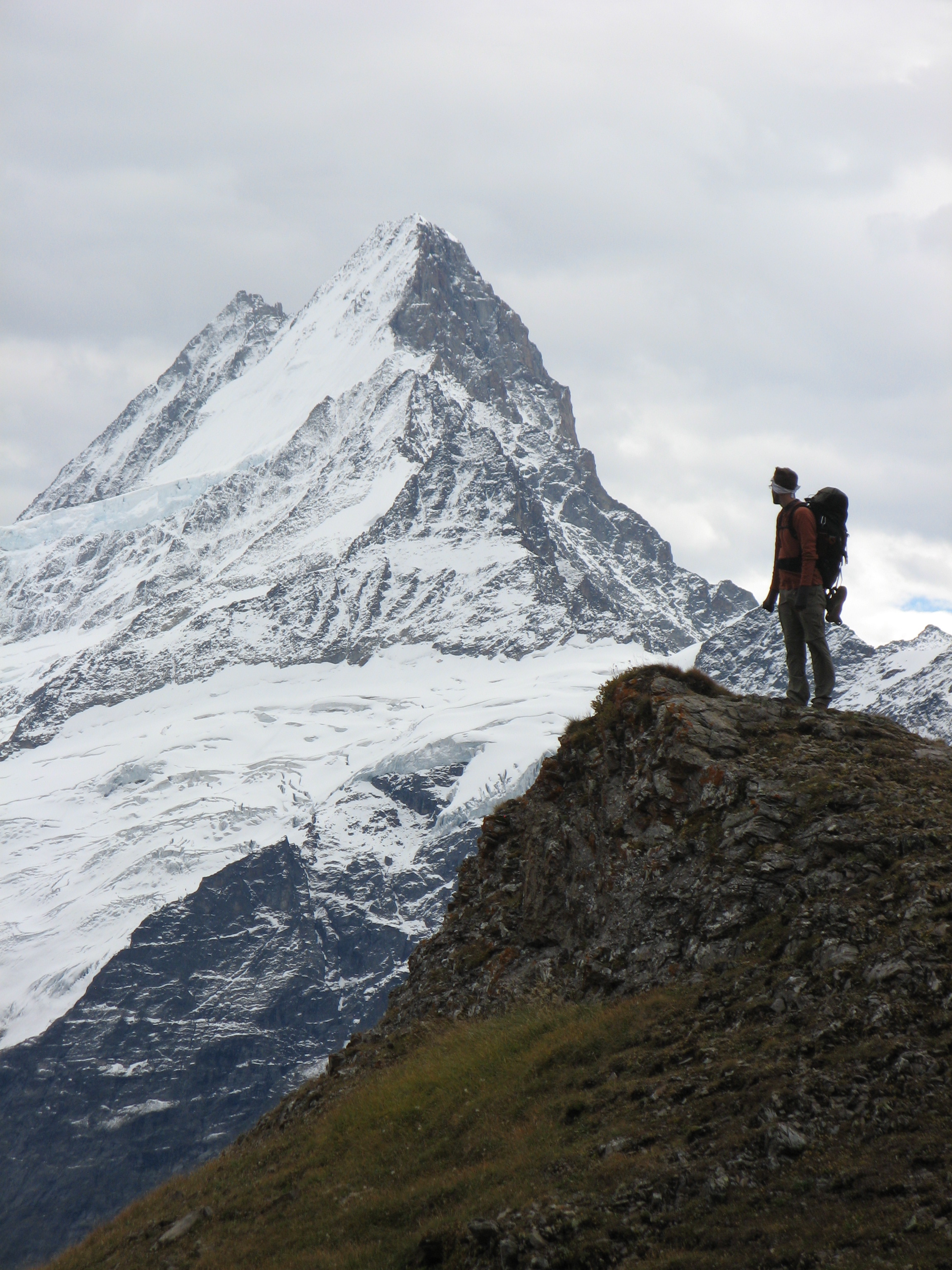
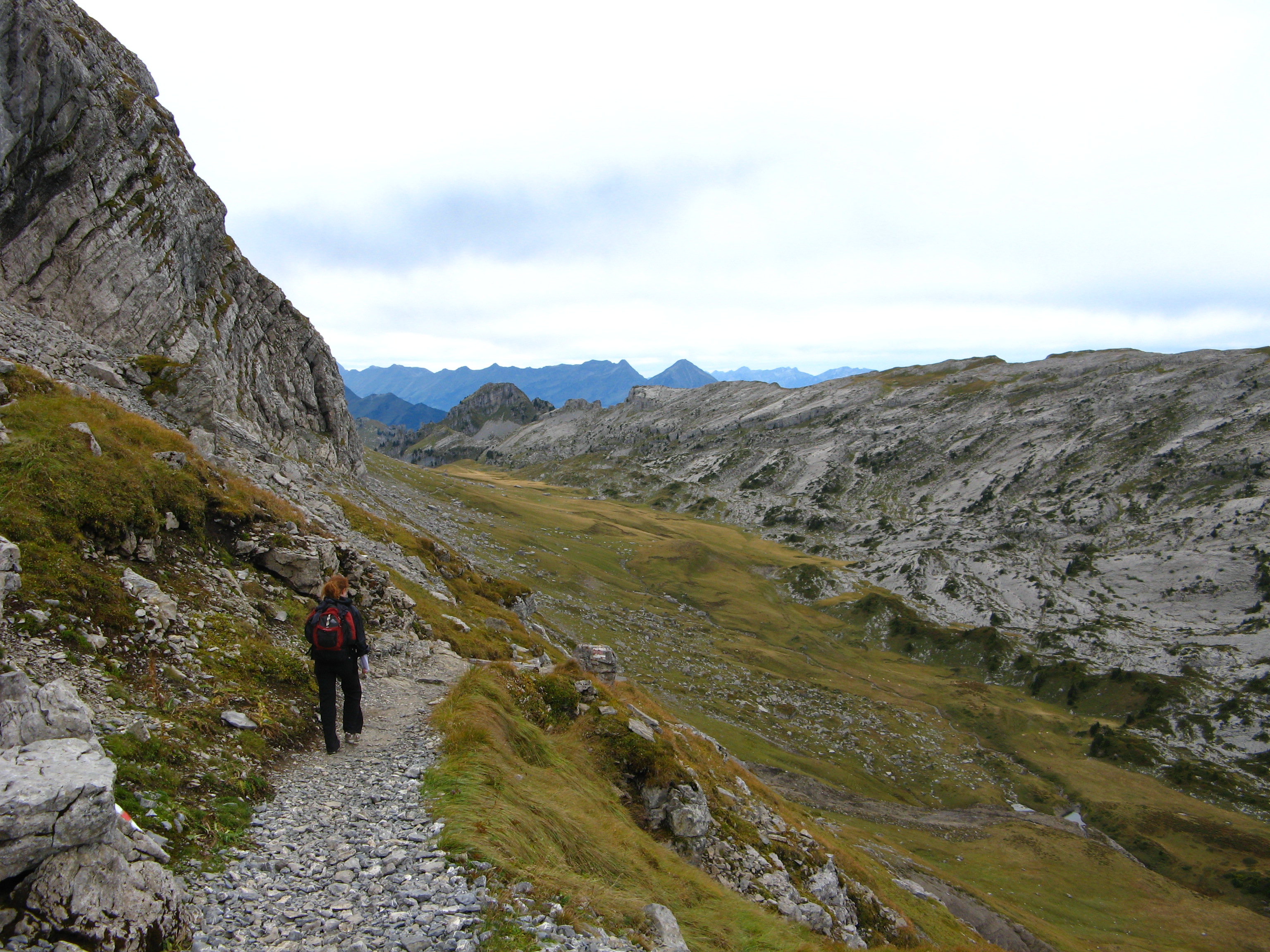
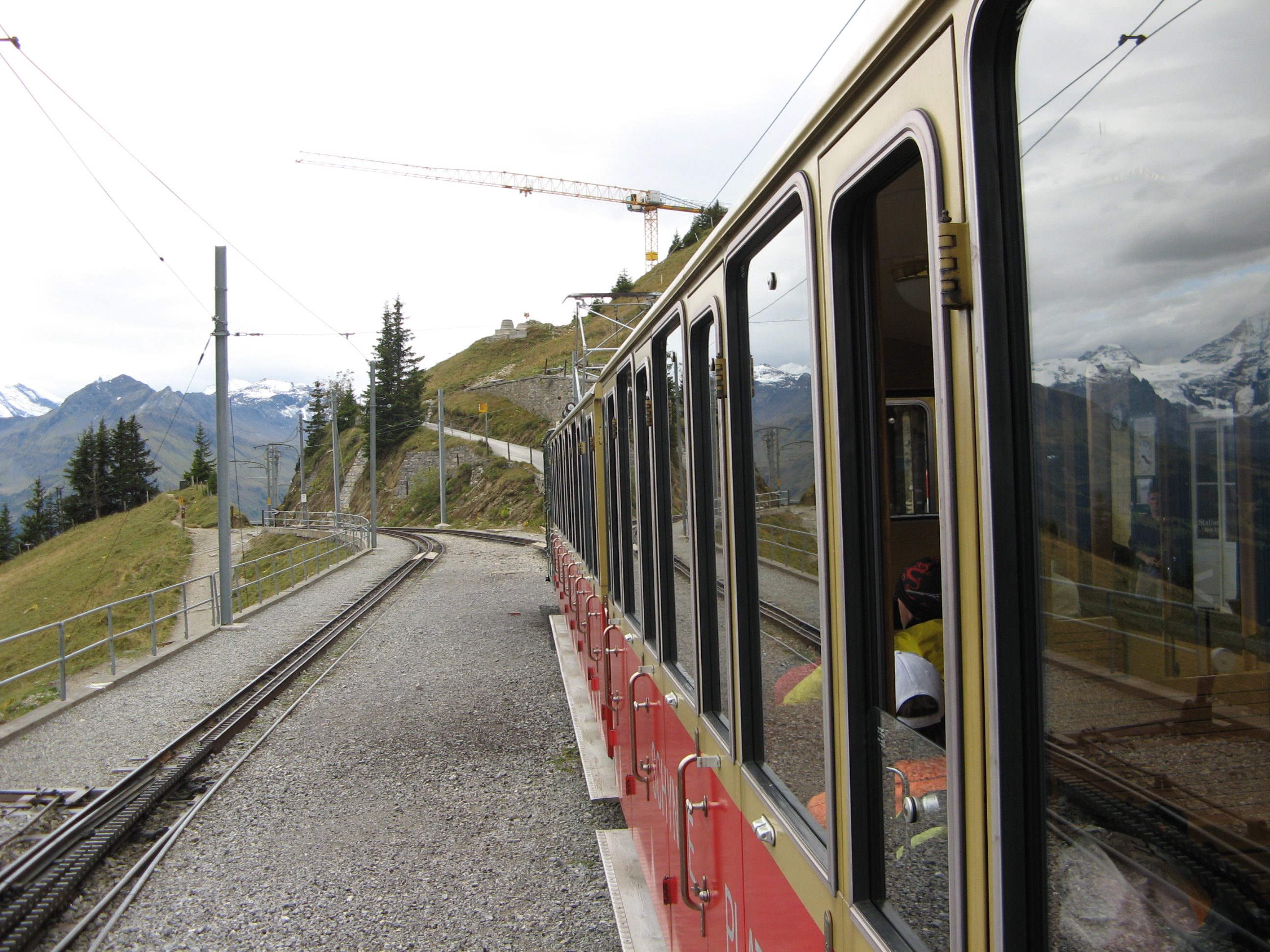
At 8100 feet, after bean soup, we decide we must go to Schynige Platte. It took us three hours from Faulhorn to Patte. Leaving time to photo the golden eagles. Make sure to arrive in time to catch the last cog train down into Winderswil. On a Wednesday in September 5:53 was the last train down. We hiked that day from 9 – 5:15 and we were zonked. It was long. Faulhorn to Platte was not difficult (or scary), at times had fist sized rock or larger that was unstable. It made mountain music. The sleek soft rock embedded with years of rain and slow grooves took tiresome to my knees. A lot of looking down to be sure footed, it was like climbing ancient mountains and naturally formed graveyards of boulder sized tumbling rock. There were actong signs to watch for rams, but we never saw any. At one hour away from Platte the paths became places to look into the valleys and gorge from where we had come. The Jungfrau opens up to us out over the grassy plain. We spot Grindelwald again, 7 1/2 hours of walking away.
In our catalog of hikes Phil had this hike more difficult than Mt. St. Helen, but not me!
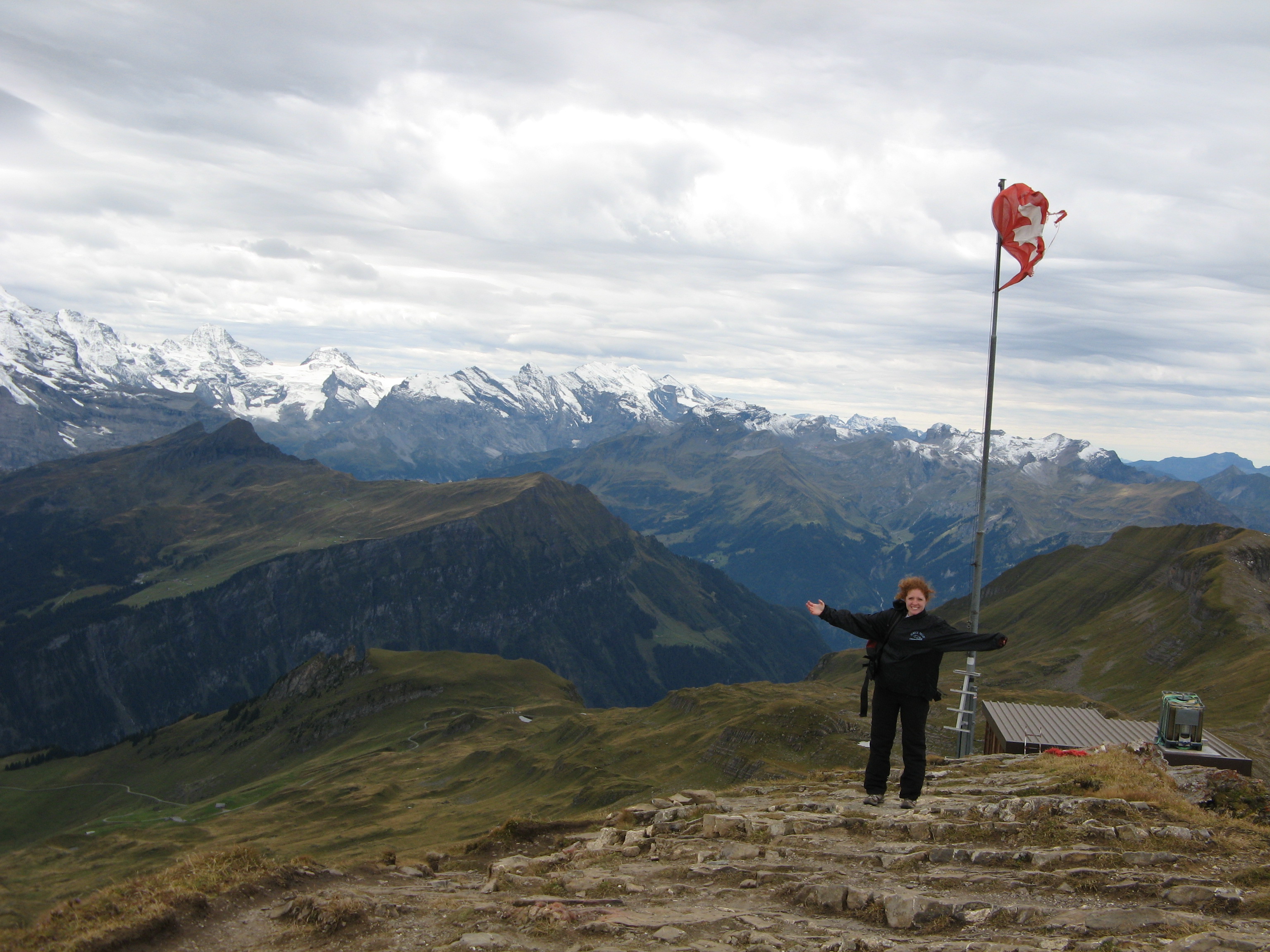
What I enjoy after this trip is the top peak of our trip where my video of Phil shows him talking, but no words can be heard. His map is flapping furiously and the whole scene is so comical. At Faulhorn, the last switchbacks up to this high point with a tattered swiss flag are killer. Sometimes it’s too much to see the top before you begin climbing. A top of Faulhorn, where we see a wooden roof and hear there may be food inside. The wind by now, as we’ve stopped walking, is through us. The pristine views of the turquoise seas to the north and the green hills to our south are glorious and gem like compared to the bland and cold sky.
We open the creaky wooden doors expecting an interior to match the shab exterior and find ourselves walking over the threshold of a Hollywood movie scene.
Inside is a Paulie’s girl clanking beer mugs for us to join in the drinking. This 40 x 12′ structure is packed with about thirty people. How did everyone get up here – and how is this a restaurant? Soup and beer await. We share a table beside 2 Californians who are coming the opposite direction we are and say our trek ahead is scary. Hm. My definition of scary is much higher I realize than many of the elder people we meet. So we sit with warm hearts and eyes to one another and take a gamble on the journey that follows. The couple by the window leaves and we have to step out to let them by because this place is packed. It really was like steeping into a portal. I expected a city outside of this establishment. We could take a bus 3 miles away or we could go discover Platte, and that is exactly what we did.
So, at the end of the day our long long hike made us so tired. But, we didn’t stop there. We walked another mile to dinner after setting up at Balmers Interlaken Hostel… the coolest hostel I’d ever been in.
Below is an Oberland Map I drew as well as a google map looking south on our trek.
What a Year it’s been!
My Mom and I made a wedding dress. My husband and I planned our wedding. We got married. We planned our honeymoon, which actually took more time, and took a month-long honeymoon. We made time for spending with friends. We found out that in the next year we would be an aunt and uncle. We traveled to Switzerland and Italy. I visited a good friend in Texas. My career became better defined as I began searching for work as a Sustainable Interior Architect. I ran races including my first triathlon in Morgantown, The Ogden relay race where Phil and I placed first, thanks to him, and I participated in a shared triathlon in Marlington WV with my best friend cheering me on.. telling me to ‘Tri like a Girl.’ We were able to spend Christmas with both of our families and ring in the new year with my sister and her husband. Whew!
WordPress.com mulled over how this blog did in 2010, and here’s a high level summary of its overall blog health:
A Boeing 747-400 passenger jet can hold 416 passengers. This blog was viewed about 9,000 times in 2010. That’s about 22 full 747s.
In 2010, there were 71 new posts, growing the total archive of this blog to 77 posts. There were 477 pictures uploaded, taking up a total of 430mb. That’s about 1 pictures per day.
The busiest day of the year was June 15th with 93 views. The most popular post that day was Beyond My Fascination with Legos.
The top referring sites in 2010 were linkedin.com, en.wordpress.com, statistics.bestproceed.com, images.yandex.ru, and wedding.ebonito.com.
Some visitors came searching, mostly for mesa verde, villa savoye, sagrada familia, villa savoye plan, and villa savoye plans.
These are the posts and pages that got the most views in 2010.
Beyond My Fascination with Legos January 2010
Clarkitecture Part 1 – Being Sustainable January 2010
1 comment
…and from the Young We are Inspired! March 2010
About Kellie December 2009
1 comment
The Sustainability Of Interiors June 2010
Why is there so much work to do and too many unemployed people? How do we find work, and ourselves, in a bad economy: what if we all lowered the bar a little, lost our egos and began to help our neighbors? I suggest the only thing we have to do to find work, is listen.
Imagine living in an overly happy world, where people read your mind. The neighbor made extra dinner and brought it over the day you were running late, someone pulled up with a can of gas as your car was coasting on an empty tank to the side of the road. When your best friend saw you walking down the street on a day you needed comfort. What if everyone who could help you were within walking distance, an interconnected world beyond wireless, a world where our actions and desires could be filled by simply being open to the fact that they could be.
I believe this overly happy world is the case, it exists around us right now, and if you don’t believe me I am going to suggest a good case of listening.
Think about your best friend. The best thing about friends are the way they listen. In return, the best thing about a friend is listening. When is the last time you were inspired talking to yourself?
Listening is about
enjoying an
o p p o r t u n i t y
and, you guessed it, about being more open. Lose your ego and discover where you find yourself. In a deeply interconnected world, I need to be less critical, even in my mind. Respecting someone with my thoughts if the first way to allowing them an opportunity to inspire me.
We give up the richness in life when we choose talking over listening. When I assume I know everything about you and my way is better, I forfeit the base of a relationship and an opportunity to enrich my life with something else.
How does this apply when looking for work? I’ll take myself as an example.
The woman I want to be: Someone who doesn’t need too much but likes the quality of things like a great china dish, a cuddling mug for coffee in the morning, things I’ve paired with a crisp table and fine linens that don’t match but look good as my collection. I want to make my own clothes, have time to think. I like this writing. I like a book club, I like arranging a room and the search for items but not as much as I like ordering what I have or making things I need. I like dinner conversations with my husband. I like to give my opinion on big questions. I like being conservative with what I own and how I spend time. I like hosting discussions…could I start a studio for community action? I like to draw and dream. I am an architect, I am a runner. I like coming together for group critiques. I love conversations with my friends.
Now, lets look at how this may apply to what I do for work, and treat it boldly, sarcastically as we all do when we sell ourselves. It is how we come across when we have the idea of what we deserve.
I am good at what I do. In the professional society I am specialized but can cover a large general area with what I do. As an architect I can dream, realize an actual, economical and buildable project for a client, I can draw pretty pictures and fly you around in a 3D model. I can conceptualize, help you find a contractor and get your project built with one. I am a visual person. On the side I am a writer, I teach gymnastics, I enjoy art and galley openings, deep conversations and traveling. I can work hard for you and I am a little expensive.
Expensive. Hm… How many more thing I would do if they weren’t so expensive. Who else would hire me if they thought I was inexpensive. Now that I am a professional I can do these things because I can afford them. In a perfect world I’m paid well and often, so well, I can work less and earn more. I can afford my own time now.
But, it’s not the same for everyone.
Many people in my profession are unemployed, many people are trying to find higher paying jobs. Good employers don’t want to spend too much money on anyone they hire and we are all wasting too much time thinking about it. Everyone is being very picky about what they deserve. (I heard this last week listening to NPR) Why don’t we all just lower the bar a little?
I think I’m great. We all think we’re great. We know what we deserve, and that’s the problem. Has anything ever turned out exactly how you’ve expected? Does the right school, too many extra curricular activities, everything, ever mattered as much as the attitude you have toward it? I’d have to say for myself that it never did.
Too often we run around in a dazed, worried world in which we are not able to look outside of the bubble and question what really matters… question the heart of what it is we are trying to obtain. That’s why I think we should lower the bar on what we think we deserve. Don’t be too close minded to mistake work for an opportunity. You decide what matters most.
Too many of us believe we deserve our lifestyle -that we should not have to work hard. It’s discouraging to some, the state of our current welfare system -that everyone has the right to money for food -and everyone isn’t granted instead the right to work. (To earn money and make a difference could all be rolled into one!)
You and I need to be better listeners. As I began to seek answers I came across many applicable resources. Charles Eisenstein wrote an article about community titled Shareable: A Circle of Gifts, an article in Architecture Record by Robert Ivy, an AIA lecture, and had a conversation with a friend about working together.
Charles Eisenstein views community as the answer to our overly commercial, less fulfilling, dwindling resource world. If we are to make a difference we can begin by helping those around us, so that in return we can depend on them. Beyond this main point he describe the history of communication and the change of our lifestyles to be more individualized. Our focus has become monetized and as a result, less giving. He introduces Alpha Lo’s idea and a social invention describing the gift circle as a way of fixing this. Isn’t it about love anyway? I suggest you read this article! Shareable: A Circle of Gifts
Here is a part of the article:
Wherever I go and ask people what is missing from their lives, the most common answer (if they are not impoverished or seriously ill) is “community.” What happened to community, and why don’t we have it any more? There are many reasons – the layout of suburbia, the disappearance of public space, the automobile and the television, the high mobility of people and jobs – and, if you trace the “why’s” a few levels down, they all implicate the money system.
More directly posed: community is nearly impossible in a highly monetized society like our own. That is because community is woven from gifts, which is ultimately why poor people often have stronger communities than rich people. If you are financially independent, then you really don’t depend on your neighbors – or indeed on any specific person – for anything. You can just pay someone to do it, or pay someone else to do it.
In former times, people depended for all of life’s necessities and pleasures on people they knew personally. If you alienated the local blacksmith, brewer, or doctor, there was no replacement. Your quality of life would be much lower. If you alienated your neighbors then you might not have help if you sprained your ankle during harvest season, or if your barn burnt down. Community was not an add-on to life, it was a way of life. Today, with only slight exaggeration, we could say we don’t need anyone. I don’t need the farmer who grew my food – I can pay someone else to do it. I don’t need the mechanic who fixed my car. I don’t need the trucker who brought my shoes to the store. I don’t need any of the people who produced any of the things I use. I need someone to do their jobs, but not the unique individual people. They are replaceable and, by the same token, so am I.
That is one reason for the universally recognized superficiality of most social gatherings. How authentic can it be, when the unconscious knowledge, “I don’t need you,” lurks under the surface? When we get together to consume – food, drink, or entertainment – do we really draw on the gifts of anyone present? Anyone can consume. Intimacy comes from co-creation, not co-consumption, as anyone in a band can tell you, and it is different from liking or disliking someone. But in a monetized society, our creativity happens in specialized domains, for money.
To forge community then, we must do more than simply get people together. While that is a start, soon we get tired of just talking, and we want to do something, to create something. It is a very tepid community indeed, when the only need being met is the need to air opinions and feel that we are right, that we get it, and isn’t it too bad that other people don’t … hey, I know! Let’s collect each others’ email addresses and start a listserv!
Community is woven from gifts. Unlike today’s market system, whose built-in scarcity compels competition in which more for me is less for you, in a gift economy the opposite holds. Because people in gift culture pass on their surplus rather than accumulating it, your good fortune is my good fortune: more for you is more for me. Wealth circulates, gravitating toward the greatest need. In a gift community, people know that their gifts will eventually come back to them, albeit often in a new form. Such a community might be called a “circle of the gift.”
Fortunately, the monetization of life has reached its peak in our time, and is beginning a long and permanent receding (of which economic “recession” is an aspect). Both out of desire and necessity, we are poised at a critical moment of opportunity to reclaim gift culture, and therefore to build true community. The reclamation is part of a larger shift of human consciousness, a larger reunion with nature, earth, each other, and lost parts of ourselves. Our alienation from gift culture is an aberration and our independence an illusion. We are not actually independent or “financially secure” – we are just as dependent as before, only on strangers and impersonal institutions, and, as we are likely to soon discover, these institutions are quite fragile.
Given the circular nature of gift flow, I was excited to learn that one of the most promising social inventions that I’ve come across for building community is called the Gift Circle. Developed by Alpha Lo, co-author of The Open Collaboration Encyclopedia, and his friends in Marin County, California, it exemplifies the dynamics of gift systems and illuminates the broad ramifications that gift economies portend for our economy, psychology, and civilization.
The ideal number of participants in a gift circle is 10-20. Everyone sits in a circle, and takes turns saying one or two needs they have. In the last circle I facilitated, some of the needs shared were: “a ride to the airport next week,” “someone to help remove a fence,” “used lumber to build a garden,” “a ladder to clean my gutter,” “a bike,” and “office furniture for a community center.” As each person shares, others in the circle can break in to offer to meet the stated need, or with suggestions of how to meet it.
When everyone has had their turn, we go around the circle again, each person stating something he or she would like to give. Some examples last week were “Graphic design skills,” “the use of my power tools,” “contacts in local government to get things done,” and “a bike,” but it could be anything: time, skills, material things; the gift of something outright, or the gift of the use of something (borrowing). Again, as each person shares, anyone can speak up and say, “I’d like that,” or “I know someone who could use one of those.”
During both these rounds, it is useful to have someone write everything down and send the notes out the next day to everyone via email, or on a web page, blog, etc. Otherwise it is quite easy to forget who needs and offers what. Also, I suggest writing down, on the spot, the name and phone number of someone who wants to give or receive something to/from you. It is essential to follow up, or the gift circle will end up feeding cynicism rather than community.
Finally, the circle can do a third round in which people express gratitude for the things they received since the last meeting. This round is extremely important because in community, the witnessing of others’ generosity inspires generosity in those who witness it. It confirms that this group is giving to each other, that gifts are recognized, and that my own gifts will be recognized, appreciated, and reciprocated as well.
It is just that simple: needs, gifts, and gratitude. But the effects can be profound.
First, gift circles (and any gift economy, in fact) can reduce our dependence on the traditional market. If people give us things we need, then we needn’t buy them. I won’t need to take a taxi to the airport tomorrow, and Rachel won’t have to buy lumber for her garden. The less we use money, the less time we need to spend earning it, and the more time we have to contribute to the gift economy, and then receive from it. It is a virtuous circle.
Secondly, a gift circle reduces our production of waste. It is ridiculous to pump oil, mine metal, manufacture a table and ship it across the ocean when half the people in town have old tables in their basements. It is ridiculous as well for each household on my block to own a lawnmower, which they use two hours a month, a leaf blower they use twice a year, power tools they use for an occasional project, and so on. If we shared these things, we would suffer no loss of quality of life. Our material lives would be just as rich, yet would require less money and less waste.
…
Whether natural or social, the reclamation of the gift-based commonwealth not only hastens the collapse of a growth-dependent money system, it also mitigates its severity. At the present moment, the market faces a crisis, merely one of a multiplicity of crises (ecological, social) that are converging upon us. Through the turbulent time that is upon us, the survival of humanity, and our capacity to build a new kind of civilization embodying a new relationship to earth and a new, more connected, human identity, depends on these scraps of the commonwealth that we are able to preserve or reclaim. Although we have done grievous damage to earth, vast wealth still remains. There is still richness in the soil, water, cultures and biomes of this planet. The longer we persist under the status quo, the less of that richness will remain and the more calamitous the transition will be.
On a less tangible level, any gifts we give contribute to another kind of common wealth – a reservoir of gratitude that will see us through times of turmoil, when the conventions and stories that hold civic society together fall apart. Gifts inspire gratitude and generosity is infectious. Increasingly, I read and hear stories of generosity, selflessness, even magnanimity that take my breath away. When I witness generosity, I want to be generous too. In the coming times, we will need the generosity, the selflessness, and the magnanimity of many people. If everyone seeks merely their own survival, then there is no hope for a new kind of civilization. We need each others’ gifts as we need each others’ generosity to invite us into the realm of the gift ourselves. In contrast to the age of money where we can pay for anything and need no gifts, soon it will be abundantly clear: we need each other.
Work for love.
Work at love.
Give love a chance.
Robert Ivy writes of the importance of a tangible urban society. In Architecture Records’ August 2010 editorial titled Scraping the Limits.
Today’s fragile world, with its dwindling resources and expanding populations, is calling for other agendas in the West. Attribute it to changing fortunes or the bitter aftertaste of spilled oil, our architectural sights have now shifted to a more socially, environmentally conscious agenda. We’re imagining a smaller scale, hands-on, ecofriendly urban world. We have corrected our course from too much bigness. Right?
AIA 2009 Convention lector, Peter Head of Arup tells us that first steps to advancing an ecoecology society from an industrial society is to involve community… bring together the experience of people to form a collective voice – made of many parts from the get go. He speaks of finding the connectivity of what exists in a community to implement better resource management. This is called open source modeling. This advances a greater social cohesion. Our skills need to be shared, pulled together and pushed quickly he says! Projects come from action. Community is so important in development. We need multidisciplinary teams who put in a small amount of work to solve each other’s problems as the first step. Before projects, these charrettes and workshops in the early stages help to seek an entire answer for a community to use its resources within and together, to create a closed loop, dependant upon one another. This is best for the world when we consider the limit of our resources. He ends with… ‘we are always in a reflectful phase.’
That is inspirational. Once I’ve started listening I hear more and more about communities, grassroot organizations, local people, and friends making small differences with our actions that are copied by those around us.
This makes me question …what does my community need to overcome to work together better? What barriers exist that take up our time and prevent an open, eager, listening mind? It seems like the last generation has impressed the tradition of territorial behaviors upon us. I live in Ohio but work in West Virginia. I say we need to ‘Bridge the River!’ I have family within an hour away in Pennsylvania. There is the Power of 32, thirty-two counties trying to break down borders. These antiquated limits of state lines we live by need to be rethought.
My time most likely involves things that I am passionate about. So why shouldn’t my work involve things I am passionate about? Instead of trying to figure out how you should make money, perhaps you should be questioning what you should be spending time doing.
If I am to engage in community I should do that with my work. It has worked for the local advocate, gardener, vista volunteer, Danny Swan. Through his passionate efforts of growing a garden he had helped to feed and empower young children in depressed areas, -children that live within two minutes walking distance of where I work each day.
It’s not about money, it’s about helping your neighbors. We all need to work harder to help people in our own community. Stop thinking about what you deserve and give someone what they need.
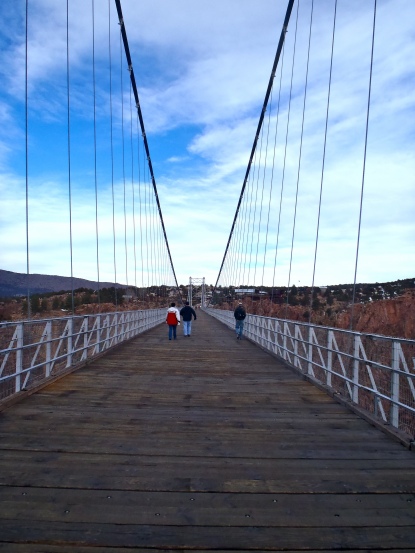
(The photo I wanted to find for yesterday.
Can you imagine crossing this bridge?)
Day 5
I woke up to the mountain snow reflecting a pink cast into our room. I’m happy the breakfast room is just off of our hallway room. Latin music plays this morning at 7:30.
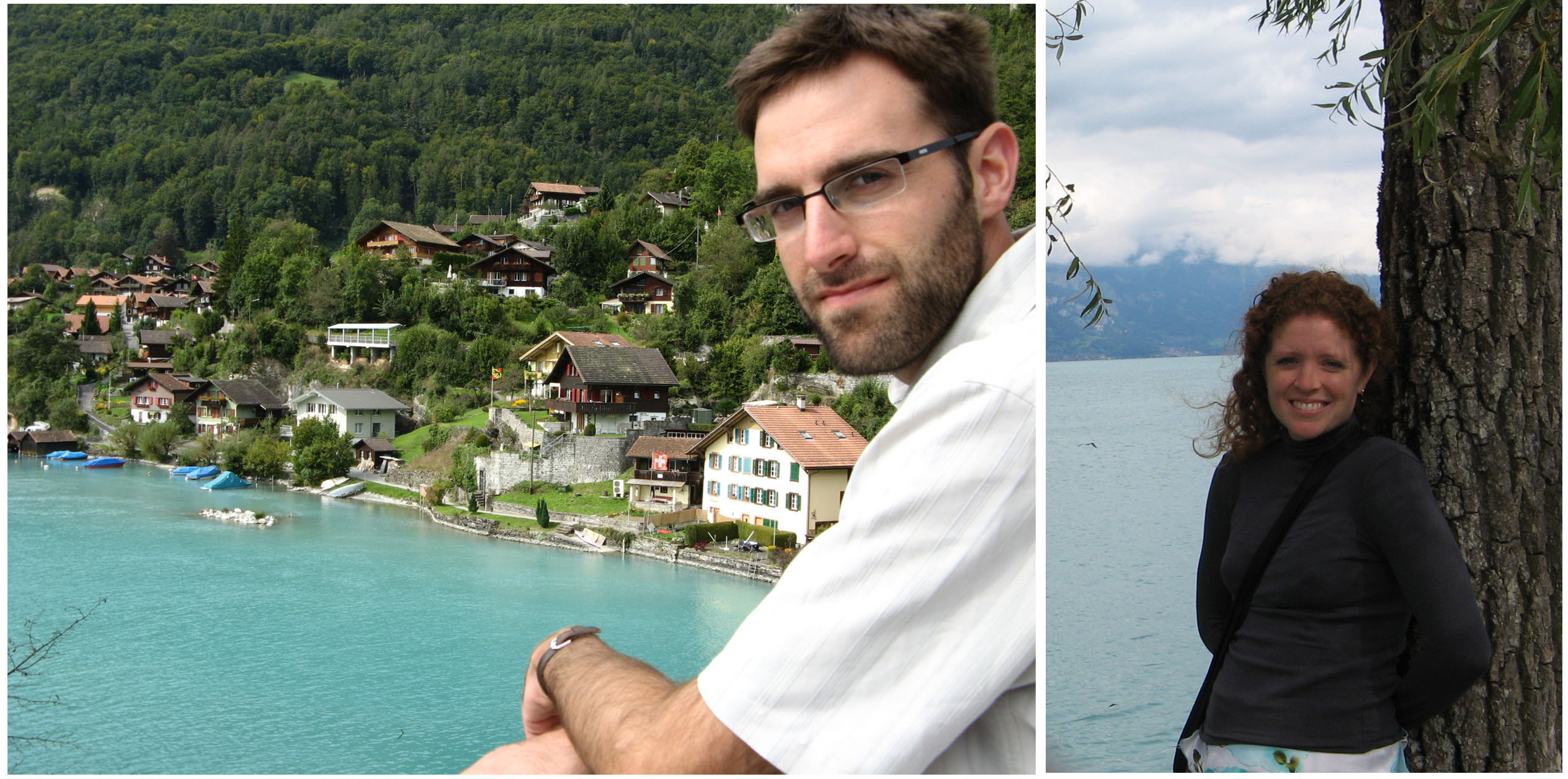
The alpine style was hiking shoes, tight thermal pants with lots of zippers and turtleneck fleeces. Phil and I were under dressed for the occasion.
When looking at a map, Grindelwald does not look large, but from town, the mountain sides creep up in the North and South direction, creating an East to West crease along which the main street spans over a long distance. There are many streets perpendicular from the main street which creep up into North and Southern mountains.
We decided after morning laundry in the bottom floor of a hotel (where we played name that place on a world map), we’d take lunch at one of Grindelwald’s overlooks – The PfingStegg.
There was the Jungfrau pass that we didn’t purchase, and it may have been worth it to get a discount on some of these gondolas, but we learned about it too late. We paid our amount to ride and rest our legs.
I wrote and Phil drew, then we took turns filming the shimmering layers of spruce. We located FIRST, the first location we’d take a gondola to tomorrow, then walk from there to Schynige Platte. Once there, we’d take a cog train down into Interlaken.
From the lunch deck where we had soup and beer I looked out over the town. Grindelwald is it’s own stream collecting to form a strong spine of a chalet ridden city. This town is for rock climbers. Eiger’s face is the sheerest vertical face in the world.
After lunch we took a short walk to hug the mountain path -an even cut into the side with no elevation change. We needed to rest our bodies for tomorrow.
The weather felt like the end of fall. The brooks coming down the mountain were so clean, they ran over stripped dolomite rock making them turn beautiful gold and green colors. Behind us was the beautiful peak of the mountain we’d taken the sunset pictures of the night before.
We strolled along, Phil always wanting to see where the next turn lead to. We came back to the gondola and decided to try and find a chalet in the town that was perched on a green knoll of perfect grass. We walked south once we landed back in town. The difference between riding a lift and walking changed the impact of the view. It was better when you earned it.
Mysteriously, my sister noticed that the couple looks exactly like my parents from behind… I think we were being followed!
Trying to find that chalet lead us into a church graveyard. The pristine plots were well-tended. Like around town, there were constant free-flowing troughs where people would cup their hands and drink or fill their canteen to water their garden plots surrounding their loved ones.
The church was closed. The prayer chapel a few 100 feet from it was a more modern glass building. It felt like a set. Everything was perfect and placed.
(I found this photo on Google Earth)
We passed Onkel Tom’s Hutte – a delicious smelling pizza joint where we decided we’d come back for dinner. The quaint, 10 x 10 out-door seating arrangements were contained in garden pods with old sewing machines and water mill sculptures setting the mood.
The sun was strong, it was setting a piercing sunset already. It felt good to be warm on our faces. I was glad it had begun to open the sky just as we were finishing lunch.
We decided to check out what it would take to transport ourselves up to “FIRST” and found it would take 64 swiss francs! With food alone we were spending a fortune in Switzerland -not to mention the train/ bus transportation costs. Everything was so expensive, yet everything had been so easy to plan in advance from the U.S. Everything here was so clean, well-kept and timely – but 64 francs to go 10 minutes? We gave them an ‘ok’ sign and decided we would walk.
This was now our proposed path.
Phil was able to track our hike with Google Earth and what we’d end up doing tomorrow would be to date our most difficult hiking challenge – 14 miles and a vertical climb of 4922 feet from Grindelwald to Schynige Platte.
We went back to The Downtown Lodge to refresh and rest before dinner with this new information swimming in our heads. We got our quick showers and dressed for dinner in our usual fare -hiking pants, cuddle duds for me and an orange long john for Phil and we headed back to Toms to discuss our plan of attack!
The restaurant was crowded and full except for one large table under the stair. A German couple who we could not converse with sat at the other end. Phil and I ate salads, drank a recommended wine and split a pizza. Both of us were quiet. The place was so warm and comfortable, – it was very romantic. We looked at maps and I’d brought my Italy language book because Phil was feeling the need to have a purpose. Our purpose would far outreach the time we were living – as for example now, almost three months later, I was able to recall moments of each day better than I could tell you what I did last Wednesday. Later in our trip we would quiz one another on meals, and maybe because we were familiar with our path of cities, or the fact that it changed every day, something make it easy to remember each moment and meal.
We determined a direction from Grindelwald. We had bought gummy bears and snacks to pack for our hike and a huge water to fill the camelback. We felt prepared as we climbed into our white sheet sacks next to one another in our pushed together twin beds.

Where the Jungfrau pass could take you cheaper!