Categories
Architecture

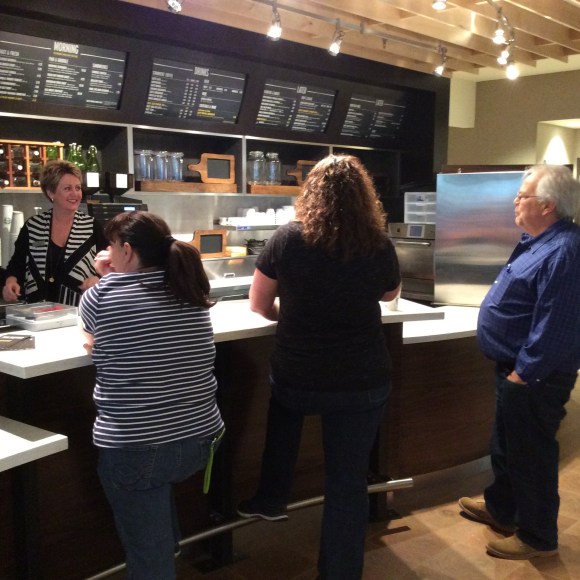
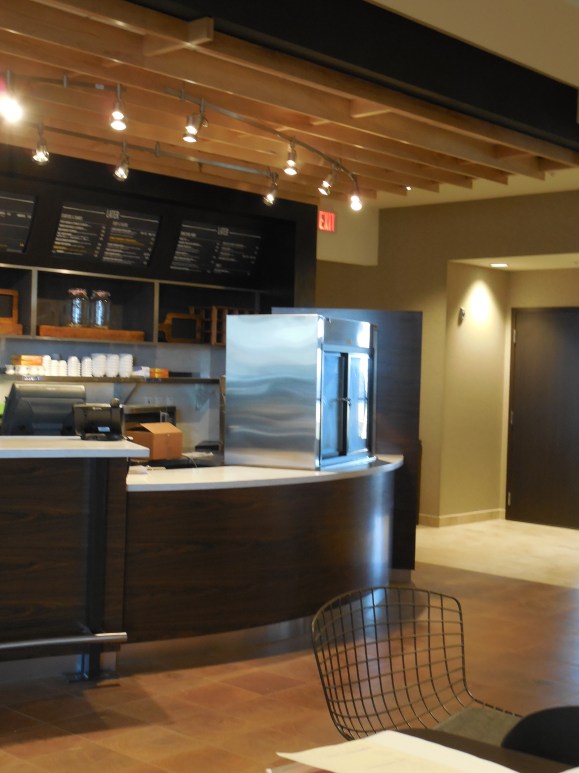
Time for Coffee – Morgantown Marriott

IMG_0403.JPG

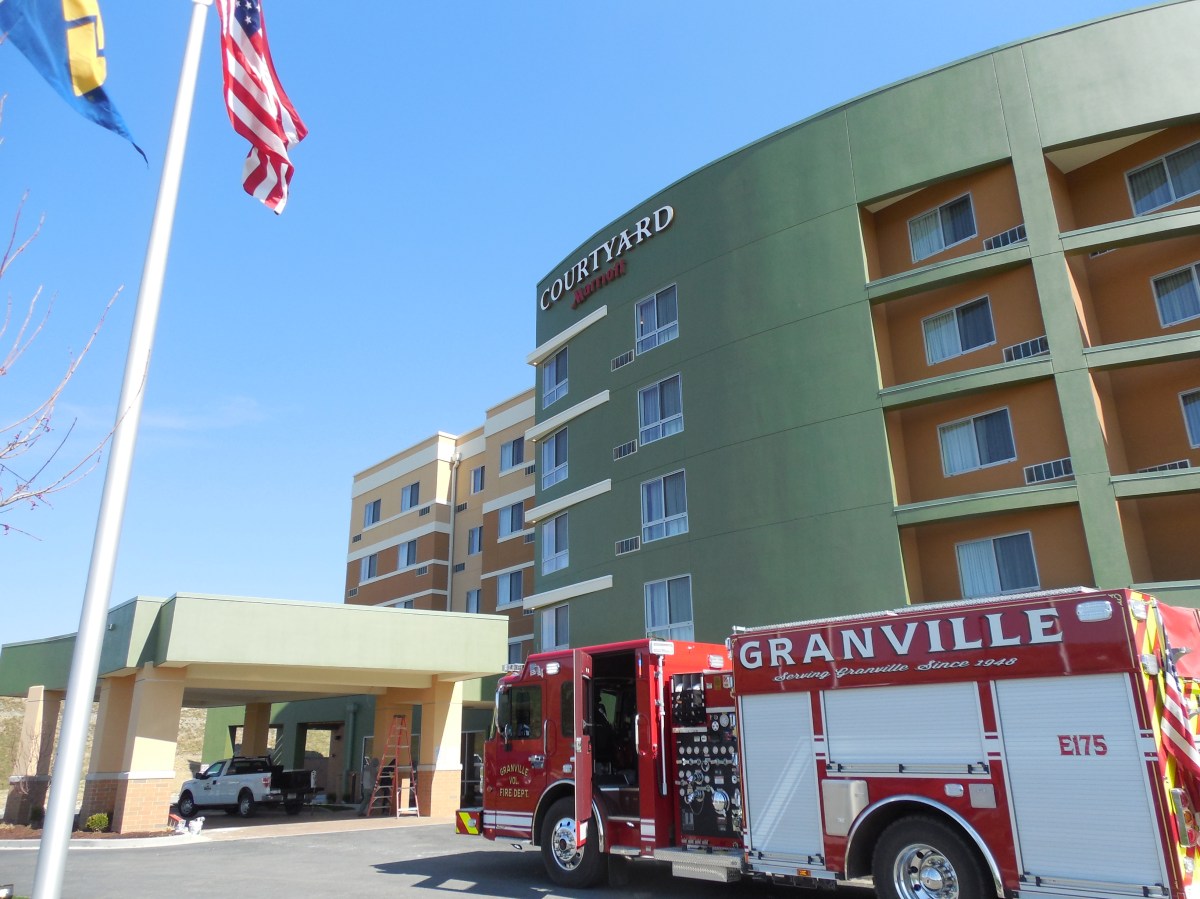
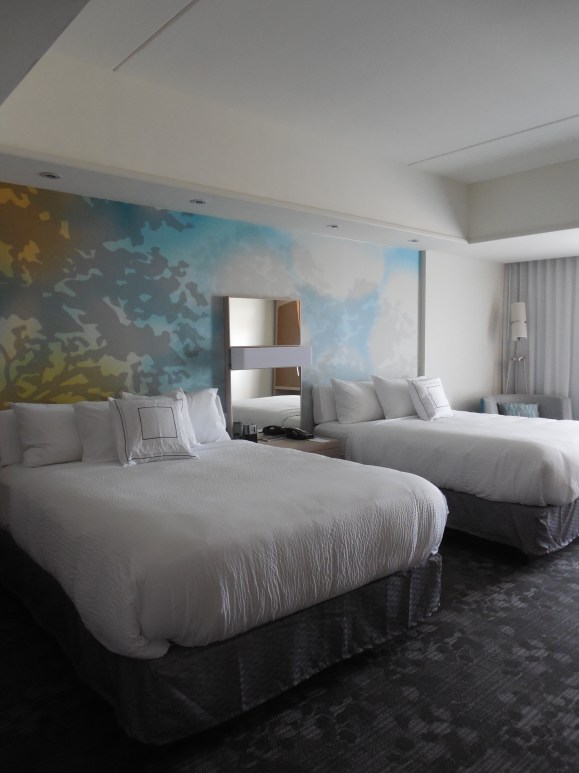
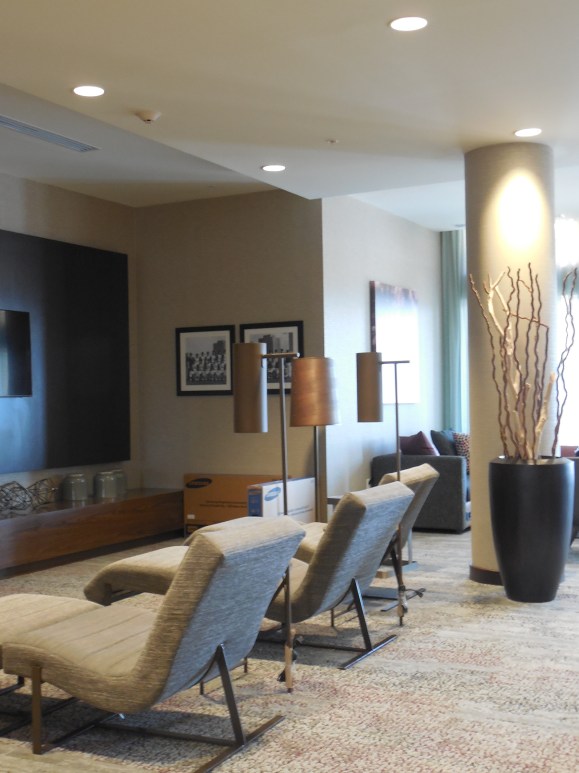
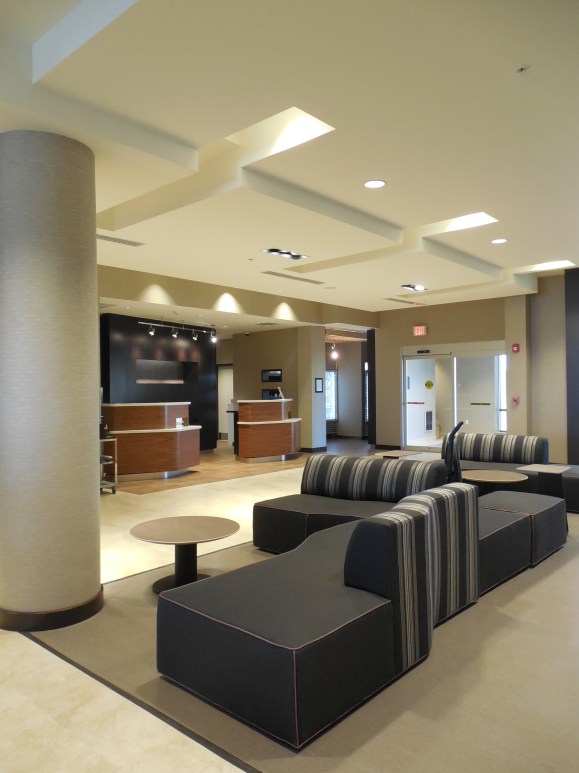
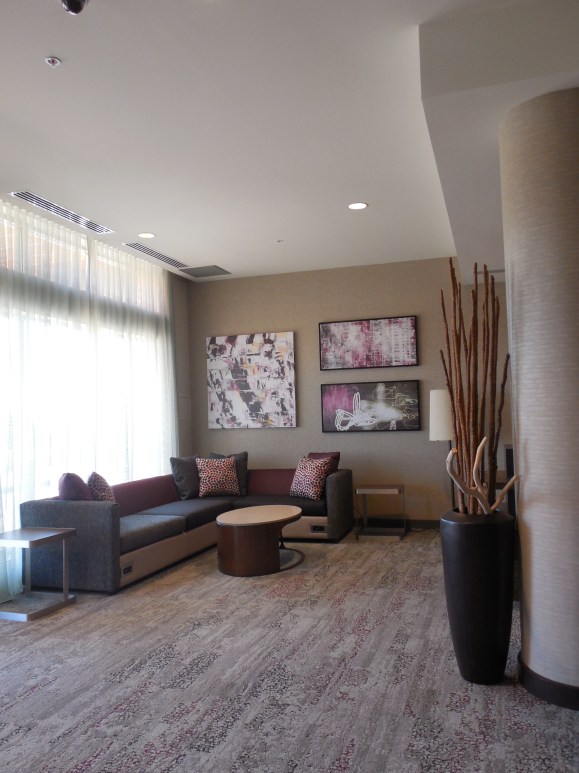
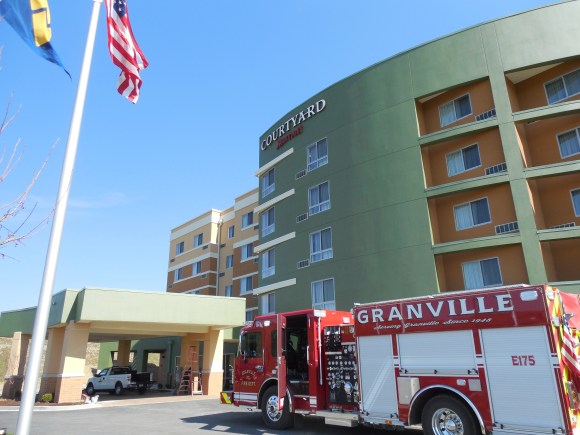
It’s always difficult to finish. It’s even more difficult to finish a project as large (70,000 sf), out of masonry and through two winters in a little over a year! The Grand Opening party is scheduled for June, but the hotel will open its doors before that. The contractors who have seen that every joint is caulked, ever louver installed, and that each fan is drawing the required air, have been a blessing to the architect. I am thankful that each member of the team cared as much about providing the owners and the Marriott brand with a hotel that is of the utmost quality. Not only were things finished the right way, but they were finished the best way. Thank you, thank you. Come and visit the hotel for yourself soon!

DSCN2301.JPGDSCN2304.JPGDSCN2309.JPGDSCN2310.JPGDSCN2312.JPGDSCN2314.JPGDSCN2316.JPGDSCN2317.JPG


Categories
Architecture

Morgantown Marriott – Punch List

Look at the hotel now! A year ago today the Marriott site looked like this:

Feb 2015 1

The drawings weren’t even complete. They looked like this, without bathrooms in the guest rooms, because we were determining the pod geometry with Oldcastle.

Drawings 120614.JPG

no bathrooms.JPG

pods coord.JPG

The first week of March 2015 was spent preparing specifications and the Marriott Courtyard prototype drawings for compliance, selecting finishes and fixtures from the options and coordinating those with our MEP trades. Structural coordination and structural detailing went on simultaneously. Mills Group had the fortunate experience of working with great owners, West Place LLC. Throughout the project we coordinated with A LOT of consultants including: the general contractor, Waller Corporation,  Oldcastle for bathroom pods,  our MEP and Structural consultants at Allegheny Design Services, Cheat Road Engineering for the site, Marriott of course, Mack Industries who provided our precast floor plans, Concrete Fabricators on the stairs and small details surrounding the outside, Fairfield Landscaping, Gilliana Pools, REDI Kitchen Consultants, Mongiovi, Morgantown Security and Fire, and Schindler to name a few. On the sub-contractor side, Elk Electric, Pine Hollow Mechanical, Inc., JMJ who built the cabinetry and Daniel W’s FF&E team who installed it have all worked alongside Waller’s tireless team to be where we are today with a space that is finishing beautifully.

Feb 2016 2

Our architectural firm uses many technologies to complete our work. Revit was used to draft this project during the production drawing phase and during our most recent punch list efforts we’ve used Blue Beam Revu. More on that program to come. For now, enjoy the final few stages of construction and FF&E setup as the Mills Group team sees the progress during the punch list process. Enjoy the images below!

Feb 16 3Feb 16 4

And then, two weeks later, photos by Mariah:


Categories
Architecture

Marriott Update December 2015

July 2014 011615 site

Foundations began less than a year ago for the Morgantown Courtyard by Marriott, and now a few months before opening, the building is standing with a real presence.

IMG_0180Mills Group made it on OldCastle’s blog recently for this project in Morgantown! Check it out here.IMG_0133 IMG_0127December has been unseasonably warm. As of today concrete and asphalt surround the building awaiting the winter opening. Winter sod will be installed soon as the finishing touches from floor five down are complete. At the start of December I walked the building with my colleague and we marveled as we watched sixty drywall finishers, some on stilts, move through level three to mud, sand and paint the drywall. The top two floors look like white boxes awaiting their finishes. Soon the Marriott Sign will arrive, and the building will have a name to the public. The collage of photos below were taken by Waller Construction.

Categories
Travel

Ostia Antica, Italy

IMG_7242

Ostia Antica is the site of an ancient Roma civilization. Our family spent the first night we arrived on the back porch of Ostia Antica Park Hotel, the site of our worst Italian experience. The first communion celebration extravaganza should have tipped us off. This place was an in-between place, convenient for travelers to the nearby airport with nothing more of the community to be shared. I would have to pay to swim, pay to sit on the front patio, pay to stay too long at breakfast. So, we eventually figured out other places to spend time while staying at the hotel. Walking around downtown wasn’t so bad, considering the well maintained private drives.

IMG_7251 IMG_7254 IMG_7258

This place was beautiful but I wouldn’t recommend our hotel for many more reasons by the end of our stay. The first being the common ‘misunderstanding’ of many restaurants serving American tourists. They loved to give us 5-times the portion of appetizers. I tried out all of my verbs, condividere – to share, or the simple word for divide, dividere. But, none of them worked. The waiters all wanted to see our faces when what was meant as an order to share was way too large for any group to split.

We had to say goodbye to my brother who would be flying back to the States earlier than the rest of us. We’d also have to say goodbye to my Mom’s camera and all of her beautiful pictures that was lost or taken somewhere in the lobby of this hotel or as we boarded the bus out from the front door. The hotel staff, with access to the security camera, refused to watch the tapes for us as we called and called back for help. That is, they refused or saw something they didn’t want to share with us. It was difficult to understand either way. Even a year later it is hard to digest the faces and scenes my Mom had captured with her creative eye, then lost.

We’d spend the day my brother left playing in the ruins around an erie feeling of a spirit returning.

IMG_7295 IMG_7284  IMG_7268

Categories
Architecture Travel

The Annunciation of Mary – Florence

IMG_7224

Italy is the place I always go back to. While my husband explains, and I realize, that there is an entire other world out there, there is something about the Mediterranean climate and the exuberant expressions in the way Italians do everything from eat to talk that I want to keep coming back to. Of course, my family is from there too. While I committed to learning the language with my mother a few years ago, since moving to Morgantown I have not had the same opportunity to continue on with Italian language classes. I am hopeful that my opportunity at Fairmont State University will expand to include travel abroad, and perhaps sitting in a classroom with an Italian professor again. But, for now, a few more photos from our trip April of 2014.

The Santissima Annunziata Chiesa di Firenze, the most decadent and bronzed church I’ve ever been to.

IMG_7227 IMG_7230

Categories
Architecture Travel

Studying Historic Italian Architecture

Sometimes it takes hearing things three times before they click. I traveled to Italy for the first time as a student at Virginia Tech. That was in 2002. Now, thirteen years later, I am taking a class by a professor who is an astute historian. It’s enjoyable to learn from someone who can sight off exact building dates from architecture built in the 1400’s to now, and probably earlier depending on the structure. The history theory class I’ve taken this semester has offered that third opportunity to learn about the same thing. I’m hopeful that this time I’m retaining the information.

Michelangelo’s square, the venetian library of Biblioteca Nazionale Marciana  on San Marco and Bramante’s forced perspective at the altar of Santa Maria presso San Satiro church are among many works that I’ve learned more about this semester.

palazzo conservatori miche en museicapitolini org

LIBRARY OF ST MARKS dailymail.co

stanta maria delle grazie wga dot hu milan(The photographs above were found online.)

Learning about these again prompted me to pull out photographs from my 2002 study abroad, and define the places that I’ve spent the years since wondering again about what it was that I visited.

8 Study Abroad Exploration

outside Parma

Categories
About Me Architecture

What should Architecture be?

IMG_9625.JPG

What should architecture be? What should I be as an architect? The class discussion about Le Corbusier required that I define something for myself!

The more I learn about how to be a better person, the more I believe everything I do should relate back to the same thing. When my family traveled in Italy in 2014 we took an 11 o’clock taxi ride to our hotel outside of Venice. The three miles was something like 30 euros, a rip-off, of course. My mother was upset and when she demanded an explanation the cab driver simply handed over his laminated ‘terms and conditions’ sheet. My family then decided that we all needed terms and conditions of ourselves and that declaration has been with me ever since.

So, with the task inspired by Le Corbusier from an architect’s perspective and my belief that all things in life relate, I’ve drafted the following.

I must try to write every day. Language relates my actions to my beliefs. Sometimes not until I write, do I fully understand what I think.

Help others.

Reading and writing influence my work.

Everything is better with a good cup of coffee.

Authentic experiences must evolve.

In architecture, there exist inner and outer forces, meaning that there is the way people want to use a space, and the conditions of the site, culture and area in which the project exists. I’ve started a chain letter to a colleague that describes how I start a project, and I believe the next step to understanding the conditions of project is to evaluate the materials with which one is to be working with. Then, the structure, something holds up and together a project, and then the infill may be allowed to be more fluid.

Homes are for eating, cleaning, sleeping. Beyond the home there is work, social interactions, and commerce, everyone sharing their work. I need to develop my thoughts architecture beyond the home.

All things great or distressing become better when they are shared with someone else.

Live life how you believe you should be living. (What you identify with, you become. – from the Deepak Chopra meditations.)

What are your ‘rules’ of life?

Categories
Architecture

Articulate where you stand.

Le Corbusier, a renowned 20th century architect, demanded a response from himself constantly during his lifetime. He still stands to ask the same of students of architecture: ‘Articulate where you stand.’

The past semester we read many treatises from architects ranging from the 14th century to the present day. The last class discussion centered around perhaps one of the most enjoyable pieces by Le Corbusier I’d ever read, Nothing is Transmittable but Thought. This was compared to The Modern City: Context, Site or Place for Architecture? by Alberto Perez-Gomez. The piece below is what I wrote prior to our class discussion.

Why do our buildings lack the richness of old buildings? Perhaps it is because our culture spends less time in one place, or thinking about one place because the trend is that we’re so mobile. We also live a portion of our lives in a virtual reality. As an architect I do the majority of my drawing this way. We can construct false lives for ourselves, allowing others to not understand us for one, by only appearing a flattering way. We limit the picture. What’s the answer to becoming more real? A dedicated focus of time on what we’re interested in, allowing a time for the relief of distraction. Perseverance as Corbusier states in his writing Nothing is Transmittable but Thought. Further on in this reading Perez-Gomez states ‘In our time we individualize culture.’ Today with our ‘radicalized faith has become increasingly international and transcultural fueled by more efficient systems of communication, blurring traditional boundaries.’ (p4) Society assumes so much by the appearance of being present in pictures. What about stories, history and political understanding? (Chris Luebkeman questions emphatically in his lecture What will [y]our normal be?) One must find out how to actually be somewhere, be silent to understand the entirety of one’s surroundings. What is the remaining scar of the Berlin wall without the understanding of what it cut and divided, and how long it remained as so?

The authors Perez-Gomez and Corbusier discuss journalism as having a limited perception, that is, unfortunately, the one that is shared. Perez-Gomez laments that ‘media is the more authentic public’ (p4) as Corbusier discusses that if you are perturbed by the journalists, it is but for just one day. The public moves on.

Content is woven in the present through our desire, Perez-Gomez states. Yes, there may be more than what’s usually present, and isn’t that what any artist is after? One must take a position on all authentic knowledge to play a role, participate in life. Perez-Gomez says ‘we must make.’ I say yes, we must draw, make, yes, just as the poet must try to keep writing the same thing in different ways.

tumblr_mt6ar84Ky81r4sf9xo1_500

‘Make to recall being Perez-Gomez repeats again citing Hejduk’s architectural masks. (photo from effettobeaubourg)

Lauren Rapp a woman who made a chair a day for the last year – Washington Post. Compared to Hejduk’s masks, these pieces question a range of materials to be a specific object.

What else can we use to understand a place? Perez-Gomez suggests we free ourselves from ‘The modern world’ that has a ‘specific reality which is not independent from our thoughts.’ (p3)  In the same paragraph he explains that Heidegger’s take on tradition talks of tradition ‘The flight into tradition, out of a combination of humility and prescription, can bring about nothing in itself other than self-deception and blindness in relation to the historical moment.’ I recall similar laments in previous readings for class too. For example, in Hans-Georg Gadamer’s The Relevance of the Beautiful he says if art has anything to do with festival, it is about transmission.  (Something passed along such as tradition through families) ’tradition means transmission rather than conservation. It does not imply we leave things unchanged.. it means learning how to grasp and express the past anew.’  (p49 – 50) As architects we must understand the assumptions we’ve come to depend on in society in order to think anew. We must find deeper meanings to the surface of tradition that suggests we just go through the motions. Expect more from what’s given on the surface, and molded to look the same each year. Instead, we could share stories, and debate the true meaning.

In discussing the ‘symbolic power of some architecture’ (p6) Perez-Gomez states ‘Our home must accept a dimension of utopia -the possibility of real historical evolution and our self-assertion as individuals- even the architect as artist -their works are comparatively free from the traditional limitation and associate of the specific site.’  Let’s think about this -to be participating humans we must understand the essence and actuality around us, recognize the abundance that surrounds us. Corbusier discusses something similar when he states in Nothing is Transmittable… ‘the only possible atmosphere conducive to artistic creation is steadiness, modesty, continuity, perseverance. Constancy is a mark of courage.’ (p2)

These writings defend and motivate architects as creators to believe in a higher role of building as our job. ‘Place has to be reinvented’ Perez-Gomez urges.

I find another parallel in Perez-Gomez’s statement ‘architecture had become meaningless due to its lack of semantic ground’ (p8) and Corbusier’s piece title Nothing is Transmittable but Thought. If a place or rather, architecture, comes from the culture, the site, the drive of an architects’ ‘rules’ would it not come with a story? It would. Poetry and architecture are similar to me in the way they are created by being tooled over and then in the end crafted to mean something. There is always a better word, or the right use of material, to help tell the story. In the end the architect/ the poet must come to the final piece with the same question; does it tell the story? If this part of the critique to the whole has been lost then how would one ever know it is finished? Rules must be established.

In other Perez-Gomez writings he spoke of an architect’s rules. In Architecture and the Crisis of Modern Science he wrote of a mandatory call for understanding the patterns of society. Or in Hermeneutics as Architectural Discourse where he calls us to create our own order, one grounded in knowledge and one based on furthering the desires of our own experience. We must make until ‘exceptional coincidences’ happen through our own making.

Corbusier describes ‘play, that the architect will take certain ideas of the client until his own order begins, evolves, comes to light -this is his play.’ (p5) I wondered to myself while reading those worlds what Corbusier was trying to fit into by the end? What were his rules? He responds with ‘modular.’ In the end he wanted everything to fit into the human proportion, so it is the way he built space sizes, the way we ourselves as humans are proportioned.

What are my own rules? What ‘house’ of mine must look like a house? Certainly Peter Waldman’s House X could not have been preconceived without the site, but found in the way the family wanted to use the home. In the past I’ve written about inner and outer forces in my own architecture work. There is the desire of the inhabitants with the availability of labor and materials, the site and the vernacular (symbols, traditions and rituals to consider now too) among the many things to discover about a place. These two things, the inner and outer forces, meet at the enclosure, the place, the wall. But what does it say of how the two meet? How thy push and pull depend so much on particular factors. In the end though it needs to uphold the original idea.

The difference between school projects (or theory projects) and what I feel is expected of me in the profession are different. Where school pushes the discovery period, work expects something to be finished quickly. As a professional I’ve been able to mature into understanding deadlines that translate into when something needs to begin reading as a finished whole. The process of discovery probably becomes truncated. It’s too easy and normal to fall into the assumption that the right thing to do is to be literal in what the client requests even if it’s too bland as ‘I want a garage.’ As an architect we expect an offering to our client more along the lines of ‘the place of arrival.’ The architect has the ability to share this sense of passion. What the architect provides for the client is more than they were asking for in terms of a holistic project, and this practice is developed with a set of each architect’s personal rules.

From making to language, so in the end we must use words not only to begin but to direct and explain the story we’ve told in the end. To understand being in a place there must be critical thought. The subject of Hermeneutics, or knowledge of interpretation, has been integral throughout other Perez-Gomez writings as mentioned previously. Perception, interpretation, different architecture, different poets -we’re all coming to art through a different set of our own rigorous rules developed by personal ways of study and evaluation of knowledge. It’s wonderful to see the variety and is motivation to develop one’s own personal way of study and creating.

Ricœur is acclaimed for his textual interpretations, bringing the close of Perez-Gomez’s writing together with yet another proof that our ways of making lasting impressions are in themselves not static either, but are an endless source of opportunity to come to a deeper understanding and for the architect and the poet to share a deeper vision with the world.

As the author Perez-Gomez concludes ‘the role of poetic language to reveal the appropriateness of form… the architect/ poet…finds its archetypal roots, its program of poetic inhabitation.’ (p8)

At the end of our discussion I was left with the desire to make my stand more simply.

Categories
Building Sustainably

Ultra Touch Denim Insulation

IMG_0124

A few months ago I put in an order for attic insulation. An order which I thought would cover 1/6th of our need. Well, I’m glad I under-ordered, and glad that I don’t do order take-offs for projects. For an hour my husband and I carried the pieces of insulation from the (2) yard by yard by yard pallets of insulation up to the attic. At this point we’re almost halfway through the project.

IMG_0126

The attic had knob and tube wiring below the floor boards. We started taking up the boards by hand and then had a nice cousin lend us a circular saw which made the project go much faster. The boards in our attic were sometimes 12′ long and we only needed to get to a few joist cavities.

IMG_0113

Before we started, and then after the channels were cut to replace the old wiring.

IMG_0117

IMG_0118IMG_0120

Then we cut some more. This weekend was spent rearranging the loose boards and our attic storage stuff to make working easier below the attic floor.

IMG_0121IMG_0123

We’re using a recycled blue jean material for our insulation. Ultra Touch’s Denim Insulation comes from Arizona and can be shipped right to your doorstep. It is available through both Lowes and Home Depot as noted below in an article by Jetson Green.

There’s been a lot of talk about cotton insulation, but I’ve seen it used in countless projects.  It’s probably worth noting that Bonded Logic’s recycled-content product hit the mainstream with a roll-out of UltraTouch Denim Insulation to 165 Lowe’s stores this month.  The product is made with 80% post-consumer recycled natural fibers and doesn’t have added formaldehyde, VOCs, or chemical irritants, according to Bonded Logic.

Lowe’s offers the R13 and R19 versions, though R21 and R30 can be special ordered.  Pricing is available in select stores; however, for example, I’ve seen a 5-pack of the UltraTouch R19 (15″ x 93″) for $39.97.

In terms of installation, this insulation doesn’t itch like fiberglass insulation and “a portion of each package contains perforations that allow consumers to tear the insulation by hand, similar to a paper towel,” according to a statement by Bonded Logic.

[+] More about Bonded Logic UltraTouch Denim Insulation.

Jetson Green – By D H on Aug. 22, 2012

Categories
About Me

A Cairn in the Backyard

I woke up this morning to a new landmark in the backyard. P spent yesterday afternoon building new beds for the fall planting of azaleas, rhododendrons, and our very first cairn.

October 2015 Foggy Cairn backyard