Blogs I really love:
~
Kendi Everyday

The Glamouri
~

~
Kelly Wearstler’s Blog, MyVibe MyLife & check out her new book: Hue


. Modern Nests .
~

Apartment Therapy
Design*Sponge


&
 Passive Architect
~
&
I want to design beautiful things! Who doesn’t want to live around them?
I always enjoy spending time talking about architecture with people who aren’t architects. Spending time lately with my new nephew, my brother-in-law and I were talking and he expressed ‘You know, your work is really about combining art with real construction details.’ I like that architecture is becoming more apparent in the world to those around me!
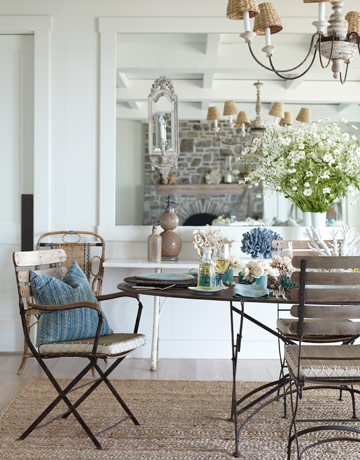
Look at the detailing of Carolyn Espley’s seat cushion used in this home. Appreciate the simple tayloring that required designers to tackle projects at the most minute of details. Blogs about her, and her own blog Slim Paley.
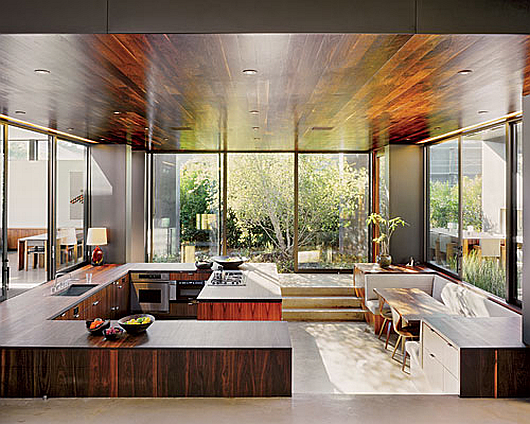
I loved this image as soon as I saw it in 2009, and still have thoughts about it. Architect, M.Rodziner ‘s walnut ceilings in the Vienna Way residence.
.

N house by Naomi Pollock Architect Fujimoto
Architecture Record describes it as three nesting boxes. I tend to be intrigued by mazes, like the thought of designing a house without doorways, and stepped one foot into the door of my own design at my parents house, when I began breaking rooms apart with planar walls, instead of cutting holes into them and using bulkheads to define a room.
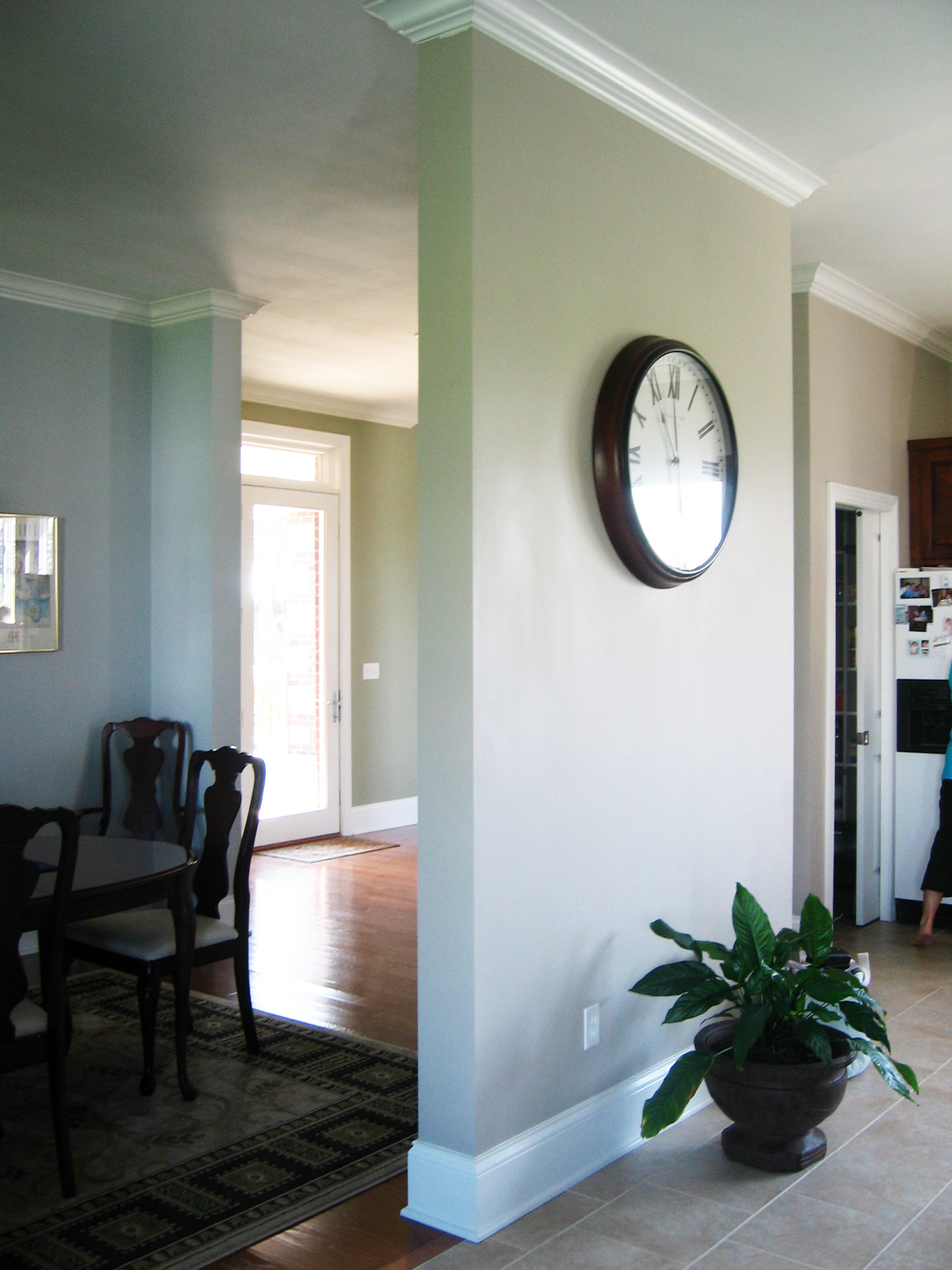
Parents House ~ Belmont Ohio

A flair of Mardi Gras still lives in the dining room to remind my family of our festive Louisiana days.
.
Redecorated towers, the Alpha Tomamu Towers in Hokkaido Japan by architect Klein Dytham Architecture.
.

The college of architecture and planning at the University of Colorado is working on The Urban Hens project Flat-pack coops sold at farmers markets! I read about it in Architecture Record.
.
Forte, Gimenes & Marcondes Ferraz Arquitetos The Grid House, suspended above ground with maze like roof top garden. I read about it on ArchDaily and can’t get enough of these elevated gardens, so magical, forest-like, and necessary.

Above and Below photos are by Ale Shneider.

.
~ Two more ~
Furniture designs by David Trubridge
&
Barry Dixon

Through Traditional Home I found Barry Dixon, who I found has a book for sale.
Enough for today?
Mid-Century Modern
~ Residential Renovation ~

A friend of mine needed help envisioning a project, that would ideally remove a wall between the existing kitchen and dining room to serve as one large entertaining space.
She had colorful dinnerware, the desire for a large island, and a vintage kitchen sink with sideboard that she wanted to refinish.
Instead of the typical 5 phase design plan (SD, DD, CD, Bid, CA) I met her at her house for 5 hours on a Saturday. We’d met prior for lunch and I learned of her initial thoughts about the project. I had taken her existing blueprint (real blueprints!) plans into CAD and then developed them into a 3d Sketchup model. By pulling in furniture and showing images that I’d collected, I had everything we could use to begin nailing down a style. She had brought her own ideas forward, and with the books and ideas laying across her dining room table, we set up our work station for the afternoon.
We talked about how she used the spaces and I took a tour of her house. While talking I determined that we could go one of two ways. I drew two schemes in plan and then we sat at the dining room table for three hours playing with a Sketchup model. We had the plan to go with and determined the next steps as we concluded on liking one scheme, hands down, it was efficient.
Here are a few mid-century-modern photos we looked at to begin our style discussion.


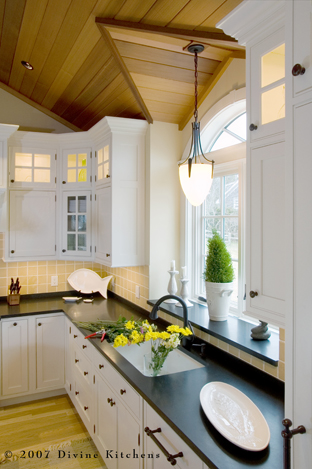

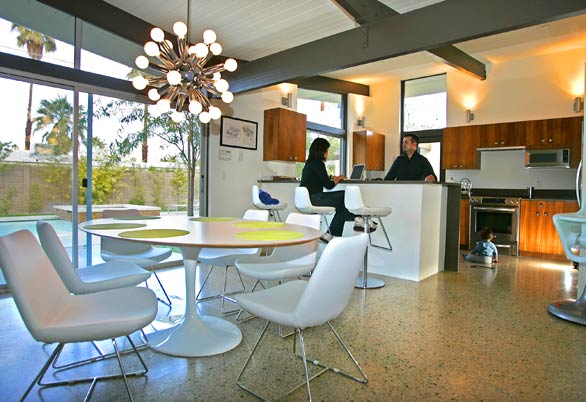



I like to show images to my clients to begin an educated discussion, determine likes and dislikes, and pull something unexpected out of our conversation.
Next, with a desire to renovate in a responsible way, she took a trip up to Pittsburgh to visit Artemis.
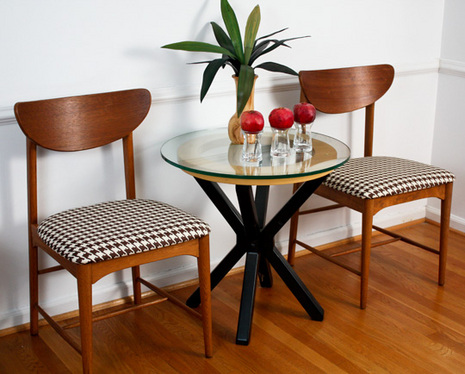
On the same trip she also visited Tri-State Antiques in Canonsburg PA to find furniture to fit the style of her new entertaining area. A love seat paired with a mid-century modern table and chairs is what she was looking for. Something similar to these:
She considered paperstone and concrete countertops, looked at Concrete Zen out of Pittsburgh, and decided upon quartz Cambria countertops that could be purchased through a local builders supply store, Famous-Supply, in Wheeling.
There are many ways to determine what building products to use in your home. A large part of decision-making is knowing what is available where you are. Typically, I ask myself, what materials are available locally, or is there someone where I live who can make this? The decision of what to use is also dependent upon the ability of local contractors.
Anyone with a product to sell can make the case for greenness. Furthermore, it is difficult to justify decisions when you are dealing with the shipping cost versus balancing money spent and energy used in local shops. In my practice, I search for the most basic products, that can be made locally, by neighbors in the community. I also have to consider what each homeowner desires, and what’s available in the market.
We have to decide what is important to each of us, and base these decisions on what makes sense. When I talk Green, I mean the true cost, embodying not only the money spent, but the energy required to get what is wanted, here. Determine what the money cost of something may be hiding, and be thoughtful in your choosing.
So, getting back to the renovation, it was important to my friend to be ‘light on the earth.’
The existing wood floors in the dining room were in good condition, and the cost to place bamboo flooring in the entire renovation was decided against. The transition between the new bamboo floors and the existing refinished wood divides the central L-shaped island, and defines each part of the new room in a nice way.

The cabinetry is made by Schrock, a company who seeks to make minimal environmental impact. She found roman shades made of thin reeds woven with jute at JCPenny and ordered Vapor bar stools from Crate & Barrel.
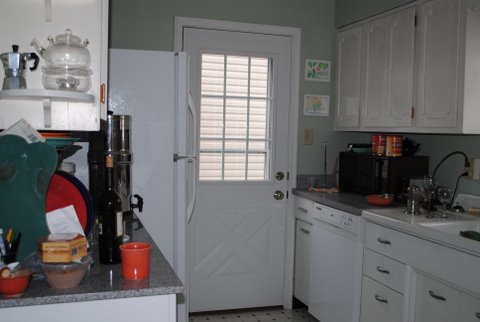
A few ‘Before’ pictures are below.

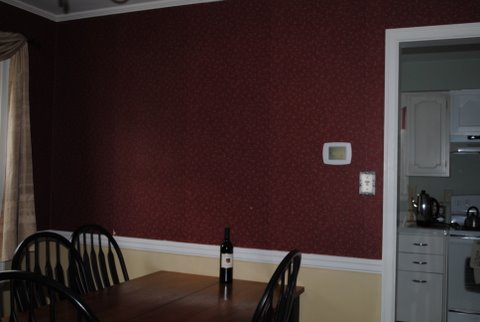
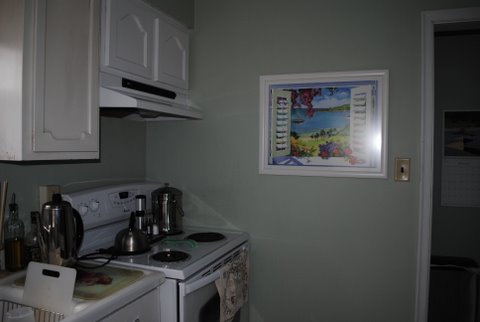
This is the sketch we came up with at the end of the day as the direction of our project:
Mid-Century-Modern, Mid-Construction:

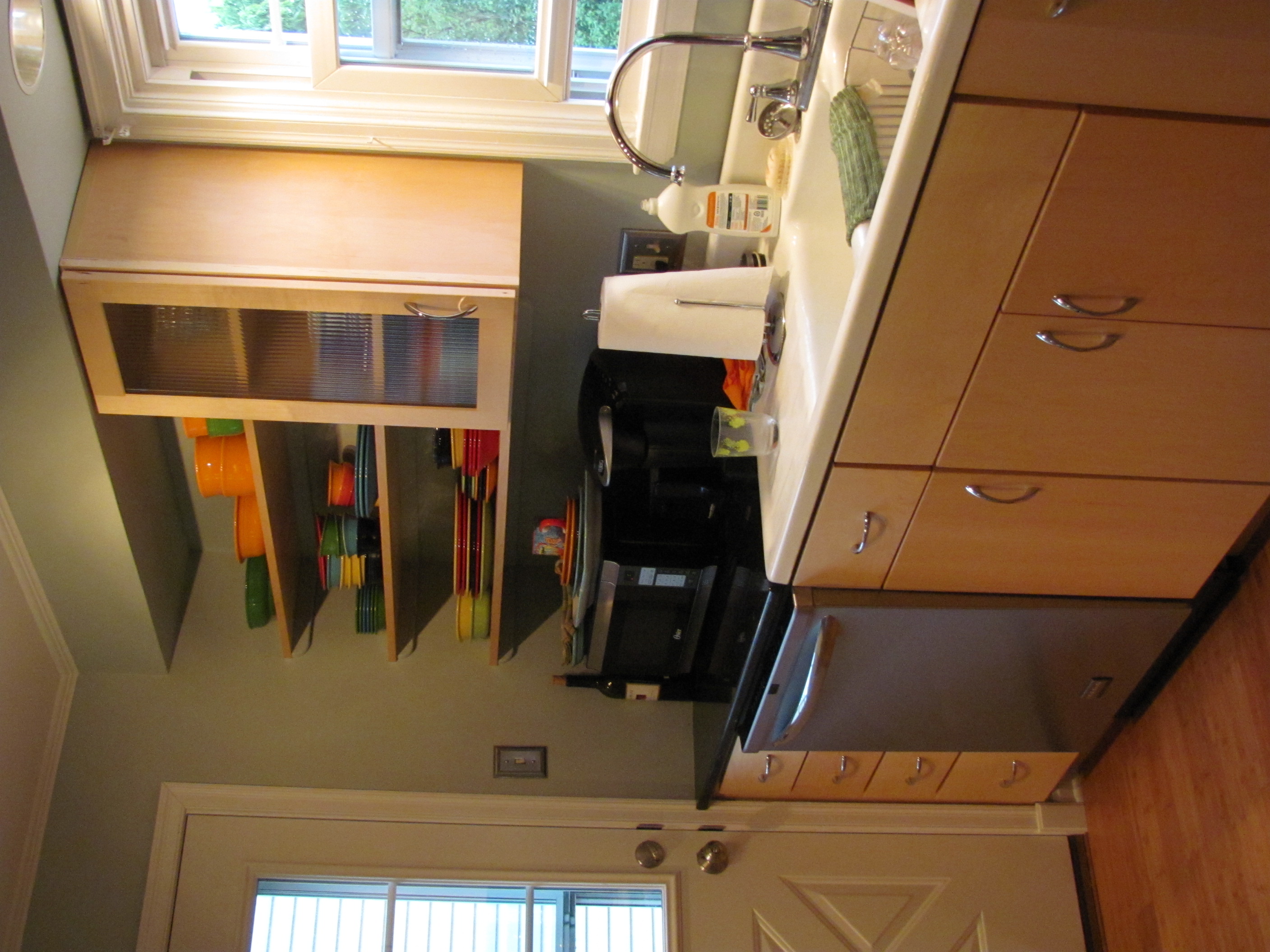
And, the final product:
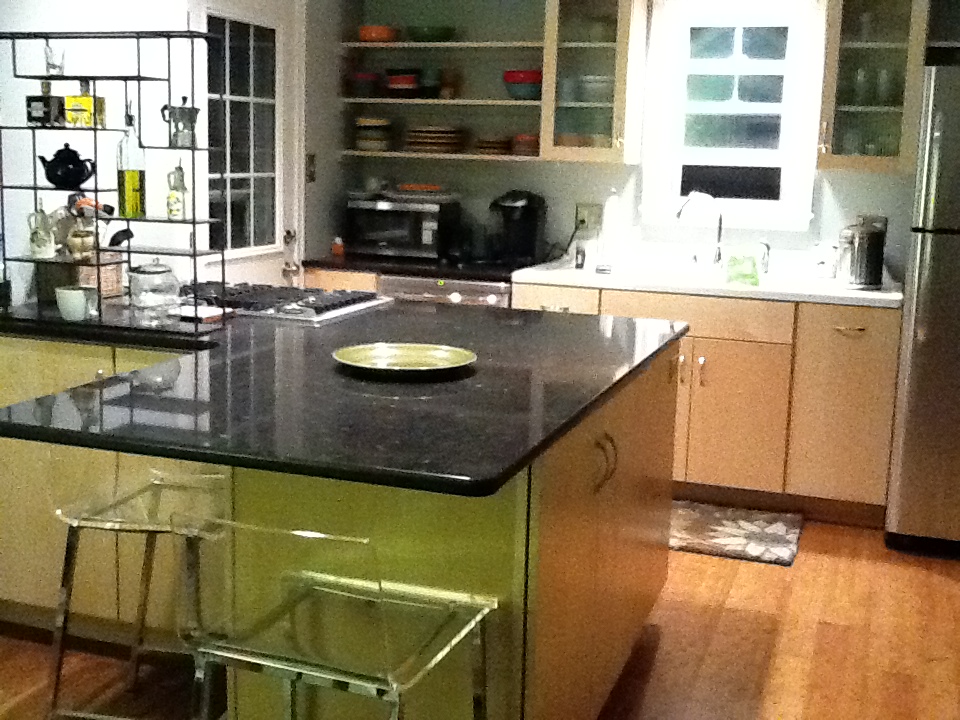
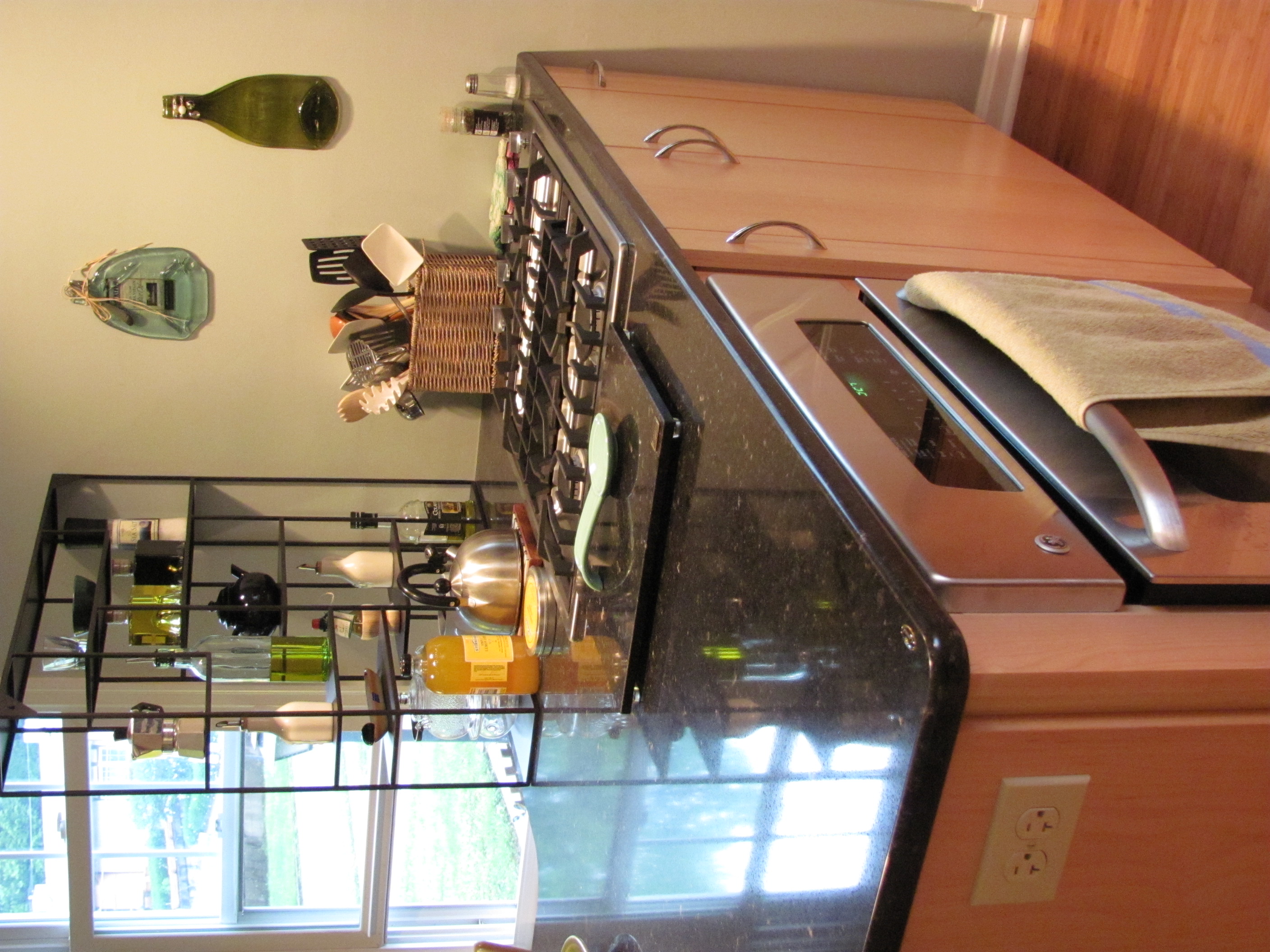

 I have recently completed a lot of research related to bathrooms and thought these tips of finding a toilet could be helpful to others in need of a good WC. The important decision makers for me are water savings and a good flush.
Toilet Performance Data on Low Flow fixtures by California Urban Water Conservation Council rate nearly 1,800 toilet models and the information is here for us to look at!
Other articles of interest are 5 Tips for Choosing a low flow toilet by William Maas and this article titled Sustainable Restroom Tips.
American Standard also offers this nice selection process for those choosing their product. American Standard Help me choose option for Toilets
I am involved in an Environmental Book Club at Oglebay’s Schrader Center.
I have read many new books thanks to this club, and every Third Thursday presents a discussion with wiser environmentalists than me. Many of these books are written in a cohesive long arrangement of definitions. No plots or climax, but critically arranged facts from beginning to end. Like portions titled Eco-Inventions from Janine Benyus’s book Biomimicry.
Here are a few of my favorite thoughts.
The biomimicry revolution introduces an era based not on what we can extract from nature but on what we can learn from her. Pg 2
The cost of money, the price of my time and why the bottom thread of my new winter coat falls off.
From being taught a ‘human centered approach’ in forestry management Benyus began to look to organisms and ecosystems for their ‘cooperative relationships, self-regulating feedback cycles and dense interconnectedness.’ Pg 3
‘Adapting to earth (as a new reality), the changes we make now no mater how incremental they seem, may be the nucleus for this new reality.’ Pg 5
The cannon of nature’s laws
Nature runs on sunlight
Nature uses only the energy it needs
Nature fits form to function
Nature recycles everything
Nature rewards cooperation
Nature banks on diversity
Nature demands local expertise
Nature curbs excesses from within
Nature taps the power of limits (which means maintain a balance) Pg 7
‘Because nature spins her spell in such a small space, her creations read like a poem that says only what it means.’
30,000 land tailored variations of rice – farming that mimicked industry, not nature. Pg 17
Her ideas on polyculture in the prairies. What about the idea of a polyculture at home in our own garden. Plants that feed, nourish and sustain the winter without our work. Pg 30
If you had a place to pull down the sun, the ASU campus in Tempe would be the place. Pg 63
Nature wants a balance – entropy – like ink dispersing in H20, it wants everything to have equal parts. Pg 67
What is Hydrogen gas?
Molecules into membranes Pg 82
Chemical graffiti
Garden-type sunshine
Purple bacterium reaction center photo
200 billion output increase every two years… why we are faster in the untactile world? Pg 241
Take back laws or ‘asset recovery’ as Xerox puts it. Pg 256
We are using the ancient sun. Pg 261
When she talks about using the condensed matter that didn’t have oxygen to decompose properly? Is the earth getting larger in diameter, or how is this upcycle working from the exterior to center of our earth core?
Closed Loop
A community designed system to use a better as a whole, water, better land, air water, build, shelter feed.
Things I’ve started thinking about since our book club began:
World population
I am my own responsibility, I must live with what I do and try not to push it on somewhere else.
Low Impact Man / Family
Hollow under-layer shifts
We fall into perfectly round holes
Circular sink holes
Whole cities swallowed down the serpents throat. Hollowed from within, termites practicing their limits.
Pouring the unused black remains of dinosaurs
Aloe plants and grub worms into our copper lines.
Instead of quickly building Architecture, perhaps time in concept-to-foundation-to-finish should take us longer, so we are taking more controlled and thoughtful steps in the process. Perhaps I should invest my time in Slow Building.
.
Carpet
 .
.

.
Sheet goods and Tile
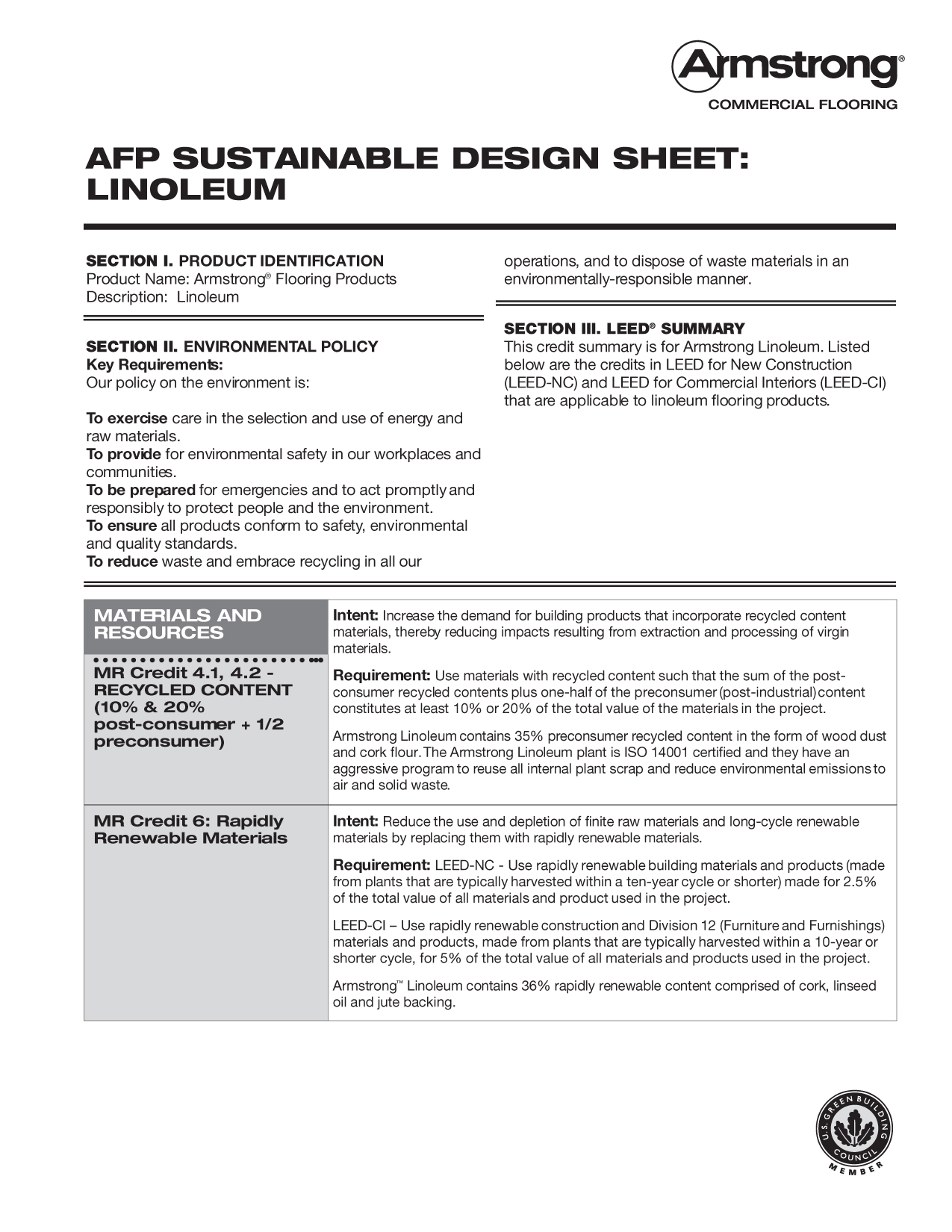
Linoleum is a more sustainable product and manufacturing companies include Torlys, Armstrong and Forbo. Colors between manufacturers are similar. The 12 inch x 12 inch VCT tile can be made with recycled content. The Armstrong product is an option.

.
 .
.
Door, Base, Crown, Mouldings & Panels
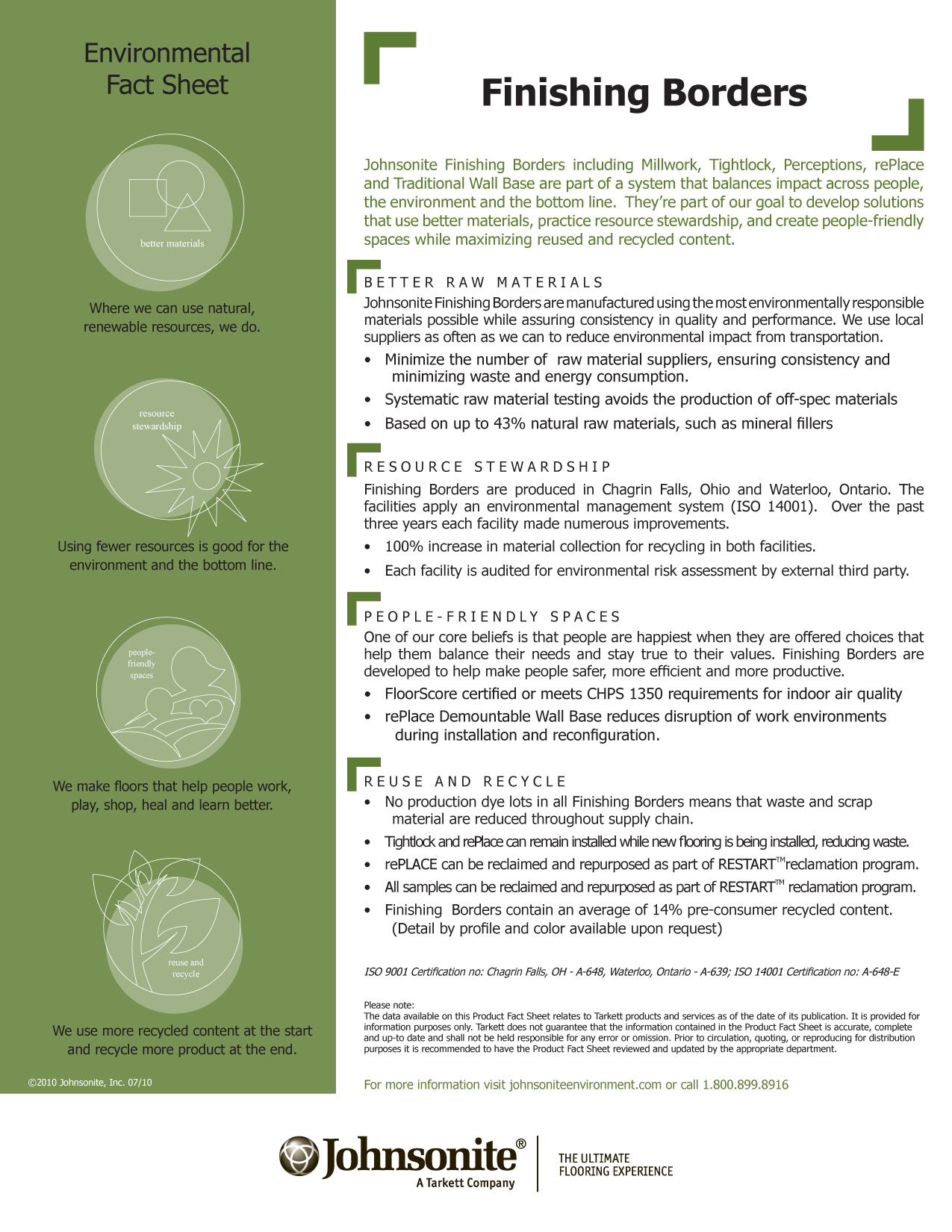
On all wood products it is important to use formaldehyde free and safe smelling glue if any composite material is used. Safe paints and sealers shall be used. Examples include Sansin Corp. waterbased stain, Vermont natural coating, mapei floor sealer, AFM safecoat stains, sealers and caulking. Recycled content Johnsonite Traditional Wall base is also an option.
 .
.

.
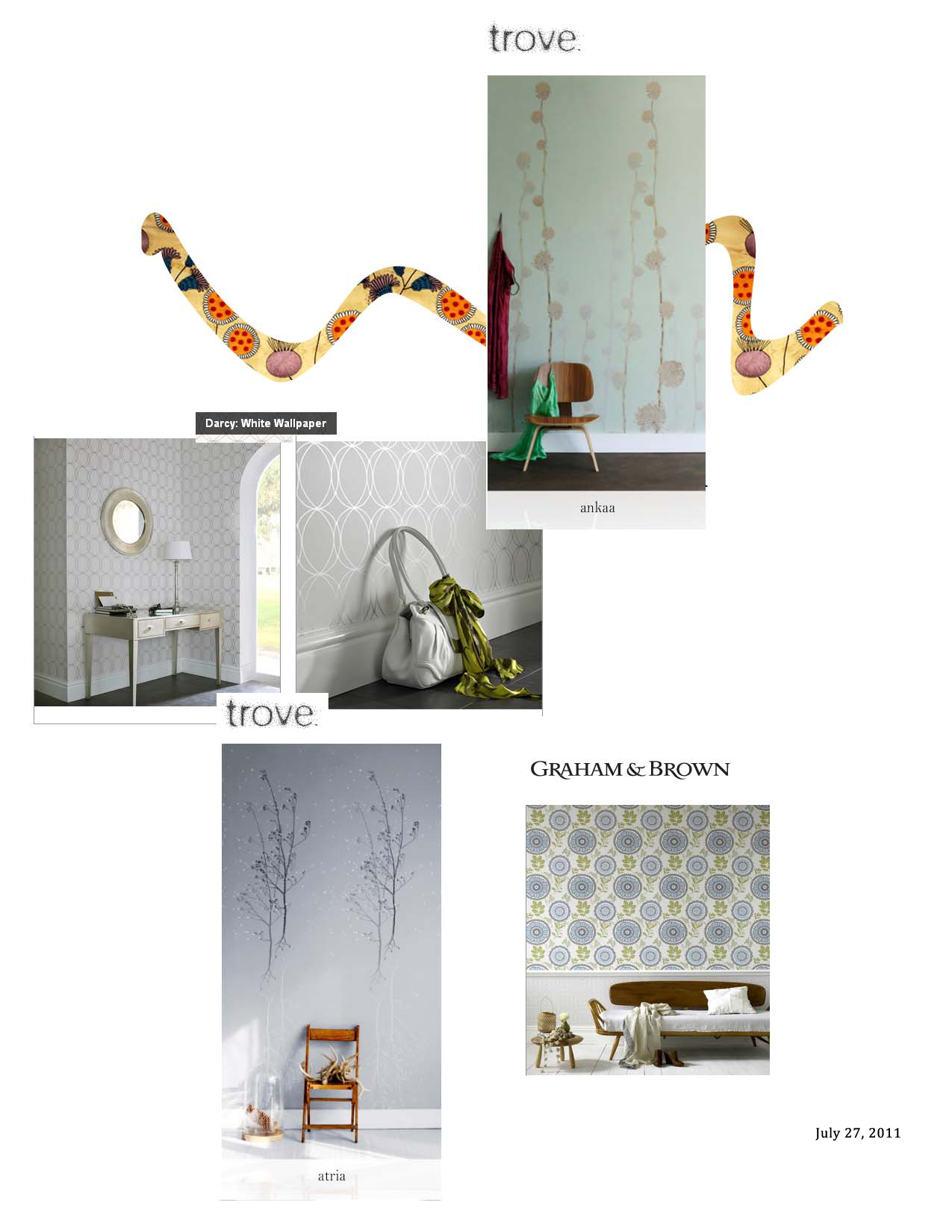
Wood, Paint & Wall coverings
To protect indoor air quality a no VOC paint formula shall be used.
 .
.
 .
.
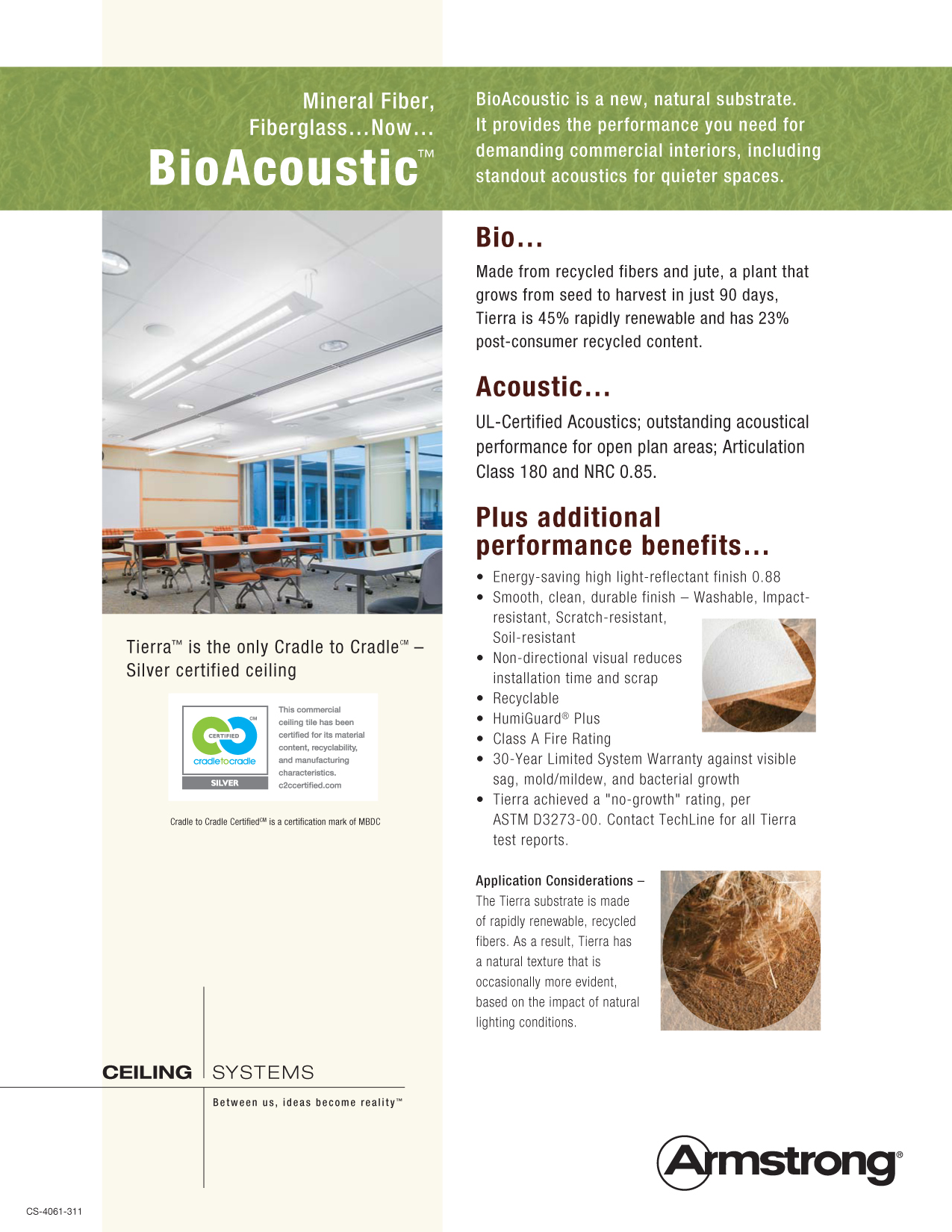
Ceilings
Armstrong’s bio acoustical panel made from jute is a great T grid system option.
 .
.
Hardware Finishes: recycled content materials, or a locally manufactured option are best.
.
Formica and Wilsonart have environmental goals if laminate is preferred in any office.

.
Inspirational Images are then used to begin an educated discussion about the look of the finish materials.
 The end
The Interiors

Because I am always in search of great and healthy ways of Interior Designing I was glad to come across a few products I hadn’t researched yet. I have a full list on my blog in the tab ‘Sustainable Interiors.’ This is the last post of the Book Review I did of Eric Corey Freed and Kevin Daum’s book
The counter top chart was extensive and fantastic!

Healthy Wall Coverings:
Mioculture wallpaper of 100% recycled paper. This company created by two Columbian boys has a neat sit full of lighting furniture and accessories.
Home $ense gives a Homemade Wallpaper Paste Recipe too! There are lots on the Internet, like this one from Tree Hugger.
There are companies such as Design Tex and Len-Tex who have achieved Cradle to Cradle certification, and others such as: Maharam MDC Wall coverings Milliken Mod Green Pod Pallas Dialtones (made of discarded Japanese telephone books) Sinan Natural Wallpaper Adhesive
Below those wall coverings can be fully recycled content drywall too. Gypsum is a coal combustion byproduct. I looked that up and found useful in formation through the University of Kentucky. Resources for Recycled DryWall include : EcoRock from Serious Materials Synthetic GYP from CertainTeed or G-P Gypsum or the recycled content from CleanBoard National Gypsum Company Temple-Inland Forest products or USG Corporation
Other interior products highlighted in the book are ~
Cork and Bamboo: Expanko Habitus Nova Distinctive Floors US Floors Teragren Eco Timber Cali Bamboo Smith & Fong
To protect our Indoor Air Quality Formaldehyde-free fiberboard: Columbia Forest Products Flakeboard Kirei SierraPine
Cabinets built out of formaldehyde free wood: Breathe Easy Cabinetry Neff Kitchens Neil Kelly Cabinets Custom Cabinets from Greenline & Humabuilt
For Carpet, look at Sheeps wool carpet.
.
Tomorrow I will share how all this knowledge actually applies to a project, when I showcase
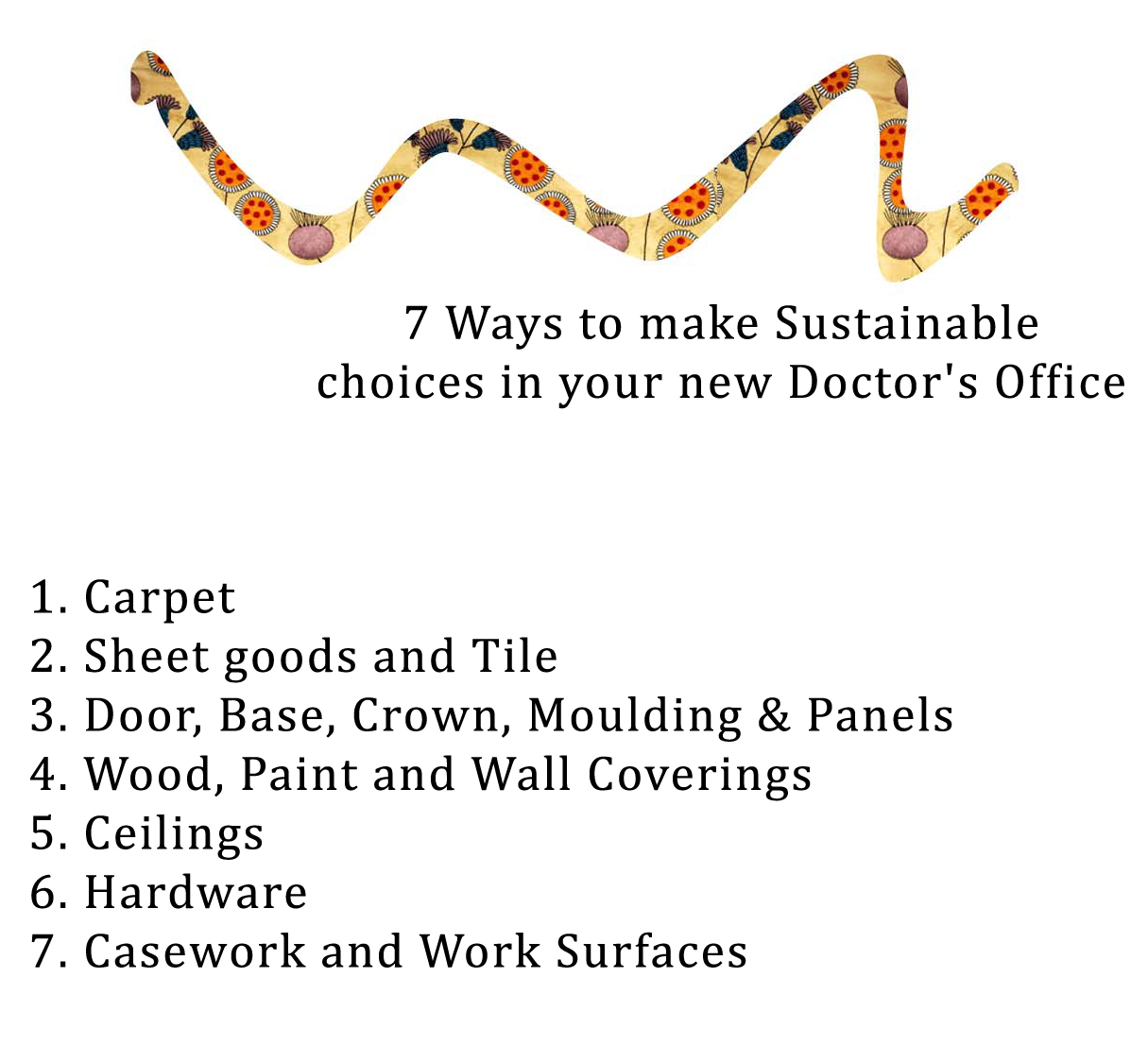
7 Sustainable Choices
I made when designing the interior of a recent doctor’s office.
Research Driven Work : In Architect Magazine, Toshiko Mori,
Poetry, & Seeds of Deception
Too busy to think? It’s so easy to get in the groove, but so hard to get out of a rut.
I want my architecture to be smarter. I want to be an architect to come to with the best answers and a well thought out practice.
In an effort to live life to the fullest and have my everyday perceptions inform my work, a friend and I from architecture school are collaborating to do just that. The first thing we need is devoted time to thinking and a goal. So… stay tuned.
This article by Mimi Zeiger highlight’s a womans efforts to evolve research driven work in her own practices. Toshiko Mori is between many practices including her own NY firm, Toshiko Mori Architect, teaching at the Harvard Graduate School, and her latest think tank, VisionArc. Isn’t she pretty?

“Architects see spaces in plan, elevation, and section; we have a way of analyzing problems in a three- or four-dimensional way. We can slice through an issue that may not connect in plan,” Mori says. I suggest reading the whole article here.
Poetry
Depending on the Wind by James Galvin
.
Also, currently reading for the Environmental Book Club at the Schrader Center of Oglebay every third Thursday of the month: Seeds of Deception by Jeffry Smith
How to help the fact that we need light!? Solution: arrange what functions you do in houses and buildings to take advantage of natural light. A window facing south will give you light 2.5 (x) the height of the window into the length into the room. Clerestory windows are best at the ceiling height because they bounce the light right off of your ceiling, illuminating your room. Or, install a solatube, which can tunnel light to where you need it if the only thing between you and the sun is your roof.

and at night…
Plug load of light bulbs reduce by 75% when switching to LED and CFL bulbs. CFL rebates are available as are recovery centers for all bulbs.
Installing occupancy light sensors may be the best option in commercial settings, when no one person in in charge of turning off, say, the conference room lights when not in use. Wattstopper has a power strip that senses people and turns plugs on just like light sensors do. See the strip here and others from Smart Home USA. Light Occupancy Sensor Resources are listed in the book: Evecto GreenGate Levitron Lutron Sensor Switch , or take a look at WattStopper’s Energy Saving Calculator.
Sometimes the easiest way to understanding consumption of energy is to determine what you use. Like eating less when you count calories, a Kill a Watt may be plugged in an outlet like a power strip, and will display the power usage that anything you plug into it may be pulling.
“You can calculate your electrical expenses by the day, week, month, even an entire year. Also check the quality of your power by monitoring Voltage, Line Frequency, and Power Factor. Now you´ll know if it is time for a new refrigerator or if that old air conditioner is still saving you money.” From P3 International.
Begin by analyzing your home room by room. Look at your dryer and think of how often you use it. Most of us spend 10% of our energy bills on the dryer. It could be a good time to visit the Urban Clothesline site.

Look at the setting in your refrigerator, or just keep all of your cold items in a tupperware bin outside through the winter. (I’ve really wanted to do this!) You should set your temperature between 35-38 degrees, and keep the freezer at 0. Green $ense referred to: Absocold ConServ Equator MicroFridge Summit Compact Refrgerators, Sun Frost as models to reference.
Dishwashers: Ariston Asko Bosch Danby Miele
Oh, and lets not forget hot to get rid of old appliances… Energy Star Refrigerator Recycling program Recycle.. it’s the perfect ending.
I’ve recently gotten cash for my electronics through BoneYard.

Do you know that in Rhode Island several communities have adopted a Pay-As-You-Throw program to manage the excessive waste of trash? You have to pay for the bright orange trash bags for trash disposal. The program aims to reduce waste and increase recycling. It allows residents to gauge what comes in because of the price attached to what goes out.
Energy consumption in heating and cooling the places where we live and work is astronomical! Later, when a good building envelope is discussed, we can learn how to keep our inside air in places where it should be. But, as far as how to make a comfortable environment in the first place is another story.
During the summer, when most places are hot, our home attics are extremely warm. If your house isn’t a passive house which would direct that hot air through natural ventilation, you may consider a few natural ways to let the hot air out by letting it rise. The book discusses solar powered attic fans by Sunrise Solar and I’ve seen them by SolaStar as well. A whole house fan is another option, and Green $ense offered one by Jet Fan USA.
A programmable thermostat is a great idea to consider. In Ohio right now Columbia gas is offering in home Audits for $50. With that a programmable thermostat is offered in the package. This allows you to have heat when you need it most. Not when you aren’t at home, and not when you are under the covers. If you are thinking about building a new home, imagine your house broken into temperature zones. Places where you have a lot of southern light will be warmer, and tend to need different air conditions than do the shady Northern facing rooms. A good architect 😉 can make sure your temperature zones are ducted to properly. See more at the future House Warming post.

The book discussed a fireplace heat exchanger upgrade or and EPA certified insert which I looked up on E How to try to understand a bit better. The idea is that you can insert a new energy-efficient unit into your existing hearth and allow the heat generated by the fire to help generate heat into your home through a blower door.
Inserts for wood-burning fireplaces improve the safety and efficiency of the unit. An insert is a metal firebox, often with a glass door for visible flames, which fits within the fireplace opening, allowing the smoke to be vented through the existing fireplace chimney.-E How
The next idea after lowering consumption is to consider creating your own power using the sun, a local stream, or passing wind.
The hubbub about Solar Panels: Think of them as an appliance you can move with you. the DSIRE is a great website source that offers the most up to date incentives for renewable energies.
Micro-hydropower uses a water to be a generator of energy.
Micro-hydro power systems use an intake box to divert water from the stream and prevent debris from flowing into the system. The water moves through a pipe that is connected to a turbine. The pressure of the water rushing through the turbine causes it to move, which generates electricity. Excess energy is then stored in batteries or diverted to a dump load. –Acreage Anywhere
You must contact several authorities before doing this, such as the Federal Energy Regulatory Commission (here), the Army Corps of Engineers, the local county engineers office, and the system may cost between $5,000-20,000. But, before dismissing this all together, think about cost holistically. The cost of what you are paying your electric or gas company, the cost of what they are possibly doing to the air where they make your power, what is lost in translation, etc. Gauging all factors makes things a different story.
I’ve recently been introduced to the Fujitsu Mini-Split heat pump by a friend who uses the system to create a warm room in his super-insulated home. It is a ductless system that runs coils through your walls to a wall or ceiling mounted unit that heats or cools your air for comfort.
How cool! or… warm?!
Come back Monday for the next series post!
Book Review
of Eric Corey Freed and Kevin Daum’s book
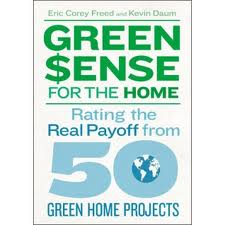
I’ve been greenwashed! Not by this book that I chose to read, but in my magazines with new products, with emails and commercials. Everyone is All Natural now (what were we?), I am buying Artisan Bread, I can breathe easier, my soaps are Locally Made… yeah yeah yeah, but is all of this good?
That is the most difficult question because being Green and living Sustainably has so many facets. In my own practice I try to weigh a Green Thing by questioning:
Green $ense made me look at their green solutions in two important categories:
The Building Envelope & Utilities Use
The book breaks down contents of going green into three categories: 16 green home projects you can do today, 21 you can do tomorrow, and 13 green home projects you can do when building new. Conclusions are given after each topic after Eric the Architect and Kevin with the financial perspective go back and forth. They call it the bottom line.

 .
.
I have decided to split up this post over the course of a few days to help in understanding the sheer amount of information it contains. So, tomorrow we can begin with the first part of Utilities Use!


