Categories
Architecture

Articulate where you stand.

Le Corbusier, a renowned 20th century architect, demanded a response from himself constantly during his lifetime. He still stands to ask the same of students of architecture: ‘Articulate where you stand.’

The past semester we read many treatises from architects ranging from the 14th century to the present day. The last class discussion centered around perhaps one of the most enjoyable pieces by Le Corbusier I’d ever read, Nothing is Transmittable but Thought. This was compared to The Modern City: Context, Site or Place for Architecture? by Alberto Perez-Gomez. The piece below is what I wrote prior to our class discussion.

Why do our buildings lack the richness of old buildings? Perhaps it is because our culture spends less time in one place, or thinking about one place because the trend is that we’re so mobile. We also live a portion of our lives in a virtual reality. As an architect I do the majority of my drawing this way. We can construct false lives for ourselves, allowing others to not understand us for one, by only appearing a flattering way. We limit the picture. What’s the answer to becoming more real? A dedicated focus of time on what we’re interested in, allowing a time for the relief of distraction. Perseverance as Corbusier states in his writing Nothing is Transmittable but Thought. Further on in this reading Perez-Gomez states ‘In our time we individualize culture.’ Today with our ‘radicalized faith has become increasingly international and transcultural fueled by more efficient systems of communication, blurring traditional boundaries.’ (p4) Society assumes so much by the appearance of being present in pictures. What about stories, history and political understanding? (Chris Luebkeman questions emphatically in his lecture What will [y]our normal be?) One must find out how to actually be somewhere, be silent to understand the entirety of one’s surroundings. What is the remaining scar of the Berlin wall without the understanding of what it cut and divided, and how long it remained as so?

The authors Perez-Gomez and Corbusier discuss journalism as having a limited perception, that is, unfortunately, the one that is shared. Perez-Gomez laments that ‘media is the more authentic public’ (p4) as Corbusier discusses that if you are perturbed by the journalists, it is but for just one day. The public moves on.

Content is woven in the present through our desire, Perez-Gomez states. Yes, there may be more than what’s usually present, and isn’t that what any artist is after? One must take a position on all authentic knowledge to play a role, participate in life. Perez-Gomez says ‘we must make.’ I say yes, we must draw, make, yes, just as the poet must try to keep writing the same thing in different ways.

tumblr_mt6ar84Ky81r4sf9xo1_500

‘Make to recall being Perez-Gomez repeats again citing Hejduk’s architectural masks. (photo from effettobeaubourg)

Lauren Rapp a woman who made a chair a day for the last year – Washington Post. Compared to Hejduk’s masks, these pieces question a range of materials to be a specific object.

What else can we use to understand a place? Perez-Gomez suggests we free ourselves from ‘The modern world’ that has a ‘specific reality which is not independent from our thoughts.’ (p3)  In the same paragraph he explains that Heidegger’s take on tradition talks of tradition ‘The flight into tradition, out of a combination of humility and prescription, can bring about nothing in itself other than self-deception and blindness in relation to the historical moment.’ I recall similar laments in previous readings for class too. For example, in Hans-Georg Gadamer’s The Relevance of the Beautiful he says if art has anything to do with festival, it is about transmission.  (Something passed along such as tradition through families) ’tradition means transmission rather than conservation. It does not imply we leave things unchanged.. it means learning how to grasp and express the past anew.’  (p49 – 50) As architects we must understand the assumptions we’ve come to depend on in society in order to think anew. We must find deeper meanings to the surface of tradition that suggests we just go through the motions. Expect more from what’s given on the surface, and molded to look the same each year. Instead, we could share stories, and debate the true meaning.

In discussing the ‘symbolic power of some architecture’ (p6) Perez-Gomez states ‘Our home must accept a dimension of utopia -the possibility of real historical evolution and our self-assertion as individuals- even the architect as artist -their works are comparatively free from the traditional limitation and associate of the specific site.’  Let’s think about this -to be participating humans we must understand the essence and actuality around us, recognize the abundance that surrounds us. Corbusier discusses something similar when he states in Nothing is Transmittable… ‘the only possible atmosphere conducive to artistic creation is steadiness, modesty, continuity, perseverance. Constancy is a mark of courage.’ (p2)

These writings defend and motivate architects as creators to believe in a higher role of building as our job. ‘Place has to be reinvented’ Perez-Gomez urges.

I find another parallel in Perez-Gomez’s statement ‘architecture had become meaningless due to its lack of semantic ground’ (p8) and Corbusier’s piece title Nothing is Transmittable but Thought. If a place or rather, architecture, comes from the culture, the site, the drive of an architects’ ‘rules’ would it not come with a story? It would. Poetry and architecture are similar to me in the way they are created by being tooled over and then in the end crafted to mean something. There is always a better word, or the right use of material, to help tell the story. In the end the architect/ the poet must come to the final piece with the same question; does it tell the story? If this part of the critique to the whole has been lost then how would one ever know it is finished? Rules must be established.

In other Perez-Gomez writings he spoke of an architect’s rules. In Architecture and the Crisis of Modern Science he wrote of a mandatory call for understanding the patterns of society. Or in Hermeneutics as Architectural Discourse where he calls us to create our own order, one grounded in knowledge and one based on furthering the desires of our own experience. We must make until ‘exceptional coincidences’ happen through our own making.

Corbusier describes ‘play, that the architect will take certain ideas of the client until his own order begins, evolves, comes to light -this is his play.’ (p5) I wondered to myself while reading those worlds what Corbusier was trying to fit into by the end? What were his rules? He responds with ‘modular.’ In the end he wanted everything to fit into the human proportion, so it is the way he built space sizes, the way we ourselves as humans are proportioned.

What are my own rules? What ‘house’ of mine must look like a house? Certainly Peter Waldman’s House X could not have been preconceived without the site, but found in the way the family wanted to use the home. In the past I’ve written about inner and outer forces in my own architecture work. There is the desire of the inhabitants with the availability of labor and materials, the site and the vernacular (symbols, traditions and rituals to consider now too) among the many things to discover about a place. These two things, the inner and outer forces, meet at the enclosure, the place, the wall. But what does it say of how the two meet? How thy push and pull depend so much on particular factors. In the end though it needs to uphold the original idea.

The difference between school projects (or theory projects) and what I feel is expected of me in the profession are different. Where school pushes the discovery period, work expects something to be finished quickly. As a professional I’ve been able to mature into understanding deadlines that translate into when something needs to begin reading as a finished whole. The process of discovery probably becomes truncated. It’s too easy and normal to fall into the assumption that the right thing to do is to be literal in what the client requests even if it’s too bland as ‘I want a garage.’ As an architect we expect an offering to our client more along the lines of ‘the place of arrival.’ The architect has the ability to share this sense of passion. What the architect provides for the client is more than they were asking for in terms of a holistic project, and this practice is developed with a set of each architect’s personal rules.

From making to language, so in the end we must use words not only to begin but to direct and explain the story we’ve told in the end. To understand being in a place there must be critical thought. The subject of Hermeneutics, or knowledge of interpretation, has been integral throughout other Perez-Gomez writings as mentioned previously. Perception, interpretation, different architecture, different poets -we’re all coming to art through a different set of our own rigorous rules developed by personal ways of study and evaluation of knowledge. It’s wonderful to see the variety and is motivation to develop one’s own personal way of study and creating.

Ricœur is acclaimed for his textual interpretations, bringing the close of Perez-Gomez’s writing together with yet another proof that our ways of making lasting impressions are in themselves not static either, but are an endless source of opportunity to come to a deeper understanding and for the architect and the poet to share a deeper vision with the world.

As the author Perez-Gomez concludes ‘the role of poetic language to reveal the appropriateness of form… the architect/ poet…finds its archetypal roots, its program of poetic inhabitation.’ (p8)

At the end of our discussion I was left with the desire to make my stand more simply.

Categories
Building Sustainably

Ultra Touch Denim Insulation

IMG_0124

A few months ago I put in an order for attic insulation. An order which I thought would cover 1/6th of our need. Well, I’m glad I under-ordered, and glad that I don’t do order take-offs for projects. For an hour my husband and I carried the pieces of insulation from the (2) yard by yard by yard pallets of insulation up to the attic. At this point we’re almost halfway through the project.

IMG_0126

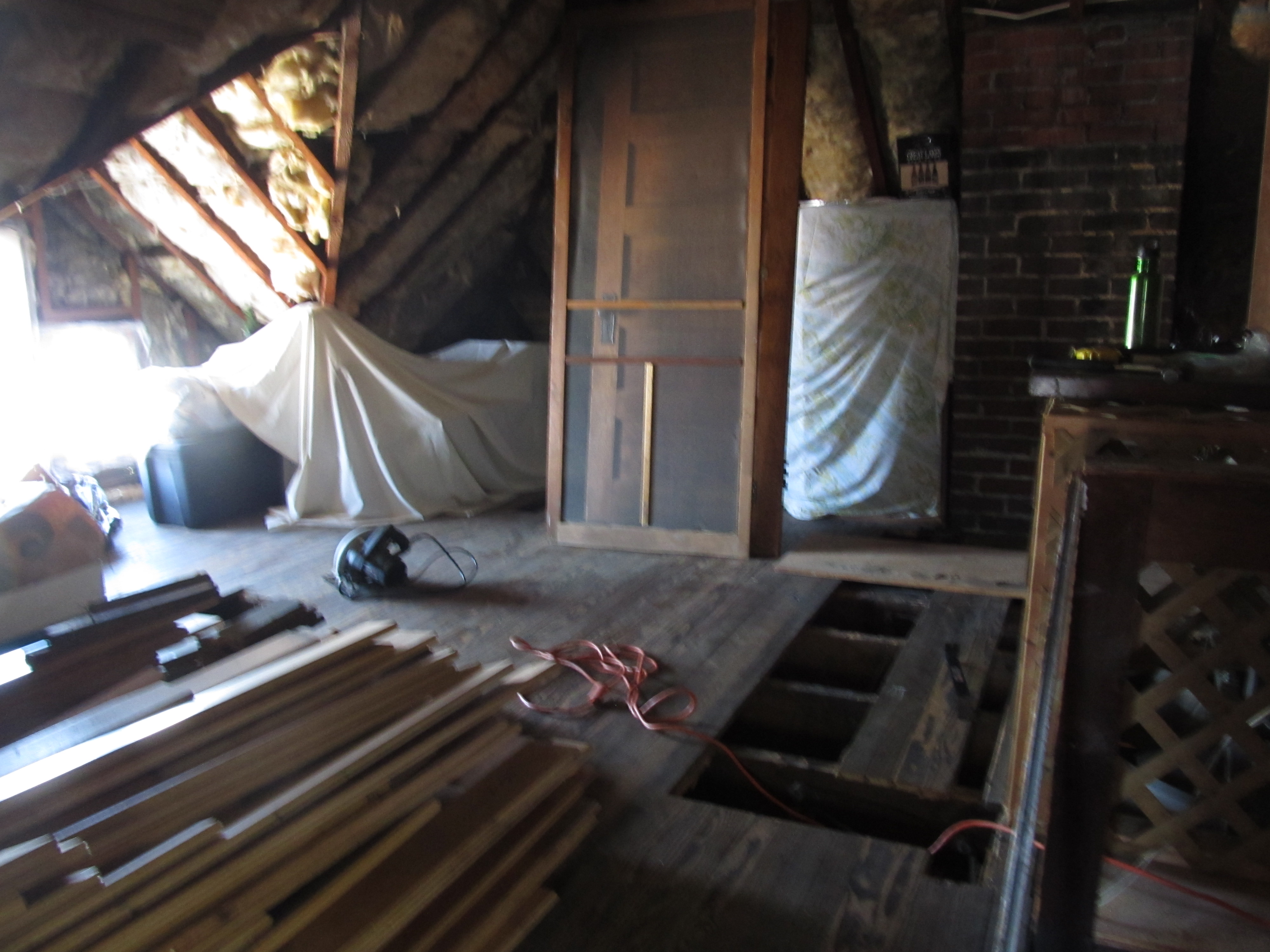
The attic had knob and tube wiring below the floor boards. We started taking up the boards by hand and then had a nice cousin lend us a circular saw which made the project go much faster. The boards in our attic were sometimes 12′ long and we only needed to get to a few joist cavities.

IMG_0113

Before we started, and then after the channels were cut to replace the old wiring.

IMG_0117

IMG_0118IMG_0120

Then we cut some more. This weekend was spent rearranging the loose boards and our attic storage stuff to make working easier below the attic floor.

IMG_0121IMG_0123

We’re using a recycled blue jean material for our insulation. Ultra Touch’s Denim Insulation comes from Arizona and can be shipped right to your doorstep. It is available through both Lowes and Home Depot as noted below in an article by Jetson Green.

There’s been a lot of talk about cotton insulation, but I’ve seen it used in countless projects.  It’s probably worth noting that Bonded Logic’s recycled-content product hit the mainstream with a roll-out of UltraTouch Denim Insulation to 165 Lowe’s stores this month.  The product is made with 80% post-consumer recycled natural fibers and doesn’t have added formaldehyde, VOCs, or chemical irritants, according to Bonded Logic.

Lowe’s offers the R13 and R19 versions, though R21 and R30 can be special ordered.  Pricing is available in select stores; however, for example, I’ve seen a 5-pack of the UltraTouch R19 (15″ x 93″) for $39.97.

In terms of installation, this insulation doesn’t itch like fiberglass insulation and “a portion of each package contains perforations that allow consumers to tear the insulation by hand, similar to a paper towel,” according to a statement by Bonded Logic.

[+] More about Bonded Logic UltraTouch Denim Insulation.

Jetson Green – By D H on Aug. 22, 2012

Categories
About Me

A Cairn in the Backyard

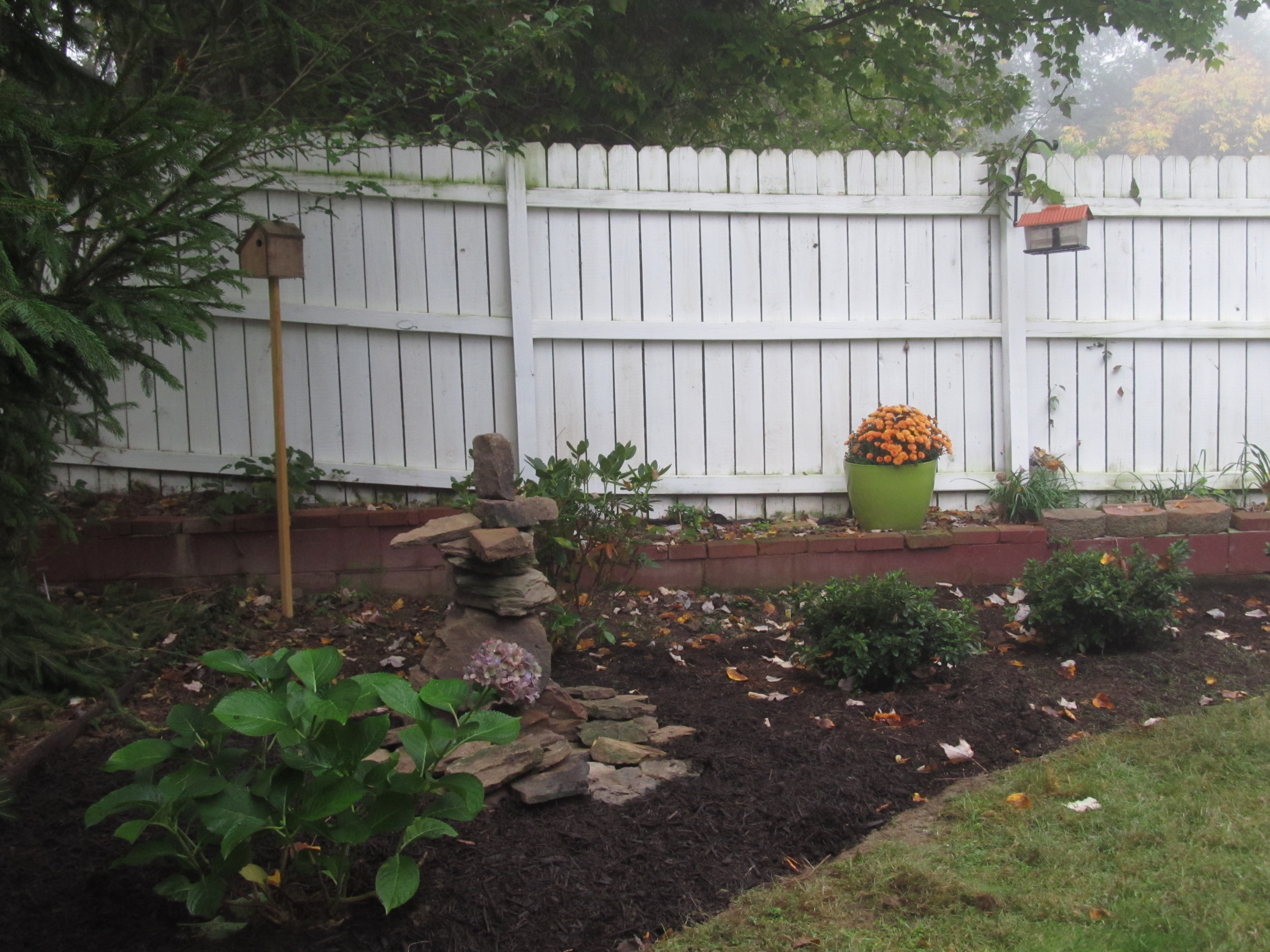
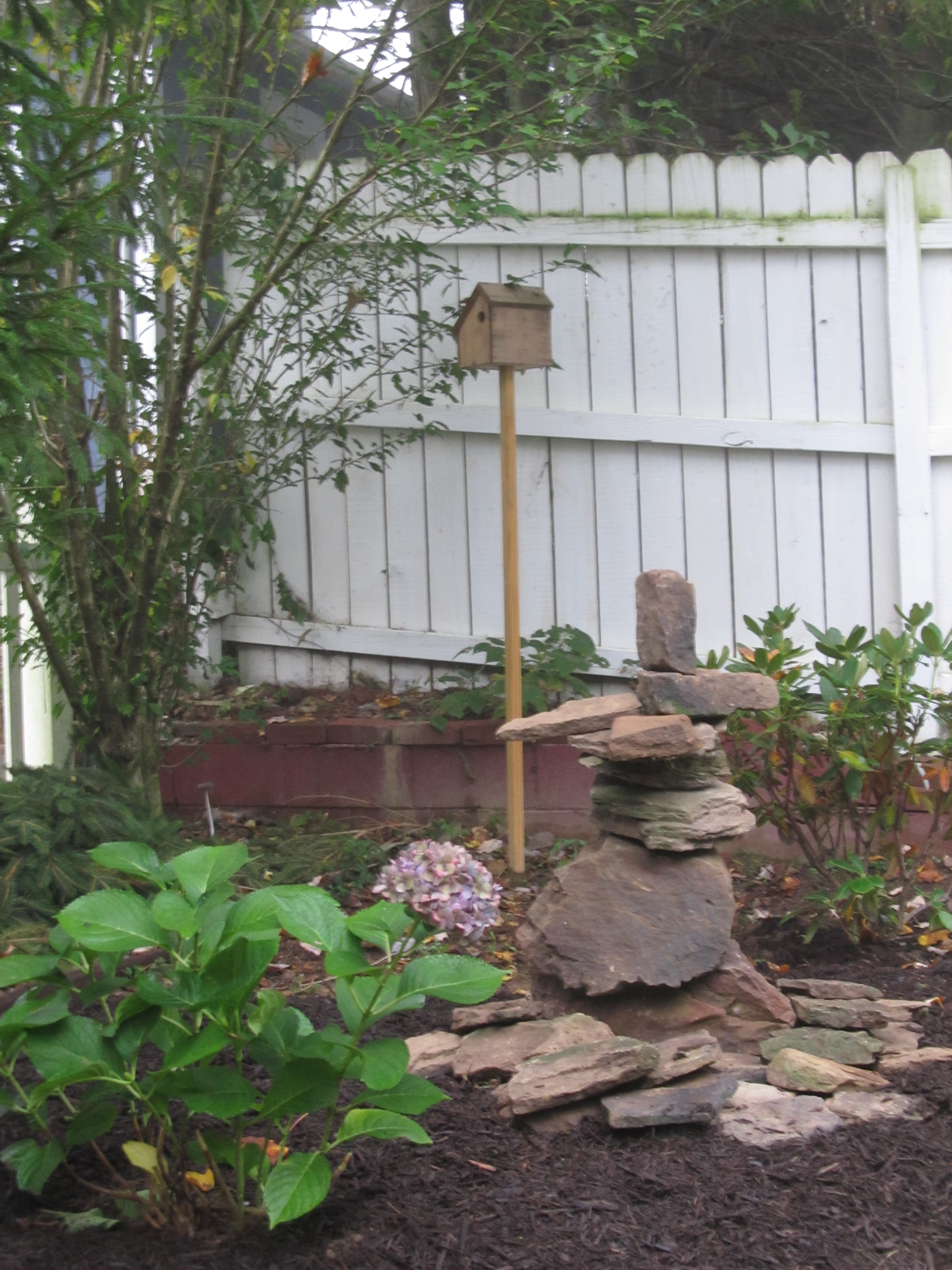
I woke up this morning to a new landmark in the backyard. P spent yesterday afternoon building new beds for the fall planting of azaleas, rhododendrons, and our very first cairn.

October 2015 Foggy Cairn backyard

Categories
About Me

Take in October 2015

Fall time with the low sun, the crisp mornings and cool breezes throughout the afternoon, October lets me see the world around me with fresh eyes.

Some images from home:

IMG_0076

Out of a stump

IMG_0085

The Front porch

Categories
Architecture

The Morgantown Marriott

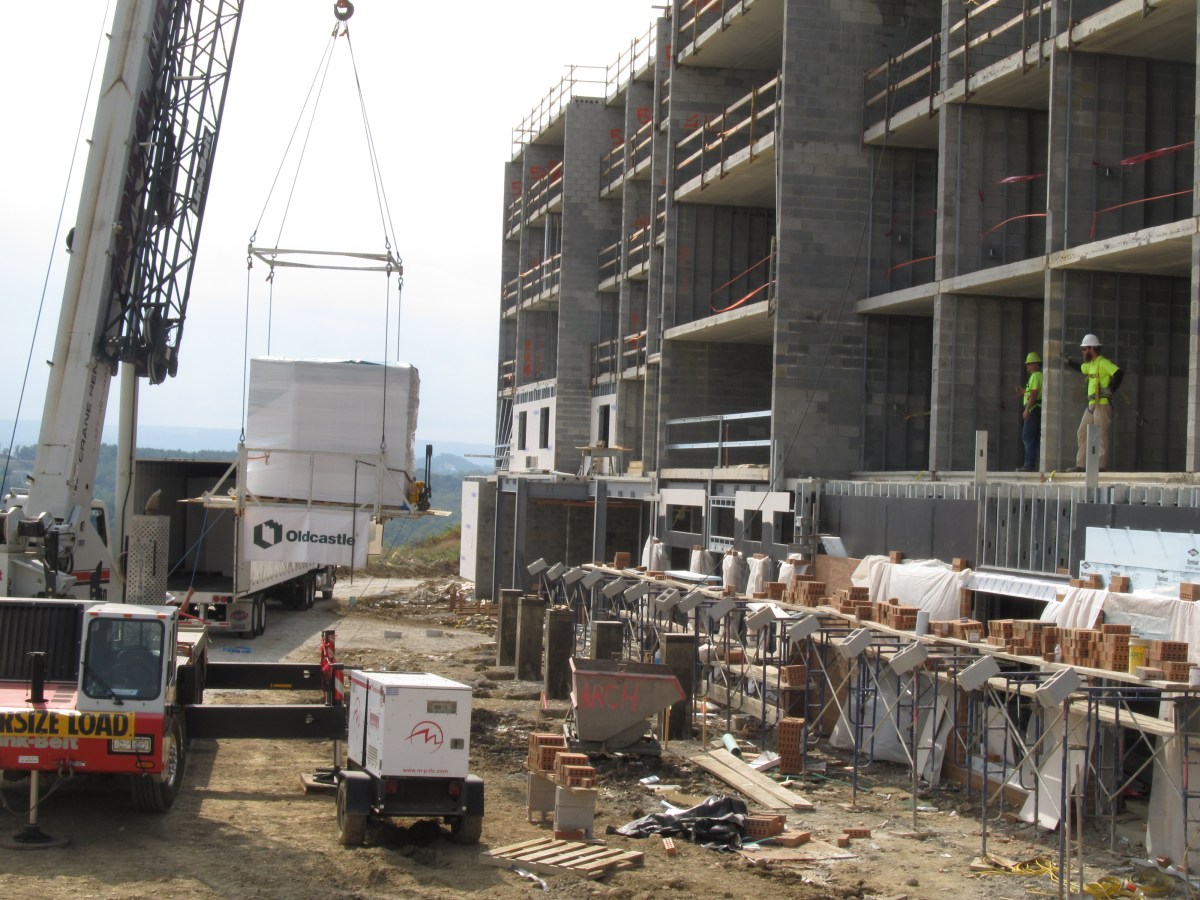
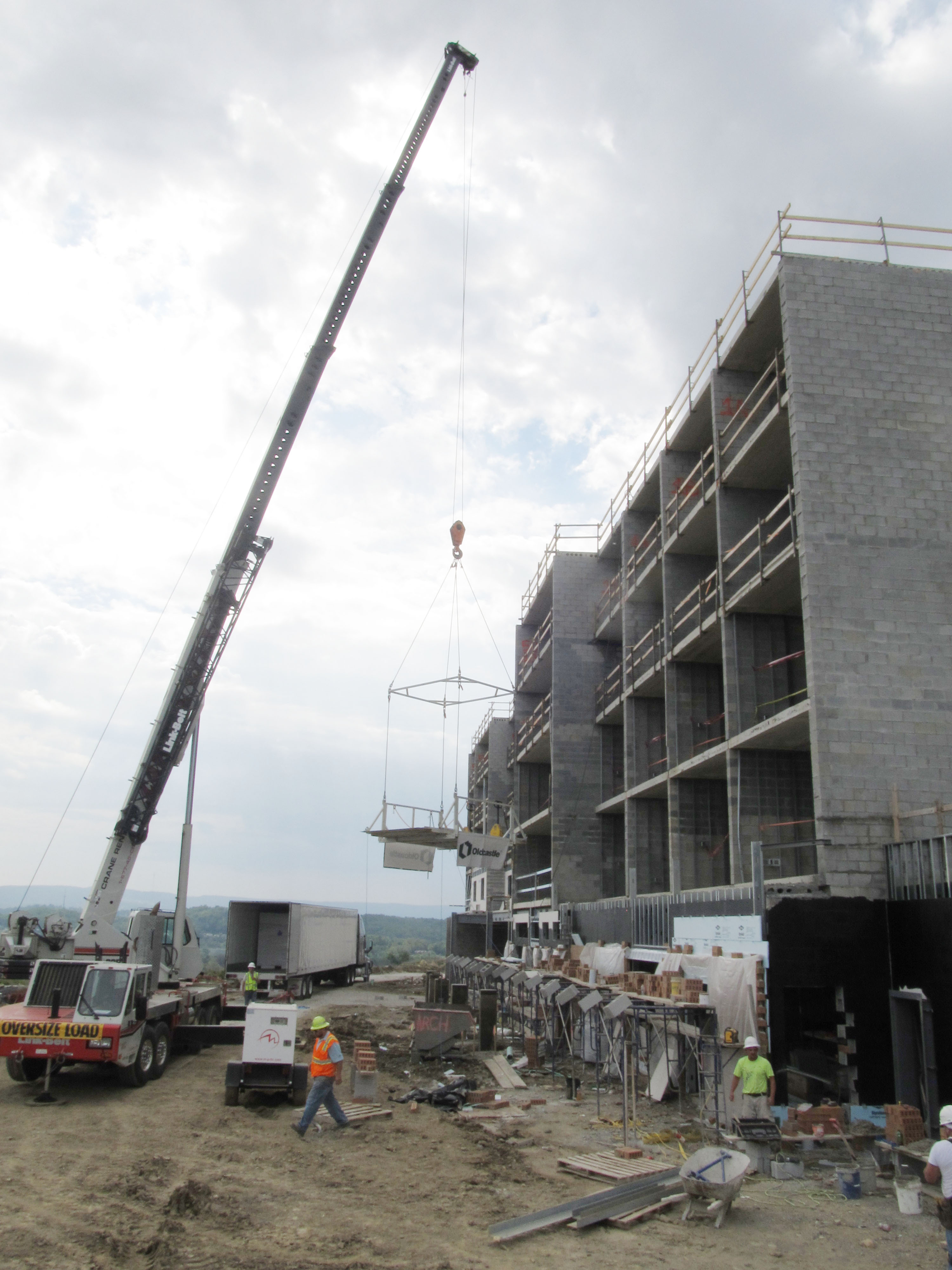
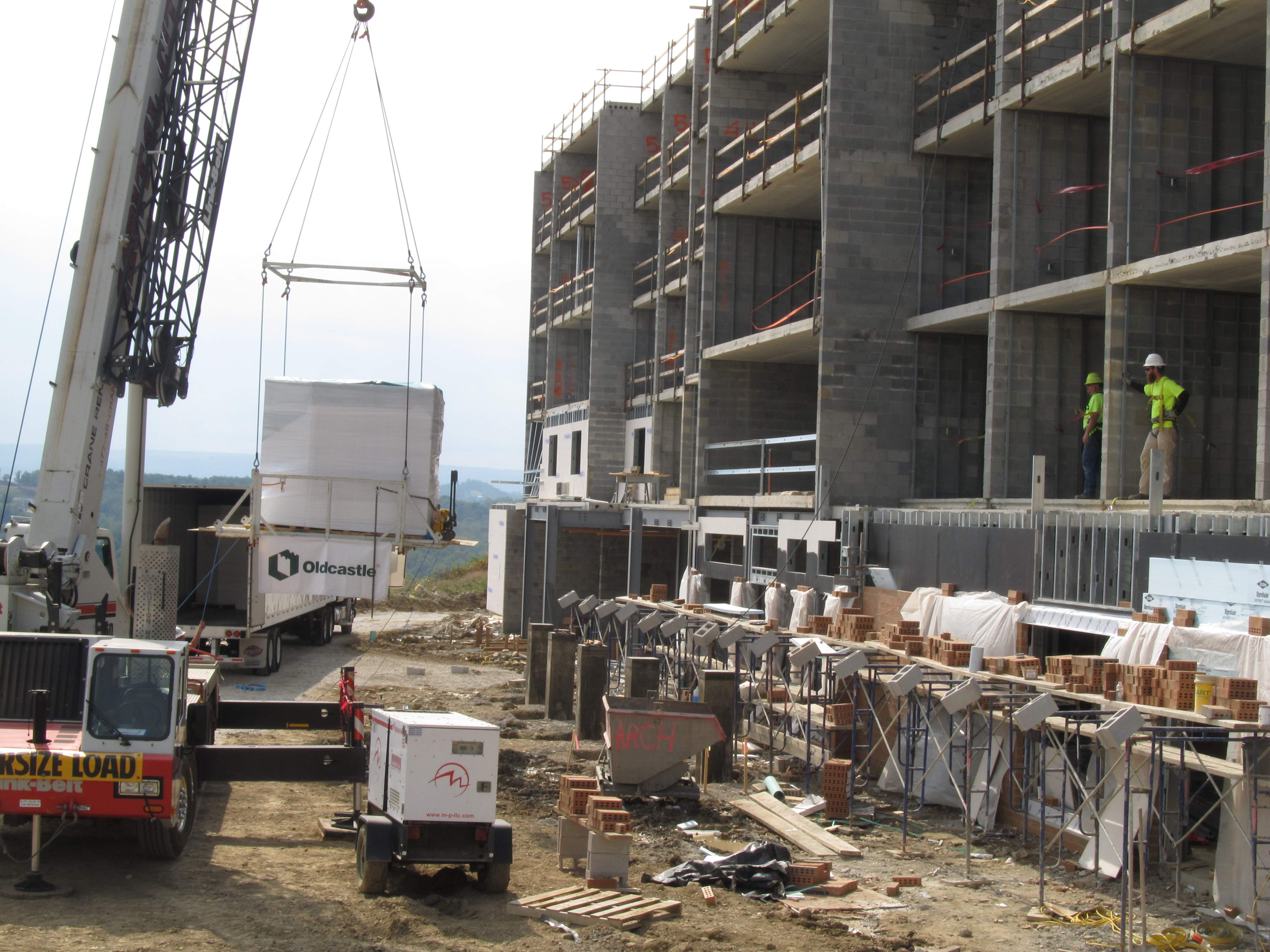
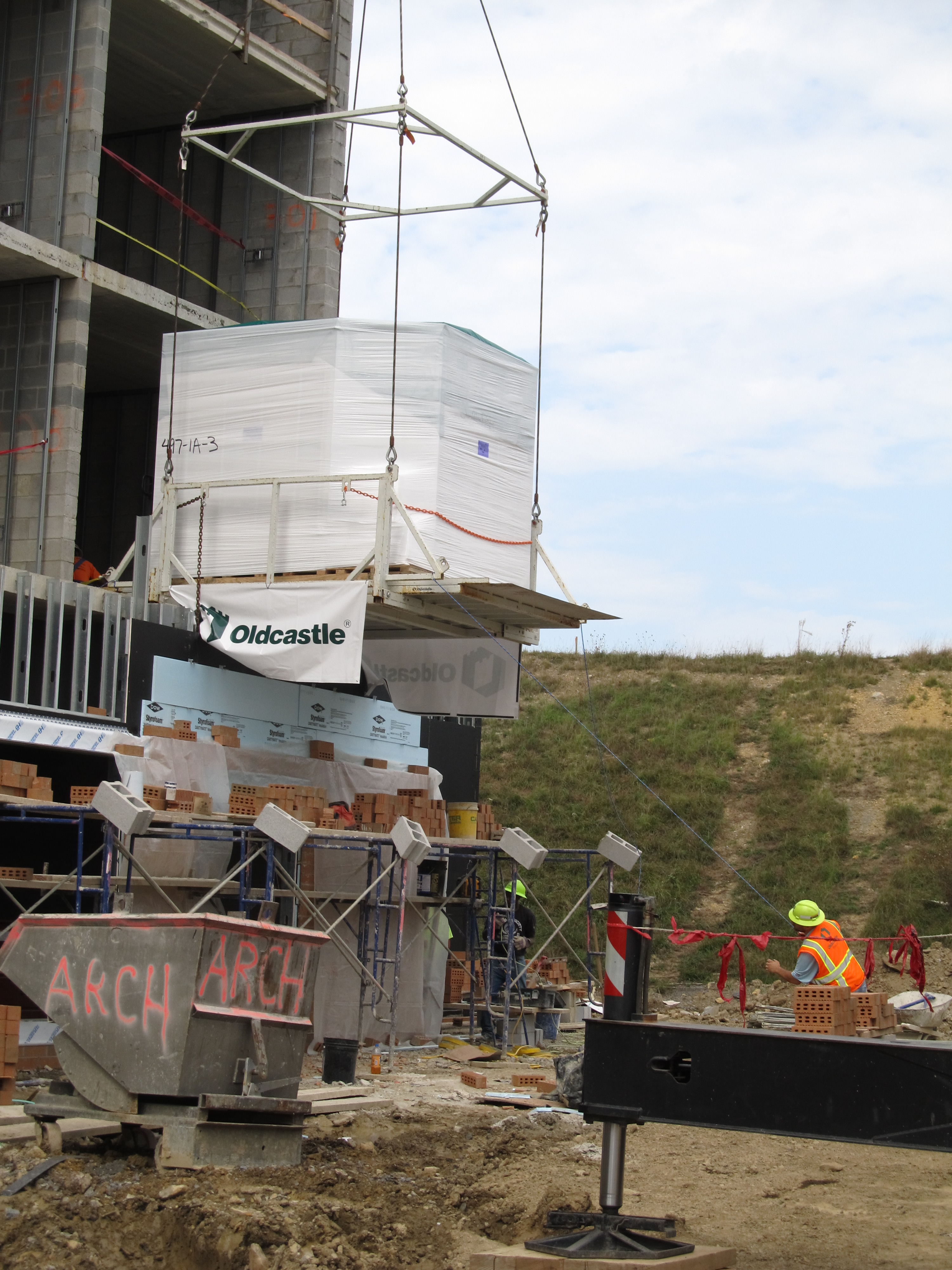
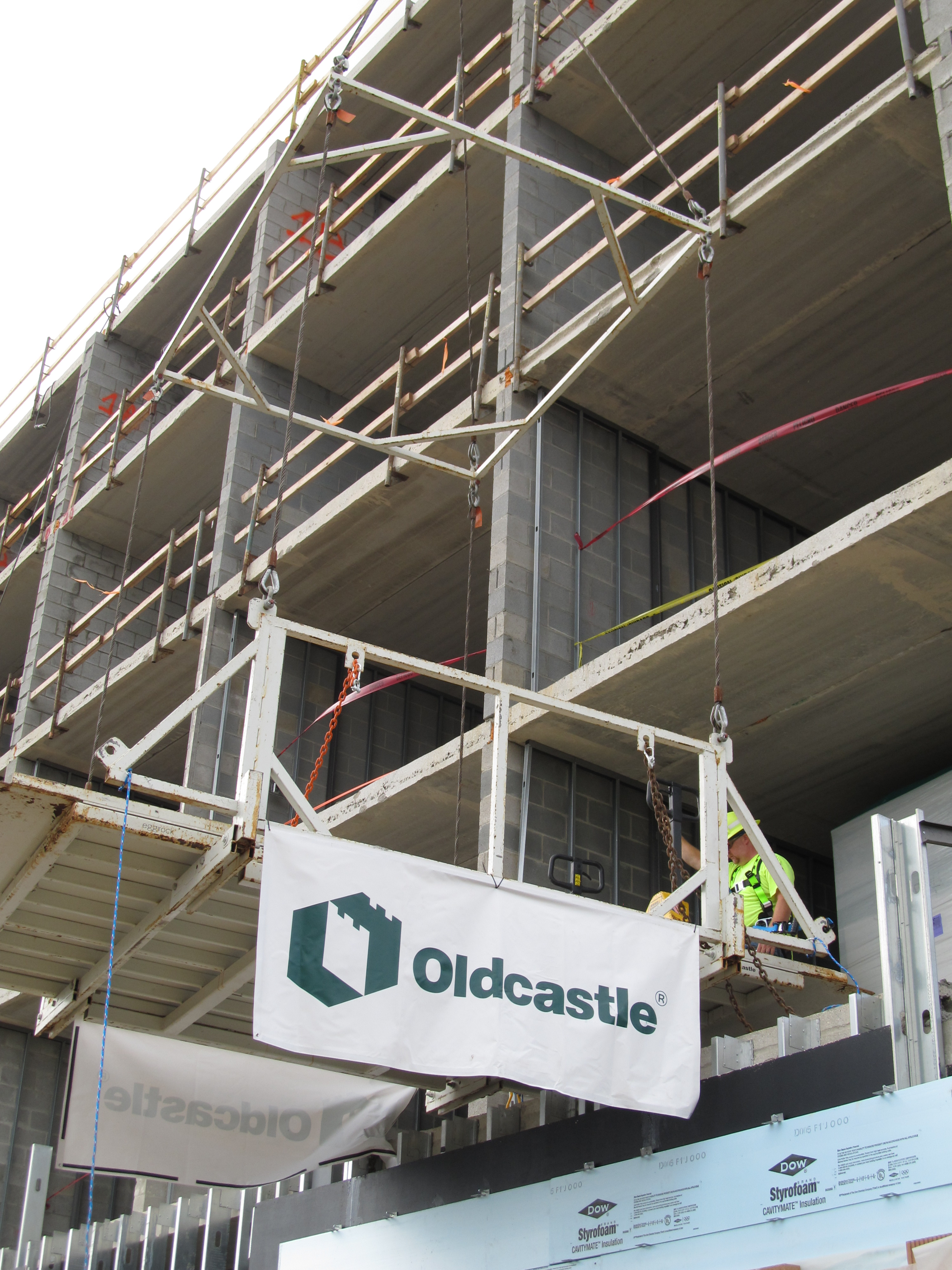
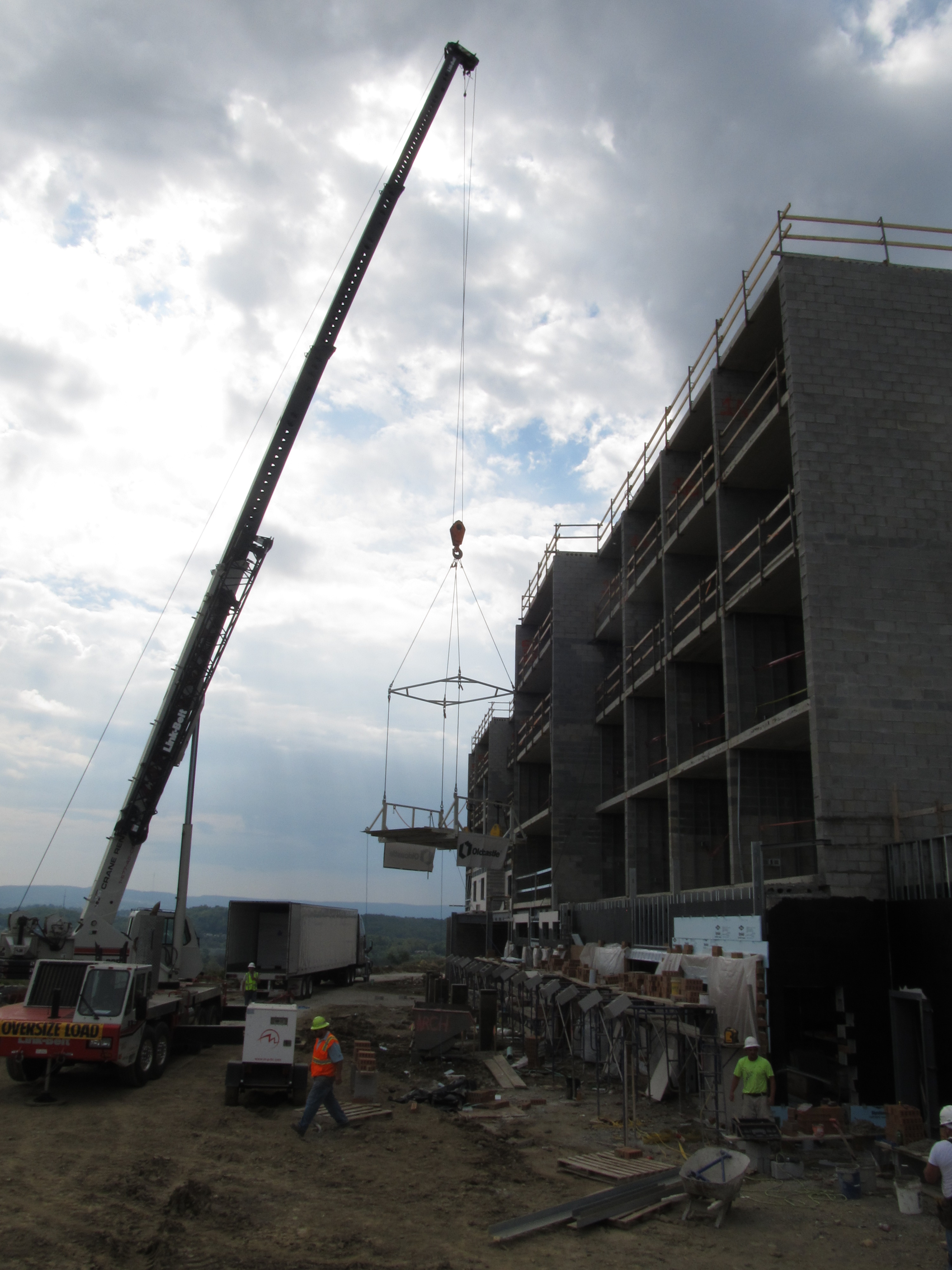
They left Florida last Friday and drove through the weekend. They came to Morgantown packaged in white, ready to be lifted into the sky, and set into place. The Pods are here! Oldcastle’s orchestration of fixtures, finishes, exact stud sizes, precise cuts and factory finesse is finally within the arms of our building. The final leg of the trip is delivering them from the semi bed to each room. It starts with a crane, a big boom, and the empty cage you see floating below.

Oldcastle Morgantown 1

The ‘cage’ has legs which stabilize it to receive each Pod.

Oldcastle Morgantown 2

Oldcastle Morgantown 7

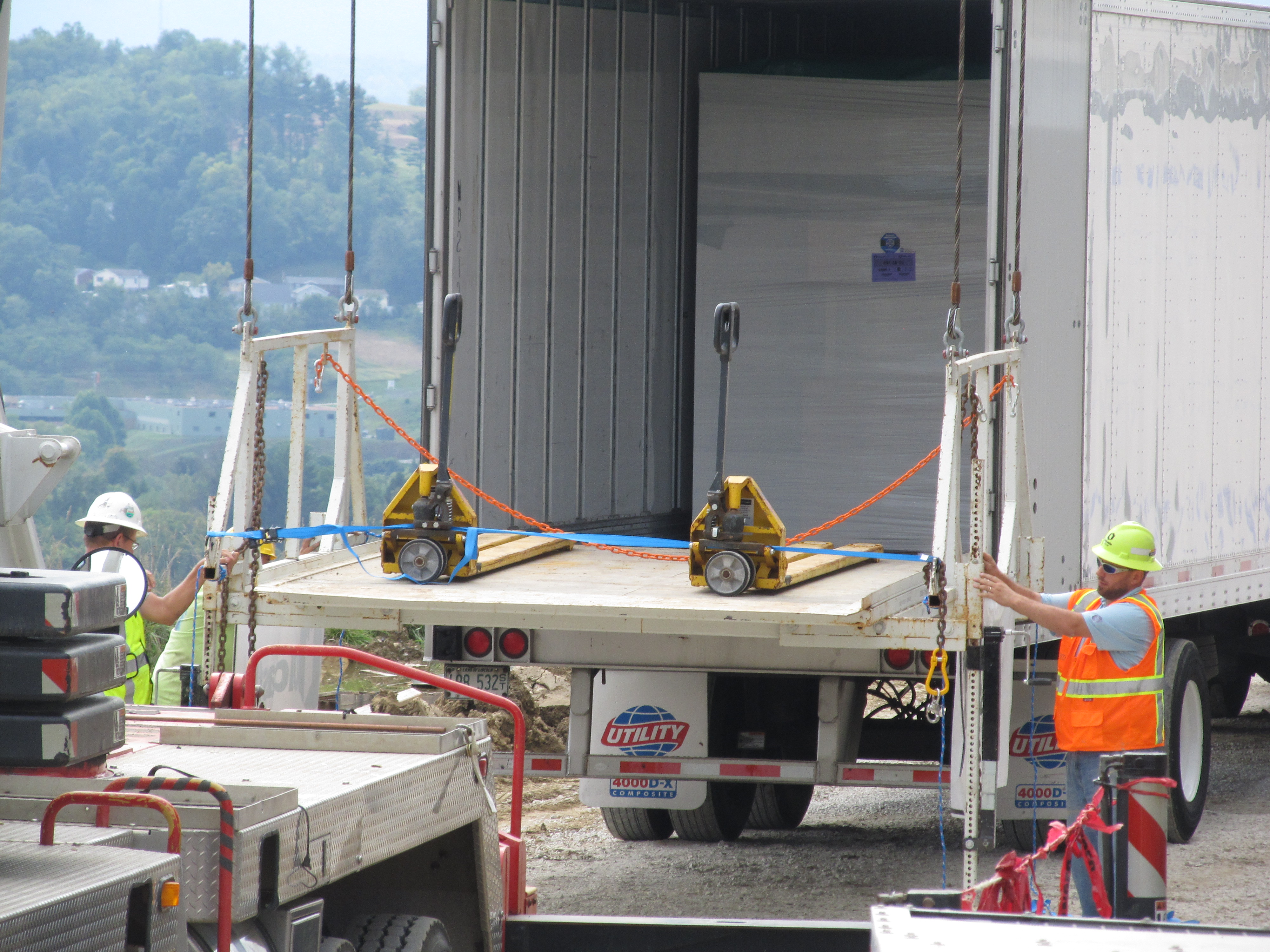
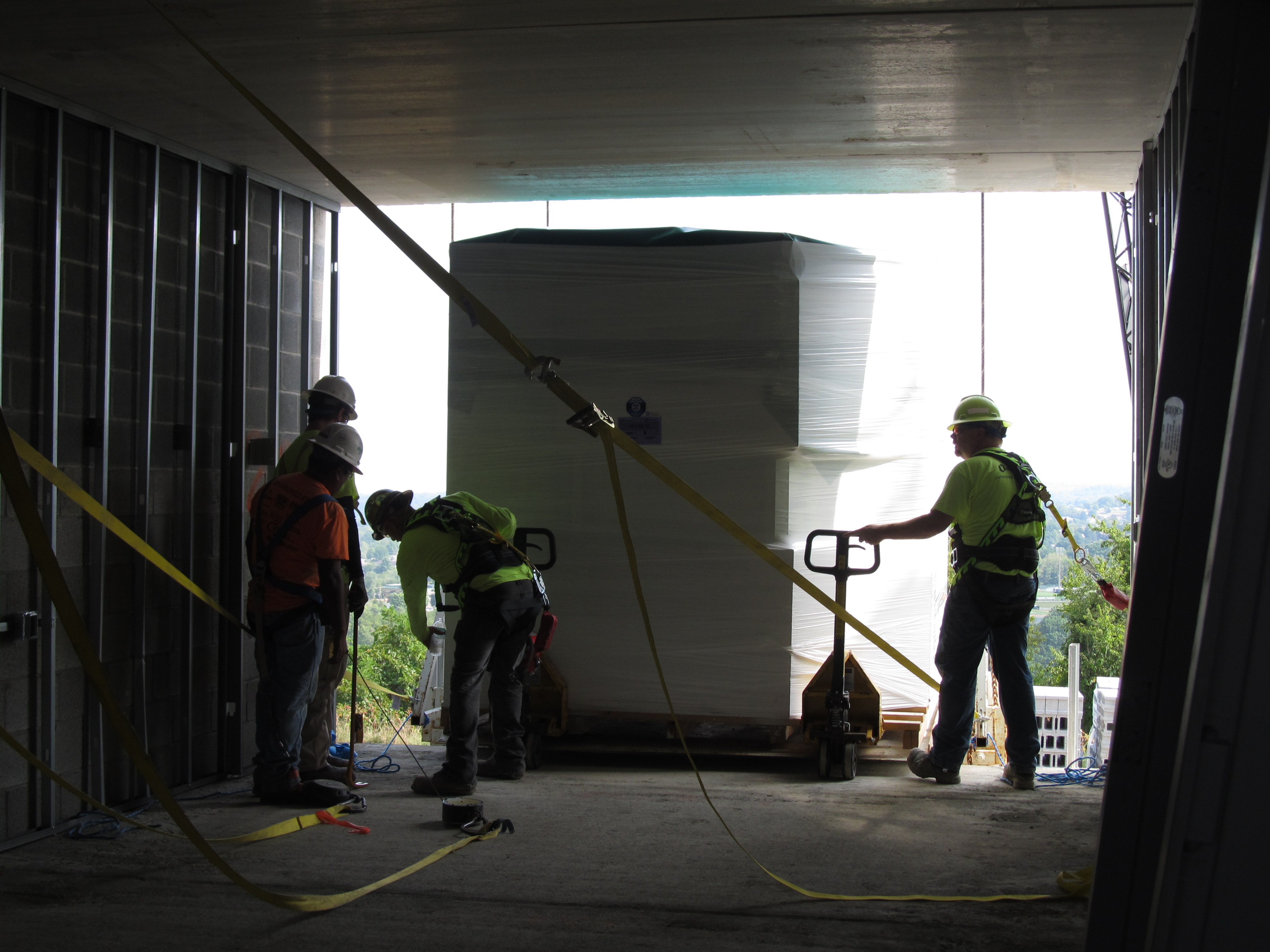
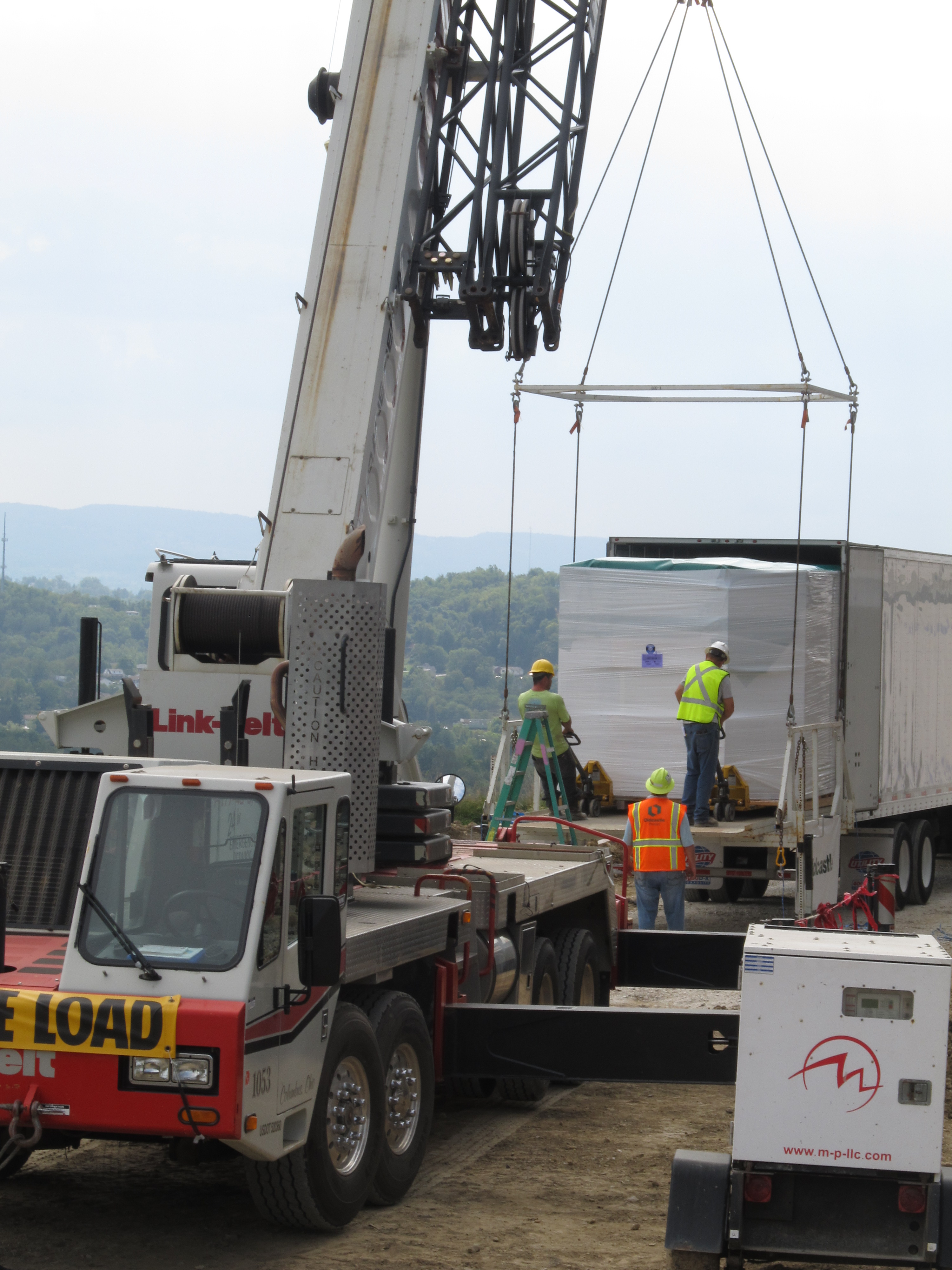
Over-sized pallet jacks ride the lift every trip and are used to pull the Pod from the truck, and then into the building. The crane rotates the lift cage for this to work.

Oldcastle Morgantown 3

The pods are loaded into the truck with precision, of course, but loaded so that they may be taken into each room in the exact direction that they will remain once plumbed. There is little room for error, as you can see in the 7″ of spare room between the Pod sides and the truck. The same goes for the coordinated place they will reside, as seen in the Pod template on a precast floor below.

Prepping for the Pod

Oldcastle Morgantown 4

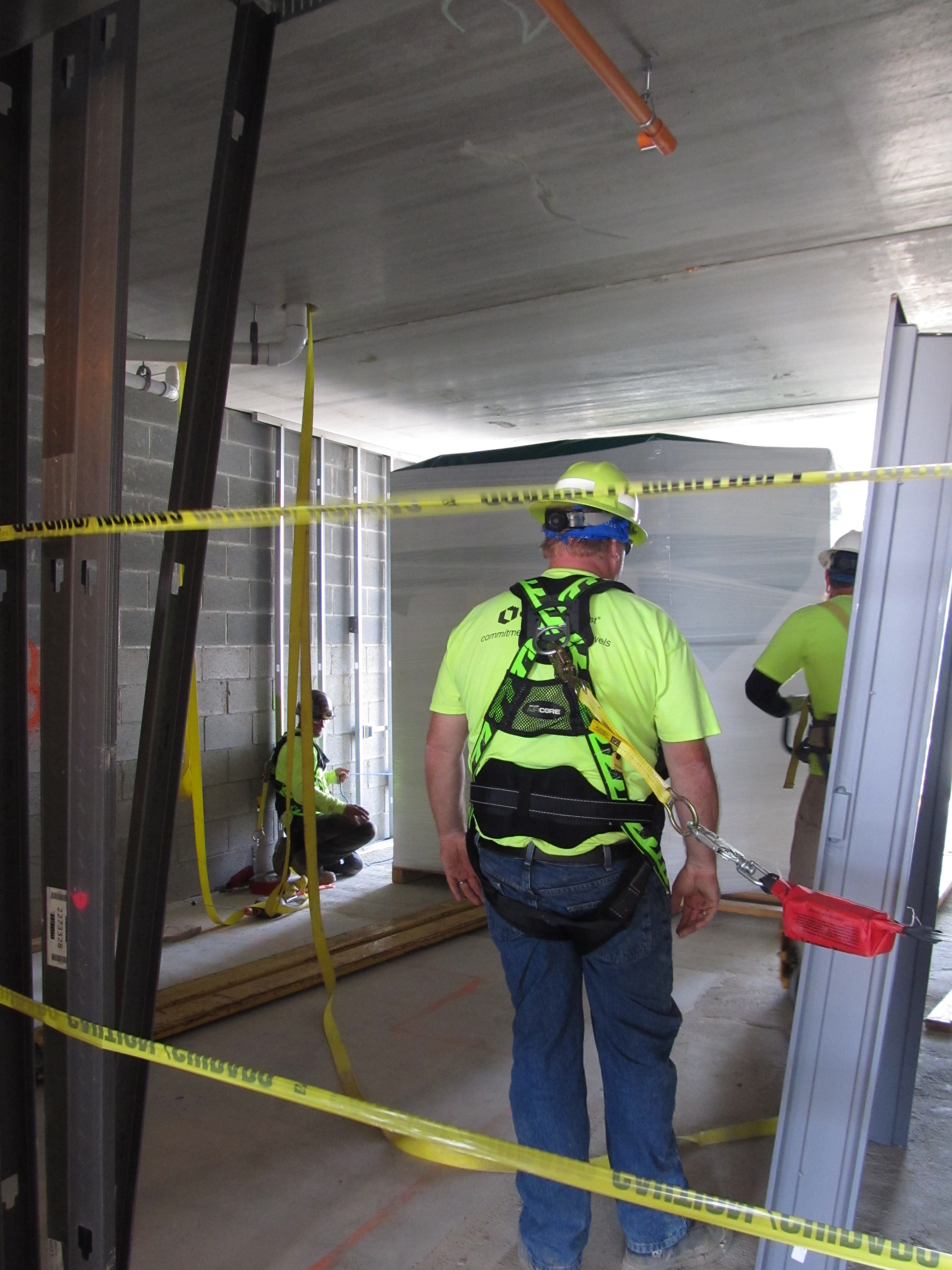
The cage to floor connection has been considered and coordinated prior to the arrival of the Pods.

Oldcastle Morgantown 5

A seamless team of two men roll the POD into the building.

Oldcastle Morgantown 7

Oldcastle Morgantown 8

The pallet jacks are slid alongside of the Pod once set in place, and take the ride to get the next bathroom.

Oldcastle Morgantown 6

Prefab POD Manufacturer:  Oldcastle Modular

Contractor: Waller Corporation

Architect: Mills Group

Categories
Architecture

Prepping for PODS at the Morgantown Marriott

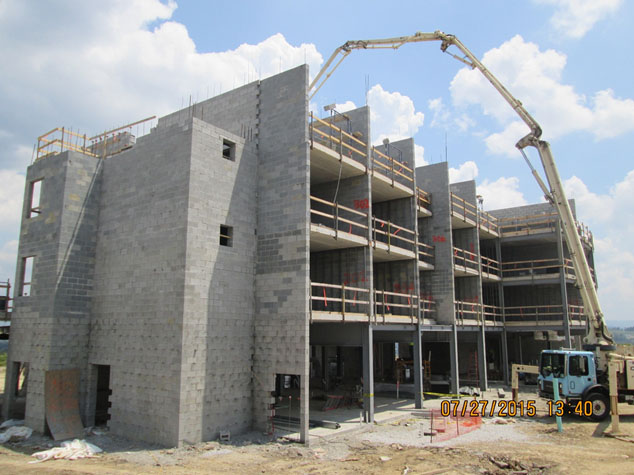
Masonry at Marriott

Last week I visited Orlando to view the Morgantown Courtyard by Marriott bathroom pods, fresh off the line. The facility of Oldcastle / Eggrock was spectacular. What impressed me was the level of engineering, waste evaluation, and labor considerations in every decision. The GC and I met with our Marriott representative to evaluate the finish product of our POD which was, unsurprisingly, near perfect.
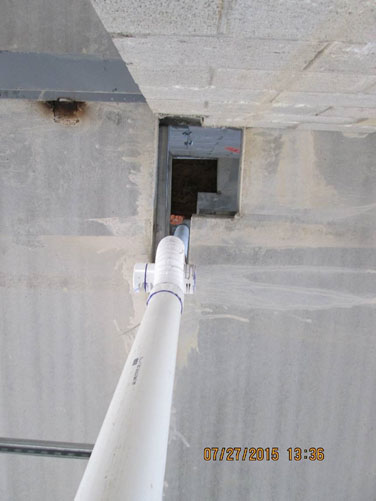
Shaft Cutout

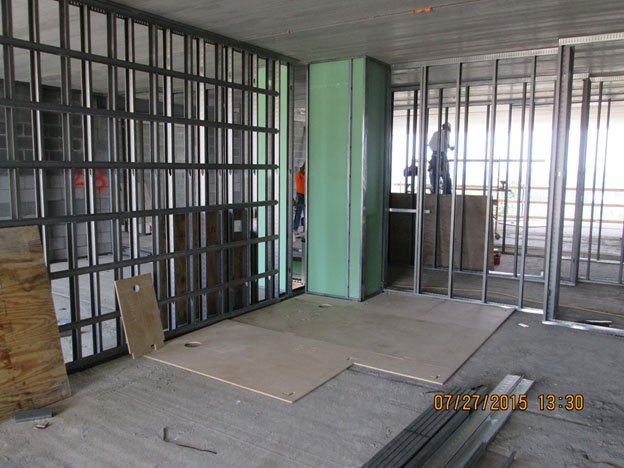
What you see in the picture above is the bathroom shaft without shaft walls. Plumbing and HVAC equipment fits within this L-shaped opening. The oddly shaped opening had to be coordinated with all of the design trades, the concrete floor fabricators, and of course, the bathroom POD. It’s been quite an effort and seeing the built product of what has been on a computer screen for so long has been the most rewarding of the entire process of creating this hotel.

Prepping for the Pod

Here you see the shaft in the center, and the template of the pod on the ground so that the concrete can be properly core drilled to receive the bathroom. In a few weeks I’ll share how these PODS are set in place after their journey from Florida.

Photos are by the General Contractor, Waller Corporation.

Categories
Environmental

Want to use less? Make a list.

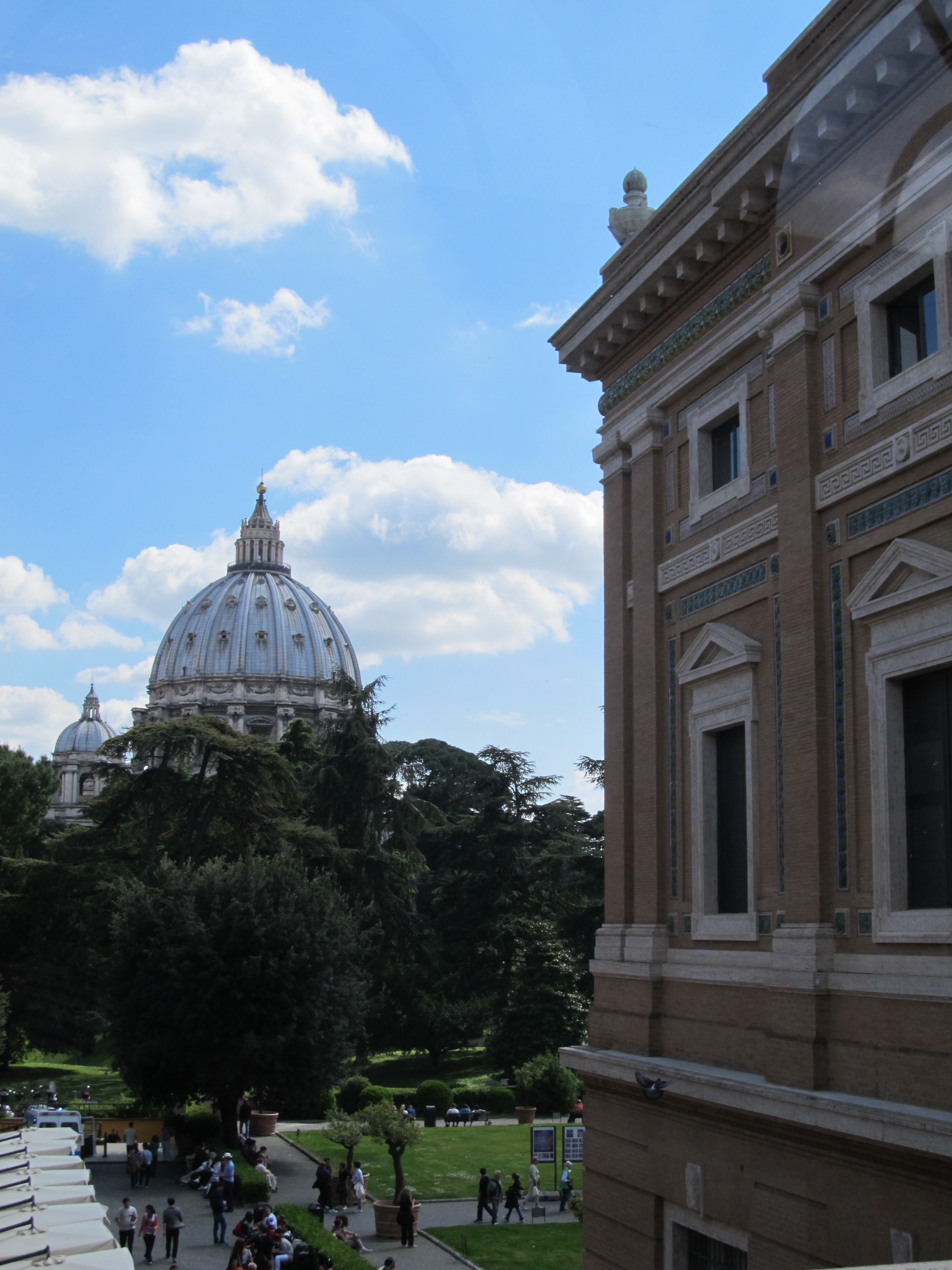
Vatican, Rome

School started again last week. That means that Morgantown is now impassible with the traffic, and I find myself going down to Fairmont State University every Thursday for class. I love going to school and was so glad for it to start up again.

Last semester I read Tom Bender and his piece on Becoming Slaves to Energy. In honor of a busy fall, I thought I’d share what I wrote for class last spring.

Tom Bender states: ‘Our consumption of existing goods and services is frequently, for all practical purposes, compulsory.’ This caused me to evaluate what I buy, what I get rid of each week, and what I need.

I made a list of where money is spent each week. The mortgage, restaurants, and travel expenses are costly, but utility bills and grocery items are where money is spent most often. Being aware of electric and water use allows me to cut back or be conscious of how I might conserve by taking shorter showers or line-drying the laundry. Most of my grocery items are unprocessed food, except for the pasta and cheese which I could make. I spend more money at the grocery on expensive items because a $4.50 box of cereal is the same price as a coffee shop muffin. I’ll be inclined to eat at home if I buy things I enjoy. My typical purchases have become compulsive.

The amount of recyclable glass and paper products I place on the curb has been cut down as I filter tap water, refill growlers, bought a soda machine, and make my own bread now. Making cheese, having a local milk source and not eating refined cereal could help more. During the summer I am able to have less recyclables because of the produce available through a farmer’s market and personal gardening. I often bring my own reusable containers and enjoy when I have the option to buy items per the pound. Many unrefined products such as apple cores and broccoli stems are great compost.

The amount of waste I produce is related to how busy I am and what type of prepared food I consume. Last week our class discussed money buying happiness and I talked about the importance of free time for me. Vacation days are more important to me than salary increases at this point in my life. I realized I could do more with my time and less with money when I was laid off part-time in 2008. When the layoff happened I was able to move from an apartment alone in with another person so we could share the expenses. I became active in an environmental book club, and began studying for the architectural exams. I had time to grow a productive garden and cook healthier meals. The time spent tending the garden taught me how much I enjoyed working in the dirt and how rewarding the labor was physically and mentally.
Gardens Online Photo

Categories
Poetry Travel

Montezuma’s Castle

Arizona Hiking

montezumas-castle-close-lo-res

Montezuma’s Castle

.
Montezuma’s Castle

sits too tall to climb without ladders

pale white adobes, pressed

together with women palms

centuries ago

since then, ancient sycamores

grow in the streambeds.

.

The next day, we closed in on the South Rim

the north face of Humphreys began to fade

to a mere backdrop

left to stand with common tourists in the

amazement of nature

over the erosion of another natural wonder.

 ~

Photo of Montezuma’s Castle from A Year on the Road

Categories
Poetry Travel

Hiking in Sedona, AZ 2012

Sedona AZ

Open Sedona
.

Sun iron details

around gated entrances

open Sedona.

.

A tall ponderosa Pin forest

along the drive of oak creek canyon falls

music beats through the intimate canyon river

.

From where we lodged we walked

around bell rock and the courthouse

with long shadows stepping on

hollow rock sounds

around the vortex.

.

The agave blooms life size

lily pad blossoms

held skyward and toward

the simple and very significant structure

The Chapel of the Holy Cross

we see from a climb up

Cathedral Rock.

.

Psychedelic colors of the desert blend

between sky blue, white purple, green

red-pink and lean down to the

Verde Valley, lush tees around Oak Creek

where small black birds open up a bright white

wing span.

~

Sedona AZ

Categories
Poetry Travel

Las Vegas to Laughlin 2015

IMG_0632

Dressing up and dressing off

.

In Vegas we stayed at a castle

a screaming floor full of ‘winners’

they’d made it here

landed in a bleak desert

from the sky or over dry land.

.

We’ve projected beyond

the desert people camps

the lonely fifty mile road

through a reservation

to a glass U walk suspended

over a natural wonder.

.

But most people stay

in Vegas, if they visit Nevada

the ‘on’ switch turns at 8pm.

Quiet malls become clubs with

long lines and the noise of the street

belongs inside by night.

.

Peace may only rest in the cliff cracks

of Zion two hundred miles east

or along the Colorado still running in Laughlin.

The Colorado