Categories
Architecture

Building Outlines

Buildings that have strong outlines remind me of children’s drawings. The dominant lines represent a true sense of what makes a shelter. It is an honest expression that takes hidden finesse to build.

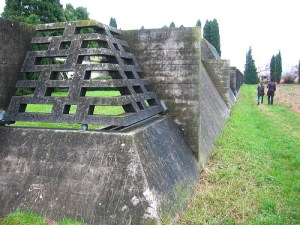
Carlo Scarpa’s work became a strong inspiration to me when I visited the Brion Cemetery in Italy.

Brion Cemetery Italy

Brion Cemetery

carlo scarpa

cara ruppert

~

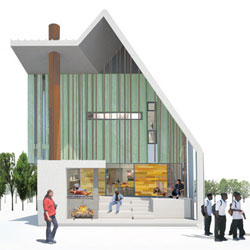
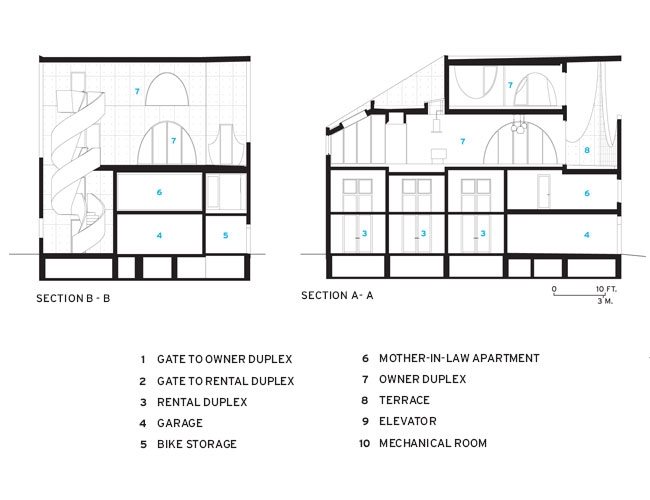
Scapra & Pugh’s ‘Make It Right Duplex’ Housing project in New Orleans

Lawrence Scarpa

.

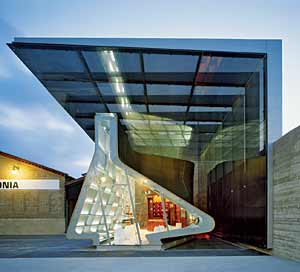
Zaha Hadid and her wine bottle section for a shop and tasting room at the Lopez de Heredia Winery in Spain.

photo by Roland Halbe  (Architecture Record)

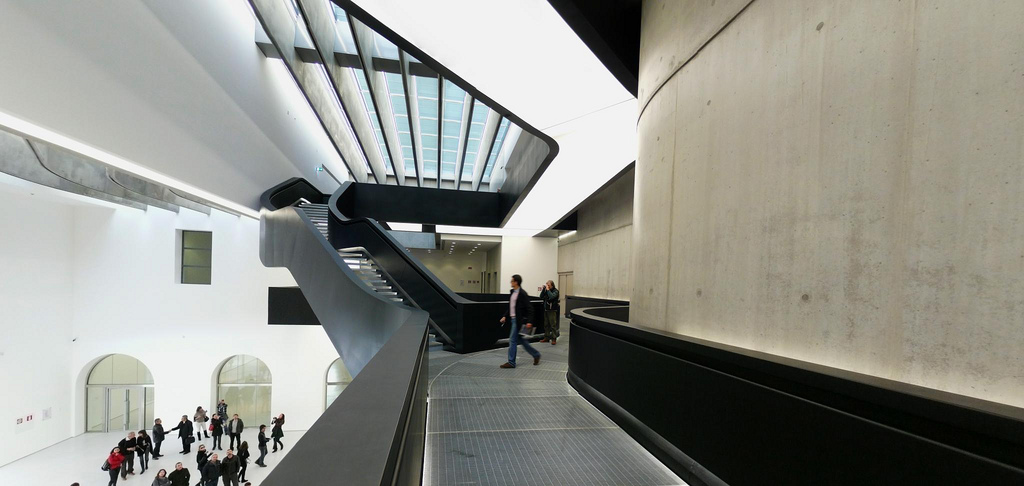
Hadid’s Maxxi Museum

~below~

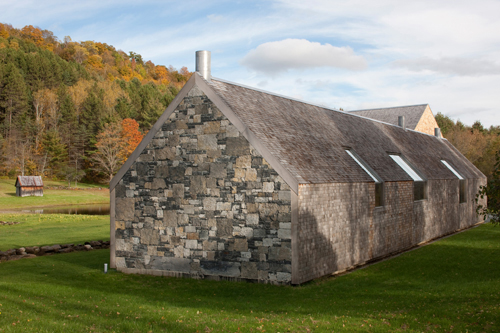
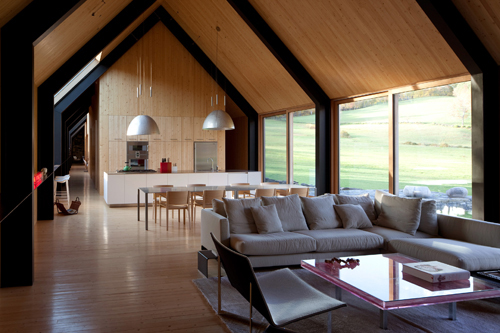
Rick Joy’s Woodstock Farm in Vermont

Categories
Architecture Building Sustainably Environmental

Architecture Layering

A few buildings and spaces that have caught my attention lately have had one thing in common -an integration of planes and material, held off or touching one another, laced over or glossed expressing a mirrored place, unraveling as one walks through a place. The architecture is cognoscente of being touched and lived-in and I am fascinated by it! Enjoy~

Navy Federal Credit Union – Rheinzink

supergres

Ceramiche Supergres has won the prestigious ECOHITECH 2009 AWARD in the “Hi-tech eco-virtuous products” category for its latest innovative porcelain stoneware collection, A.I.R. (Architecture in Respect), manufactured using a high percentage of post-consumer recycled material (CRT glass) derived from the recovery of the cathode ray tubes of obsolete TV sets and PC monitors.    – Ceramic Industries

JetsonGreenLibertyTile

Liberty Tiles post industrial recycled content glass tiles that look like sun streaked stain glass through a cathedral window on a sunny day. – Jetson Green

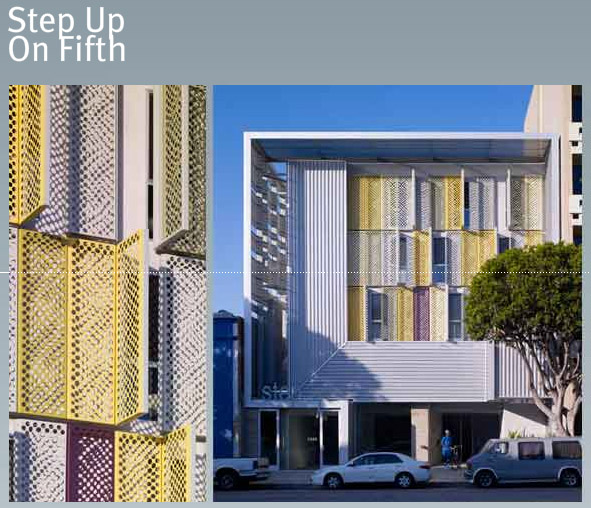
Step Up on 5th in Santa Monica, CA by Pugh & Scarpa

These screens not only play with color, but they dapple light to amuse the passerby and serve as an exterior screen, a passive house strategy, that blocks the sunlight from a window on the exterior side of the glazing. -Architecture Record

pugh_scarpa_aia_architecture_firm_award_10_3

Pugh + Scarpa have been on my favorite architect list since I was introduced to their work surrounding the rebuilding of New Orleans. Their Make-It-Right duplex has the true lines of a house that I appreciate. Their houses look like houses, and when they need to rise above the ground they do so with a barely noticeable way of growing.

yankodesign _inspired_interiors 26-May2010-living-TedYarwood 59395_0_4-4049-contemporary-kitchen 392037-Lepere_Looping a closet transformed into a book nook anthropologie_ruffles_skirt_thumb apartment therapy Bahia Palace Heritage sequin trim cowlneck - Winter beige blackliving blog carolyn espley-miller-slimpaley coke bottle chandelier colorboard Corrugated_plathouse davidkaihoi3 davidkaihoi decorpad DonnaKaran__121 eckerman-studios eldorado9 elena mar ricami ellenoneil Ellipse-Sky-Keiko-Manabu-4 Ellipse-Sky-Keiko-Manabu-6 Ellipse-Sky-Keiko-Manabu-7 Ellipse-Sky-Keiko-Manabu-10 emdeeinternational3 glamourai_NuevoEstilo_6 glamourai_TheCoveteur3 Windsor Smith Residence, Los Angeles, CA honeycombshelves INTERIORKITCHEN jeanmichael othoneil leucos ether malcolmjames menossi37 mir officeForDesignArchitecture2 petrucci_clgdetail smith-2-0909-xl timelessTilePittsb TSPJoe-Frances-2011IMG_9195 veltman3

Categories
Architecture Building Sustainably Environmental

Heating your Ohio Home

~ How to efficiently heat your renovated Home ~ 

Five Ideas

1. Geothermal

by The Greenest Dollar

Energy Star reports that a geothermal heating system is the most efficient and environmentally-friendly way to heat your home.

Geothermal literally means “earth heat”. And, to put it bluntly, they’re awesome systems.

 Traditional forced-air systems (like most of us have) use the outside air as a base to heat the house. So, if it’s 10 degrees out the furnace has to heat that 10 degree air up to 70 degrees to make it comfortable inside. This, as you can imagine, takes a lot of energy to do.

A geothermal system, on the other hand, uses the constant, stable temperature of the earth as a base to heat your home. The earth’s temperature stays at a constant temperature, usually 45 degrees to 75 degrees, depending on your latitude. Because the temperature of the earth is much higher than the outside air, it takes a lot less energy to get it to 70 degrees.

The unit works with large coils that are buried in the earth. A liquid, usually a mixture of water and anti-freeze, runs through the tubes. That water (which is the same temperature of the earth) is then run through your home. A compressor extracts the heat from the water, and then raises the temperature to what your thermostat is set at.

The system also works in reverse: in the summer, your geothermal unit can easily cool your home using the earth’s temperature at a fraction of the cost of your air conditioner.

Now, the costs for installing a geothermal heating system are pretty steep. You can bank on spending $7,000 to $15,000 for a complete system.

But, here’s the good news. Depending on your part of the country, the system will pay for itself in 5-8 years and add significant resale value to your home.

Plus, the U.S. Department of Energy reports that geothermal heating systems run at 300%- 600% efficiency on the coldest nights, versus 175%- 250% of air-source heat pumps on cool days.

Many experts claim that a geothermal system in a 1,500 square foot home will heat and cool your home for $1 per day. I don’t know about you, but that’s pretty awesome.

And the best part is that you’re not using any fossil fuels to heat and cool your home.

~

2. Fire Place Heat Exchanger

by Green $ense

A fireplace heat exchanger upgrade or and EPA certified insert which I looked up on E How to try to understand a bit better. The idea is that you can insert a new energy-efficient unit into your existing hearth and allow the heat generated by the fire to help generate heat into your home through a blower door.

Inserts for wood-burning fireplaces improve the safety and efficiency of the unit. An insert is a metal firebox, often with a glass door for visible flames, which fits within the fireplace opening, allowing the smoke to be vented through the existing fireplace chimney.-E How

3. Furnaces

by Lennox

I reviewed gas and electric furnaces, and have based the following on efficiency ratings. ‘A natural gas furnace that operates at 80 percent efficiency–80 percent of the energy used to run the furnace goes into warming the air–will perform better than a gas furnace rated at 70 percent. An electric furnace rated at 90 percent will be closer in cost to a gas furnace rated at 80 percent than one at 90 percent.’ –E How states.

So, the first furnace I looked into, a Lennox SLP98V, is a 98% efficient  gas furnace.

Consumer Reports breaks down a review on the most common brands on their website too here.

Consider also a programmable thermostat that allows you to have heat when you need it most. Not when you aren’t at home, and not when you are under the covers. Places where you have a lot of southern light will be warmer, and tend to need different air conditions than do the shady Northern facing rooms.

4. Heat Pump

I’ve recently been introduced to the Fujitsu Mini-Split heat pump by a friend who uses the system to create a warm room in his super-insulated home. It is a ductless system that runs coils through your walls to a wall or ceiling mounted unit that heats or cools your air for comfort. Though, some people may not like the wall mounted aesthetic.

5. Insulate!

As always, I think it’s best to keep in that warm air with great insulation and to caulk around openings, penetrations and drywall connections.

A few insulation products that I have researched are:  Weka – Wool insulation through Artemis, Ultra Touch Cotton,  Bonded Logic, EcoBatt,  Greensulate by Ecovative Design, Cell Pak Blow in Insulation, Green Fiber Loose Fill Insulation, Icynene Spray Foam formaldehyde-free, and recycled newspaper is used in cellulose blow-in applications such as NuWool, and USA Premium Insulation. Insulation board can provide up to a 7 R value per inch as well!

There you have it.. now develop a  plan to keep warm this winter!

Categories
Architecture

Think Tank Talk

Do you want to be hired as a Think Tank? Hired to Inspire, hired to think about the whole and interconnected world we live and work in?

Architects have varied positions in this world. While some build shelters for the wealthy, others build for world disaster victims. These are a few Think Tank focused firms that have caught my attention lately.

AMO

OMA’s Research counterpart, AMO put together a video on a world using 100% Renewable Energy .

VisionArc

VisionArc is a consultancy run in tandem with Toshiko Mori Architect, the practice founded by Toshiko Mori (pictured) in 1981. Mori also teaches at the Harvard Graduate School of Design and chairs the World Economic Forums Global Agenda Council on Design. – Architect Magazine

.

Fast Co writes about why Firms aren’t so great at Sustainability

This is no secret at the management level of top companies. So why is it that even the best American brands, so clever, innovative, and adaptive in all other aspects of business, aren’t able to come up with smart solutions to the resource problem that the culture of consumption has created? The answer is counterintuitive: Our experience tells us that it is exactly because American companies are so amazingly innovative, entrepreneurial, and intensely competitive that they can’t find ways to deal with the global challenges. Finding sustainable solutions isn’t about discovering new, ever-more disruptive ideas. It requires the opposite, something very un-American: standardization, slowness, and centralization. To most, more ideas are always better. But in this case, the more green solutions we have, the less effective and efficient processes become.

~Full Article Here~

.

The Why Factory,

A think tank headed by MVRDV’s Winy Maas questions a multitude of things to be explored!

Categories
Architecture

Museum Rendering

Two weeks at an Architect’s Desk

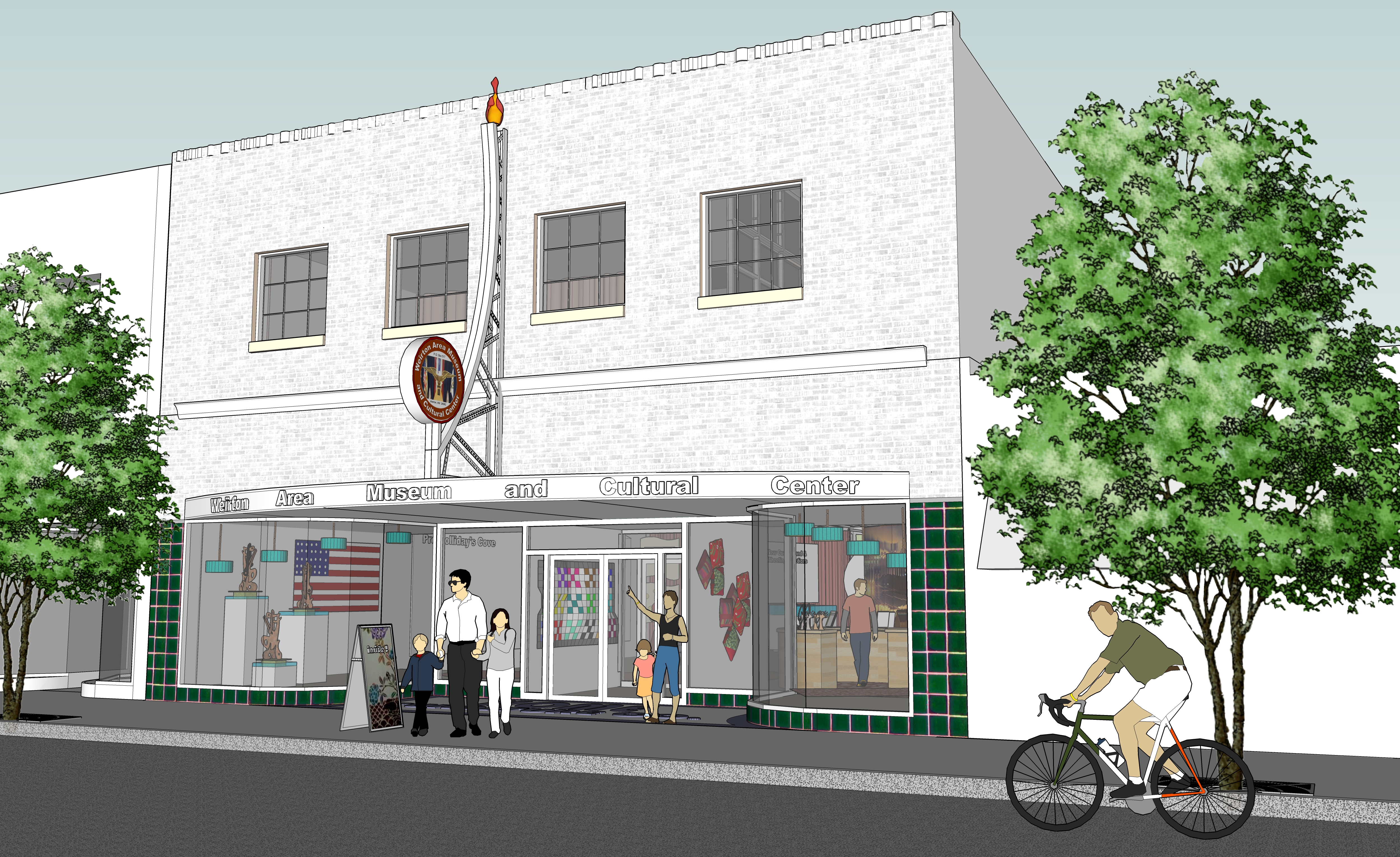
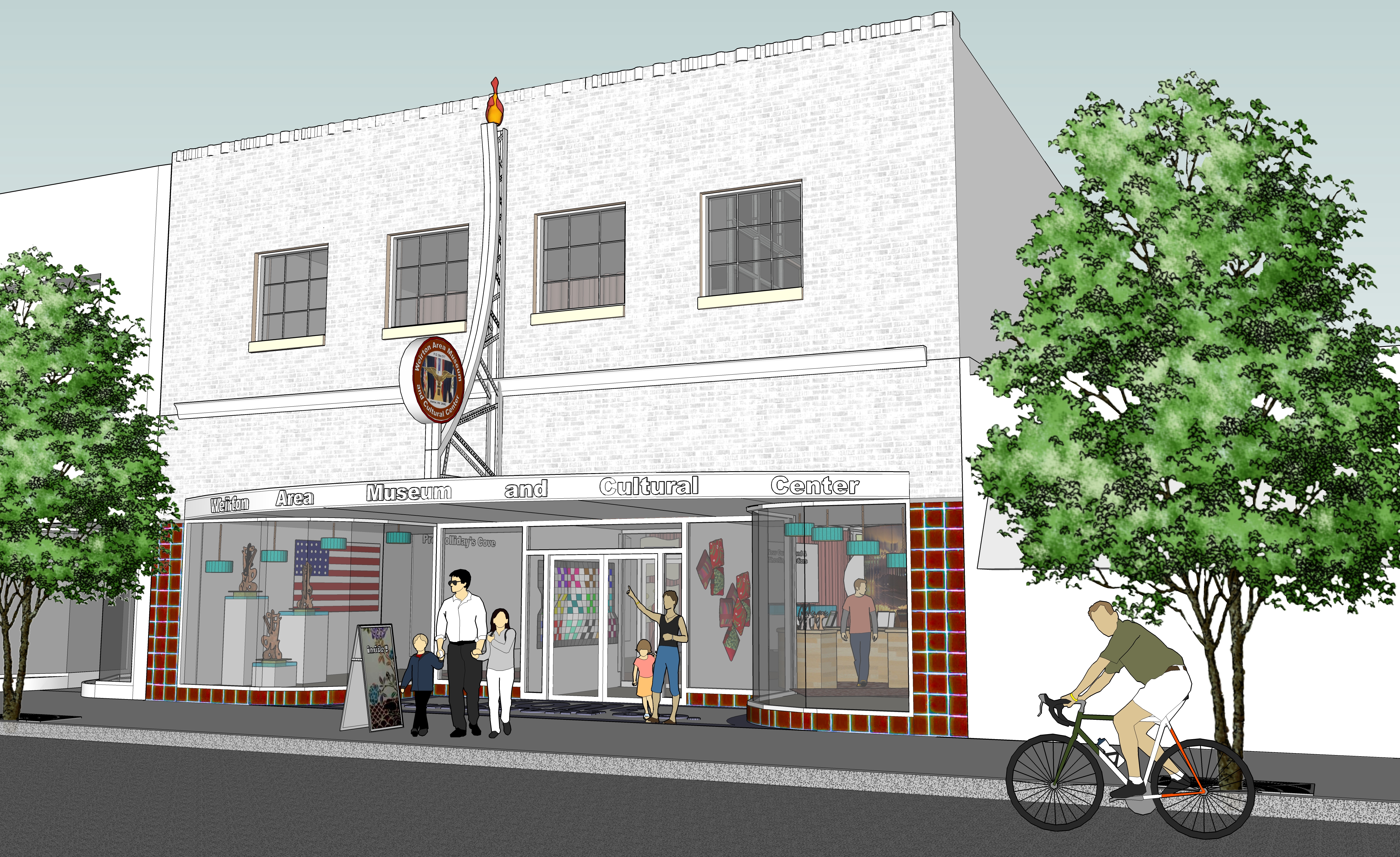
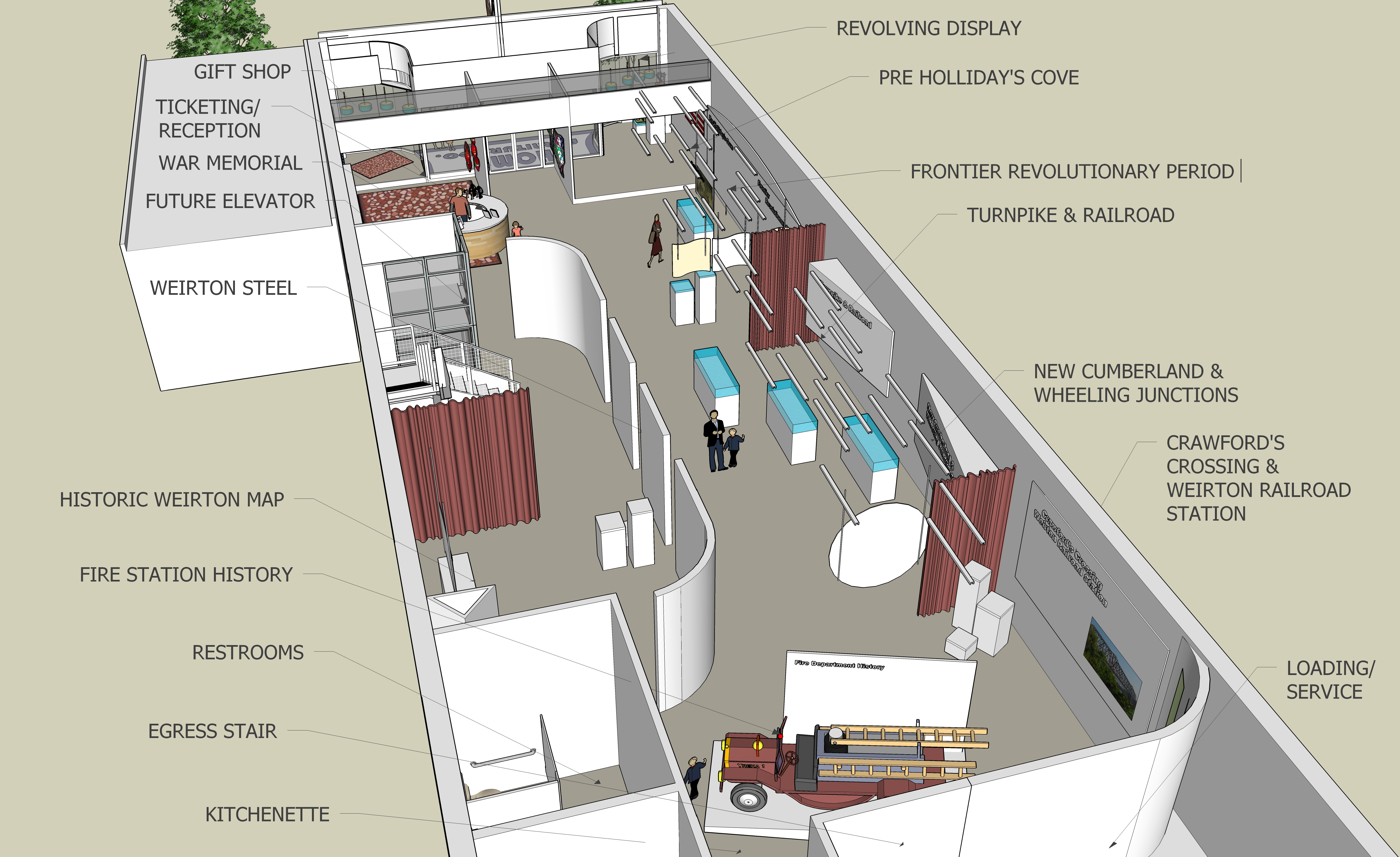
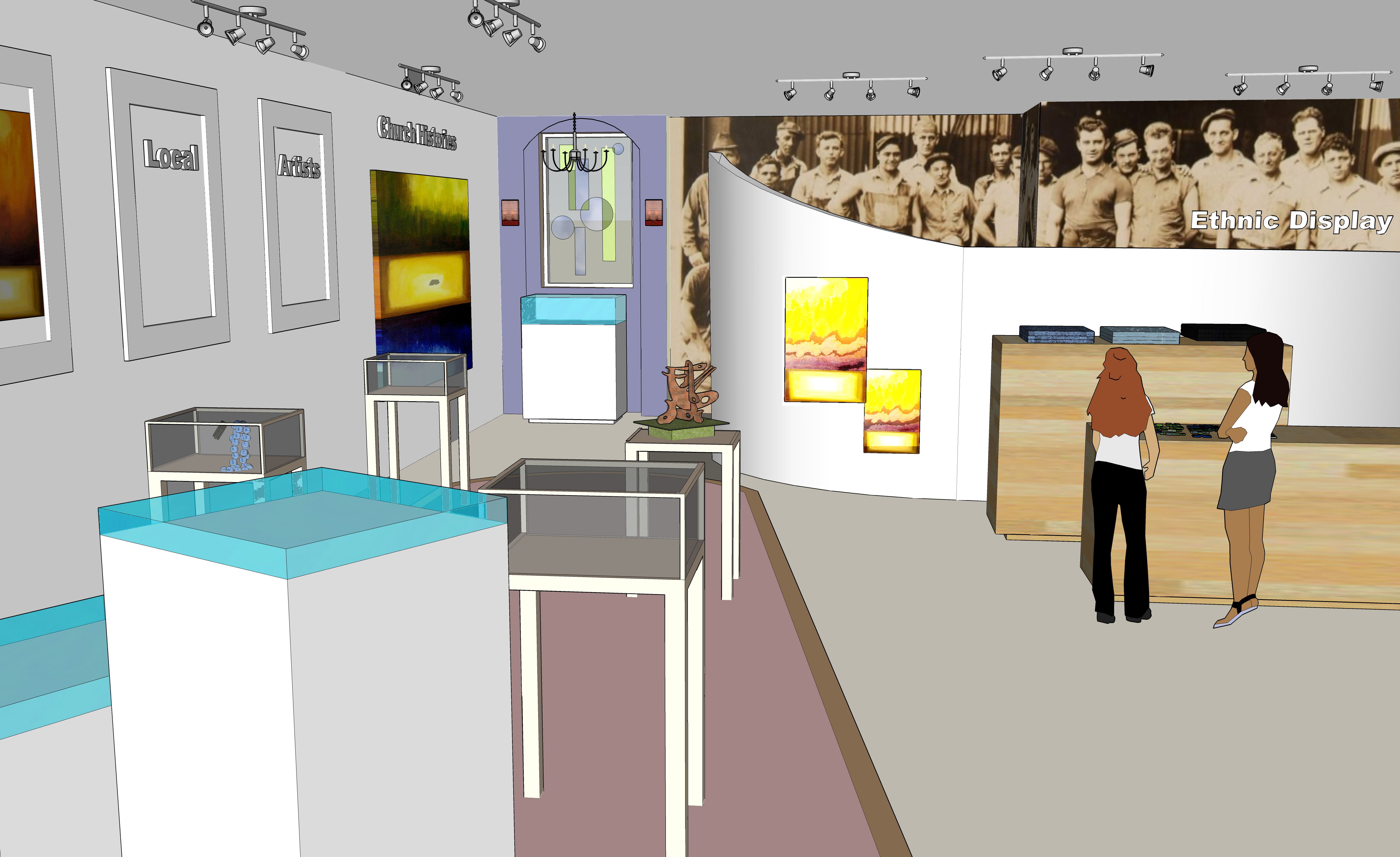
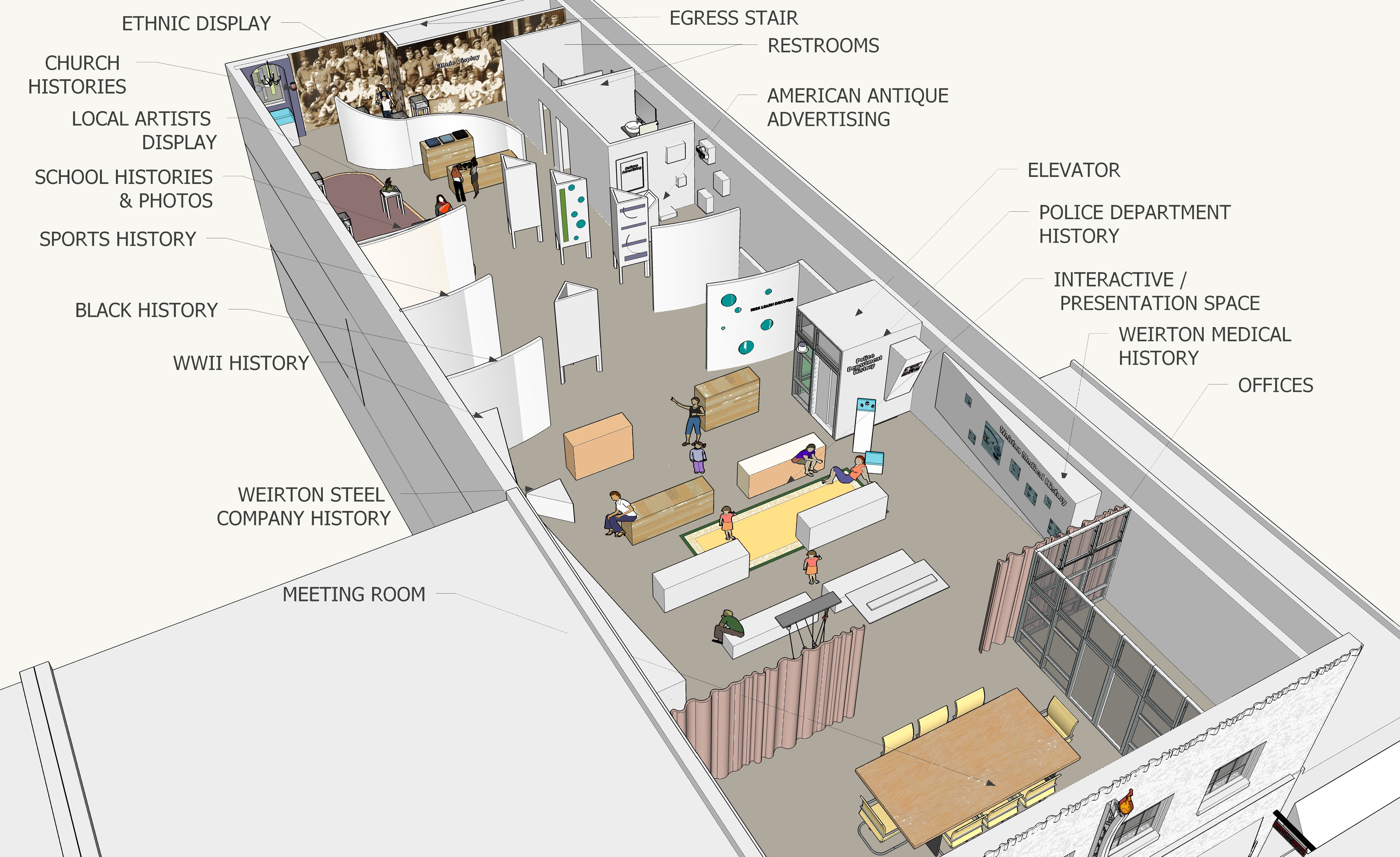
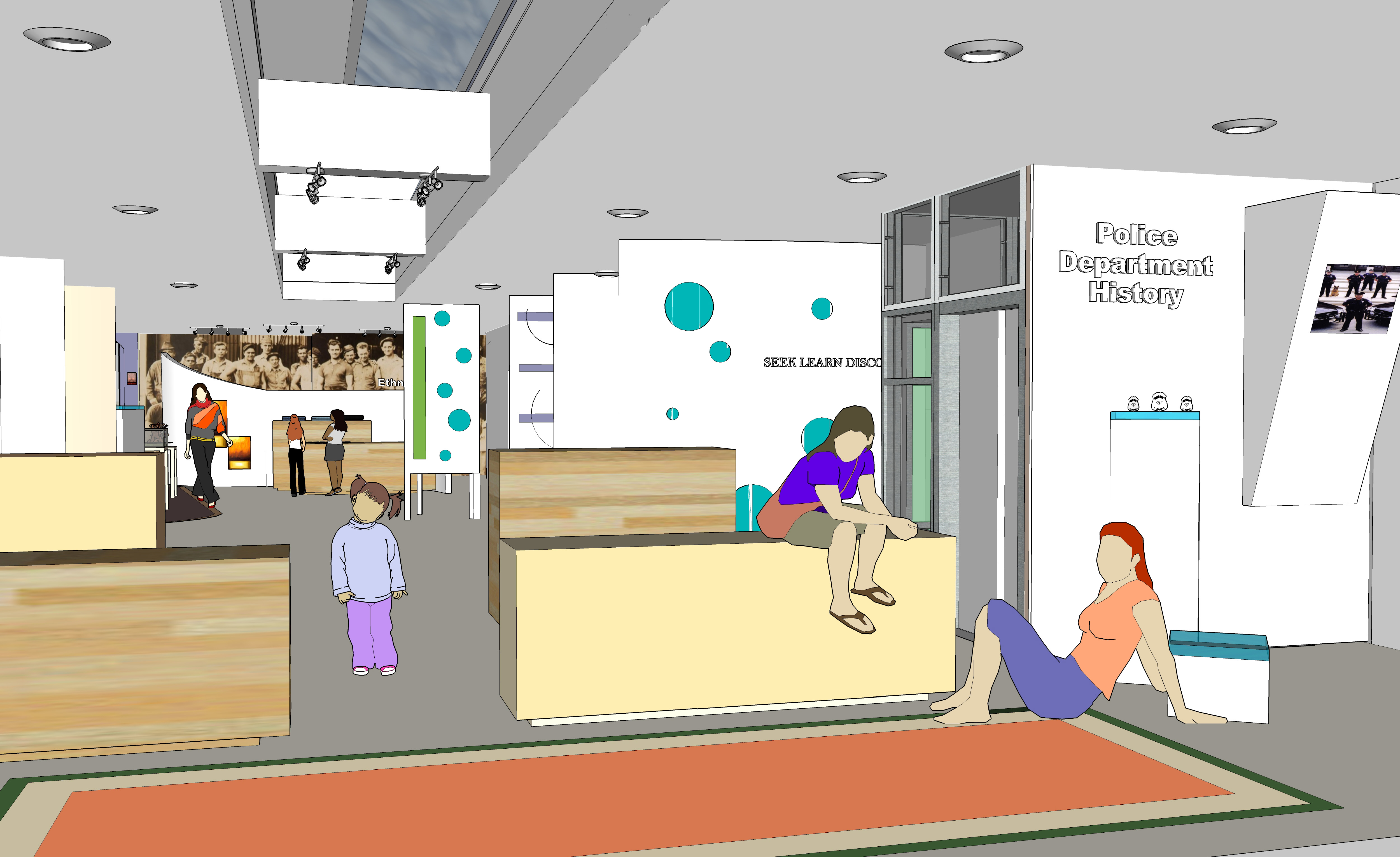
These are a few renderings I did for the Weirton Museum.

Categories
Architecture

At an Architect’s Desk

 7 years or 10,000 hours – the time in which it takes someone to be good at something after lots of practice.

I did the following sketches two years ago during a cold January. So, here is what is at the desk of an architect ~All in a Month ~

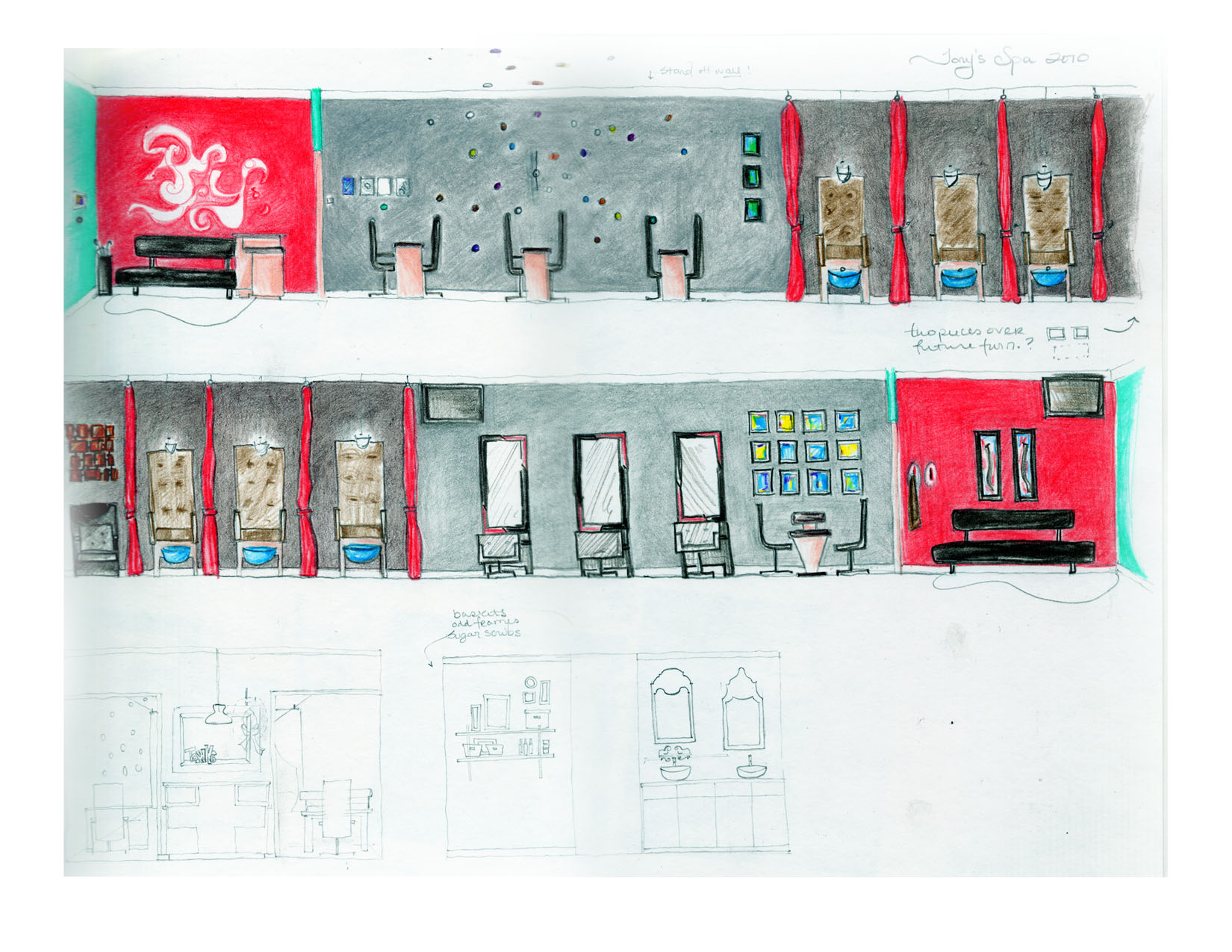
I drew the above space for Tony’s Spa in Triadelphia WV. These interior elevations were to help dictate art and the placement of it. I need to make it to Tony’s with a camera in tow to take pictures of the final product.

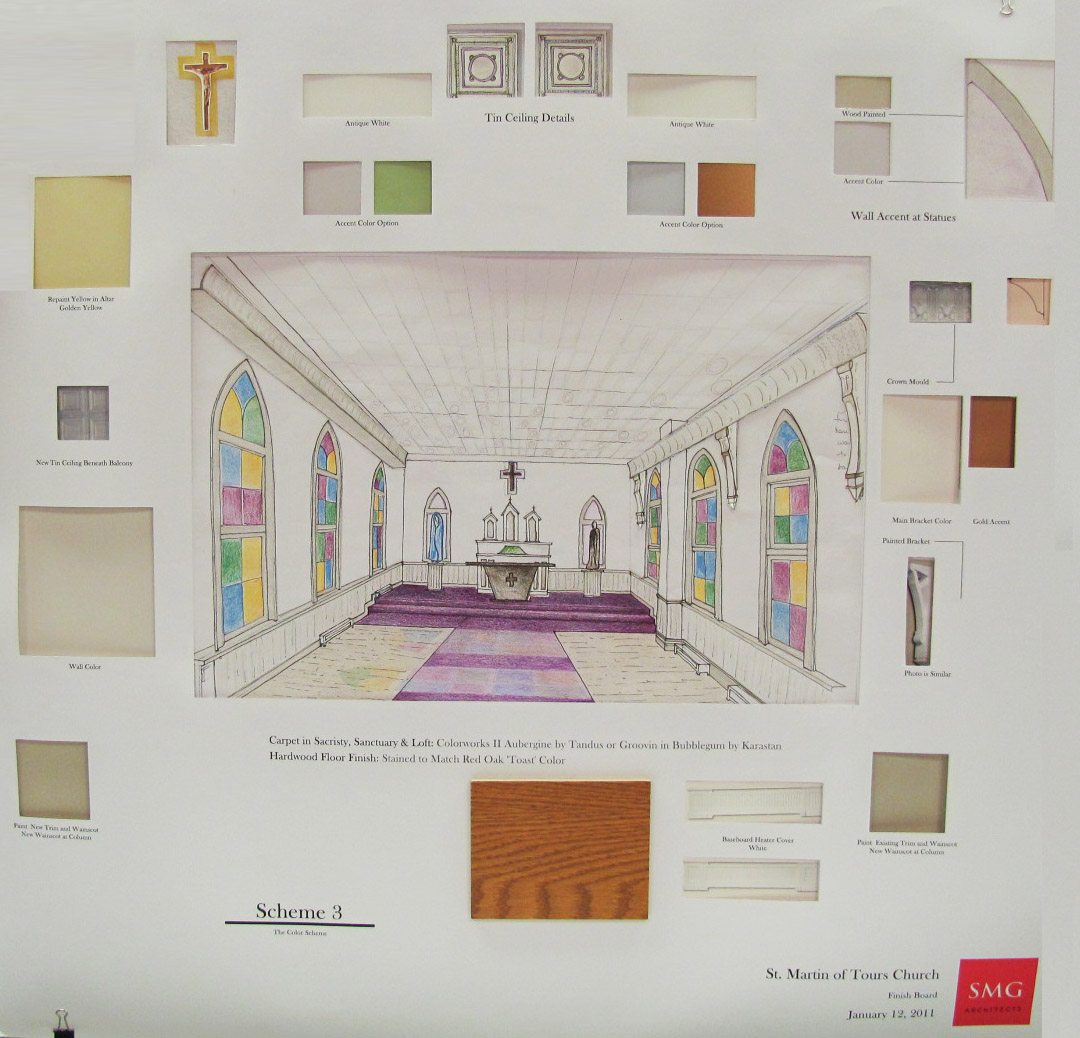
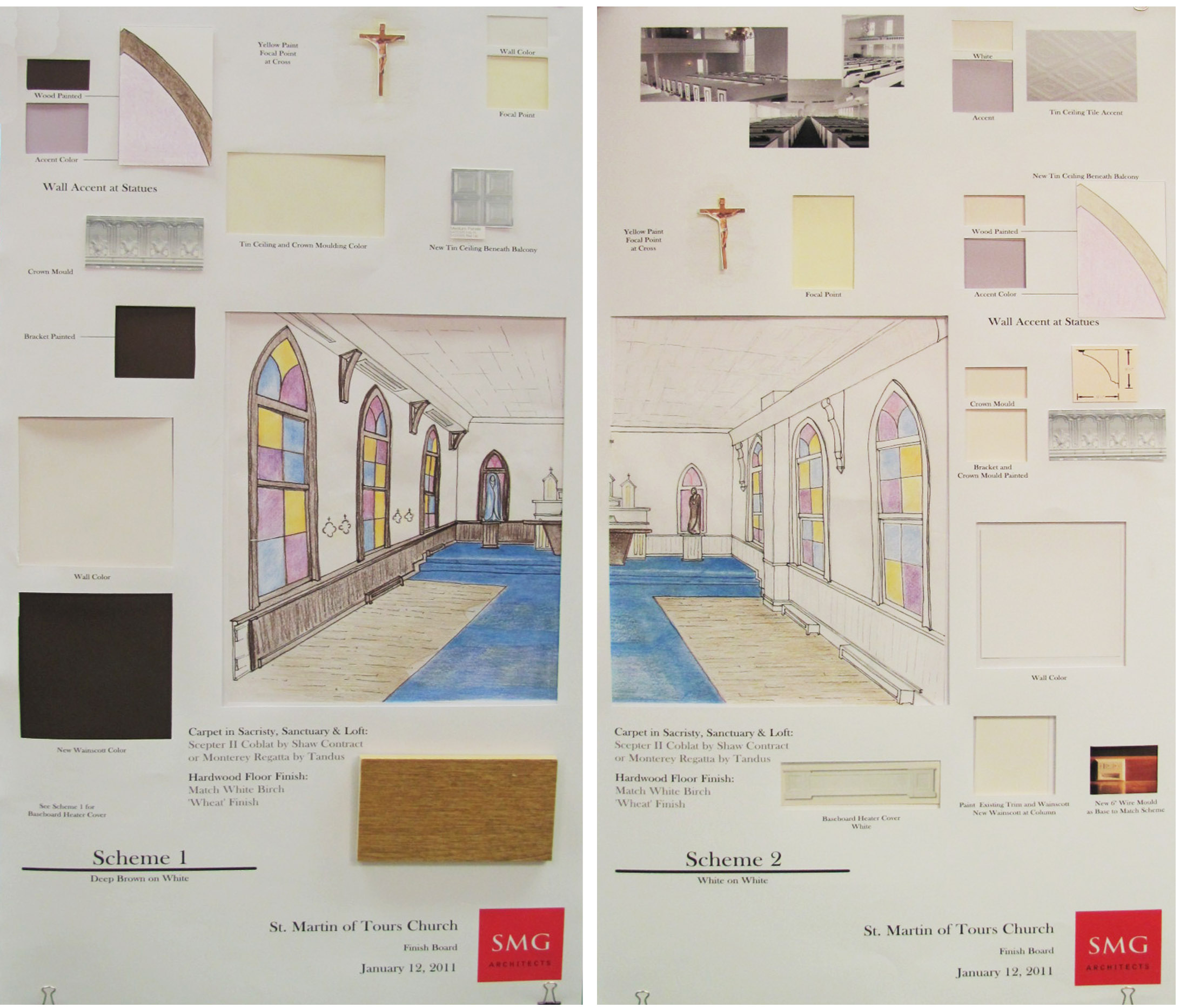
I began January working on a Stained Glass Country Church in West Virginia and in one and a half months took a church in need of renovation and additions into a set of construction documents. I  developed 3 color scheme boards for them to choose an interior color scheme from as well.

The 30 x 30 inch finish boards.

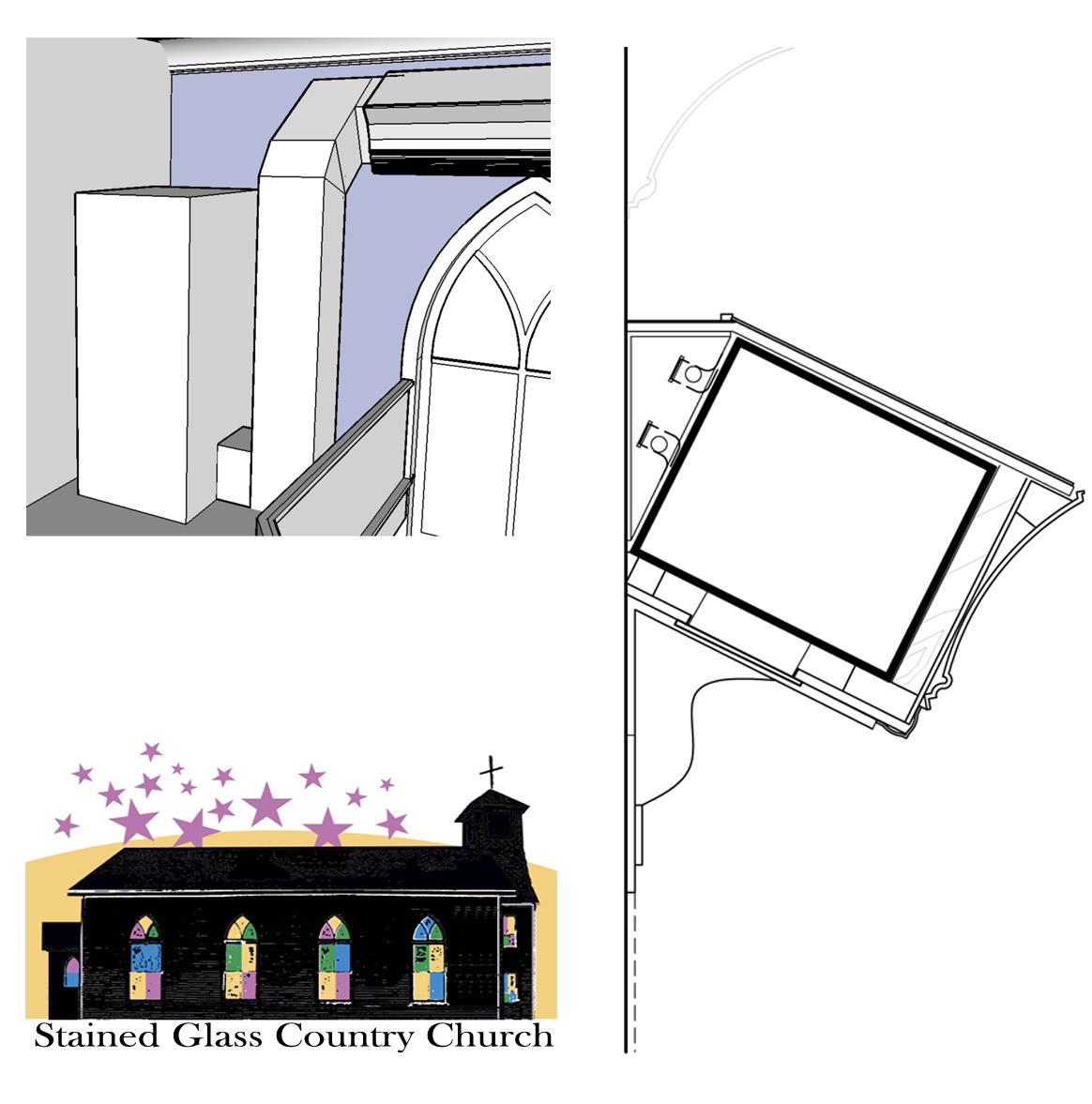
Construction Documents included coordinating with a MEP consultant to conceal a horizontal duct.

Here, my firm and I developed a unique solution to incorporate duct work into the simple space of the existing sanctuary.  Solution: develop a horizontal bulkhead, pulled from the ceiling plane, to allow the existing tin ceiling to continue without interruption. The new low bulkhead is detailed with new crown molding and held up with decorative brackets.

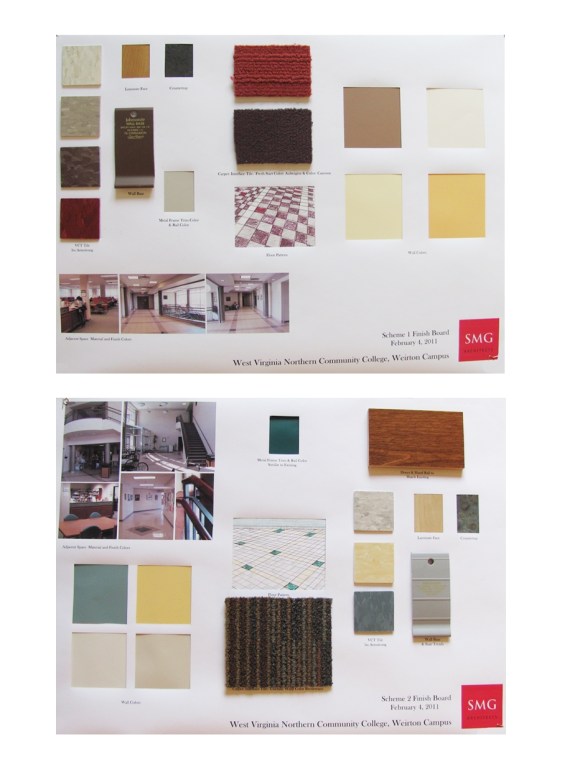
Next, I began working on a large addition to a technical college. The first step, to develop finish material schemes.

I’ll leave you with a few architecture thoughts as well:

I’ve been thinking lately that architecture is about the master plan. It seems there are qualified product distributors that have an easier time selling cabinets than I do designing them. An architect’s work has become the arrangement of many systems. I no longer hire a craftsman to make my building space work, I specify instead, pieces that fit in a large space puzzle. I hope they all fit! I find that trying to understand all of the pieces thoroughly becomes a task in itself.

I came across an article in Architect Magazine, that seemed to be thinking along the same lines.

An article written by Kiel Moe titled Do more with Less, Double glazing Vs. Masonry. (about monolithic building structures) Read it here.

Categories
Architecture Book Review Building Sustainably Environmental

The search for The Greenest way I can build a new Home

The best methods, The best materials

What is Green Building in the Northeast U.S.? I’ve consulted the following book many times in designing new spaces. I’ve found the information in what has been provided to me through searching The Passive Solar House links.


The Passive Solar House by James Kachadorian

Book Review

Rule #1: Build in Reference to your Surroundings

Position the long direction of the house in the East/West direction and plant deciduous trees along the South. James gives direction for how to know your site. ‘Make a point of being on site at sun rise and sunset at different times of the year. Develop a sense for which direction the prevailing wind comes from…in addition to solar orientation, consider access, view, wind, direction, snow removal, power, septic and water.” In the past when I have mentioned Slow Building, this is the direction I was seeking.

Rule #2: Design on a 12 month basis. ‘Accommodate and benefit from the sun’s shifting patterns and other natural seasonal cycles.’

Rule #3: Provide effective thermal mass to store free solar heat in the day time for nighttime use. The above diagram is a graphic from the book where he notes ‘achieve thermal balance by sizing the storage capacity of the thermal mass to provide the heating needs of the building through the night.

4″ slab over 12″ CMU is approximately 10″ of solid concrete.

10″ x by the building x and y dimensions = the ____ cubic feet of volume.

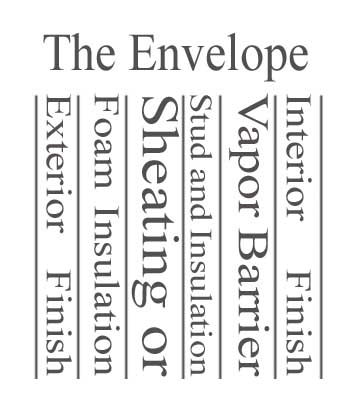
Ways of keeping the heat in include thermo-shutters, as described in the image below. However, you want to make sure that your building envelope is a closed cell construction to protect the R values you’ve invested in it as well as to prevent insect damage. The envelope is something that you may ‘Dress as you please.’
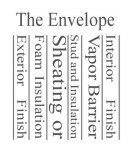
This is a graphic for a wall section, envelope, that you would find in the north-eastern United States. For example, the vapor barrier is always to be on the warm side, and in this area the warm side is the heated side of the home, on the interior because we heat in the winter. This leads us to Rule #4:  Insulate thoroughly and use well-sealed vapor barriers.

While constructing a home for my family I studied Advanced Framing, also termed Value Engineering. This means building with typical construction methods, but arranging the building components  in a smarter way. The simple spacing of 2×6’s at 2′ on center versus 16″ or the ways in which to construct a corner and header of a window frame are two examples in which less wood can be used to build a solid home.  Look at these sites listed:  Building Science Consulting and The Energy and Environmental Building Alliance

Getting back to the book, the author makes it a point to differentiate between house wraps and vapor barriers. House wraps are designed to stop wind, not moisture, and a vapor barrier is an extremely important part of the building envelope sandwich.

Tightly sealed buildings should exhaust and vent to the outside through controlled or deliberate openings. For example, areas that have excessive moisture such as the bathroom, kitchen and laundry rooms. So, what are deliberate and controlled openings about?

I sought out the information on the internet and found Scandinavian Homes; Passive houses who described a Ventilation heat-recovery system by Temovex. These systems control the air-exchanges in a home, and in the winter months when we don’t want to pump out our expensive heated air with necessary ventilation, they have a way of recovering the heat without compromising our inside air quality.  Click here to see how the Temovex works in expanded terms.

With a balanced mechanical system, you control the amount of ventilation in the house. Not too much on windy and cold days and enough on humid and mild days…A whole house ventilation system helps to provide consistent temperatures though-out the house or apartment. The house or apartment must be reasonably well insulated and draft-proofed for the system to work to its highest potential…Temovex units make your home into a thermos! You retain the heat in the building without the need for unnecessary new thermal energy…

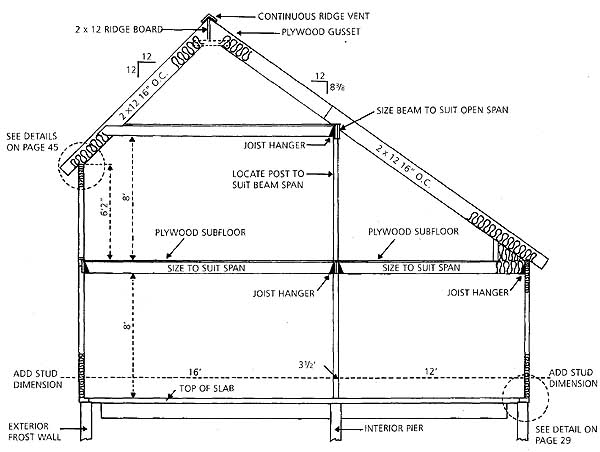
In chapter five the book begins to describe floor plans and layouts in the same way it invites you to learn your site. ‘We should layout the home’s rooms in relation to the patterns of the sun; that is, morning areas and activities should be planned for the east side of the home, and evening activities generally on the west side.’ The sun and normal living habits migrate from the east to the west. For example the living room should be well warmed by mid day, but the breakfast area should be warming first. I found these images on this site.

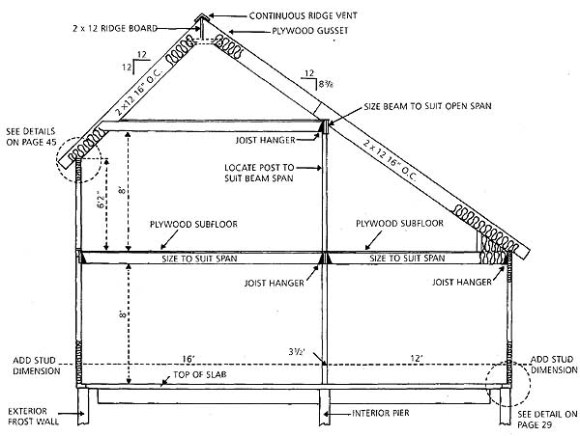
This plan uses space efficiently and uses the space below the stairs for storage of the water tank and air circulation equipment.

This leads us to two important and key rules to this entire passive strategy.

Rule #5: Utilize windows as solar collectors and cooling devices.

Rule #6: Do not over-glaze.

What the book provides here is an in-depth lesson on how to calculate exactly what your home needs to maintain a comfortable living environment. I suggest you find the book to learn about this exactly. You can find the book at Amazon by clicking the picture below.

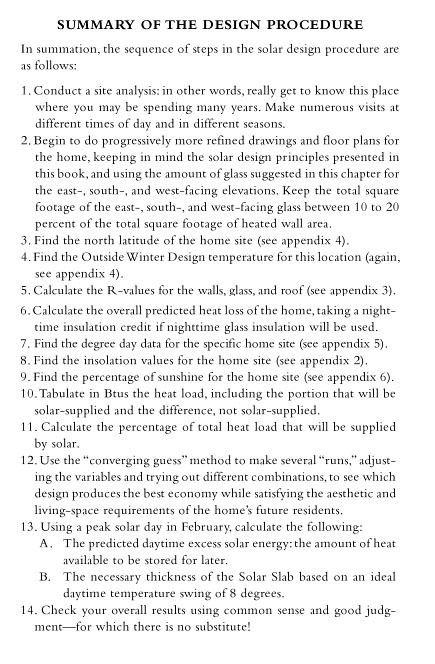
The author tells us that ‘There are not cookbook recipes for solar design.’  A summary of the design procedure is provided by Google Books, and is represented below.
Rule #7: Consider the contribution of solar energy (indicated by insolation values for your region) and natural processes (including breezes and shade) to the heating and cooling of the home, in order to avoid over sizing a backup heating system or air conditioner. A home that is oriented to true south, is tightly constructed and well insulated, and has operable windows for air circulation should not require large fossil-fuel burning equipment to maintain thermal comfort.  Size the conventional backup systems to suit the small, day-to-day heating and cooling needs of the home.

Rule #8: Provide fresh air to the home without compromising thermal integrity.

Rule #9: Use the materials you would use for a conventional home, but in ways that maximize energy efficiency and solar gain.

Rule #10: Remember that the principles of solar design are compatible with diverse styles of architecture and building techniques.

Other ideas to come… what about Malcolm Wells Earth Sheltered Homes or those by Jacques Couelle?

Categories
Architecture Poetry Travel

Cosmopolitan Architecture in the Desert

~

~

The Show – Vegas 2012

.

The water and a glass-lined desert protect me

from the harsh fade of heat.

.

The flashing heat mirrors across faces

the commercial drum beat strums

hot skin and thumping hearts

pounding out a healthy tune.

.

People come to Vegas to be someone else

step into studded slippers, swing through crystal curtains at The Cosmopolitan

oval ceiling float over black jack tables

gold tassels pull back an open dangling atrium.

You may swim from between the glistening towers at the Monte Carlo, and come into a world built for enjoyment, an open show of ‘life’ on the streets, just as real as

diamonds floating in the desert.

~

Photos from the blog of Christine Astorino via The Cosmopolitan Las Vegas.
Design Team via Wiki: The Cosmopolitan’s design team is led by Friedmutter Group as executive architect, with Arquitectonica as the design architect for the building’s themed exterior. The building is engineered by DeSimone Consulting Engineers. The Interior design team includes the Friedmutter Group, The Rockwell Group, Jeffrey Beers, Adam Tihany, and Bentel & Bentel.
Categories
Architecture

Color Saturation

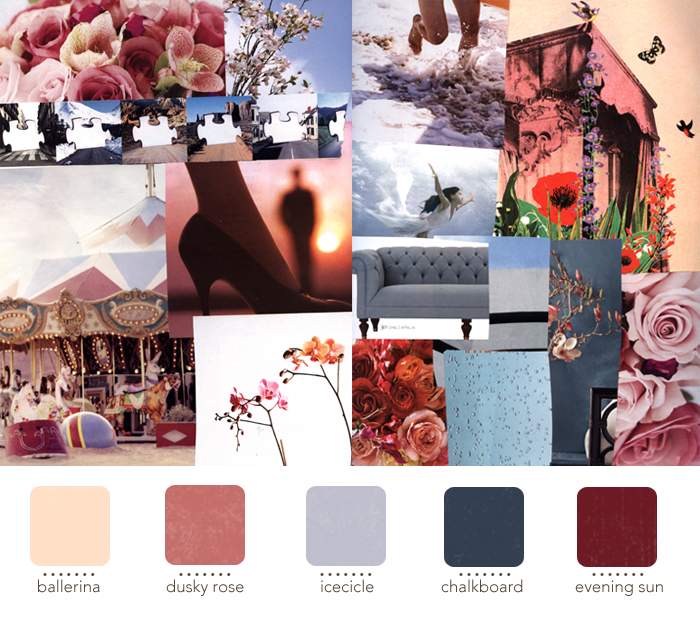
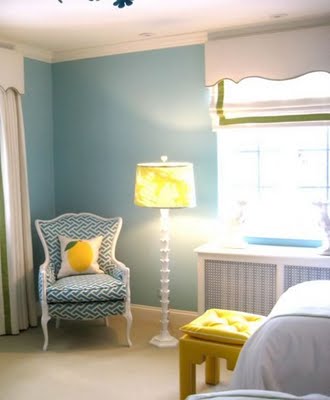
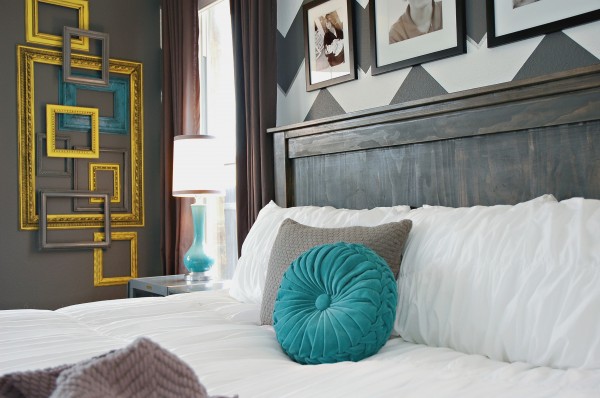
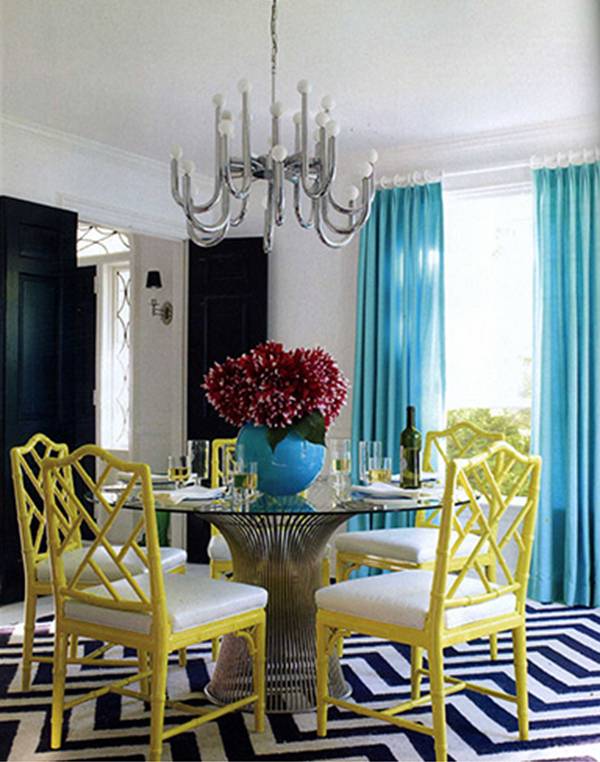
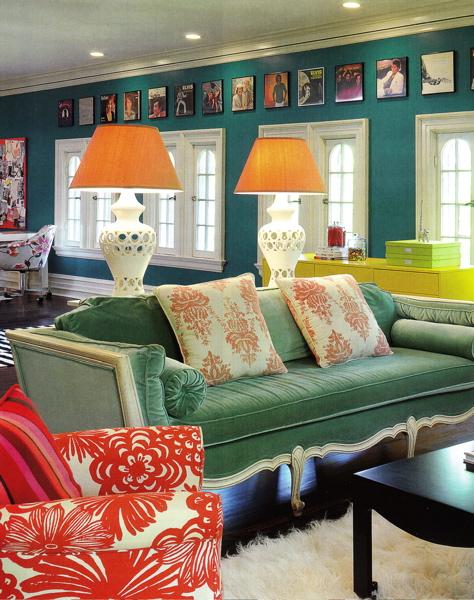
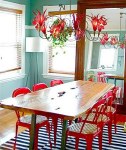
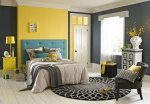
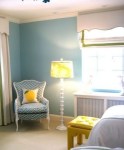
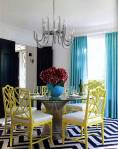
In my profession I think a lot about color. I think equally as much about how to present color. I recently drove off from the old color-board idea, and instead, talked my way thought images that conveyed my proposed color scheme in a multitude of ways. For this series below I was proposing a palette to match and coordinate with our prior selections of  SW colors Moody Blue and Harvester.

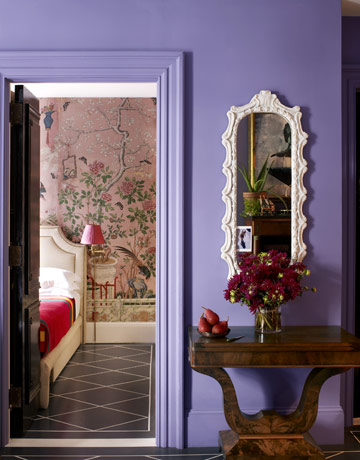
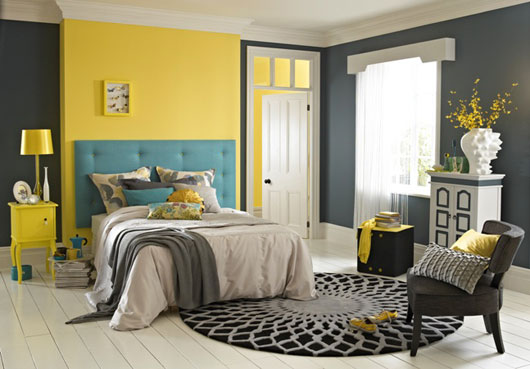
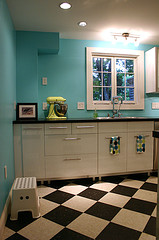
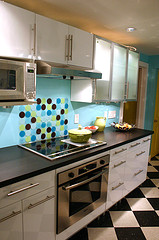
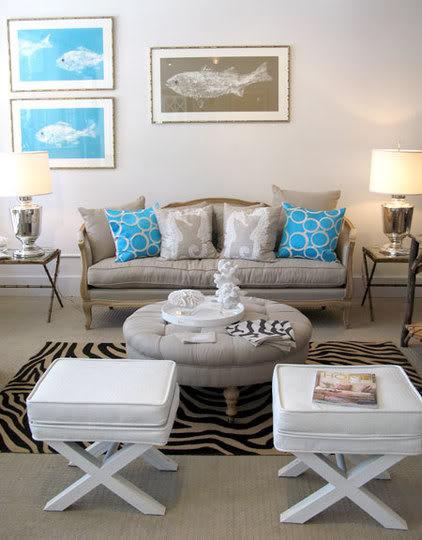
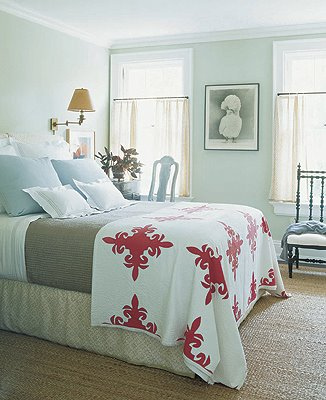
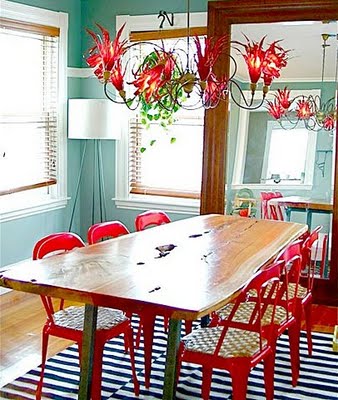
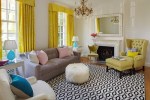
The rooms below show a saturation of color as compared to the one that follows that uses the same colors to accent a white palette.

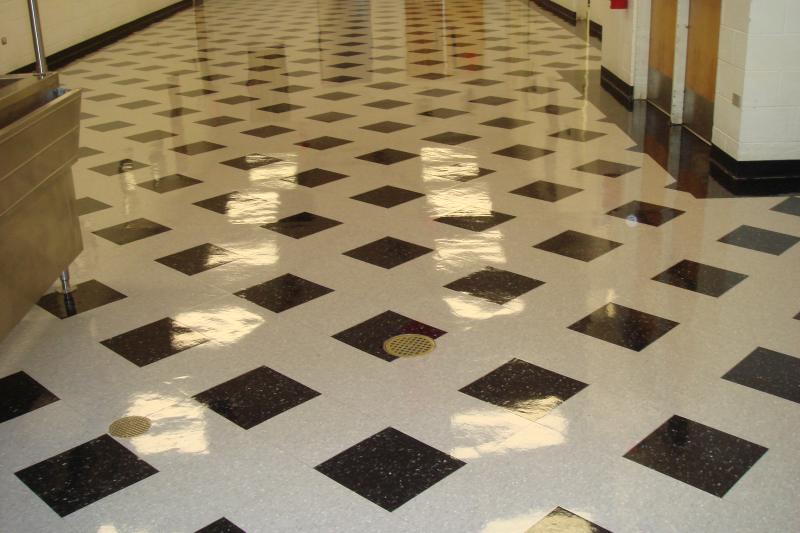
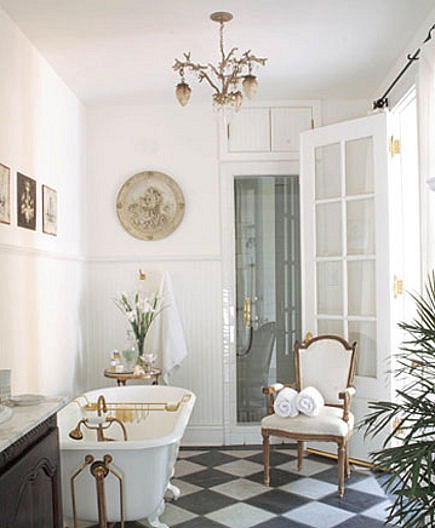
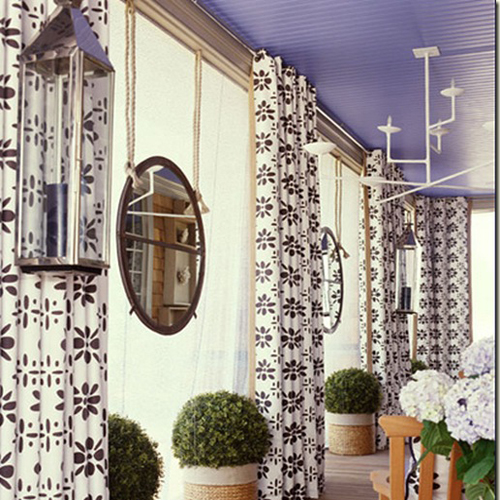
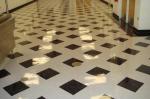
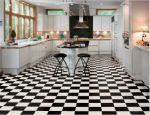
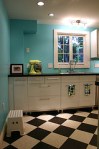
The rooms above show a saturation of color as compared to this one that uses the same colors to accent a white palette. Notice that in the images of color saturation the eye often rests on rigid, structured patterns. See the parquet rug, the checkered wall and the zig zag carpet?

By giving a field regularity with color opposites you create an interesting, deeper background. The background, as you can see, may take on many forms.

~

Different hues can be picked up with the texture of materials, color, and type of furniture. You must know what the room is used for before beginning to arrange the color interaction. You can use color to focus on certain things, or use it as a background that fades away. Look at the photo above. Do you really see the white cabinetry?

The floor compliments the space by drawing your eye away from everything else going on.

……………………………..   ……………………………..

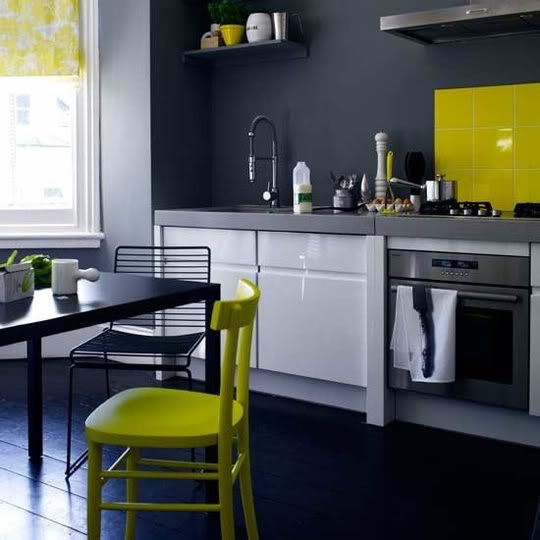
These above images give interest in the pop and placement of color. The placement is meaningful and in balance. The white, color, and pattern interact and add interest in different ways. We can do this with a deep dark color too. I like to call this use of color ‘color blocking.’ Color blocking creates fields of color as a background to the furniture and inhabitants. You may use rich, deep colors to create cohesiveness and enhance the functions of a room.

I think color blocking is best used in small spaces, where pattern and movement of too many textures and colors can become overwhelming. The dark color is restful.

The next thing I did was introduce more colors into the scheme for my client. After making a case for the moody blue, harvester and reserved white, I added a little ablaze, vigorous violet and wisteria.

These colors can be used as focal points as a way of puncturing the patterned backgrounds or used to draw attention to a key place in our plan.

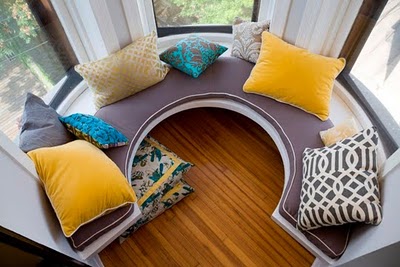
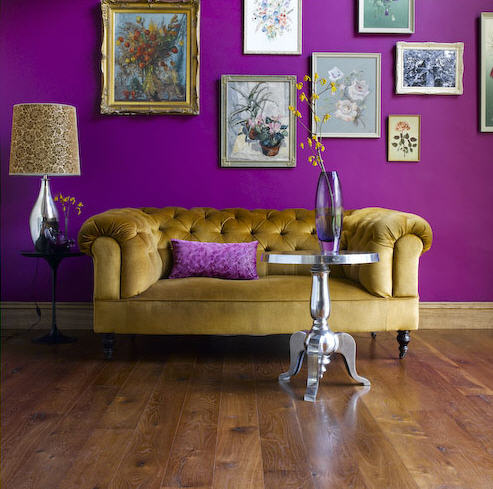
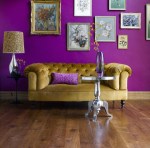
This is a plum nice focal point. The strong use of color is punctuated by the glamorous shade of gold.

The photo below displays a rich background color, and using the black lines of the base mold, the black furniture is brought in as a symbol of similarity. The energetic use of color needed consistency, and white is the perfect color for this. The white base allows a collection to be on display and the lesson is a good one. If we want to display many unique artifacts, let us make them a collection by some sort of consistency.

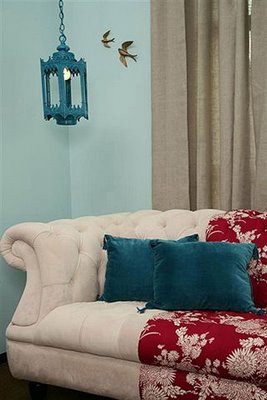
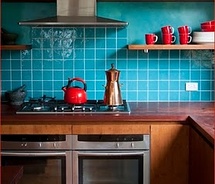
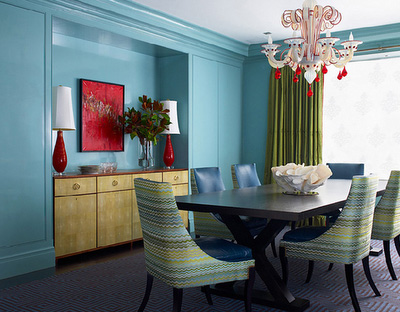
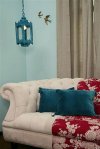
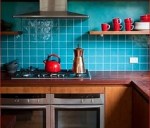
Another dark scheme using red as a break and accent to the deep blue.

As a closing thought, before you are let off to look through all of these images once more, look at the balance and focal point of color. Use color to liven up a space, add interest, or communicate purpose. See the use of red popping out in the above photo? Where is it used and why?

~

The photos displayed here are not my own. I found them through image searches on the internet. If you’d like your particular photo tagged, please send me your information.

Categories
Architecture

Architecture in the Desert

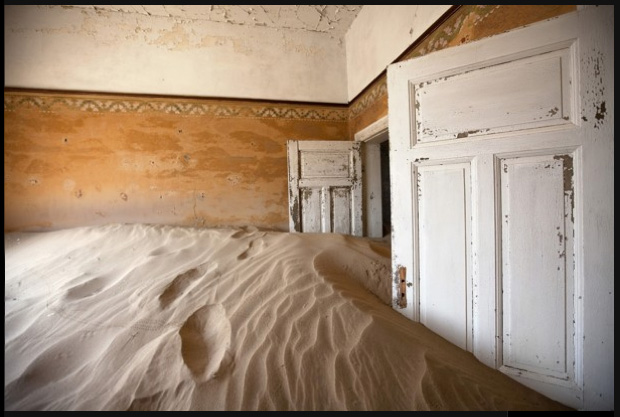
Marc Tkach in the 2011 Best Travel Photos of The Washington Post.

Marc Tkach, Alexandria. Tkach took his haunting photo this past fall in the diamond-mining ghost town of Kolmannskop, Namibia, a place the civil engineer found “both unsettling and very calming” — calming because of the silence, broken only by the wind, but unsettling because the town is slowly being consumed by sand.

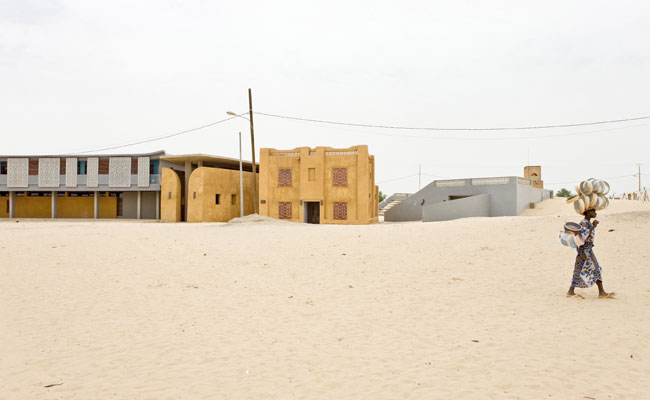
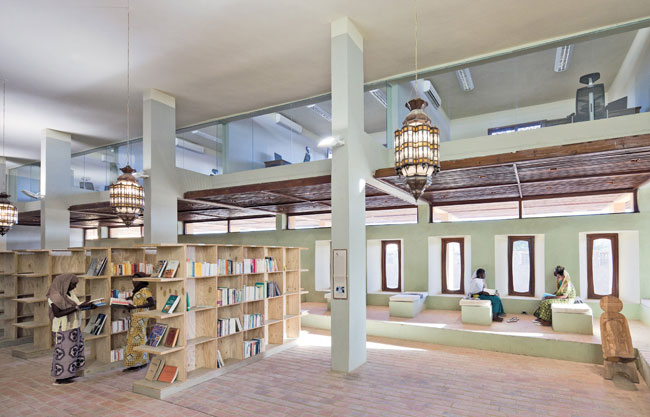
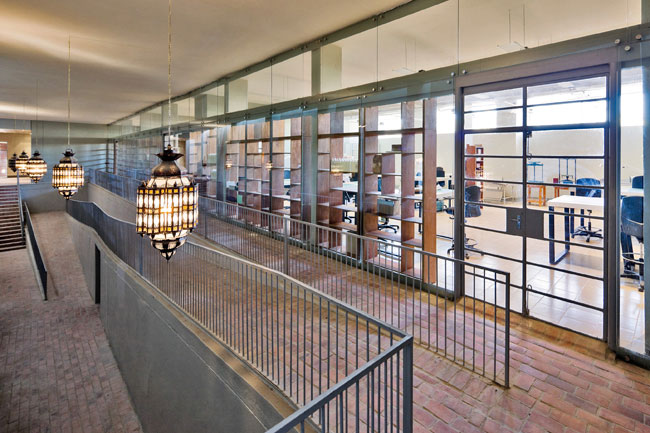
Ahmed Baba Institute Library

dhk Architects

This library made an impression on me when I first discovered it in Architectural Record. The effort to make an effect with simple materials sufficing simply the program makes a permanent mark in the desert.