Categories
About Me Architecture Dancing & Gymnastics

Space, Time, Architecture & Dance

As an instructor of Tumbling I am still learning about Architecture.

While I am learning about construction, constructing houses, setting trusses, wiring electricity, puttying walls…

I am learning about the part of architecture in perception, reasons for walls being the time and experience at which we move through a place where views are capped off, hidden and traded for something else more definite and prominent for that moment.  Sometimes architecture is a house that organizes daily life, other times architecture is a museum of pieces set out along our journey in an artful way so as to make our mind and body stumble together to capture a piece of resonating oddity.  For one second let our minds trip so as to glimpse the intense and happy evoking emotions this amazing and complex world has for us to enjoy.  That is Art.

I have gotten back into gymnastic teaching this year through a local dance studio, The Dance Difference.  While in architecture school I participated in the gymnastics club as an instructor and as a student.  Gymnastics pairs physical endurance with the technical skill of trusting your body and knowing the flying, twisting, hurling body’s reaction to gravity.

Since beginning at this studio in September I have learned much more than of lovely young ladies inspired to reach youth and the youthful with the poise and precision of dance.

I have always dreamed of dancing in a tall studio overlooking a town.  I am apart of this now, in this woman-owned business, dancing and tumbling two stories high with a beacon of light coming in through the tall rounded windows from the courthouse next door.

If you have never watched a ballerina perfect her balance through the delicate window panes, you must at least be able to  imagine how her silhouette must make the passerby pause.

In this experience I am learning again what role exercise tests our endurance of patience, brings us back to simple kinesthetic learning, how words of direction can be misinterpreted in one instant then fully embraced in the following explanation.  I learn how important exercise is to be agile in the body and also in our mind, keeping the rhythm of the two working together close to our heart.

I will be creating a routine to music for a spring recital.  In the past, gymnastic precision has been for the timely skills down the mat, one pass at a time, critiqued and finished in an instant.  Here, we create choreographed routines, set and played up against the music. My broadway selection is from the 1978 musical Grease. I drew a plan of the girls who would form this routine, listened and replayed the music while creating their gymnastic impressions.  This took a few hours to compose only minutes of a routine and last week I began teaching. In asking for assistance I spoke with the owner of The Dance Difference. Her  notes of dance and routine set up a list, side to side, with categories of time and words, dance steps aligned. 

I began comparing this to architecture and thought of composing mazes of walls alongside the orders of a home set toward its inhabitants. The time it takes to see a peek window is brought to you in the time it takes to walk the hallway.  The table edge you notice when you sit down to dinner and touch the corner. One will look toward the ceiling if there is a wall for support of the hand…all of this dancing in your house. The house is built on a standard of these secrets, moments only upon living there can the dweller enjoy their existance…a lifestyle set to the tempo of Andrew Bird, The National, or Lady Antebellum. Only now do I begin to understand and question what part ‘Time’ plays in Architecture, as it is the perception of parts over a course of time, places side to side, dance steps aligned that allow us to live in harmony with our space.

Categories
About Me Architecture Building Sustainably Environmental

What is Sustainable?

To me?

I am talking about the ways in which to live in and build with this world!

When talking about architecture, that means talking in terms of the materials it takes to construct a place. In the April 08 issue of Architectural Record I find great resources to cumulate together for my use as an architect and thought I would share:

The author, B.J. Novitski discusses the Life-Cycle Assessment – a methodology that quantifies the environmental impact of a material by examining how it is grown, harvested, transported, maintained, and eventually disposed of, computing costs in energy and water use, air degradation, and other factors…architect William McDonough and chemist Michael Braungart offer their Cradle to Cradle (C2C) material assessment, product development, and certification to manufacturers.

McDonough and Braungart argue that when a product is made of appropriate materials and is designed so that its constituent parts can be recovered at the end of its useful life, any waste is “food.” The waste becomes raw material for the manufacture of more products…

…some rapidly renewable materials more green than others. The circumstances of production may cast a shadow on the sustainability of an agricultural product: Are fossil fuels, irrigation, or harmful chemicals used in its cultivation or manufacturing? Is the crop diverting acreage from food production? Are natural forests being destroyed to produce raw materials for construction? Does transportation consume inordinate amounts of fossil fuel?

Brendan Owens, USGBC vice president of technical development…points out that the term “renewable” should be considered in context. “If you’re using wood for structural framing in a house that will exist for 100 years, ‘rapidly renewable’ might be 50 years, because the resource regenerates in less time than one cycle of its use.”

So, lets talk about materials!

  Cork is the bark of cork oaks grown in the Mediterranean region. Unlike nearly every other tree species, it is not harmed by removal of its bark. A mature tree is stripped about once every 10 years and lives for an average of 16 strippings. The cork oak forests thrive without chemical herbicides, fertilizers, or irrigation and provide habitat for wildlife such as the threatened Bonelli’s Eagle and Iberian lynx. After stripping, the large slabs of bark are boiled, and bottle stoppers are punched from them. The leftover material is then ground up, pressed into sheets, and cut into tiles for flooring.

  Cotton is now being used for building insulation.  Bonded Logic in Arizona produces r-30 batts from post-industrial recycled denim, the scraps from manufacturing blue jeans, diverting about 200 tons of material per month from landfills!

  Natural linoleum, such as Forbo, is formed from a variety of rapidly renewable materials, including linseed oil, wood flour, and pine rosin. During production, the ingredients are heated, mixed, and rolled flat. The sheets are cooled, backed with jute, then dried and trimmed. Pigments that do not contain heavy metals are used to achieve a wide variety of colors and unusual flooring installations.

  Agriboard Industries  in Kansas, produces a composite structural panel from highly compressed wheat and rice straw sandwiched between oriented strand board…The panels provide both structure and insulation in wood floors, walls, and roofs…The manufacturing process combines heat and pressure, drawing lignin from the cell walls of the straw, and creating a natural binder that obviates the need for urea-formaldehyde or other additives. 

Environ Biocomposites makes a particle board combining wheat straw and sunflower hulls with urethane-based resin instead of the urea-formaldehyde binders.

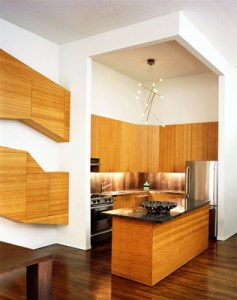
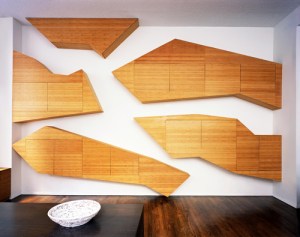
   In only five to six years, bamboo grows to a height of 40 feet and a diameter of 6 inches, and can be harvested without killing the root system, which then regenerates it. The hollow stalks are cut into strips which are dried, planed, and glued together to form durable flooring, plywood, and veneers. Some bamboo importers, such as EcoTimber and Smith & Fong, now offer products without urea-formaldehyde and are encouraging Chinese foresters to move away from use of pesticides, herbicides, and chemical fertilizers.

Bamboo is a case in point. This fast-growing grass is hard enough to be used as a replacement for wood in applications such as flooring and furniture. However, most bamboo is grown and processed in China, and there are concerns about forestry practices, the toxicity of binders, and worker safety. A few bamboo plantations have earned certification from the Forest Stewardship Council (FSC), which accredits forests managed “to meet the social, economic, ecological, cultural, and spiritual needs of present and future generations.” However, certified bamboo products are still not widely available in the U.S. And even though bamboo plantations sequester as much carbon as native forests, they do not support the same wildlife. What is more, while ocean shipping consumes less fuel per mile than overland trucking, the fuel used in shipping is more polluting. Clearly, the environmental balance is more difficult to calculate than by simply examining the length of a harvest cycle.

(all above descriptions of products taken from Architectural Record’s B.J. Novitski’s April 08 issue)

Categories
Architecture Building Sustainably Environmental

Clarkitecture Part 3 – Being Sustainable

……… Renovation ………

The thought of existing architecture made modernized with new fashion and theories is a mixing of two worlds, an old generation meeting a new baby to foster. The old farm-house kitchen, the simplistic shaker style is a nostalgic modernism, an architecture that was built in need to host the basic function of preparing food.

A sustainable house is one that already exists.  Can architects make good impact making existing things work better? At the Dairy House in Somerset England, architect Skene Catling de la Peña as described in Architectural Record’s Record Houses, does, by bringing a 1902 Hadspen Estate building back to life.


The slits of old wooden boards are held apart with glass, allowing daylight in, and acting as a night-light to the landscape by dusk.

Christopher Hawthorne describes it as Skene Catling de la Peña’s Dairy House, in England, meanwhile, not only brought a 1902 structure back to life but did so using local materials, craftsmen, and know-how, expanding the notion of green design to include what the client calls “social sustainability.”By defining sustainability in such a broad and thoughtful way, the Dairy House also offers a way to summarize the attitude of this year’s Record Houses as a whole. As Diana Lind writes in her description of the project, “When you get down to it, whether a work of architecture is green is usually a shade of gray.”


One more thing… this is a funky Architecture website I found myself at recently:

http://www.tropolism.com/

Categories
Architecture Building Sustainably Environmental

Clarkitecture Part 2 – Being Sustainable

Small Houses

Houses where every structural slant doubles as a ramp, steps are sliding drawers and book shelves become ladders.

Nora House by Atelier Bow-Wow       &      VH R-10 gHouse by Darren Petrucci, AIA

Small Houses remind me of building small retreats in corners of my back yard, escaping into the nearby creek while visiting my grandparents in Ohio and playing house around concrete basin that had fallen into the earth.  A house is about owning shelter for yourself, acting in self-reliance toward the way you care for your life. You may bake, or garden, or sew by the window, but a house is  for bathing, eating, and sleeping.

Jane F. Kolleeny, writing for Architectural Record’s Record Houses in 2008, acknowledges Thoreau’s philosophy of self-reliance and simplicity, which lead me to search for his thoughts, a few of which are below:

Most of the luxuries, and many of the so-called comforts, of life are not only not indispensable, but positive hindrances to the elevation of mankind.
.
.
A man is rich in proportion to the things he can afford to let alone.
.
.
Do not be too moral. You may cheat yourself out of much life. So aim above morality. Be not simply good; be good for something.
.
.
I think that we may safely trust a good deal more than we do.
.
.
All by Henry David Thoreau
Walden, published in 1854 is Thoreau’s thoughts and experiences in his exploration of living and adventure, I think I will go to the library for lunch tomorrow.
Categories
Architecture Building Sustainably Environmental

Clarkitecture Part 1 – Being Sustainable

Building Locally, Carefully and with Relationships that Exist on site.

The Palmyra House by Studio Mumbai

(a new house)

As I read that one could only walk to this house through the forest, as it rests below the canopy of a coconut plantation, so as not to disrupt the palms, as the two-piece house alludes, I wished to visit this Indian mangrove. Prathima Manohar writes that the architect Bijoy Jain designed the house with signature louvers made from the tree’s cut, dried and locally harvested wood, setting a course of using sustainable, regional materials to guide the project. Like Louis Kahn’s Esherick House, it breathes, inhaling with the breezes, sleeping near the coconut crabs and waking with the Bulbul birds.

In Christopher Hawthorne’s opinion:  Rather than aiming for a kind of spare, Modernist universalism… it takes its formal cues from its region, landscape, and context—and then, significantly, coats it with a sheen of sophistication that reflects the challenges of building locally in a globalized world. This sensibility is illustrated by Studio Mumbai’s stunning Palmyra House on the Indian Ocean…

…………

Passive with Natural Illumination and Ventilation

The Nora House, full of levels, light and space defined by directional walls that contain each room but do not limit them. The ceiling and roof as one plane, cinched in the preparatory flight of a butterfly that shields the branch below just before climbing the air.

The house reminds me of a book shelf, each piece of wood positioned to hold a part of life in an organized notion, each piece of life symbolising from its platform where to stand to perform daily tasks to take care, rest, clean and eat. It makes me want to hide stairs between walls, and fill the hallways with books like Frank Lloyd Wright. The floor that supports me could insulate me with warmth through winter, could be a place I store my journals.


Nora House in Sendai, Japan designed by Yoshiharu Tsukamoto of Atelier Bow-Wow

Categories
About Me Architecture

Beyond My Fascination with Legos

A good friend of mine works in Chicago at Studio Gang. Azure Magazine just ran an article on an interior project she worked on.  This is the start of the article..  Studio Gang’s Ballroom Blitz

More on Venturi’s Complexity and Contradiction in Architecture thoughts continued from my post a day ago, 1.5.10, Why An Architect…

Venturi’s manifesto makes the case that there are multitudes of reason and problems to figure out in architecture.  ‘Each contains within the whole contrasting scales of movement besides the complex functions.’ He states as certain ‘problems’. The complex form and building, scale and perception could be poor in relation to one scenario, but work significantly well as the whole.  So, here is his case of complexity and contradictions and examples throughout history for the case of working (great) architecture.

I believe Venturi’s reference to ‘modern’ architect means the architect now and I begin to daydream while reading of my own contradictions, tensions and fascinations…

I remember learing about Native American societies in the 3rd grade. Beyond my captivation with Legos, I had never been confronted with such great mazes, built across plains and in mountain sides. I always recalled the Mayan culture in Merida, but in researching my few leads I think I must have seen images from Mesa Verde.  Mesa Verde National Park – The First Pueblos 


Mazes and labyrinths represent a magic journey, an experience, something I enjoy tangling myself in. Looking at them from above they could be a house plan – a plan in which the space will direct the inhabitant. Like a house plan the maze leads people through in sequence to establish a rhythm, one that is parallel to their living.  Some labyrinths are used for meditation, as they were historically sought to.


 A part of architecture is establishing a set of rules which are derived from the intentions of the project. Venturi points out Le Corbusier’s Villa Savoye, and the structural rule of columns.  The grid is broken by elements necessary to conduct living in the Villa.

Alvar Aalto finds order from necessary elements in his work.  Look at the repetition of his Riola Parish Church. 


Venturi presents rules of structure citing Kahn’s proposal for a Philadelphia Office Tower

and Gaudi’s Sagrada Familia.


I am inspired with these thoughts of rules, and breaking the rules to construct living in structures. 

What about mixing Kahn’s wind braced tower with diagonal circulation, similar to Corbusier’s ramp circulation in the Villa Savoye?

Categories
Architecture

Building Inhabitable Objects

In reading past Architectural Records and  furthering my thoughts in discussions over what is an architect…

Architects are building inhabitable objects.  Look at Zaha Hadid Architects with their Wine Shop and Tasting Room in Rioja, Spain. It looks like a section of a wine decanter, and I want to live in it like a genie in a bottle.

 Then there is Morphosis Architect’s Cooper Union Aluminum Rock jutting into the urban scape of New York City.

Joann Gonchar, AIA describes it in her article for Architectural Record ‘It has a sharp and folded perforated-stainless-steel shell with an aggressive gash in its main facade. Performance is part of the rationale behind the dynamic sheath, which cloaks a poured-in-place concrete building with a standard window-wall system, helping mitigate heat gain in summer and retain heat in winter.’
…………………………………………………………………………………………………………………………

Kengo Kuma & Associates creates a luminous jewel box for Tiffany Ginza in Tokyo.’


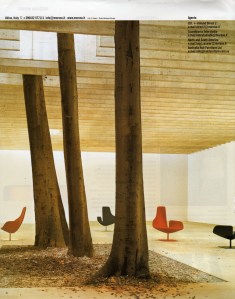
Look at how the architect treated lighting the spaces.  In two different situations the rooms are lit at where the ceiling meets the wall, as if we are getting light from the crease of jewel box lid that has been left slightly open.

Categories
About Me Architecture

Simplify your Lifestyle

Clean it out~

If you’ve lived in the same house for the past three years or longer it is likely that you have begun to fit newly acquired things in crevices, corners and newly found empty spaces.  I’ve moved about every two years for the last twelve, which has given me the chance to evaluate what I do and don’t use, and what I could get rid of for someone else to get better use of.  If I’m not moving I have to make a conscious effort to purge.

The best advice for dealing with too many things (like too many books on my bookshelf) is to imagine what it  means to be you now. Does my bookshelf define who I am and what I am interested in now? In the case of my closet, have I worn these clothes in the last eight months?  Why so or why not?  Do I use all of these blankets, dishes, these perfumes, read these magazines… I can get a little carried away with all of my things.

When I pare down what I own to what it takes to keep care of myself, to essentially what defines me and my interests, I find I have much less to worry about!

I learned this concept while traveling in Europe my junior year of college.  With only a back sack full of daily needs such as a camera, sketchbook and journal, I was able to spend three months with this bag and a small portable suitcase.  It took me a few months to determine exactly how much shampoo would get me through two weeks (there are stores in Europe!), how much detergent I would need if I were only bringing a weeks worth of socks, etc.  Again, perhaps a little overboard, but what I learned after three months of living like this, with so few things, was that I felt so free not having to be concerned with what I could not pick up and move with me.  It taught me how many things I pamper myself with during my typical daily routine and what I could do without at home.

I talked about the digestive system yesterday, which was spawned by reading an organizational book (to learn more about organizing my home) from author Karen Kingston. It was ‘Clear Your Clutter with Feng Shui.’

 It was the first time I heard about Bagua, arranging a grid overtop of your house floor plan that tells you what each space in your home is related to.  I call it the Zen Grid. 

By desiring each entity in my life to be better I have in essence cleaned up most of my spaces to reflect how I utilize them the most – giving me a clearer vision of what I do and what I most enjoy.

Also, an article was featured in the NY Times yesterday about sharing experiences instead of stuff.  ‘In Recession, Americans Doing More, Buying Less’  I learned about a young family jumping in a pink canoe to travel to small islands in the Biscayne Bay.  It was an inspiring little story.

Categories
Environmental

Environmental Book Club Books

2009 Book Selections

February 19th 2009 Hot, Flat and Crowded by Thomas Friendman

March 19th 2009 Animal, Vegetable, Mircle by Barbara Kingslover

April 16th 2009 Omnivores Dilemma by Michael Pollen

May 21st 2009 Cradle to Cradle by William McDonough & Michael Braungart

June 18th 2009 Deep Economy: The Wealth of Communities and the Durable Future By Bill McKibben

July 16th 2009 A discussion lead by Rich Sidwell on ‘The Passive House’

August 20th 2009 Better Off : Flipping the Switch on Technology by Eric Brende

September 17th 2009 Gone Tomorrow:The Hidden Life of Garbage by Heather Rogers.

October 15th 2009 The Hawk’s Nest Incident: America’s Worst Industrial Disaster by Martin Cherniack

November 19th 2009 Massive Change by Bruce Mau, Jennifer Leonard

December 17th 2009 Reenchanted World: The Quest for a New Kinship with Nature by James William Gibson

…………………………………………………

2010 Book Options to be Voted on January 21st

Silent Spring by Rachael Carson

Limits of Growth : The 30 year update  by Donella H. Meadows

Sacred Sea: A Journey to Lake Baikal by Peter Thompson

The Long Emergency: Surviving the End of Oil, Climate Change, and other Converging Catastrophes of the Twenty-First Century by James Howard Kunster

The Last American Manby Elizabeth Gilbert

Into the Wild by Jon Krakauer

My Antonia  by Willa Cather

The Snow Leopard by Peter Mathiessen

A River Runs Through It by Norman Maclean

Kingbird Highway: the Biggest Year in the Life of an Extreme Birder by Kenn Kauffman

A field Guide to Getting Lost by Rebecca Solnit

Ceremonyby Leslie Silko

An American Land Ethic by M. Scott Momaday

The Golden Spruce by John Vaillant

Right Relationship, building a whole earth economy  by Peter Brown and Geoffrey Garver

The Green Collar Economy  by Van Jones

Blessed Unrest, how the largest movement in the world came into being and why no one saw it coming  by Paul Hawken

Pedal Power, the quiet rise of the bicycle in American public life by J. Harry Wray

Plan C, community survival strategies for peak oil and climate change by Pat Murphy

Crisis Opportunity: Sustainability in American Agriculture by John E. Ikerd

Biomimicry, innovation inspired by nature  by Janine Benyus

Ecological Intelligence: How Knowing the Hidden Impacts of What We Buy Can Change Everything  by Daniel Goleman

The Long Descent: A users’s Guide to the End of the Industurial Age  by John Michael Greer

The Worst Hard Time: The Untold Story of Those Who Survived the Great American Dust Bowl    by Timothy Egan

The Sacred Balance: Rediscovering Our Place in Nature by David Suzuki

Uncommon Grounds The History of Coffee And How it Transformed Our World by Mark Pendergrast

Detoxification and Healing: The Key to Optimal Health by Sidney MacDonald Baker

Earth in Mind: On Education, Environment, and the Human Prospect  by David W. Orr

Small is Beautiful: economics as if people mattered  by E.F. Schumacher

The Post-American World by Fareed Zakaria

When Smoke Ran Like Water : Tales of Environmental Deception and the Battle Against Pollution by Devra Lee Davis

In Defense of Food : An Eater’s Manifesto  by Michael Pollan

Real Food; What to Eat and Why  by Nina Planck.

Categories
Building Sustainably

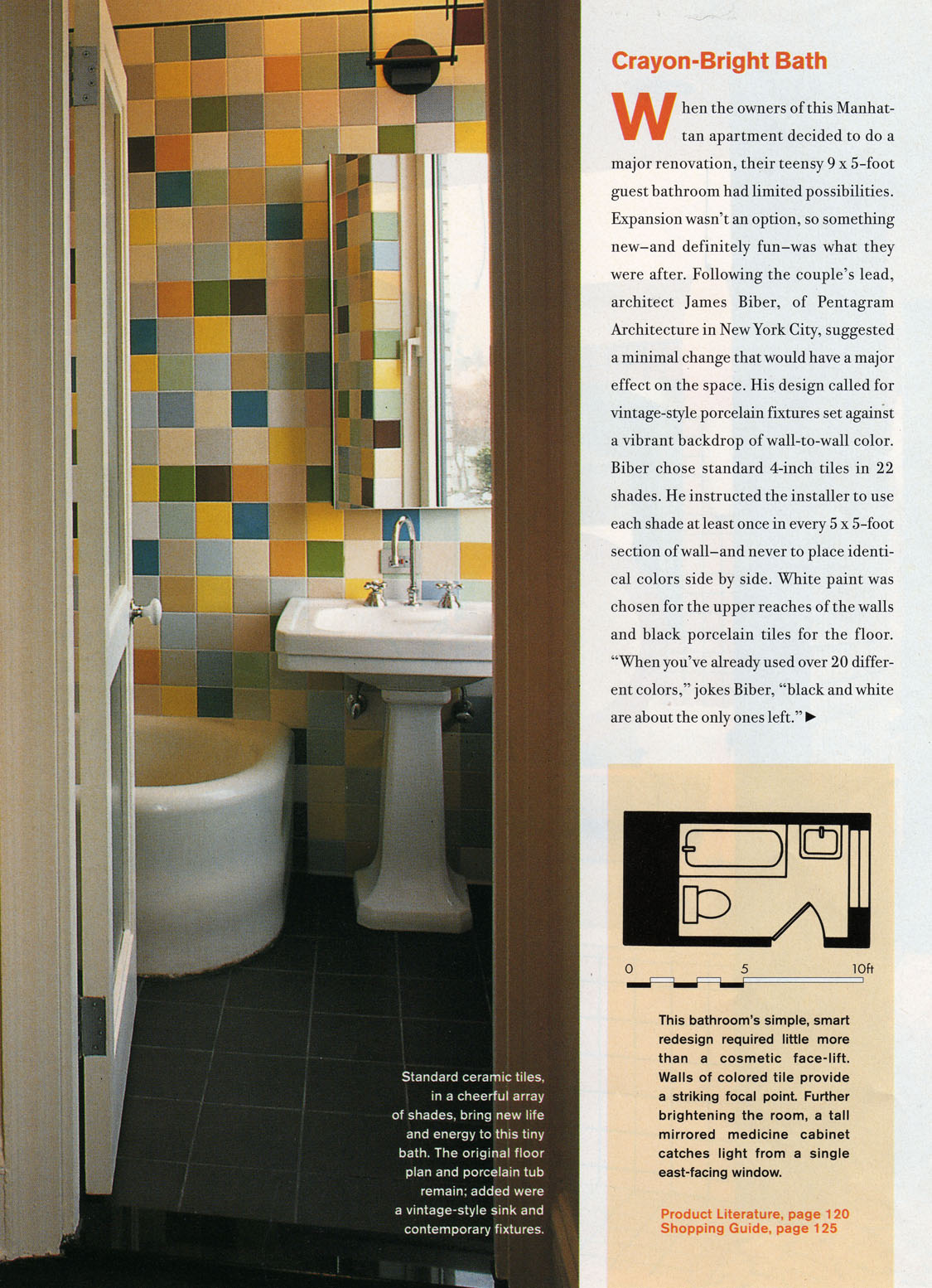
Bathroom Renovation

Renovation has begun on the Bathroom! Our house was built in the 30’s and we think the last time the bathroom was renovated was in the 70’s, and that would have been to make the soaking tub into a shower.  We are guessing that by the linoleum yellow floor that was installed beneath the wall partition.

 My fiance and I began the demolition of one small wall a few weeks ago, took off the wallpaper to expose green painted walls, and removed the chair rail to cover the transition of the stucco stippled below the rail to the smooth painted wall above it. 

We decided to cover the entire wall with joint compound to even out the textures and make the walls have a consistent adobe-like feel.


We used the most Green Joint Compound we could find at Lowe’s.        

And applied it using an 11″ trowel and creativity.  It was easier to work with thick blobs, a mixture of compound to a little water, giving the paste a little thicker than cake batter mix consistency.  Thick blobs that occasionally plopped on the floor, with as little as much swiping as possible to give a clean, uniformed stroke look worked best.

In an effort to salvage and reuse most of the demolition material we separated the drywall from the studs, the plastic shower liner from the metal, recycled most and gave the wood away to someone who uses a wood stove to heat their home.  We saved a piece of drywall large enough to fill the two foot by 6″ hole created in the ceiling from taking down the wall.  My fiance did a nice job patching the ceiling and matching the texture with a paint brush.

Taking down the wall and clean up took about two hours for us to work together.  Wallpaper and glue stripping took about 4 hours, and plastering has taken 6 hours so far. 

I am researching a Kilz to use and have found:

Kilz Clean Start zero-VOC water-based primer, sealer, and stainblocker improves, strengthens, and reduces top-coat paint appearance, the maker says. The low-odor product provides a mildew-resistant finish, blocks tannin bleed, and cleans up with soap and water.

We should be able to finish plastering in the next day or so, let it dry, apply a no voc kilz and then a low voc paint from PPG.